Los Angeles, CA
Wine cooler repair in Los Angeles County.
94 cities and neighborhoods across Los Angeles County, part of Los Angeles — 14 with a page on what that place does to a wine cooler.
Mon–Sat, 8am–8pm
- 94 places covered
- 14 with a page
- 10 repairs we do here
Book a visit
Three short steps, about a minute.
or call (844) 709-0727
Loading appointment form…
The appointment form couldn’t load. Please try again.
What Los Angeles County does
to a wine cooler.
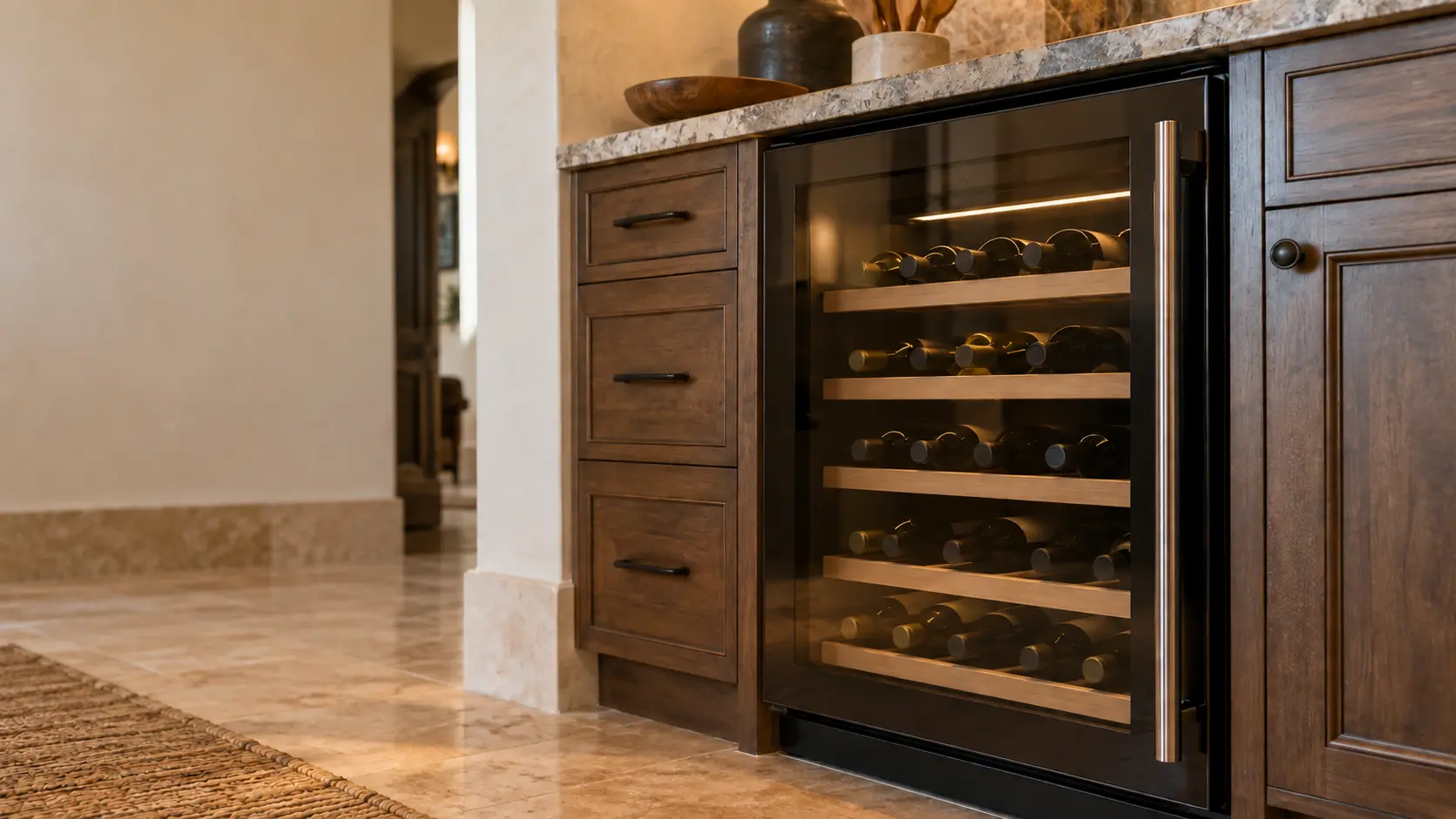
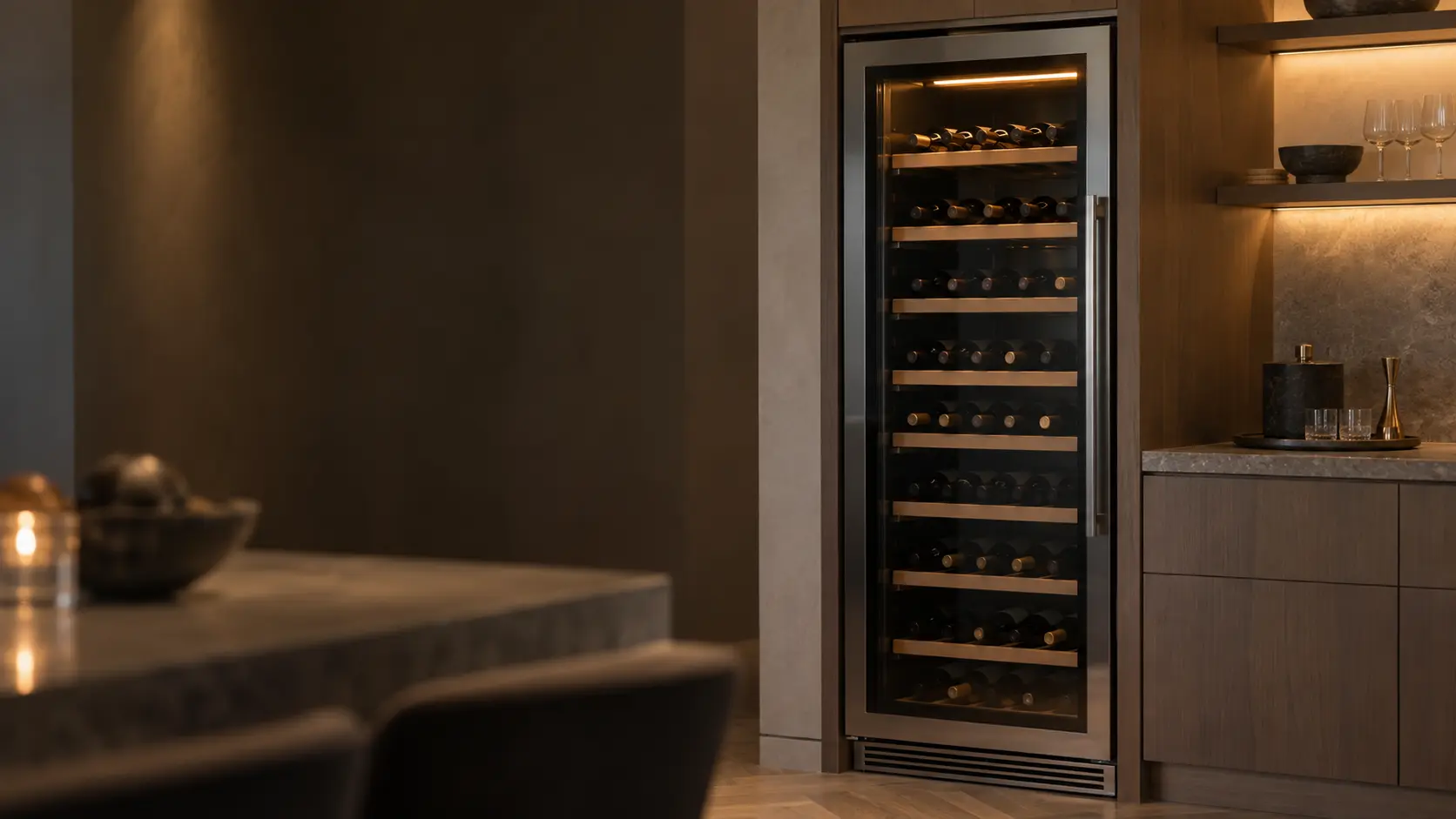
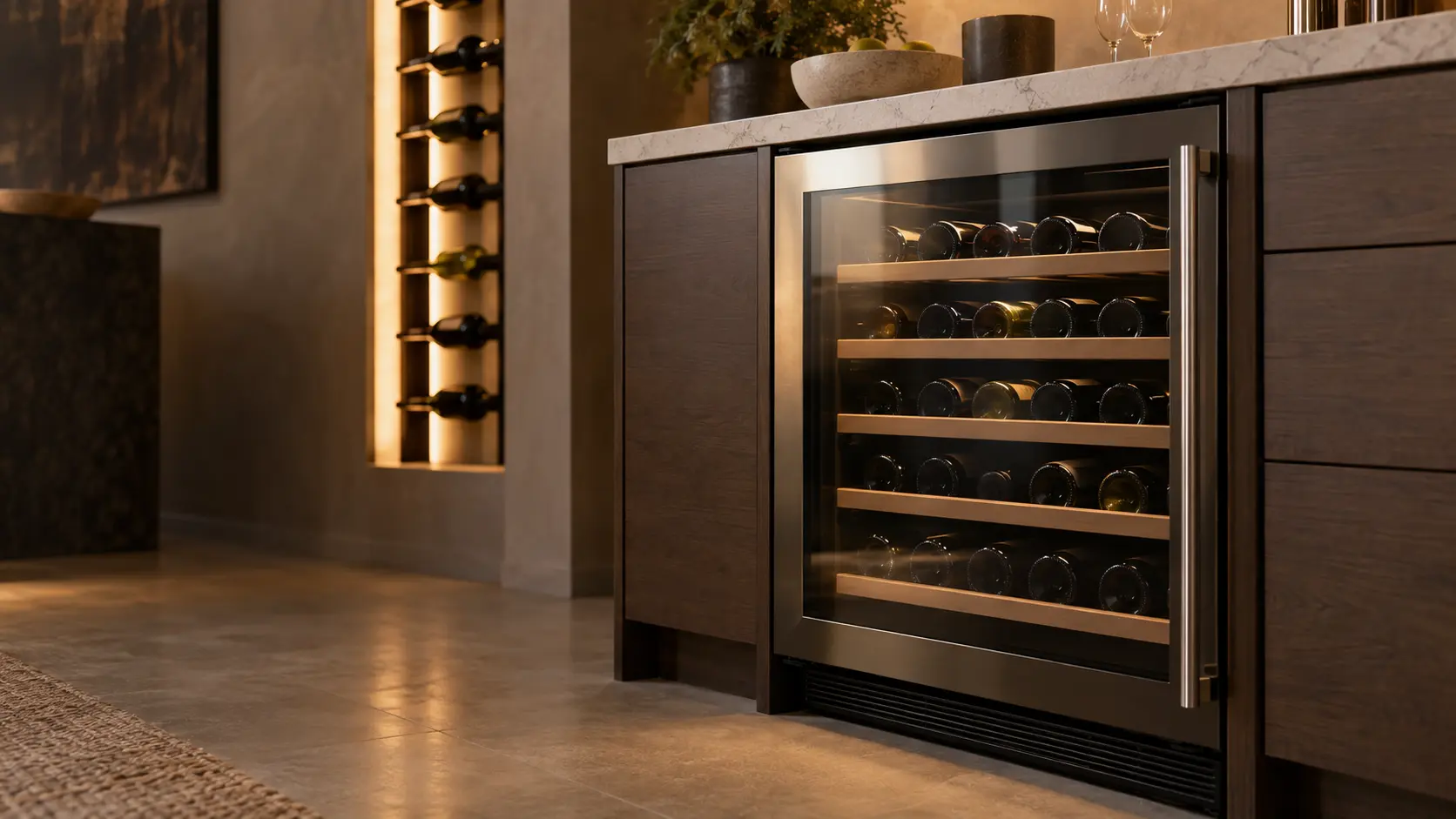
Where wine coolers sit in Los Angeles County: built-in wine columns, patio wine storage, gated communities.
All of Los AngelesBuilt-in wine columns
A panel-ready wine cooler carries a custom wood frame around its glass, and the added weight can sag the hinge until the seal no longer closes, so hinge adjustment is part of any gasket repair there.
Patio wine storage
Direct sun on an outdoor wine cooler's glass door heats the bottles near the front and lets UV reach them, so on a patio a solid door or a shaded spot often does more for the wine than any new part.
Gated communities
Gated estates usually run a whole-house standby generator, so a wine cooler that still warmed in a blackout raises one question first: whether it came back cleanly when the transfer switch moved the house back to utility power.
Where we go
in Los Angeles County.
94 cities and neighborhoods across Los Angeles County, part of Los Angeles, 14 of them with a page on what that place does to a wine cooler. The same visit in each.
Bel Air
At the heart of the community lie the Bel-Air Country Club, which founder Alphonzo Bell built, and the Hotel Bel-Air.
Beverly Hills
Houses where wine columns built into the kitchen hold part of a collection and a large dual-zone cabinet at the bar holds the rest, kept under watch by a house manager who calls before a dinner if a zone has drifted.
Brentwood
Family houses where an undercounter wine cooler in the kitchen and another by the pool see heavy use on weekends, and summer heat reaching the patio is when a struggling cooler is first noticed.
Calabasas
Calabasas has a hot-summer Mediterranean climate: its weather table shows August afternoons averaging 93°F and a record high of 114°F, set in September.
Hancock Park
Hancock Park's preservation overlay zone reaches from Melrose Avenue south to the commercial lots on Wilshire Boulevard, and from Highland Avenue east to Rossmore Avenue.
Holmby Hills
From 2004 until 2010, Williams-Sonoma chief W.
Malibu
Beach and canyon houses where a bar cooler faces ocean spray on the deck side and fire-season shutoffs from the hills behind, and collectors who travel for weeks learn from an app alert that a zone has warmed.
Manhattan Beach
Manhattan Beach covers 3.9 square miles with 2.1 miles of ocean frontage.
Pacific Palisades
Rebuilt houses and survivors of the January 2025 fire, where new wine columns go into new kitchens, and coolers that sat without power through the evacuation are cleaned of smoke odor and tested before bottles go back in.
Palos Verdes Estates
Frederick Law Olmsted Jr.
Pasadena
Craftsman houses where a freestanding wine cooler stands in a dining room without central air and a September heat wave pushes it past what it can hold, and the Eaton fire of 2025 left many coolers near Altadena without power for days.
San Marino
Its seven zoning districts are drawn by minimum lot size, and while the smallest lots run near 4,500 square feet, many exceed 30,000.
Santa Monica
Temperatures in Santa Monica have ranged only from 33°F, in March 1945 and March 1952, to 100°F, on November 1, 1966.
Studio City
LADWP, Studio City's utility, runs an Attic Insulation Rebate Program meant to lower the cost of cooling a house.
Also covered in Los Angeles County
- Agoura HillsDuring the 2018 Woolsey Fire the whole of Agoura Hills was ordered to evacuate.
- AlhambraHousing in Alhambra runs from Craftsman bungalows and Spanish Colonial Revival houses to condominiums and mixed-use buildings downtown.
- ArcadiaLucky Baldwin, who bought 8,000 acres of Rancho Santa Anita in 1875, built the Queen Anne Cottage that now stands in the Arcadia arboretum.
- Beverly GroveBuilt mostly in the 1920s, Beverly Grove gained a 2008 zoning overlay meant to keep new houses in scale with the buildings around them.
- BeverlywoodWalter H. Leimert built Beverlywood in 1940 under binding covenants that still govern the size, style and color of its 1,354 homes.
- BradburyBradbury Estates, one of three parts of Bradbury, is a gated enclave of estates on lots of at least five acres.
- BurbankAccording to Burbank Water and Power, residents cut their water use by 22 percent over 10 to 15 years, from 170 to 132 gallons per person.
- Canoga ParkCanoga Park and Woodland Hills, in the southwest corner of the valley, usually record its highest temperatures.
- CarthayCarthay fills the blocks between La Cienega Boulevard and Fairfax Avenue, from Wilshire Boulevard south to Pico Boulevard.
- Century CityBefore it became a studio backlot, the ground under Century City belonged to cowboy actor Tom Mix, who ran it as a ranch.
- ChatsworthThe Chatsworth Reservoir, built in 1918 for the Los Angeles Aqueduct system, was abandoned for storage after the 1971 San Fernando earthquake raised seismic concerns.
- Cheviot HillsMost homes east of Motor Avenue and south of Forrester Drive date from the early 1950s, on the grounds of the old California Country Club.
- Culver CityExcept for a border with unincorporated Ladera Heights on the east, Culver City is ringed almost entirely by the city of Los Angeles.
- Del ReyBallona Creek and Centinela Creek mark the southeastern edge of Del Rey, and Lincoln Boulevard its southwestern side.
- Echo ParkBefore Hollywood took over, the Edendale part of Echo Park was the center of West Coast filmmaking.
- El SegundoA Chevron oil refinery takes up more than a quarter of El Segundo, and about three quarters of the city is industrial or commercial land.
- EncinoEncino is named for the oak, echoing the Tongva village of Siutcanga, "the place of the oaks."
- FairfaxThe blocks east of Fairfax Avenue and north of Beverly Boulevard, mostly 1920s apartment buildings, became the Beverly Fairfax Historic District in 2019.
- GlendaleIn the 1971 San Fernando earthquake, surface ruptures nearly 12 miles long reached within a few miles northwest of Glendale.
- Granada HillsGranada Hills is built mostly in mid-century modern style, including the Balboa Highlands tract built by Joseph Eichler.
- Hermosa BeachHermosa averages about 70°F in summer and 55°F in winter, and westerly sea breezes keep smog away most of the year.
- Hidden HillsLandscape architect A. E. Hanson designed and built Hidden Hills as a gated community in the 1950s.
- HollywoodThe all-time high in Hollywood is 112°F, recorded on June 26, 1990.
- Hollywood / Central LACentral Los Angeles is the city's historic urban core, split by the planning department into six Community Plan areas under a single Area Planning Commission.
- Hollywood HillsThe Hollywood Reservoir, the Hollywood Bowl and the Hollywood Sign all sit within the Hollywood Hills neighborhood.
- Hollywood Hills WestLaurel Canyon Boulevard bisects Hollywood Hills West, which runs west to the Beverly Hills line at Trousdale Estates.
- KoreatownMany of the Art Deco buildings in Koreatown kept their terra cotta facades because new businesses found them worth using.
- La Cañada FlintridgeLa Cañada Flintridge was two separate communities, La Cañada and Flintridge, until it incorporated on December 8, 1976.
- Lake BalboaLake Balboa, split off from Van Nuys, covers 3.13 square miles with a population density about average for the city.
- Larchmont VillageLarchmont took its name in 1912 and had become a streetcar suburb of Los Angeles by 1920.
- Laurel CanyonBungalow Land, an early Laurel Canyon subdivision, had its own roadhouse, the 1907 Bungalow Inn with an 80-foot living room.
- Los FelizAfter the 1971 Sylmar earthquake, some buildings at John Marshall High School in Los Feliz were condemned.
- Malibu / Santa Monica MountainsMany vineyards in the Santa Monica Mountains are planted as firebreaks, separating hillside homes from the native chaparral.
- Mar VistaSouth of Venice Boulevard, Mar Vista is zoned for apartments and dense with dingbat buildings, most of them under the city rent stabilization ordinance.
- Marina del ReyThe Admiralty High-Rise, a 20-story complex of about 800 condominiums, can house close to 30 percent of Marina del Rey.
- Mid-WilshireAlong the Park Mile stretch of Wilshire, a 1979 ordinance holds buildings to three stories to protect the single-family homes around them.
- Miracle MileThe Miracle Mile North preservation zone is mostly single-family houses of uniform scale, built largely between 1924 and 1941.
- MonroviaMonrovia grew from a sparse community of orange ranches into a residential city of more than 37,000 people.
- Mount OlympusMt. Olympus was developed in the 1960s, with streets such as Apollo, Electra and Zeus Drive named for figures of Greco-Roman myth.
- Nichols CanyonAvocado grower Jacob Miller bought 70 acres here in 1879, and the canyon went by Miller Canyon for a time.
- North HollywoodNorth Hollywood was called Toluca and then Lankershim before it took its present name in 1927.
- NorthridgeThe 1994 earthquake that carries the Northridge name was the second strong quake to hit the area in 23 years, after the San Fernando earthquake of 1971.
- PalmsPalms is almost entirely apartment buildings today, and about 92 percent of its residents rent.
- Pico-RobertsonPico-Robertson roughly matches the area of the South Robertson Neighborhood Council, long a center of Jewish life in Los Angeles.
- Playa del ReyPlaya del Rey pairs large ocean-view estates on its hills with a densely built eastern side of apartment and condominium complexes.
- Playa VistaPlaya Vista began building in 2002 as a planned community on the land where Hughes Aircraft built the "Spruce Goose."
- Porter RanchThe Vineyards at Porter Ranch, completed in 2019, is among the newest developments in the neighborhood.
- Rancho Palos VerdesThe Portuguese Bend landslide in Rancho Palos Verdes spans about 260 acres and averages 135 feet thick.
- Rancho ParkRancho Park took its name after World War II, when residents cut off from Westwood by Olympic Boulevard pushed for an identity of their own.
- Redondo BeachSince its records began in 2000, the Redondo Beach weather station has never read above 102°F or below 31°F.
- ResedaAlthough the 1994 earthquake carries the Northridge name, later analysis placed its epicenter in neighboring Reseda.
- Rolling HillsRolling Hills requires its single-story homes to be painted white and keeps room on each lot for horses.
- Rolling Hills EstatesHorse paths run through Rolling Hills Estates, a mostly residential city on the northern side of the peninsula facing Torrance.
- San Fernando ValleyFive ranges ring the Valley: the San Gabriel, Verdugo, Santa Monica and Santa Susana mountains and the Simi Hills.
- San GabrielPassing the mission in 1853, geologist William P. Blake found its once-great vineyards in disarray yet predicted California would become famous for its wines.
- San Gabriel ValleyThe 1987 Whittier Narrows earthquake damaged or destroyed most of the older buildings of Uptown Whittier, on the southern side of the valley.
- SawtelleThe Kuruvungna springs that drew the Tongva to Sawtelle still flow today near University High School.
- Sherman OaksSherman Oaks grew from 1,000 acres subdivided by the Los Angeles Suburban Homes Company, in which Moses Sherman was a partner.
- Sierra MadreThe magnitude 5.8 Sierra Madre earthquake of June 28, 1991, knocked over chimneys and broke up cinder block walls across the area.
- Silver LakeThe Silver Lake Reservoir, built in 1907 and named for water commissioner Herman Silver, supplied 600,000 homes until 2013.
- South BayThe South Bay has long been the home of Southern California's aerospace industry, with military satellite work centered in El Segundo.
- South PasadenaSouth Pasadena has been named five times to the National Trust for Historic Preservation's list of "Most Endangered Places."
- Sunset StripNightclubs and casinos opened along the Strip in the 1920s, and during Prohibition alcohol was served in their back rooms.
- TarzanaIn the 1994 Northridge earthquake, a seismometer at the Cedar Hill Nursery in Tarzana recorded horizontal ground acceleration of 1.82 g.
- Temple CityWalter P. Temple started the town in 1923 on 400 acres of the old Rancho Santa Anita, dividing it into lots so that average families could own homes.
- Toluca LakeThe private lake at Toluca Lake is fed by wells, having lost its artesian springs as the water table dropped.
- TopangaThe 2025 Palisades Fire destroyed structures in Topanga, forced evacuations and closed several roads through the canyon.
- TorranceTorrance was planned by Frederick Law Olmsted Jr. as a balanced industrial city, with early buildings by architect Irving Gill.
- Valley GlenValley Glen is home to Los Angeles Valley College and the Great Wall of Los Angeles, a half-mile mural on the National Register of Historic Places.
- Valley VillageValley Village hit an all-time high of 117°F on September 6, 2020.
- Van NuysVan Nuys, the most populous neighborhood in the San Fernando Valley, was laid out by the Suburban Homes Company and annexed to Los Angeles in 1915.
- VeniceVenice has a record high of 110°F, from September 27, 2010, and a record low of 32°F.
- West HillsWest Hills became its own neighborhood in 1987, when the city approved splitting it off from the western part of Canoga Park.
- West HollywoodTemperatures in West Hollywood have spanned 24°F, on January 4, 1949, to 111°F, on September 26, 1963.
- WestchesterWestchester takes in all of Los Angeles International Airport as well as Loyola Marymount University.
- Westlake VillageWestlake Village became the 82nd city in Los Angeles County when it incorporated in 1981.
- WestsideThe Westside has no official boundary, and one historic reading starts it at Main Street downtown, where the big boulevards pick up "West" in their names.
- WestwoodWestwood Village, just south of the UCLA campus, was built up from 1929 through the 1930s.
- Windsor SquareIn 1911 Windsor Square became the first part of the city to run its power lines underground.
- Woodland HillsWoodland Hills lies along the Arroyo Calabasas, a tributary of the Los Angeles River, at the foot of the Santa Monica Mountains.
A visit in
Los Angeles County.
Four steps from the call to a working wine cooler, the same in all 94 places of Los Angeles County.
What repairs cost- 01Each zone measured first
- 02A figure before any work starts
- 03The usual wine cooler parts on board
- 04Settled back at cellar temperature
When a wine cooler
cannot wait in Los Angeles County.
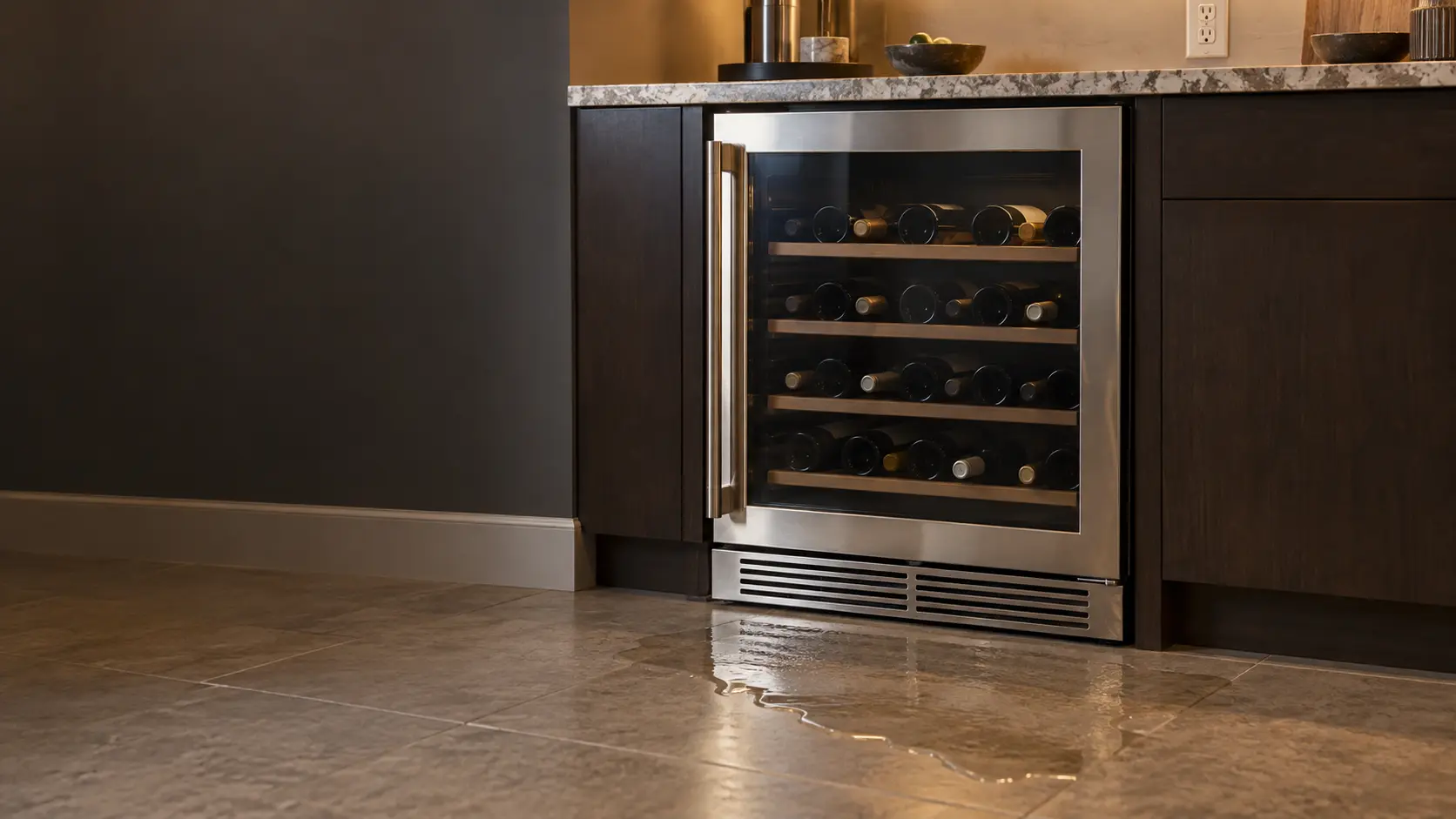
Across Los Angeles County, the four problems where the cabinet is warming with bottles still inside, where water is reaching an outlet, or where the unit smells hot or keeps cutting the power.
All 17 problems
All of
Los Angeles.
Los Angeles County is the county where we repair wine coolers in Los Angeles.
All of Los AngelesBack to your everyday
Wine cooler trouble in Los Angeles County?
Book with the town, what you are seeing and the model number — 94 places across Los Angeles County, the same wine cooler visit in each.