
Wine Cooler Not Cooling
Usually turns out to be
- 1 Wine cooler thermoelectric module repair
- 2 Wine cooler fan repair
- 3 Wine cooler compressor and sealed system repair
What we do
Ten repairs we take on. Every wine cooler job we take on has a page here, covering what the technician actually does, how heavy the work sits among the others, and the point where a worn cabinet stops being worth the parts.
Mon–Sat, 8am–8pm
Book a visit
Three short steps, about a minute.
or call (844) 709-0727
Loading appointment form…
The appointment form couldn’t load. Please try again.
Familiar brands. Expert care.
Independent repair service. Not affiliated with, authorized or endorsed by any manufacturer. Brand names and model numbers are the property of their respective owners and are used here for identification only, to describe the appliances we service.
In the order it gets done: the cheapest cause first, and the expensive answer at the bottom where it usually belongs.
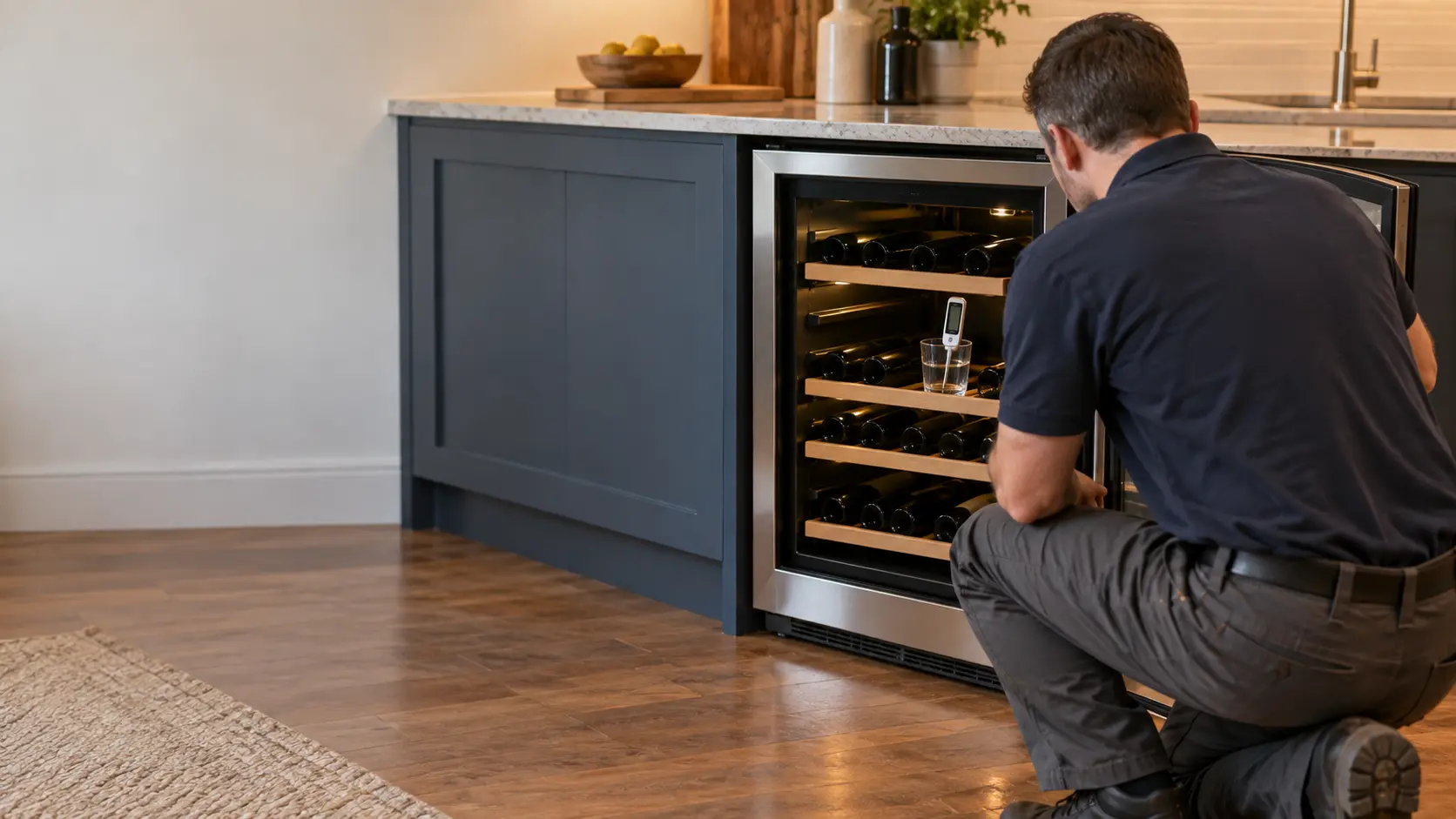
A visit that measures each zone and the room around the cabinet first, then works through the door seal, the airflow, the sensors and the cooling system until one part is named.
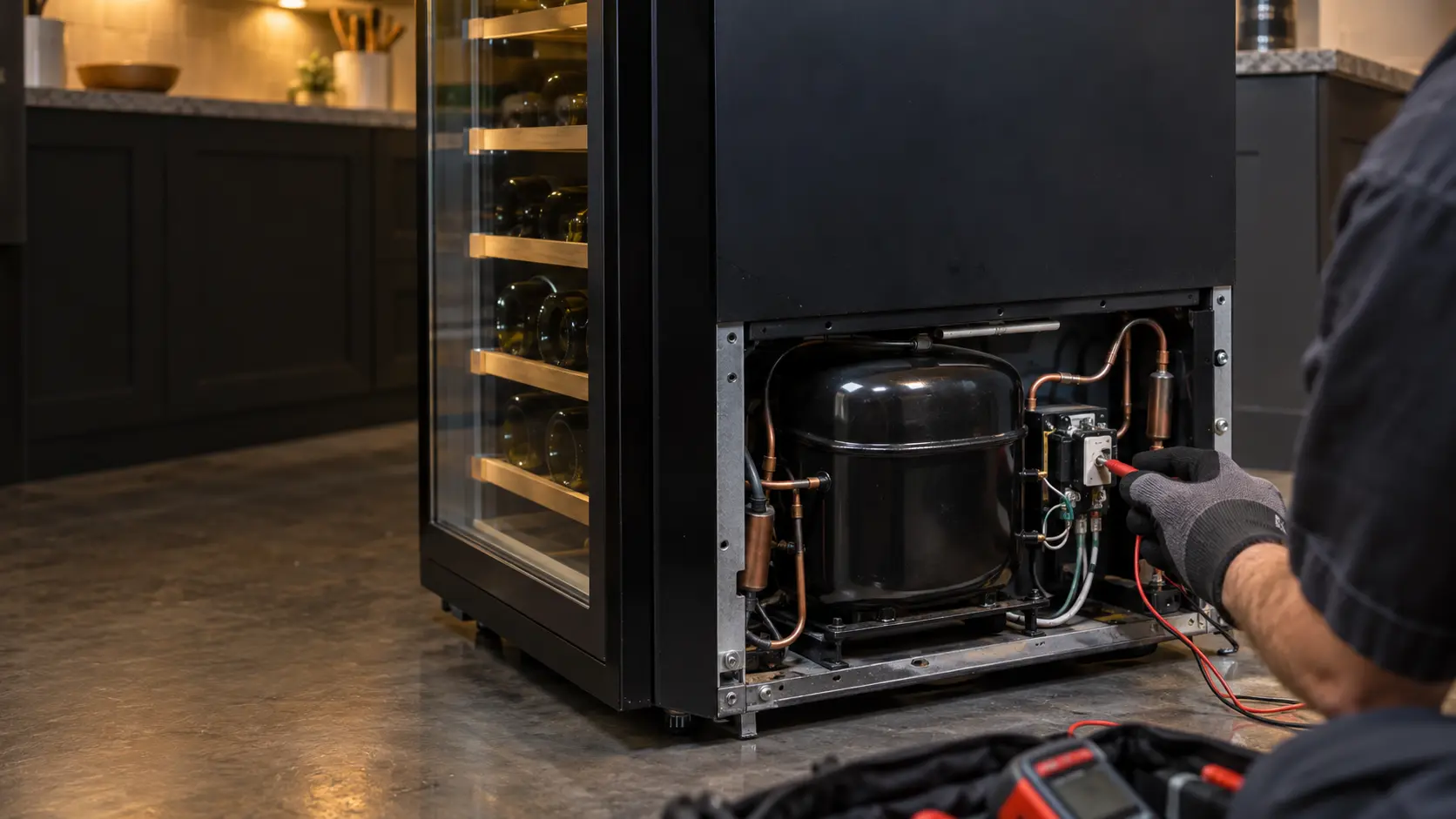
Getting a compressor-cooled wine cooler holding cellar temperature again, from the start relay and overload that fail first to a leak or a restriction in the sealed tubing.
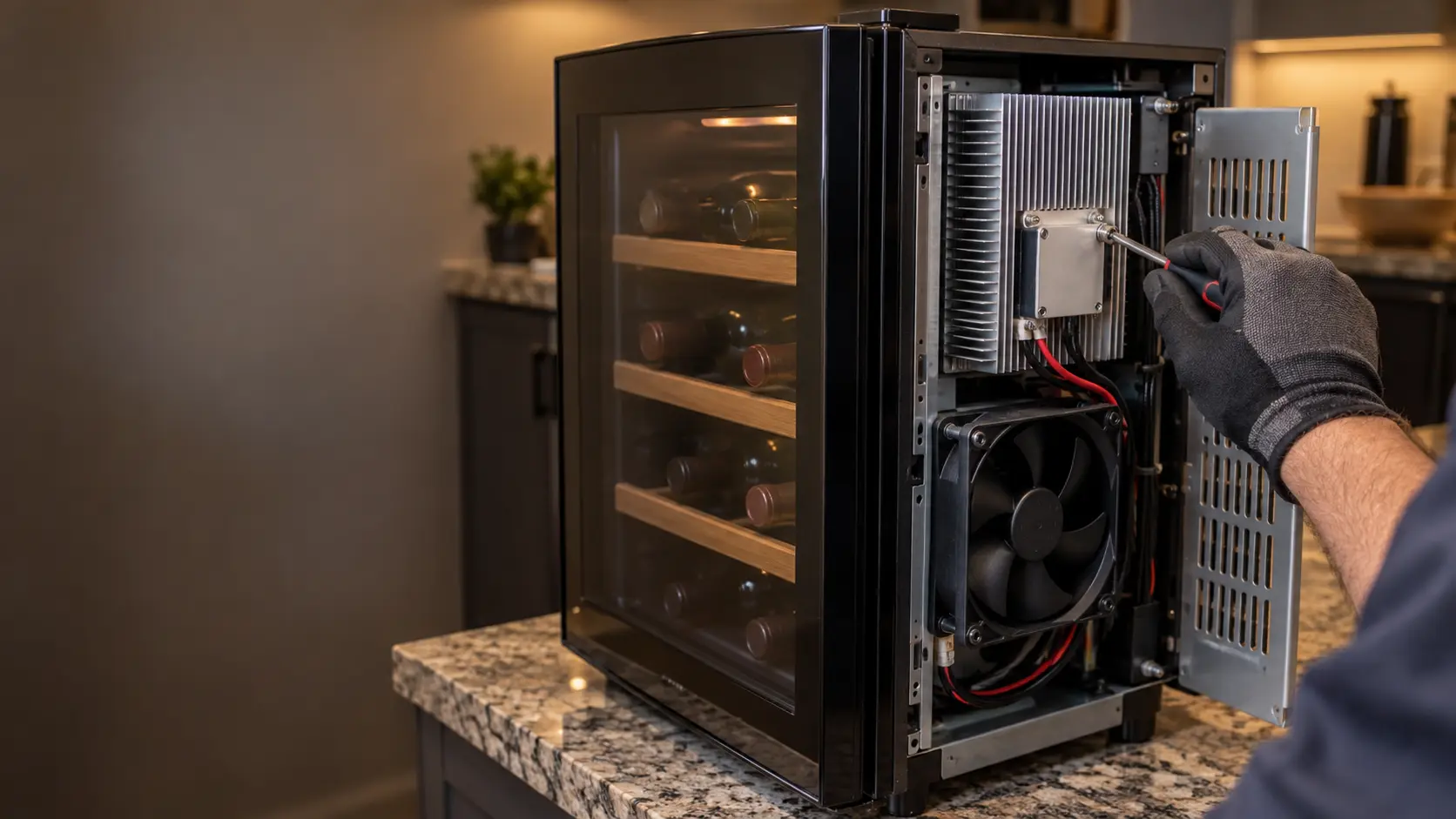
Bringing a thermoelectric wine cooler back to temperature by testing its solid-state module, the two fans on either side of it and the power supply that feeds them.
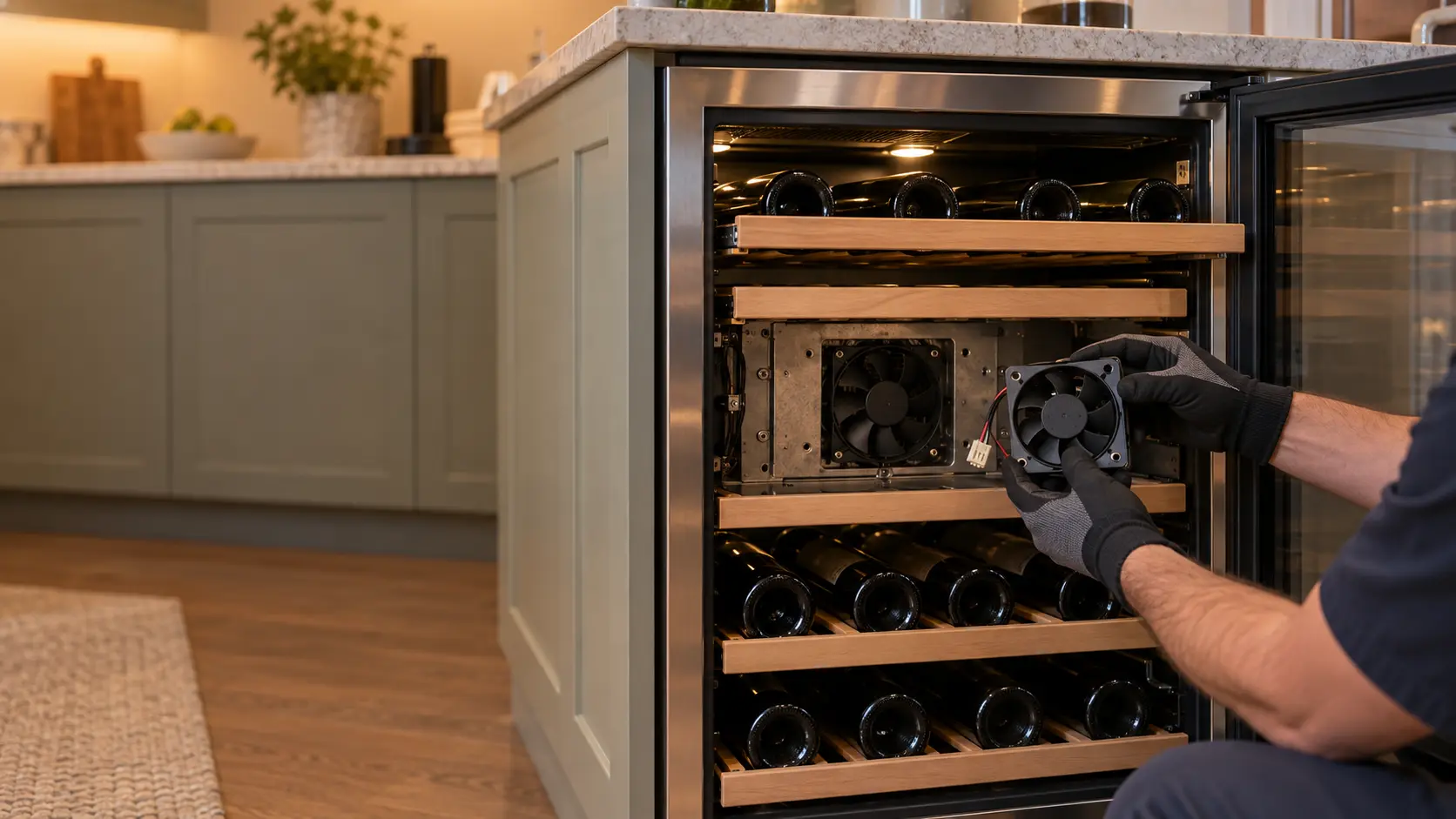
Replacing the fan that circulates air across the racks, or the one that cools the condenser, when a wine cooler warms unevenly, ticks, buzzes or falls silent.
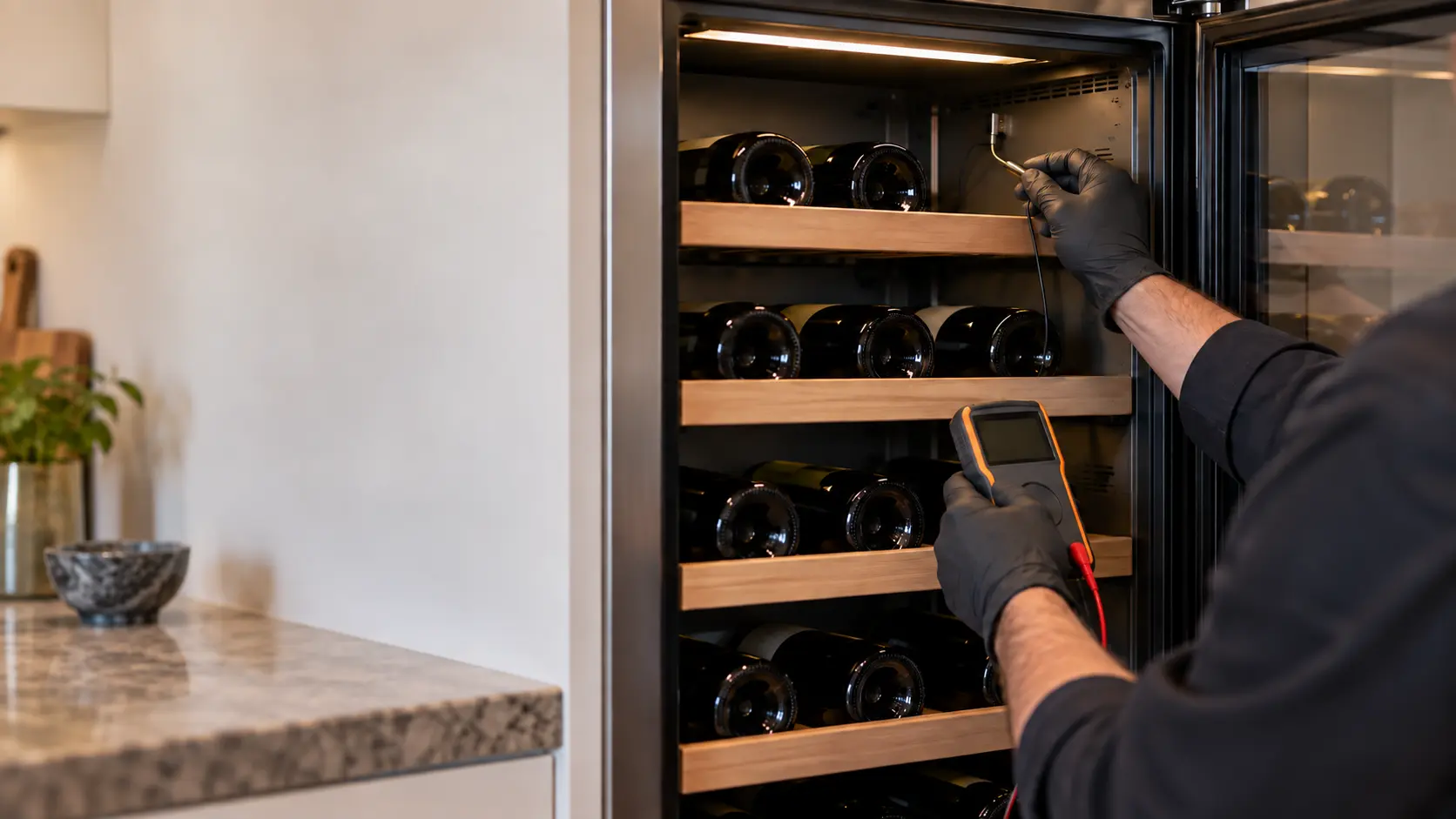
Testing and replacing the thermostat or the temperature sensors that tell a wine cooler when to cool, when the cabinet runs too cold, too warm or back and forth.
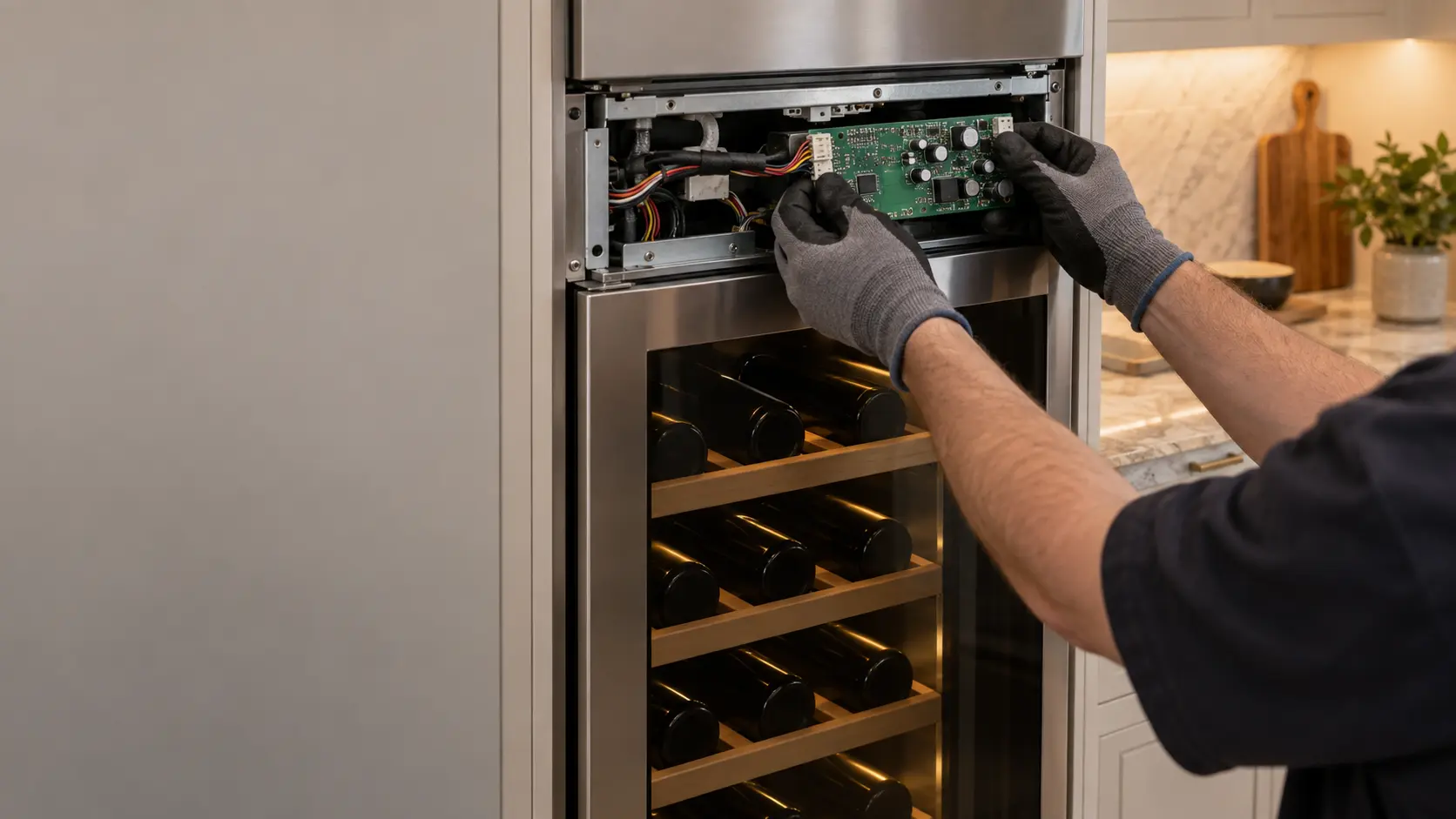
Repairing the electronic control and the touch display that run a wine cooler, from a blank screen or a code to keys that will not respond or a cabinet that will not start.
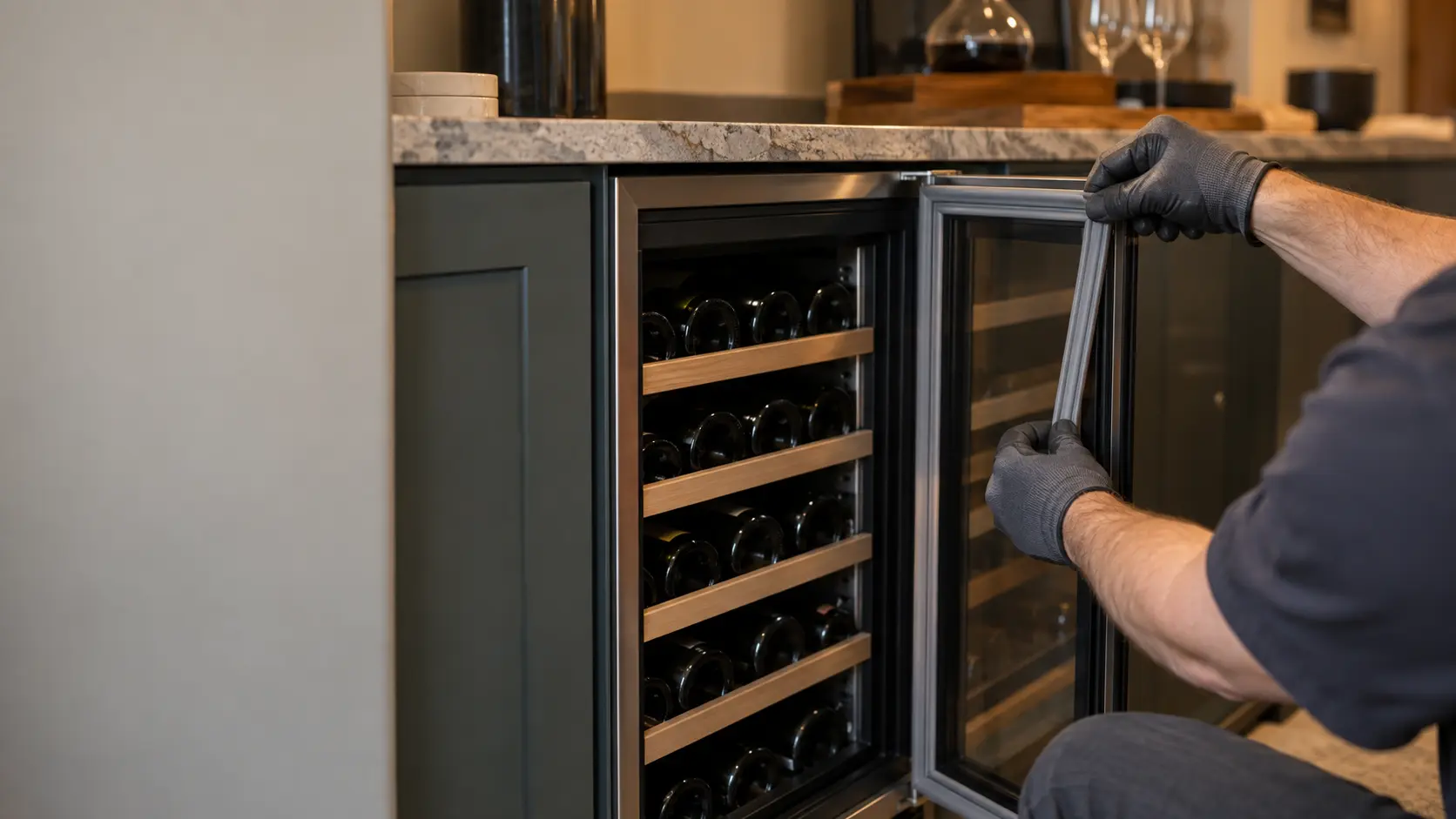
Replacing a torn or flattened gasket, resetting a door that no longer closes square, and repairing the glass door that keeps light, heat and humid air away from the bottles.
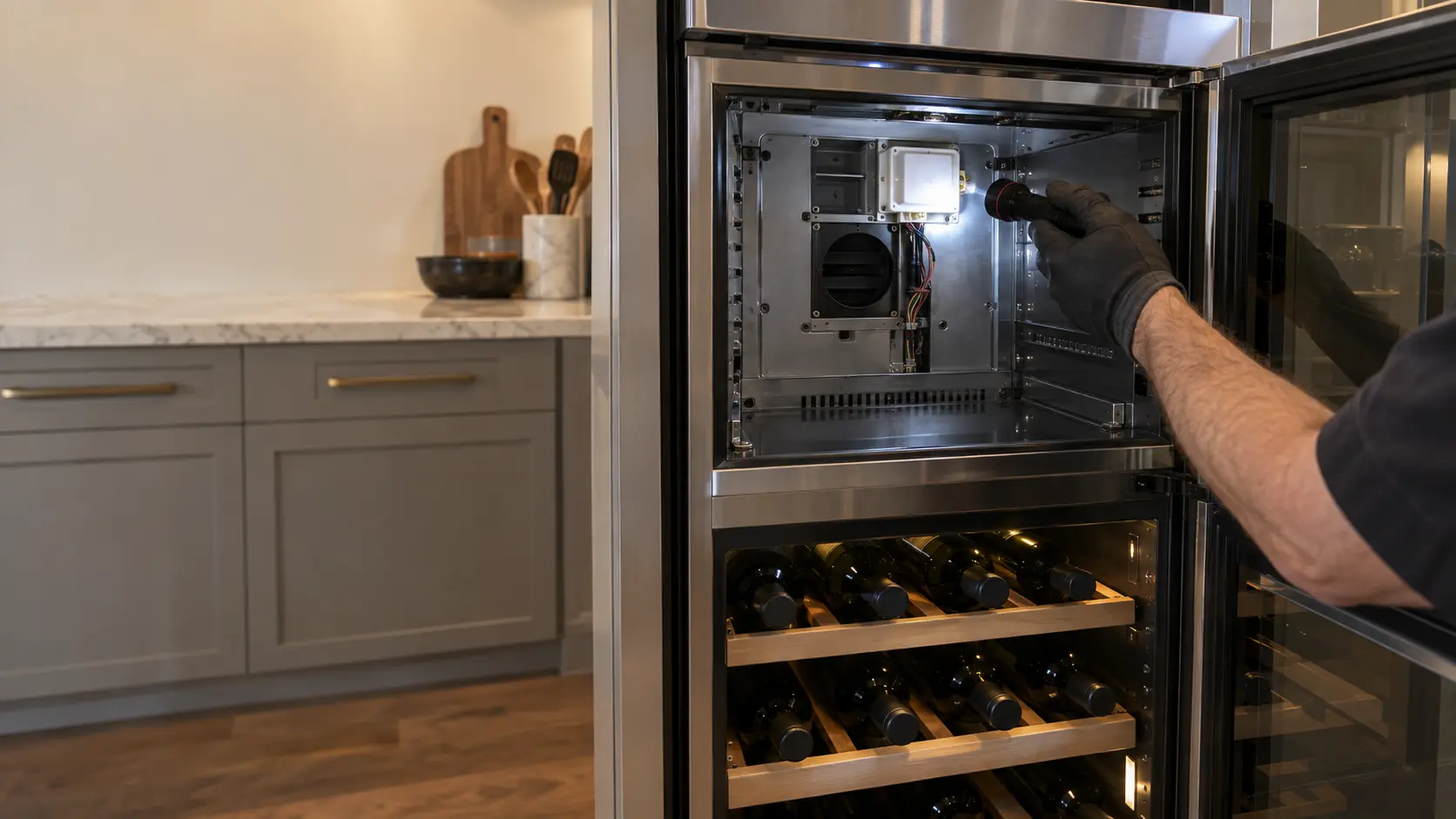
Getting both zones of a dual-zone wine cooler back to their own settings by testing the damper, the zone fans and the zone sensors that share one cabinet's cold.
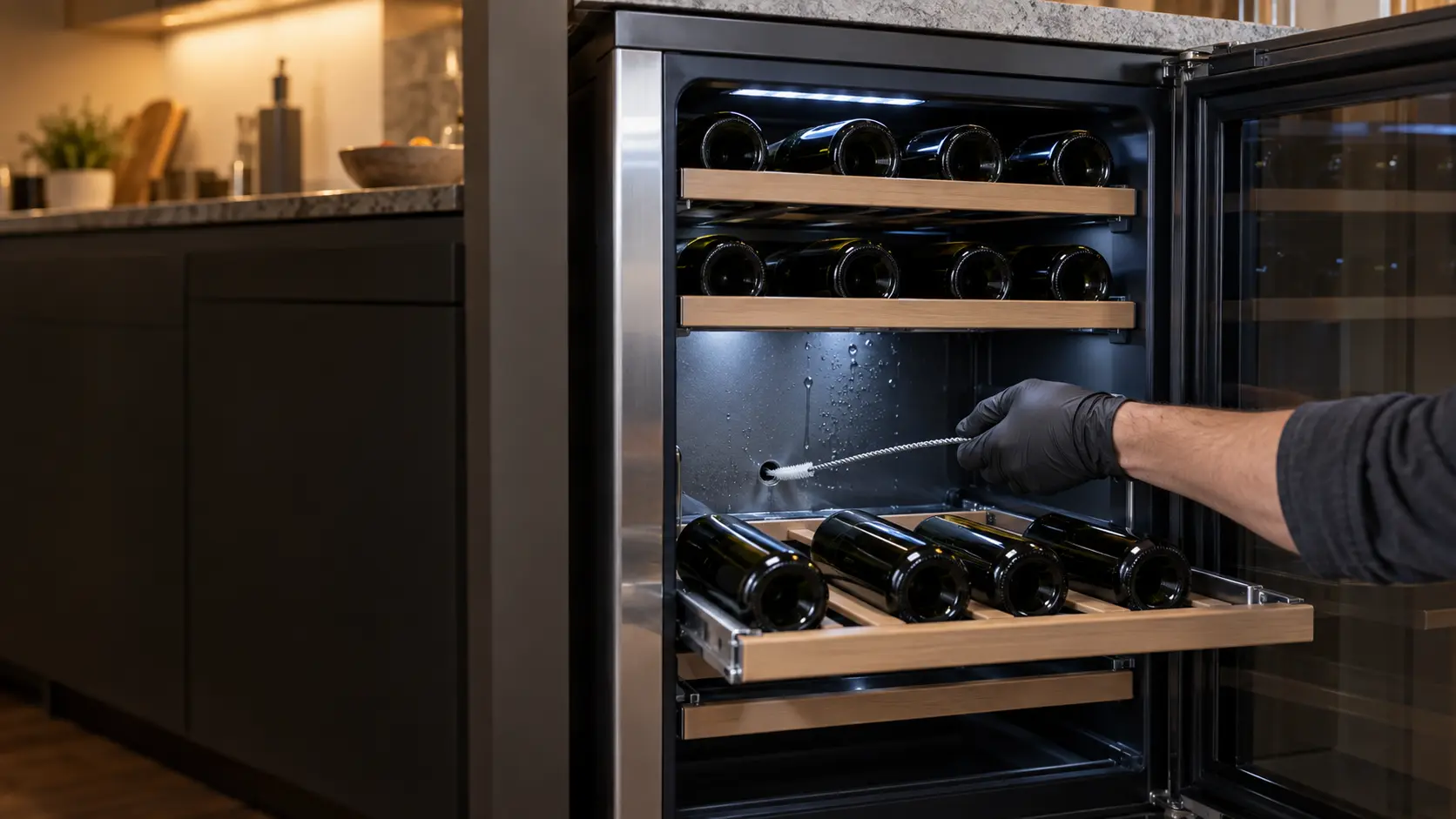
Clearing the drain line and resetting the drip tray that carry away the water a wine cooler collects, when water pools inside, runs onto the floor or feeds a musty smell.
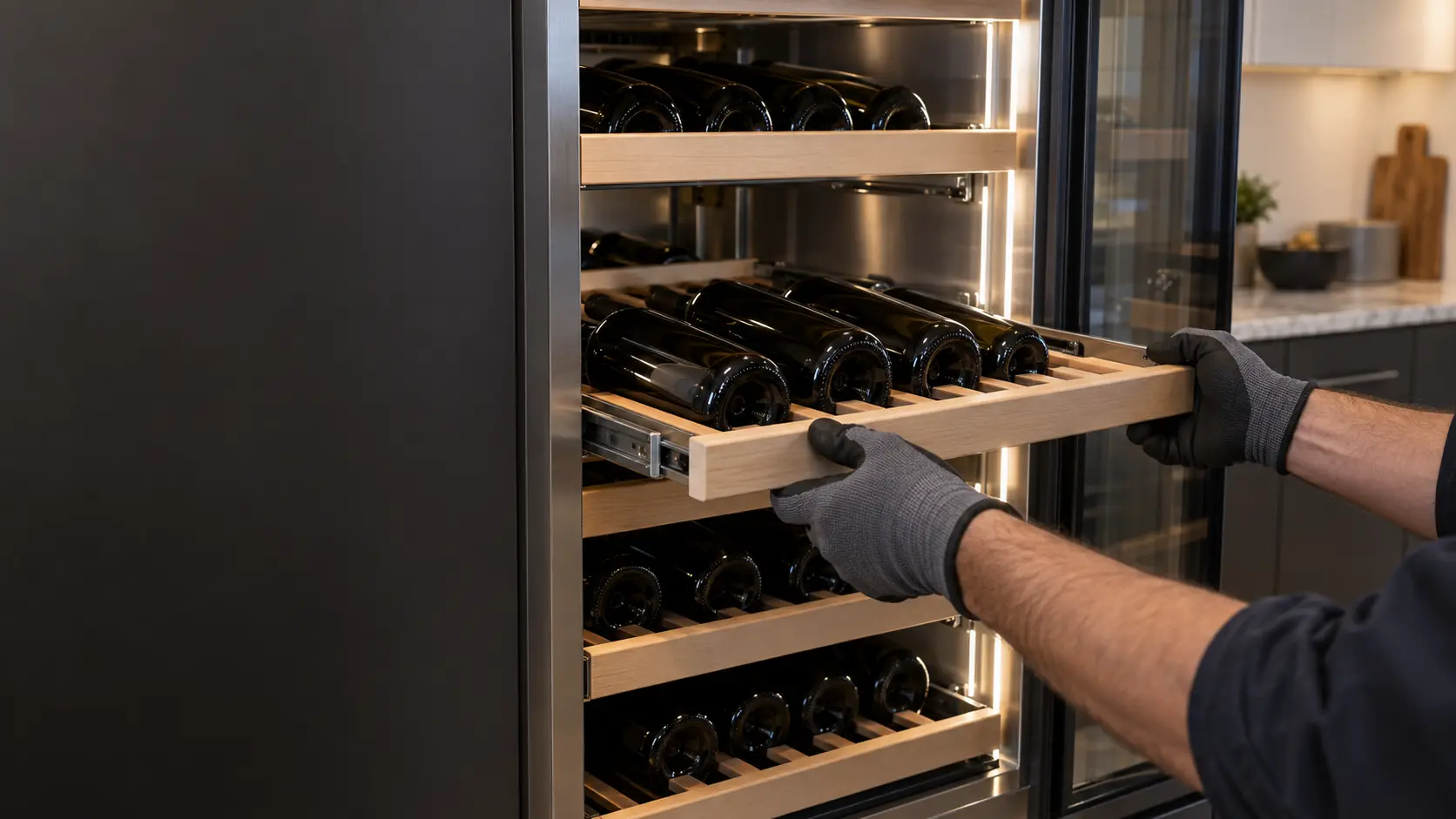
Fixing the parts you touch every day on a wine cooler: rack slides that stick, wood fronts that crack, hinges that sag, and interior lights that flicker or go out.
Before you bookBands rather than prices, because nobody can quote a figure before the wine cooler has been looked at — and the diagnostic visit that decides it, set against the repair.
10 repairsCheapest firstDiagnostic visit Read the cost guideMeasure a repair against two things: a new cabinet for the same opening, and the bottles now inside. Nearly every fan, sensor, gasket, drain or hinge job is a small share of either. Built-in columns and undercounter units almost always earn their repair, sealed-system work included, since a replacement must fit the cutout and match its neighbors. On a small, older freestanding cooler the line falls at a failed compressor, a refrigerant leak or a second thermoelectric module, and there the technician sets both numbers side by side.
| Repair | Relative cost | Notes |
|---|---|---|
| Start relay, compressor or sealed-system leak | moderate to highest | A start relay or overload on a compressor-cooled cabinet is a small part changed from behind the grille. A leak that has to be brazed, with a new drier, a vacuum and a weighed charge, or a new compressor, sits near the top of the scale. |
| Thermoelectric module, fan or power supply | low to moderate | The solid-state module, its two fans and the low-voltage power supply are modest parts reached from the back panel. Most of the time goes into cleaning the heat sinks and seating the new module evenly. |
| Circulation or condenser fan motor | low to moderate | A fan motor is an affordable part reached from the inside rear wall or behind the grille. A variable-speed fan in a column, or a fan behind a zone full of racks, adds a little time. |
| Thermostat or zone temperature sensor | low to moderate | A single sensor or a dial thermostat is an inexpensive part. A column with a sensor in each zone, where more than one has drifted, moves the job up a step. |
| Main control board, display board or door switch | moderate to highest | A door switch, a connector or a board fuse is a small repair. A main board or a touch display for a built-in column is one of the costliest parts a wine cooler takes, and some have to be ordered in. |
| Door gasket, hinge adjustment or glass door | low | A gasket made for the model, fitted with the door in place, sits low on the scale. A full glass door or frame to replace a pane that has fogged between its layers costs more than a gasket alone. |
| Damper, damper motor or zone fan | moderate | The damper and its motor sit behind the rear panel of the zone they feed, so the racks come out first. Ice in the air channel from a leaking door adds time for thawing and curing the leak. |
| Drain hole, drain tube or drip tray | lowest | Clearing and flushing the drain, or reseating a tray over the compressor, is among the least costly work on a wine cooler. A cracked tray under a built-in unit, reached by sliding it out, adds a little. |
| Rack slides, rack fronts, hinge or interior lights | low | Slides, wood fronts, hinges and LED strips are affordable parts made for each model and fitted with hand tools. An LED driver board or a full set of racks for a tall column sits a little higher. |
Most people arrive knowing the symptom, not the repair. These are the jobs each one usually turns out to be, cheapest first — and every one of them starts with the wine cooler diagnostic visit.
Usually turns out to be
Usually turns out to be
What to check firstUsually turns out to be
What to check firstUsually turns out to be
Usually turns out to be
What to check firstUsually turns out to be
Usually turns out to be
Usually turns out to be

Back to your everyday
Three short steps online, or one call. Tell us what you are seeing and pick a window that works.