
Start with what you own
Wine cooler
types,
told apart.
The same case of wine can rest in four quite different machines. An undercounter unit breathes only through its front grille, a wine column is built into the cabinetry at full height with its own electronics, a freestanding cooler may run a compressor or a quiet thermoelectric module that struggles in a warm room, and a dual-zone cooler divides its cold between two settings. Tell us which of these four is racking your bottles and much of the diagnosis is narrowed down before anyone rings the bell.
Mon–Sat, 8am–8pm
- 4 types
- Serviced in place
- What each one costs
Book a visit
Three short steps, about a minute.
or call (844) 709-0727
Loading appointment form…
The appointment form couldn’t load. Please try again.
Four types,
each its own job.
Each one is built, reached and repaired differently. Open yours for what fails on it and what the work involves.
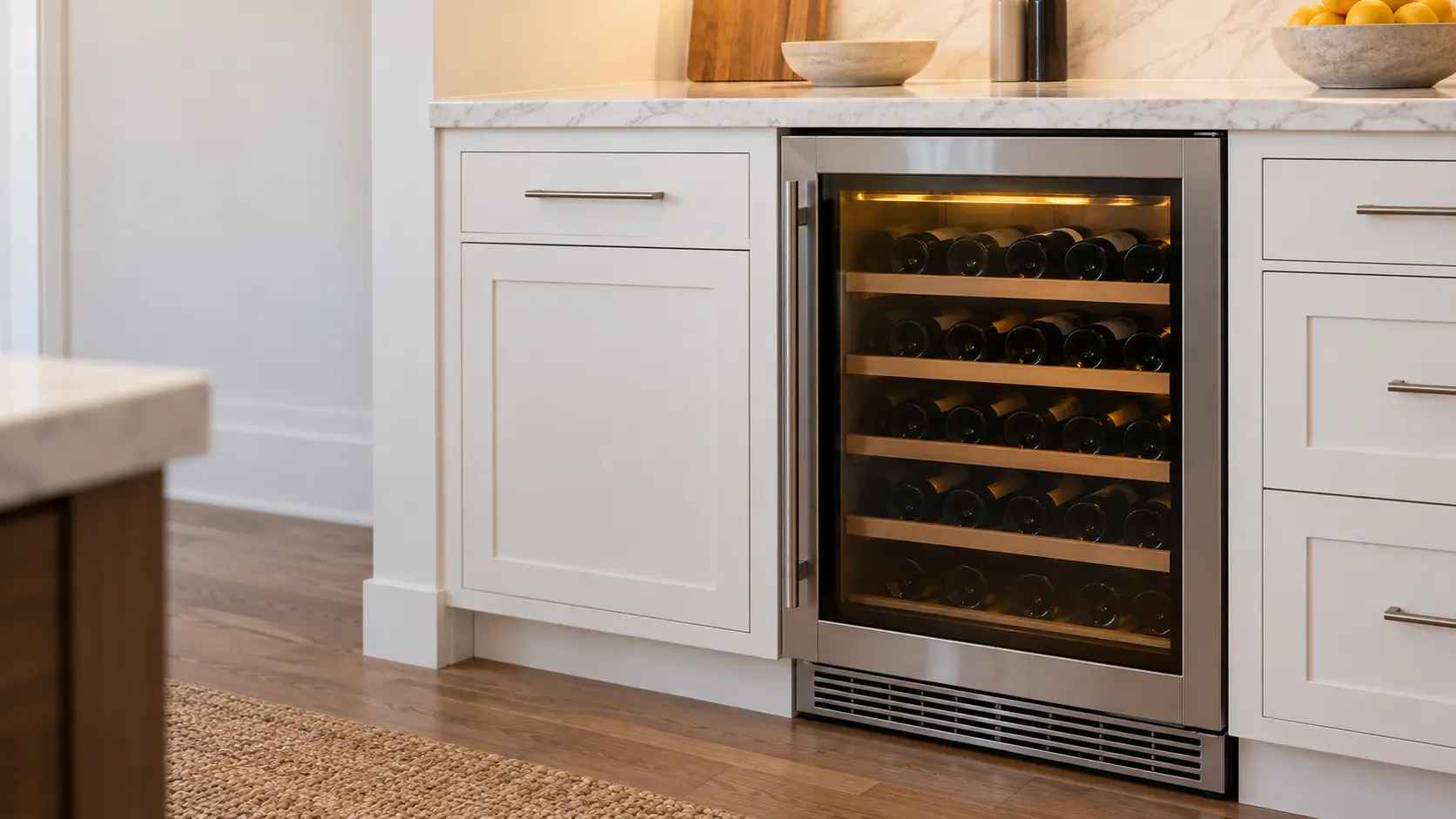
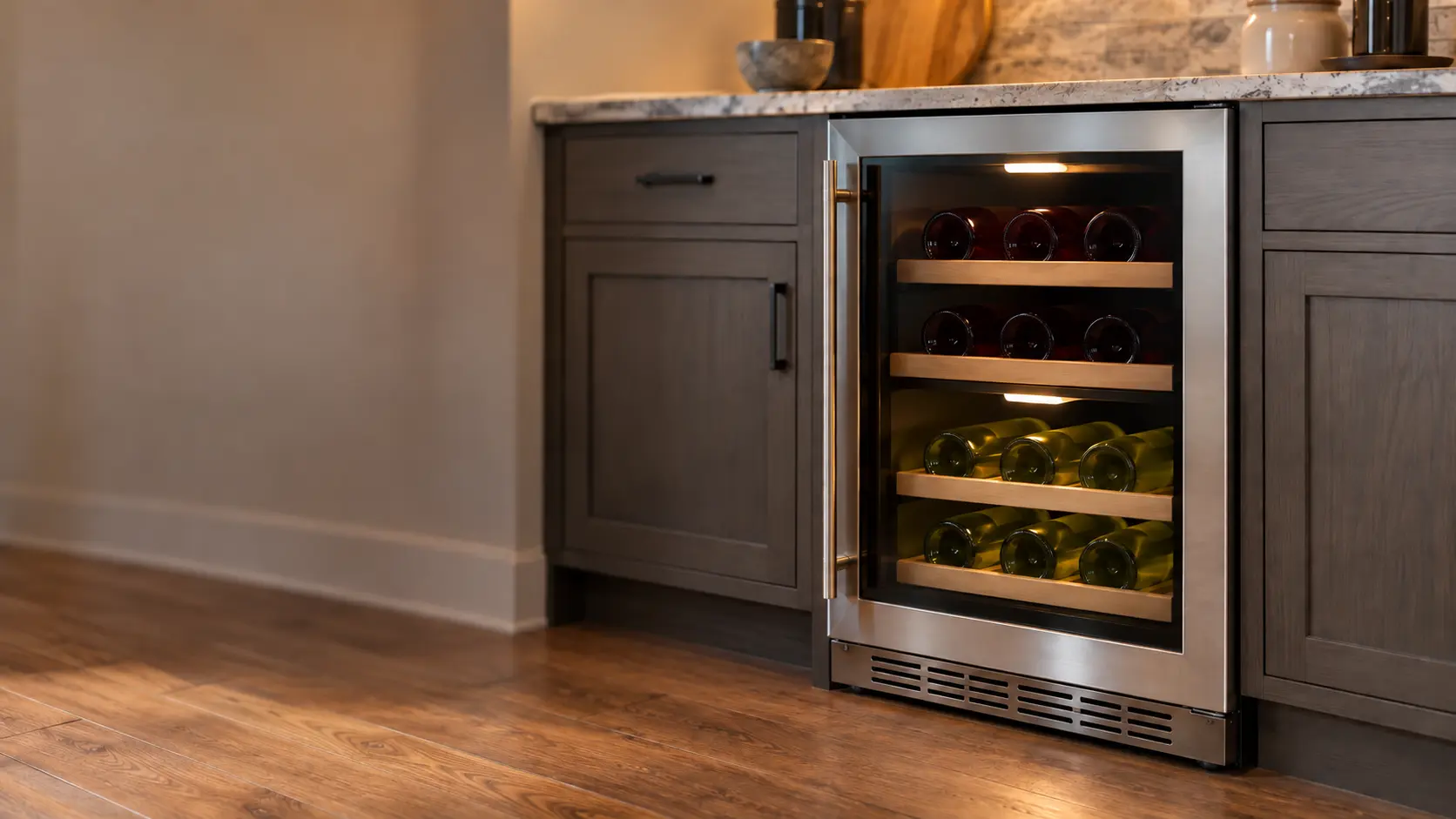
Undercounter wine cooler
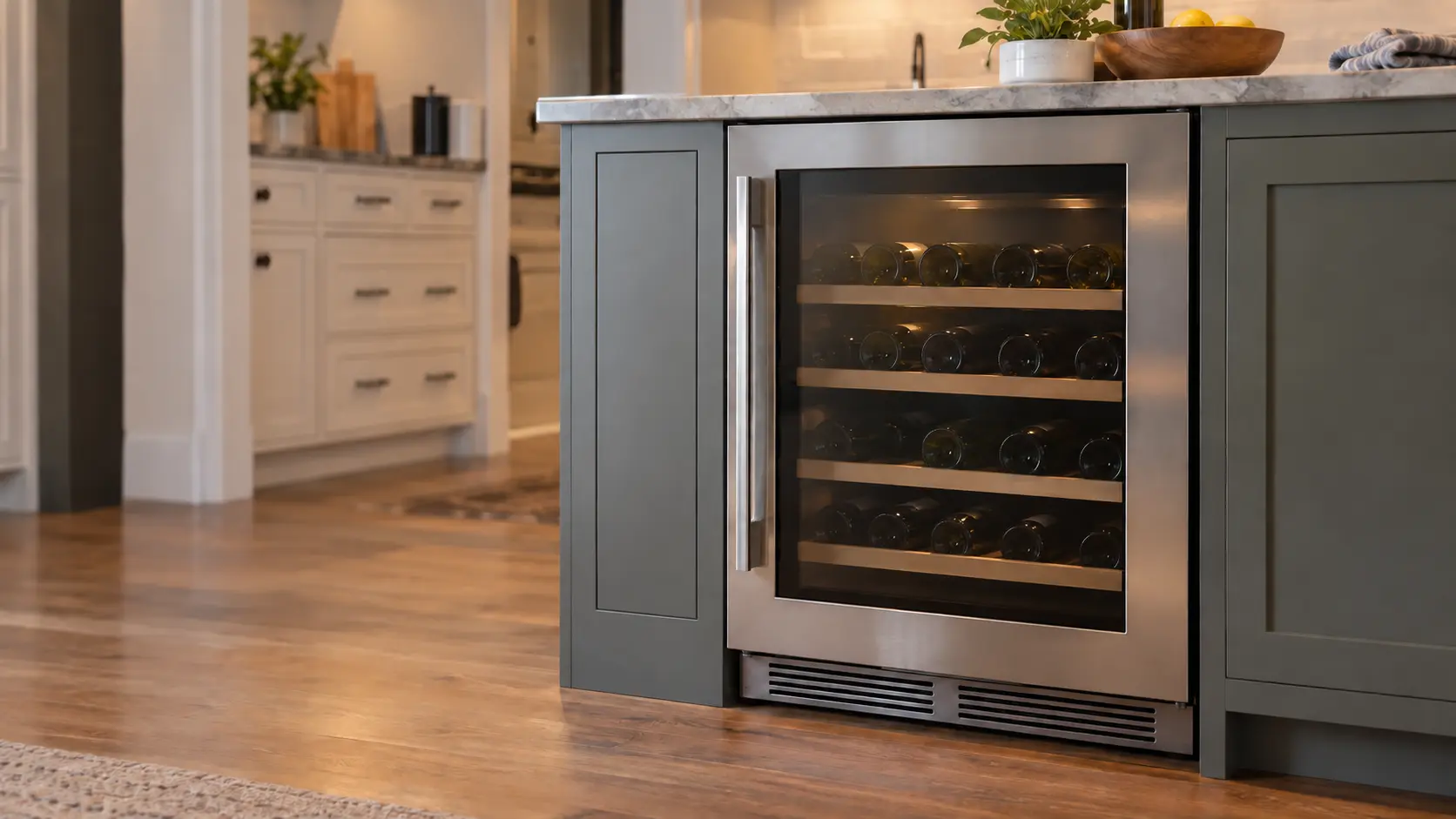
A wine cooler about the height of a base cabinet, built in under the counter of a kitchen, a bar or a butler's pantry, with a glass door, sliding racks and a vented toe grille at the floor.
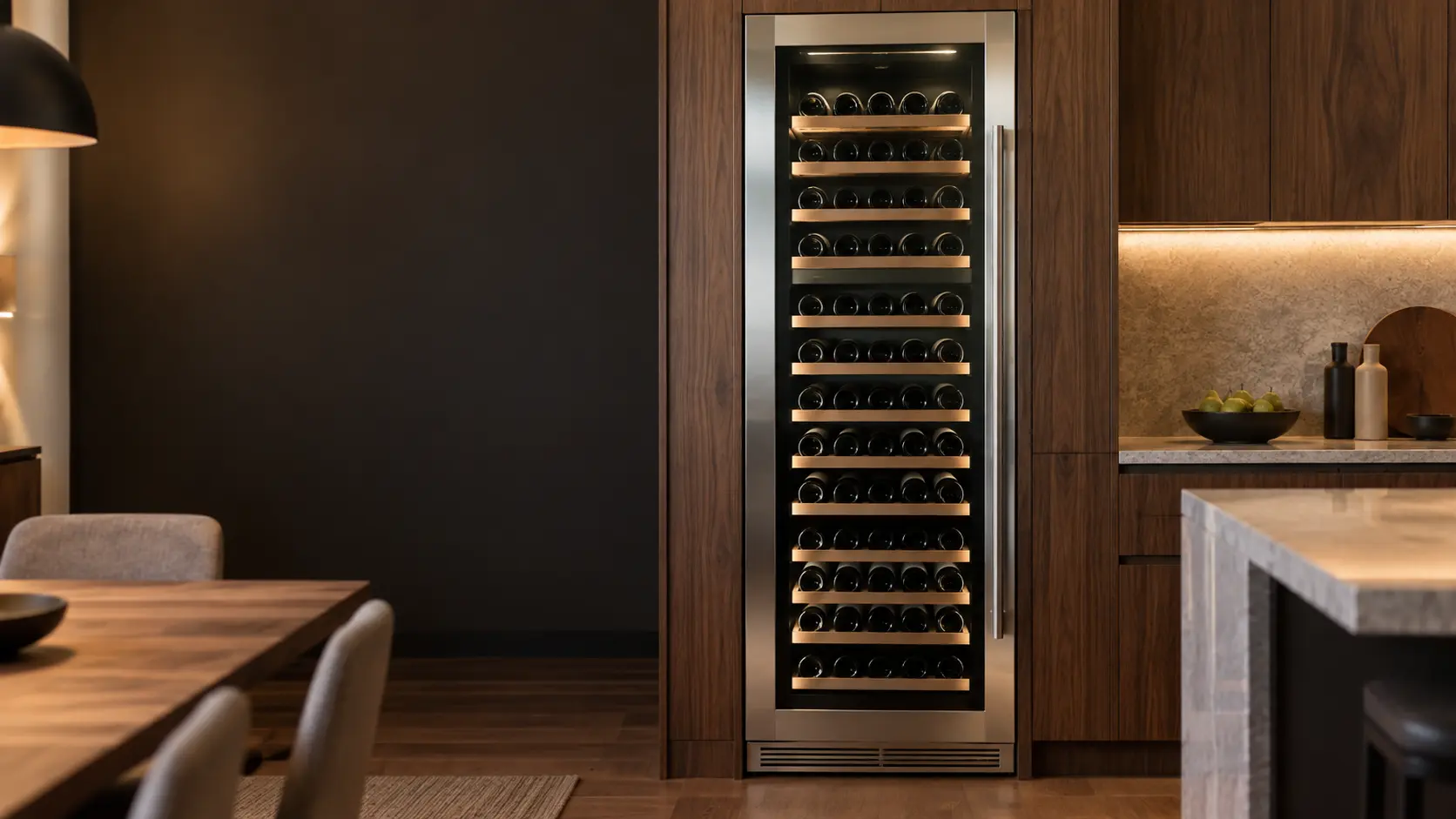
Wine column
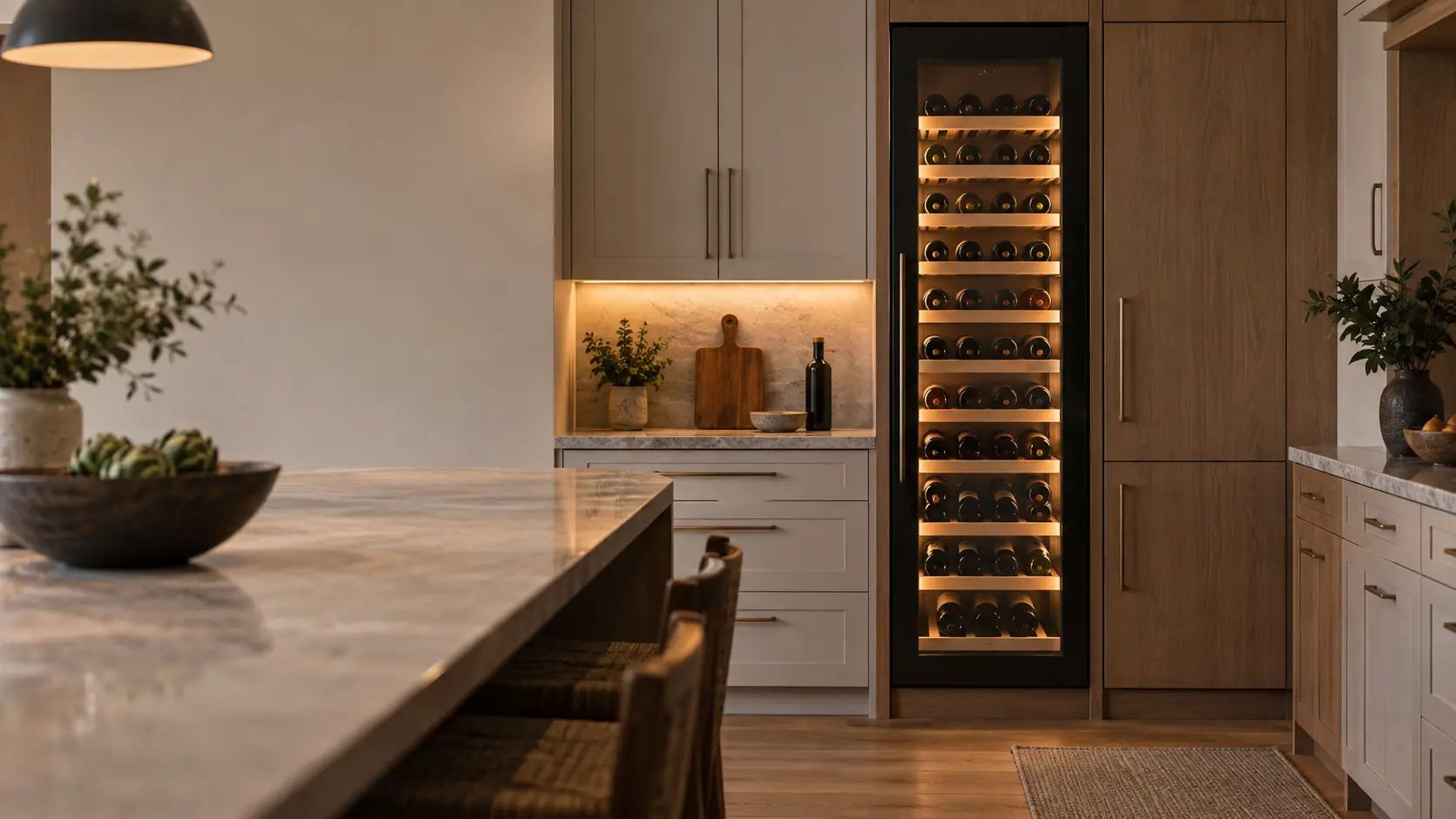
A full-height built-in wine cabinet, 18 to 30 inches wide, set flush into tall cabinetry or paired with a matching column, with a glass or panel door and dozens to well over a hundred bottles inside.
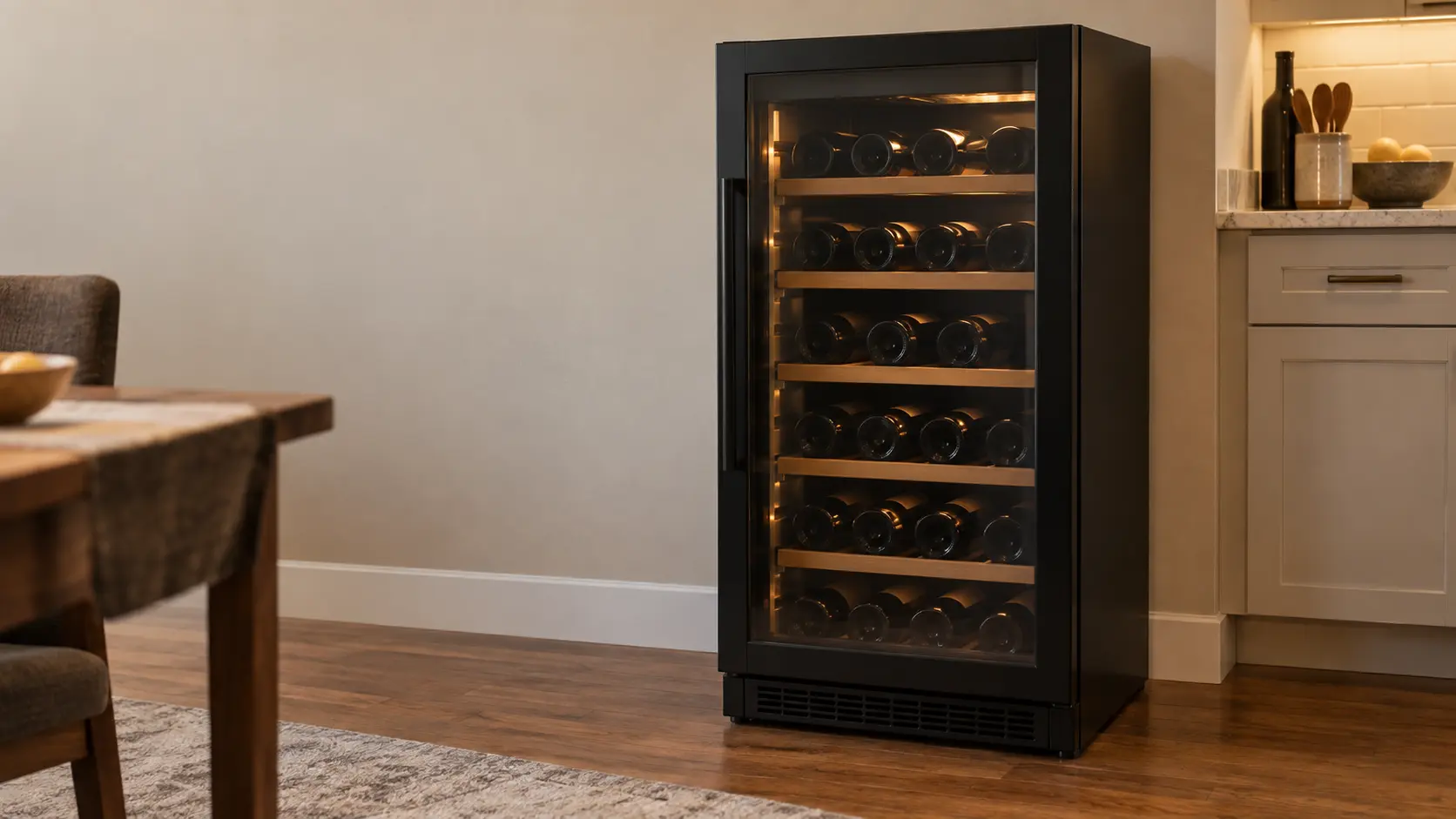
Freestanding wine cooler
A wine cooler that stands on its own in a dining room, a den or a basement, cooled either by a compressor or by a thermoelectric module, and vented at the back or the sides.
Dual-zone wine cooler
A wine cooler with two separately set compartments, upper and lower or side by side, so reds and whites or a storage zone and a serving zone each keep their own temperature.
Not sure which you have?Start from what it is doing
If the wine cooler in your home does not obviously match one of these, work from the symptom instead. It reaches the same answer from the other end.
17 problemsIn order of costWhat to check first Go to the problemsWhich one
is yours?
One look at the wine cooler usually settles it. The first sign of each type is on the right; its page has the rest, and what that type means for a repair.
Single or dual zoneUndercounterUndercounter wine cooler
It is built in beneath a countertop, flush with the cabinet fronts, and stands roughly 34 inches tall with its feet adjusted all the way up.
ColumnWine column
It reaches roughly from the floor to the top of the tall cabinets, with no counter above it, and sits flush with the panels around it.
FreestandingFreestanding wine cooler
It has finished sides and a finished top, stands away from cabinetry, and needs a few inches of open space behind it or around it.
Dual-zoneDual-zone wine cooler
The display shows two temperatures, and each has its own up and down keys or a zone button that switches between them.
What a repair
usually costs.
Measure a repair against two things: a new cabinet for the same opening, and the bottles now inside. Nearly every fan, sensor, gasket, drain or hinge job is a small share of either. Built-in columns and undercounter units almost always earn their repair, sealed-system work included, since a replacement must fit the cutout and match its neighbors. On a small, older freestanding cooler the line falls at a failed compressor, a refrigerant leak or a second thermoelectric module, and there the technician sets both numbers side by side.
| Repair | Relative cost | Notes |
|---|---|---|
| Start relay, compressor or sealed-system leak | moderate to highest | A start relay or overload on a compressor-cooled cabinet is a small part changed from behind the grille. A leak that has to be brazed, with a new drier, a vacuum and a weighed charge, or a new compressor, sits near the top of the scale. |
| Thermoelectric module, fan or power supply | low to moderate | The solid-state module, its two fans and the low-voltage power supply are modest parts reached from the back panel. Most of the time goes into cleaning the heat sinks and seating the new module evenly. |
| Circulation or condenser fan motor | low to moderate | A fan motor is an affordable part reached from the inside rear wall or behind the grille. A variable-speed fan in a column, or a fan behind a zone full of racks, adds a little time. |
| Thermostat or zone temperature sensor | low to moderate | A single sensor or a dial thermostat is an inexpensive part. A column with a sensor in each zone, where more than one has drifted, moves the job up a step. |
| Main control board, display board or door switch | moderate to highest | A door switch, a connector or a board fuse is a small repair. A main board or a touch display for a built-in column is one of the costliest parts a wine cooler takes, and some have to be ordered in. |
| Door gasket, hinge adjustment or glass door | low | A gasket made for the model, fitted with the door in place, sits low on the scale. A full glass door or frame to replace a pane that has fogged between its layers costs more than a gasket alone. |
| Damper, damper motor or zone fan | moderate | The damper and its motor sit behind the rear panel of the zone they feed, so the racks come out first. Ice in the air channel from a leaking door adds time for thawing and curing the leak. |
| Drain hole, drain tube or drip tray | lowest | Clearing and flushing the drain, or reseating a tray over the compressor, is among the least costly work on a wine cooler. A cracked tray under a built-in unit, reached by sliding it out, adds a little. |
| Rack slides, rack fronts, hinge or interior lights | low | Slides, wood fronts, hinges and LED strips are affordable parts made for each model and fitted with hand tools. An LED driver board or a full set of racks for a tall column sits a little higher. |

Questions about
the types.
Which wine cabinets fall under this site?
Does an undercounter unit get repaired differently from a column or a freestanding one?
Is a thermoelectric wine cooler simpler to fix than a compressor one?
Which details about my wine cabinet help the technician most?
Back to your everyday
Let’s get your wine cooler working again.
Three short steps online, or one call. Tell us what you are seeing and pick a window that works.