
Wine Cooler Not Cooling
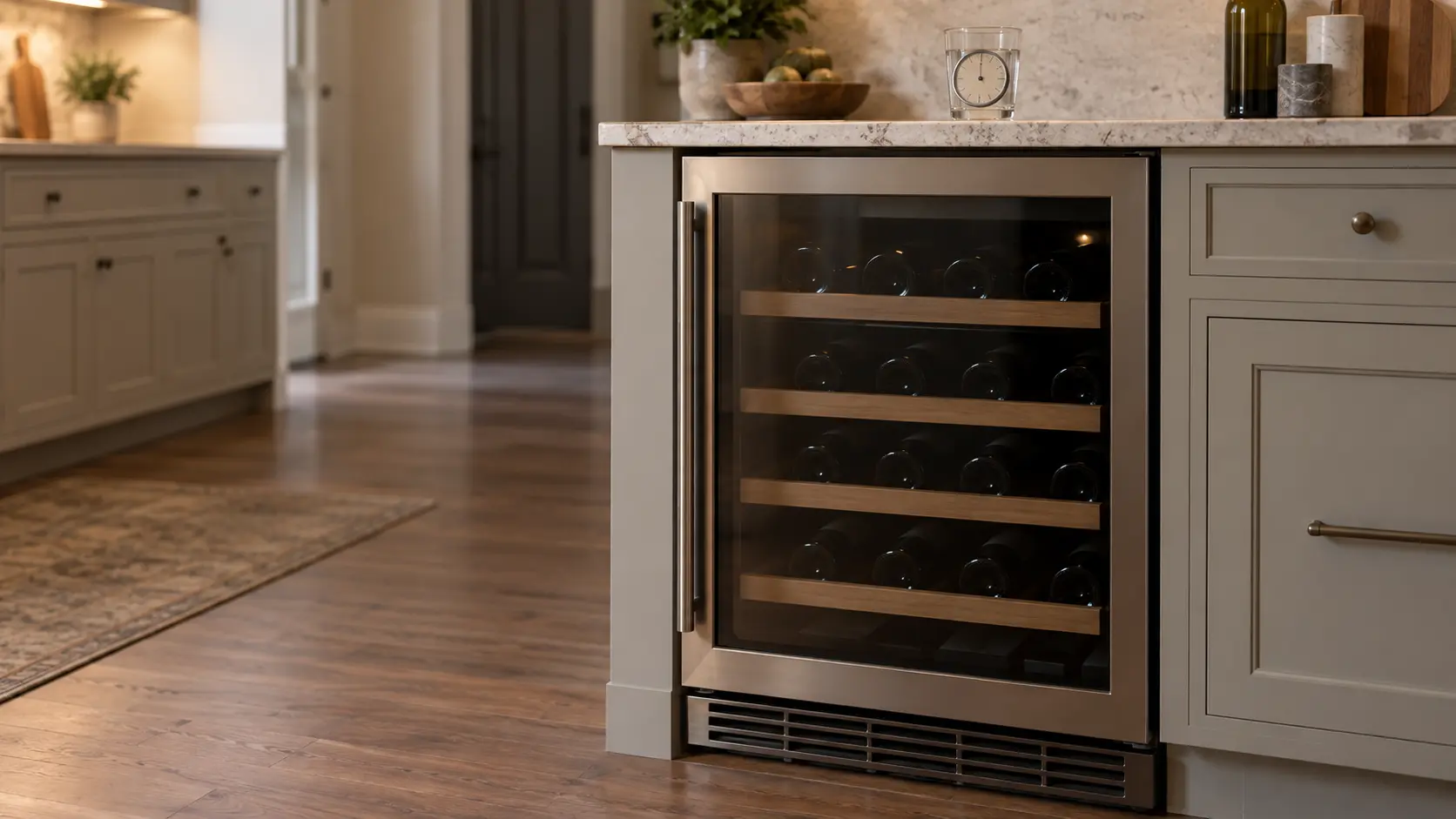
A wine cooler not cooling rarely announces itself: the glass feels warm to the touch, a bottle lifted from the middle rack is nearer to room temperature than to cellar temperature, and the display may still show the number you set.
Mon–Sat, 8am–8pm
- Wine at risk now
- 5 questions that narrow it
- 6 causes, cheapest first
Book a visit
Three short steps, about a minute.
or call (844) 709-0727
Loading appointment form…
The appointment form couldn’t load. Please try again.
Door closed, prized bottles to a cool dark spot, power off at a dry panel
Treat a warming wine cooler as urgent once the bottles pass the low 70s, because what is at stake is the collection, not the cabinet. Keep the door shut, move the bottles you would least like to lose to the coolest dark corner of the house, and book a visit before a warm week turns into pushed corks and tired wine.
What it
usually means.
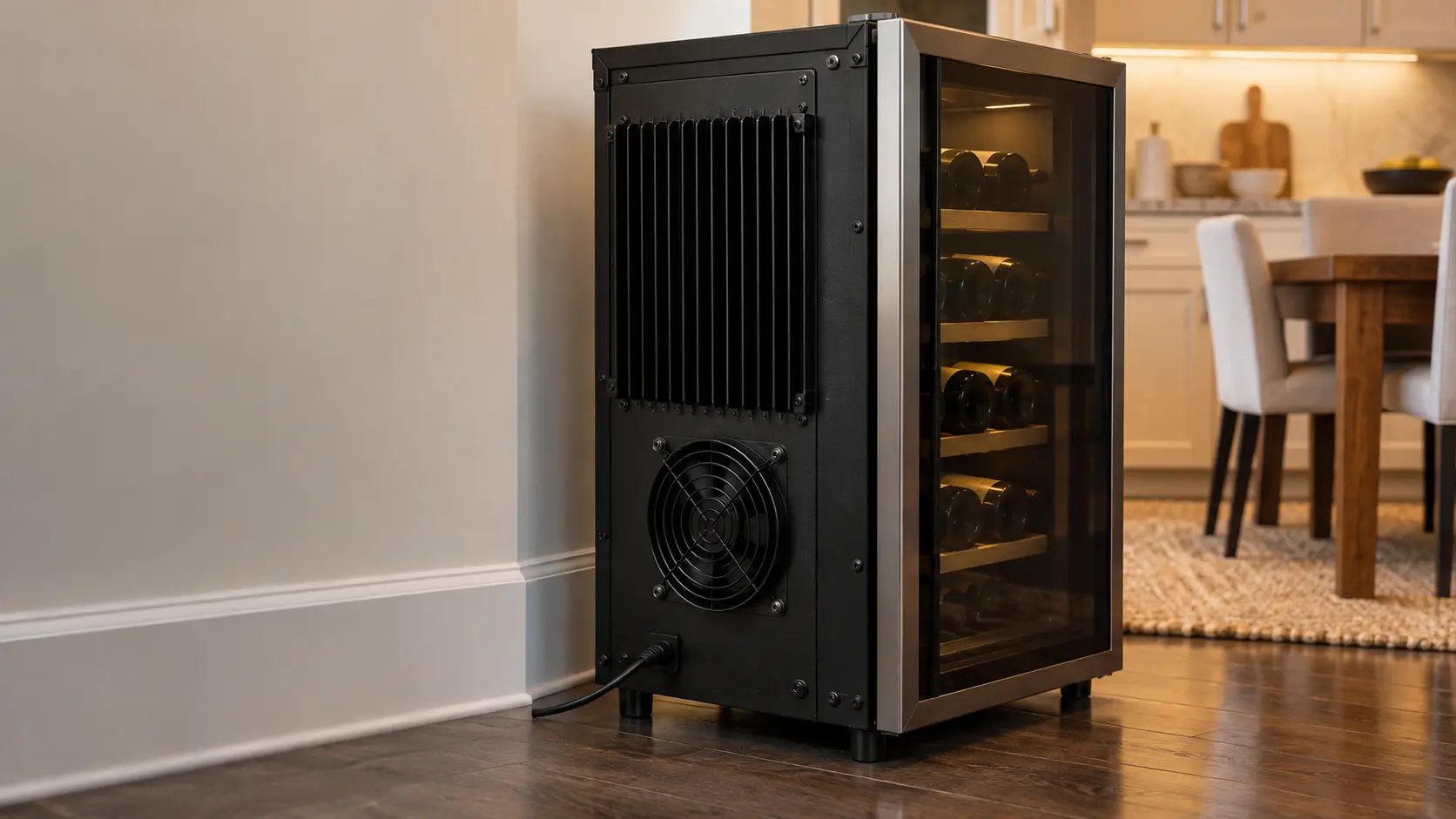
A wine cooler is built to hold bottles at a steady cellar temperature, usually near 55°F for storing, and to hold it without sharp swings. Two very different machines do that job. A compressor unit moves heat through a sealed loop of tubing, with a cold plate or coil on the back wall of the cabinet, a condenser near the floor and fans that stir the air between the racks. A thermoelectric unit has no compressor at all: a solid-state module with a heat sink and a fan on each side pumps heat out through the back, and it can only reach a limited number of degrees below the room it stands in. When the cabinet creeps up toward the temperature of the kitchen, one of those parts has stopped doing its share, or the cooler can no longer shed its heat because of where it stands. Warmth does not ruin a bottle in an hour, but weeks in the 70s age wine faster than its owner planned, and a hot spell can push corks and let wine seep past them, which is why a warming cabinet full of bottles is treated here as urgent.
 The 6 causes, cheapest first
Answer these first
What does a thermometer read after it has stood for an hour in a glass of water on the middle rack?
Is it a compressor unit that hums and clicks, or a quiet thermoelectric model with a fan whirring at the back?
Is it built in under a counter, or a freestanding model that someone has slid into a cabinet opening?
Can you feel warm air leaving the grille at the toe kick or at the back, and does the fan inside the cabinet turn?
Did it start after a move, a hot week, a power outage or a new setting on the panel?
Check these
before you book.
Wine cooler not cooling: 5 checks, and none of them costs anything.
Keep the door shut; every look inside sends warm room air across the bottles, and a struggling cooler may not win that air back.
If the thermometer reads above 70°F, move the most valuable bottles to the coolest dark place in the house, such as a basement closet or an interior room away from windows and appliances, and lay them on their sides.
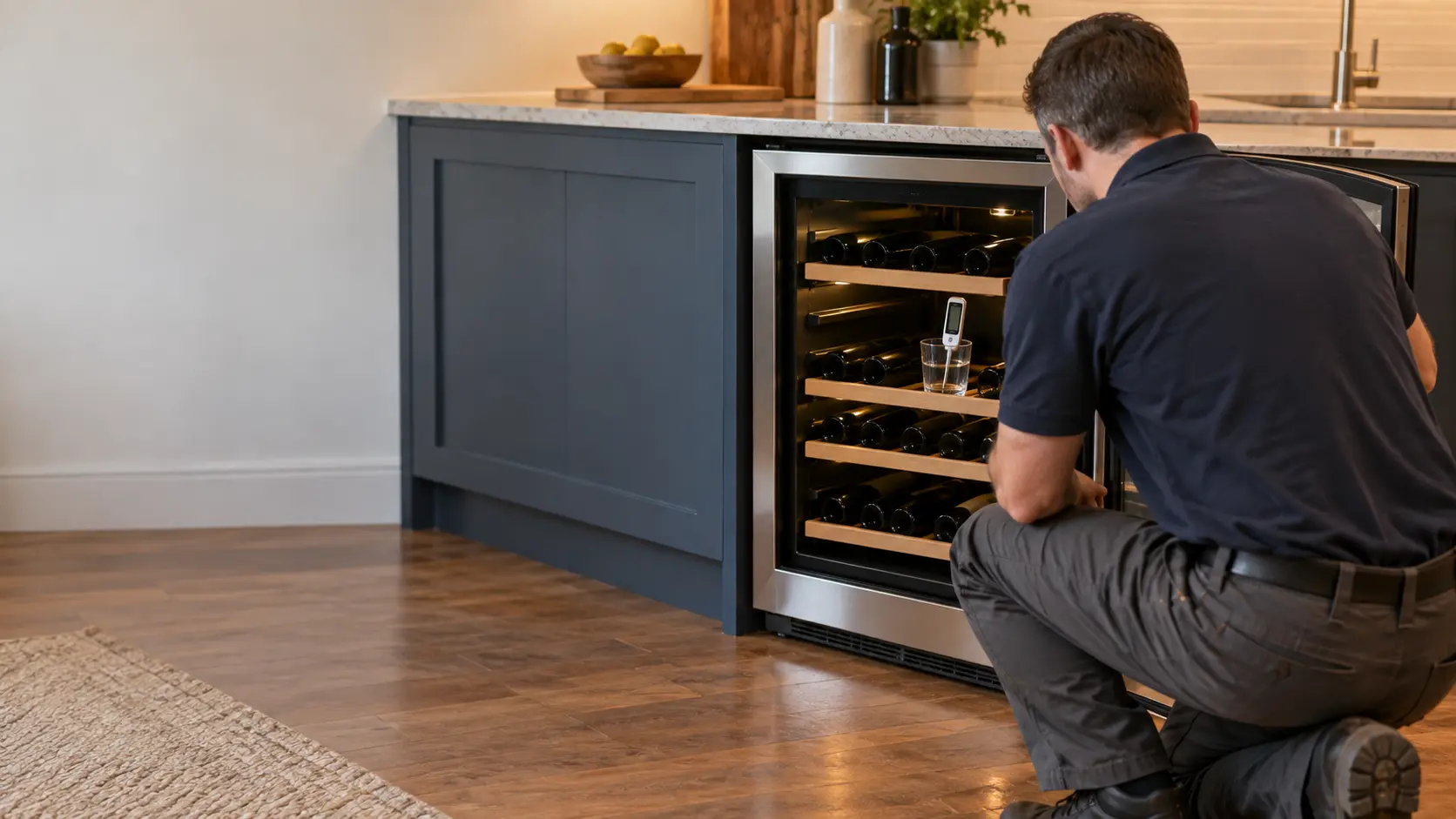
Stand a thermometer in a glass of water on the middle rack and read it after an hour, so we know the temperature of the wine rather than of the air.
Also worth checking
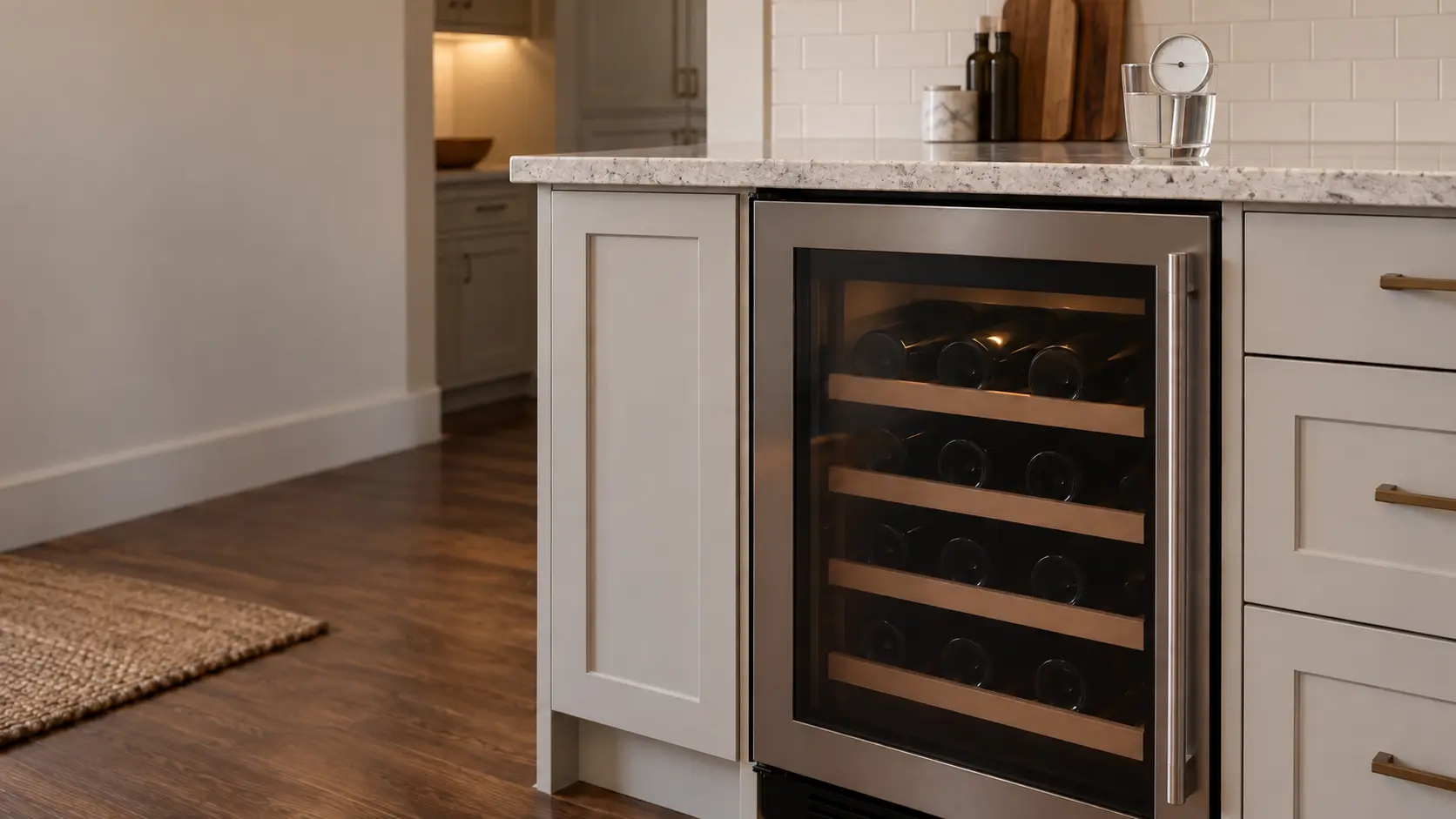
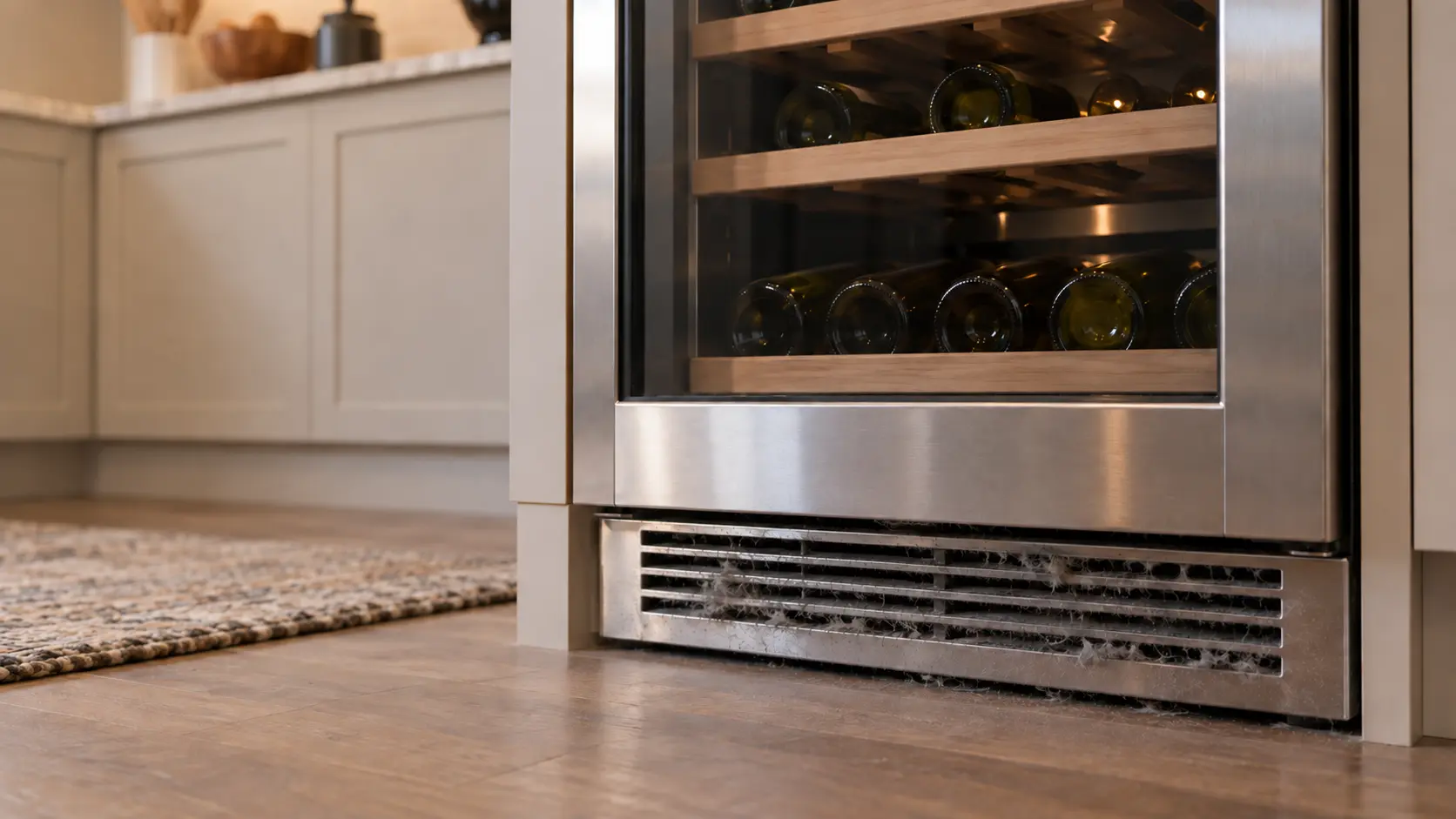
- Check that a freestanding unit has open air at the back and sides, and that the toe-kick grille of a built-in unit is not blocked by a rug or a mat of dust.
- Tell us the make, the model number from the label on the inside wall or on the back, and whether it is a compressor or a thermoelectric unit.
The causes,
cheapest first.
6 things wine cooler not cooling turns out to be, from a warm room or a boxed-in freestanding unit to compressor not starting or charge lost.
The cost guide-
01 no repair
A warm room or a boxed-in freestanding unit
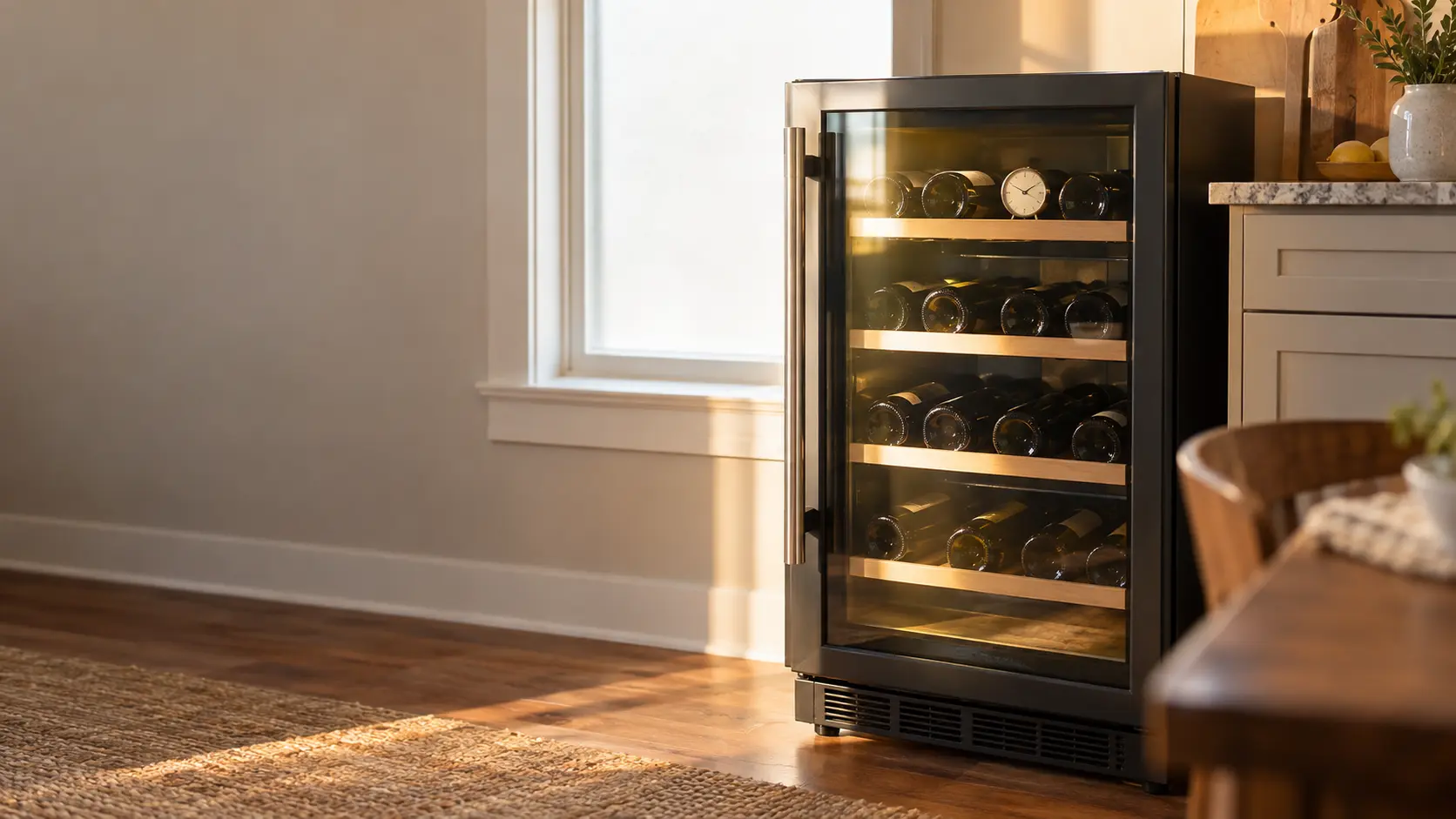
A freestanding model needs open air at its back and sides; slid into a gap between cabinets, it breathes its own heat back in. Thermoelectric units also lose ground quickly once the room passes the high 70s. Give it space or a cooler spot before judging the machine.
-
02 low to moderate
Condenser fan or grille choked with dust
On an undercounter unit the fan behind the toe-kick grille is what pushes heat out of the opening. Lint on the grille or a stalled fan motor keeps that heat in, so the compressor runs hot while the racks stay warm.
-
03 low to moderate
Cabinet sensor reporting cold that is not there
A sensor that reports the cabinet as already cold tells the control to rest. The display shows the set number while a real thermometer among the bottles reads far warmer.
-
04 low
Glass door not closing fully
A torn gasket, a sagging hinge under a heavy glass door or a bottle neck pressing the glass lets room air in all day long.
-
05 moderate
Thermoelectric module or its fans worn out
On a solid-state model the module and the two fans that serve it are the whole cooling system. A seized inside fan or a module that has lost its output leaves the cabinet stuck a few degrees below the room, whatever the setting says.
-
06 highest
Compressor not starting or charge lost
A start relay that clicks and quits, a tired compressor or a slow leak in the sealed tubing leaves a compressor cooler running long and cooling little. It is the most involved repair a wine cooler can need, and we confirm it before anything is ordered.
What else
it could be.
Most often confused with wine cooler temperature swings, then wine cooler running constantly.
All problemsCodes that come with it
F2ASKO · Fans and airflowZone temperature is out of rangeASKO · Temperature and alarmsUpper or lower zone too warmBertazzoni · Temperature and alarmsError Code...Bertazzoni · Control board and displayCheck CondBertazzoni · Fans and airflowHigh Temperature AlertCafé · Temperature and alarms
Also related
The makes
it happens on.
25 makes on this site; wine cooler not cooling can show up on any of them. Each mark opens that make's own page.
All 25 brandsWine Cooler Not Cooling,
where we come out.
9 metros, each with its own page.
All service areasTampa BayFL · 31 areas
Miami / South FloridaFL · 47 areas
New York MetroNY · 75 areas
HoustonTX · 36 areas
ChicagoIL · 50 areas
Los AngelesCA · 95 areas
San DiegoCA · 31 areas

Questions about
wine cooler not cooling.
How warm can a wine cooler get before the bottles suffer?
My thermoelectric model is quiet and only slightly cool. Is it broken?
Is a full-height wine column that stopped cooling worth repairing?
Can the bottles stay inside while I wait for the visit?
Back to your everyday
Still seeing wine cooler not cooling?
Book with what you checked above — 5 answers save the technician the first part of the visit.