Storage temperature and serving temperature are different questions
Most of the confusion starts here. Liebherr's storage guidance treats reds, whites, rosé and sparkling as sharing one set of needs for keeping: a constant 10 to 12°C, which is roughly 50 to 54°F, with humidity, darkness and quiet. A bottle of Cabernet and a bottle of Riesling put away for five years want the same cool, unchanging place.
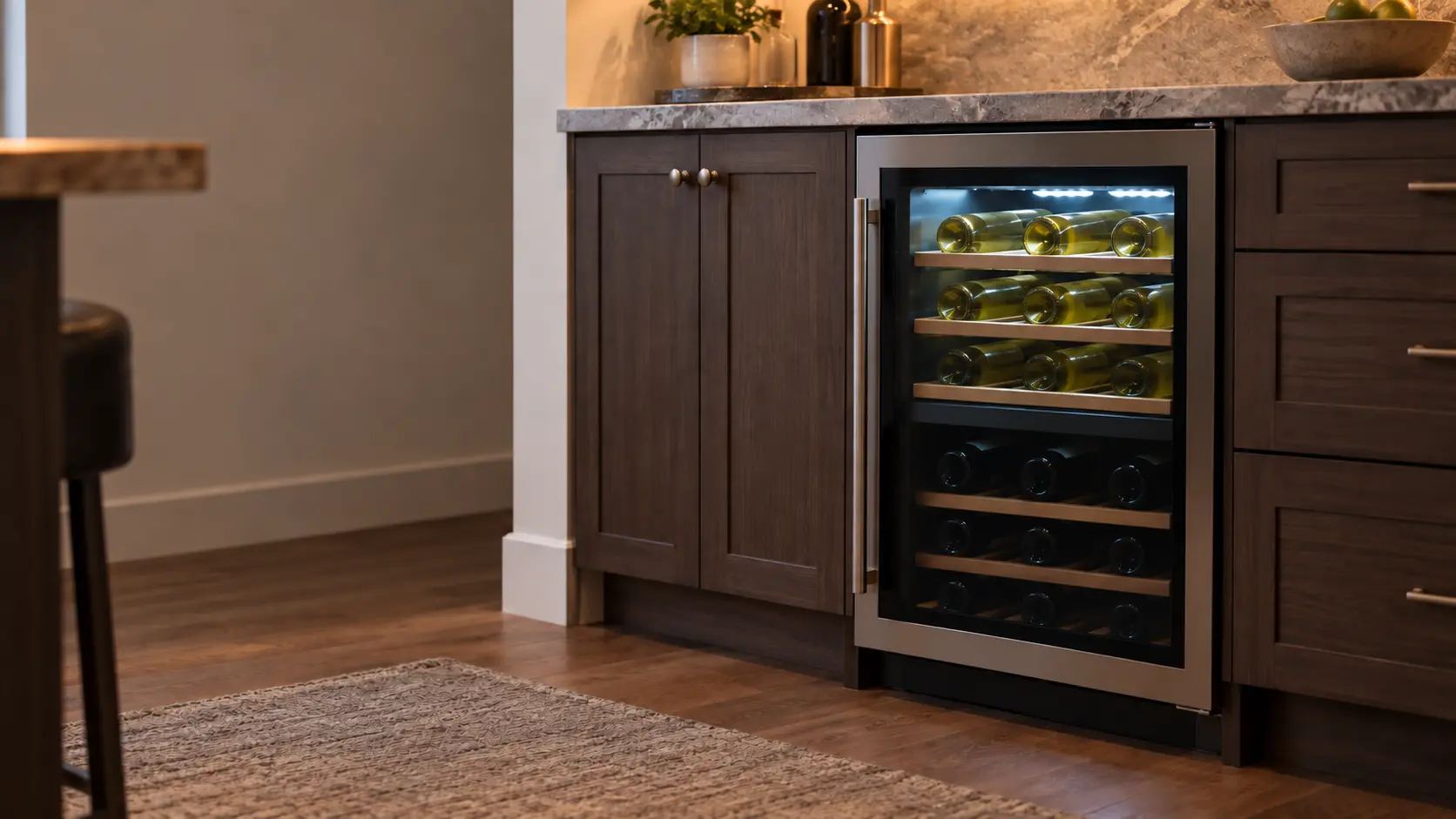
Serving is another matter. A crisp white or a sparkling wine is usually poured noticeably colder than a red, and a red opened straight from a 52°F cabinet can taste closed until it warms a little. A dual-zone cabinet lets one section sit at pouring temperature for the whites while the other holds storage temperature, so the bottle comes out ready.
When one zone is the better choice
If the cabinet is mainly where bottles wait for years, one zone set to a single steady figure does the whole job. It has fewer parts, one sensor to trust and nothing to balance between sections, and every rack position is usable for any bottle.
When two zones pay their way
A household that opens a few bottles a week, or hosts often, gets real use out of a chilled section beside a storage section. Vinotemp's advice runs the same way: one kind of wine, one zone is enough; an equal taste for red and white makes a second zone worthwhile.
Source: Liebherr FreshMAG — Storing wine: the most important factors — Red, white, rosé and sparkling share the same storage needs: a constant 10 to 12°C, humidity, darkness and quiet; Vinotemp — Wine refrigerator buying guide — One type of wine suits a single-zone cooler; equal interest in red and white makes a dual-zone cooler worthwhile
How the second zone is made cold
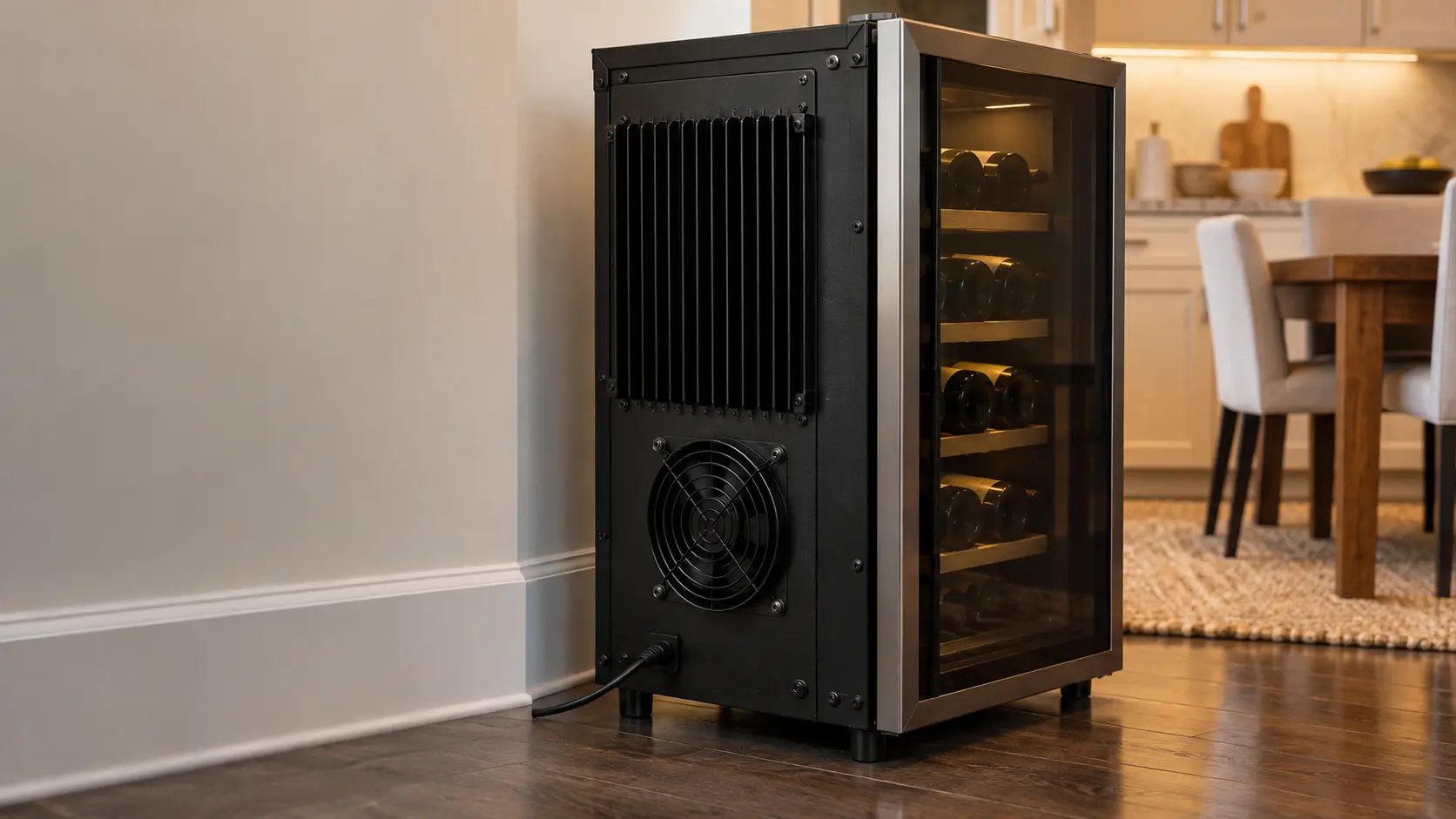
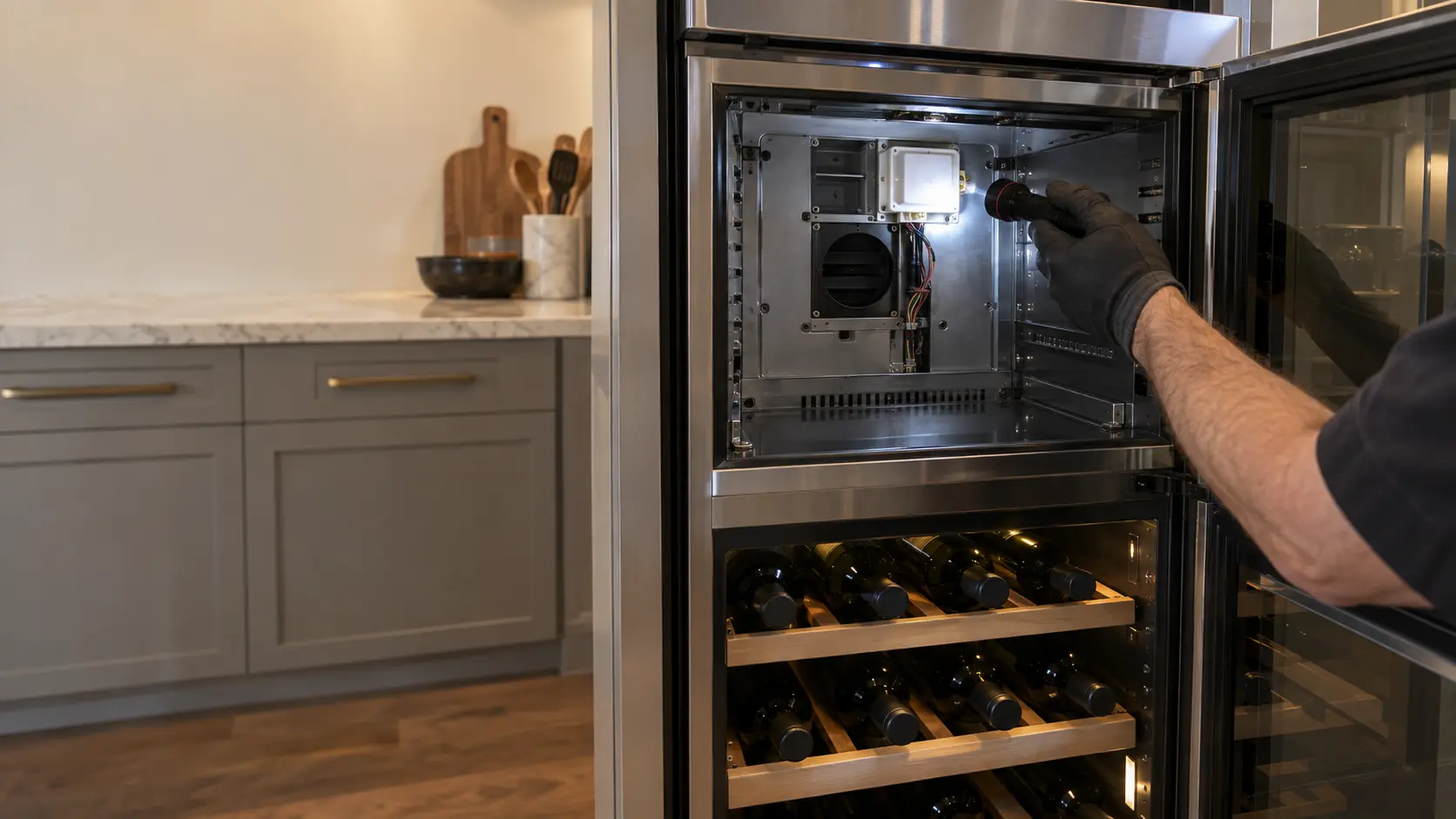
Not every dual-zone cabinet is built the same, and the design decides how it behaves years later. Some run a single evaporator and split its cold with a motorized damper and a fan, opening the damper when the colder section calls. Others give each section its own evaporator, or on thermoelectric models its own module. The owner's manual or the parts diagram for the model says which kind you have.
Whatever the design, a glass or insulated shelf separates the two sections, and each has its own temperature sensor feeding the control board. The wider the gap you ask for between zones, the harder the cooling system works on the cold side while the warm side rests.
- Damper design: one evaporator, a flap that opens and closes, a fan pushing the air through it.
- Twin evaporator design: two cooling paths from one compressor, each section controlled on its own.
- Thermoelectric dual zone: a module per zone, each limited by the temperature of the room.

What a second zone changes when something goes wrong
The classic complaint on a dual-zone model is one section drifting warm while the other stays right. That points somewhere quite specific: the damper stuck shut, the fan serving that side stopped, a sensor reading wrong, or ice blocking the passage between the sections. On a single-zone cabinet the same warmth would point to the whole cooling system, so the diagnosis is broader.
The partition shelf itself matters as well. If it is removed to fit a magnum, or seated crooked, cold air spills across and the two sections pull against each other. Many owners find that the colder side never reaches its setting until the shelf is put back exactly where the manual shows.
Each zone has its own limits
Sub-Zero lists 39°F to 65°F for its wine units, and adds that the range varies with the model, serial number and age of the unit. On a two-section cabinet the full span is not necessarily open to both sections at once, so check which zone the manual treats as the cold one before loading the bottles you want chilled.
Source: Sub-Zero — Wine storage temperature range — Designer, Classic and undercounter wine storage units adjust between 39°F and 65°F, varying by model, serial and age
Zones across the four kinds of cabinet
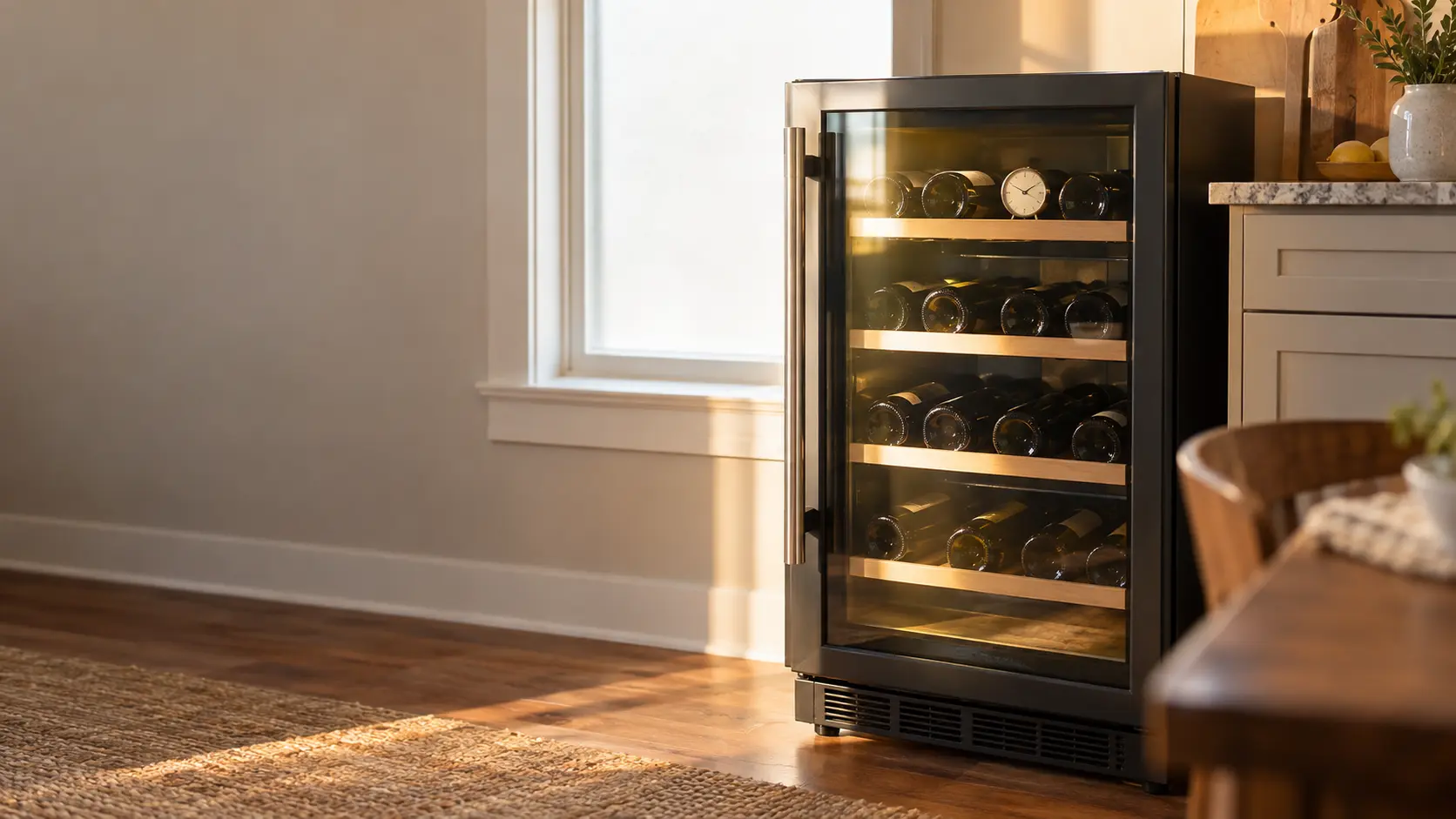
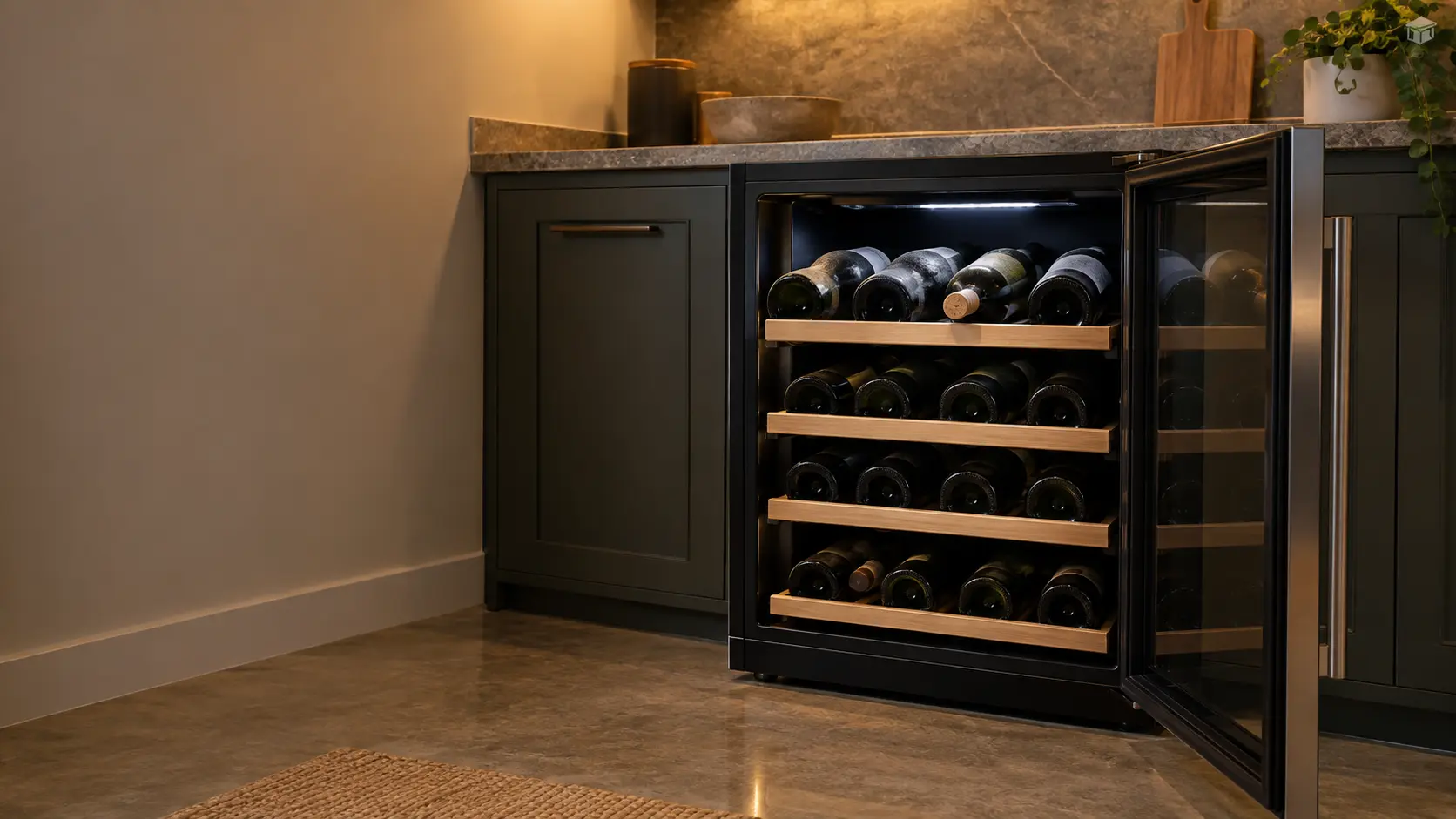
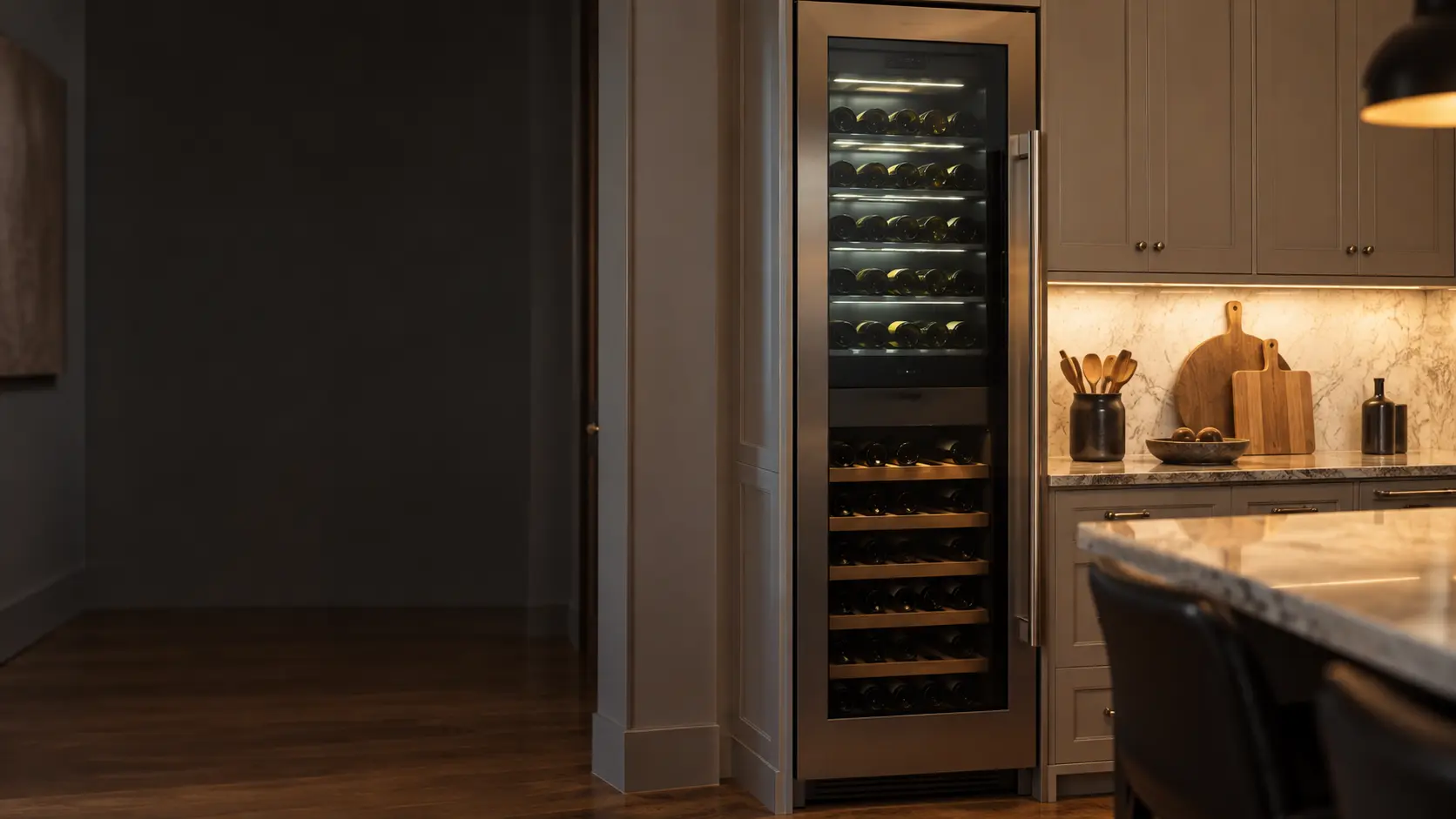
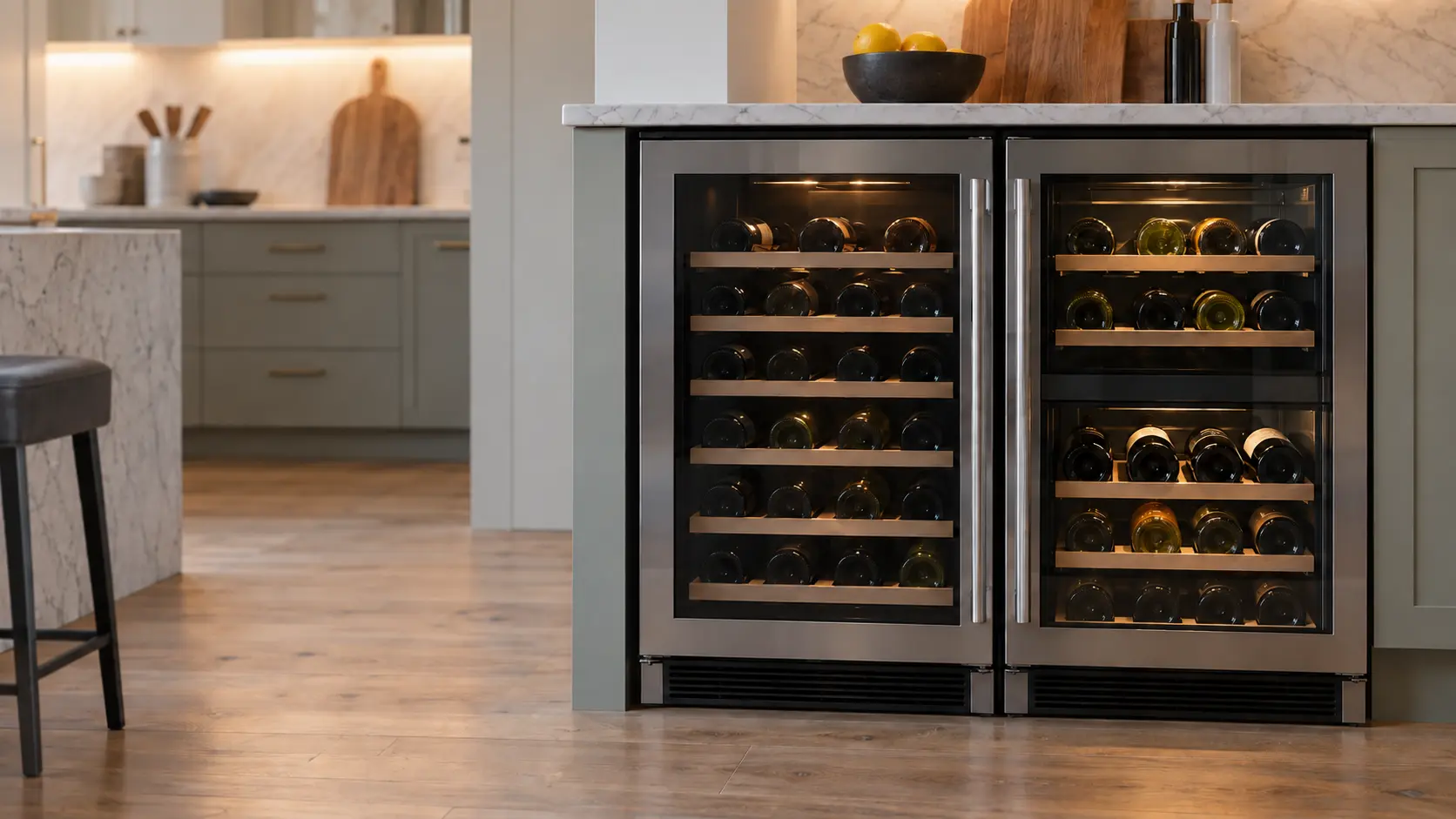
In an undercounter unit, 24 inches wide or less, a second zone takes a real share of a small space: each section may hold only a couple of dozen bottles. A full-height wine column has room to spare, and many are sold with two or three zones for that reason. Freestanding compressor models come either way, and a thermoelectric dual zone is only as capable as the room it stands in.
Some buyers pair two single-zone columns instead of buying one multi-zone cabinet. That costs more space and two appliances, but a problem in one leaves the other fully working, which appeals to people with a collection they would hate to move in a hurry.
Before buying a single or dual zone wine cooler, count honestly how many bottles you open in a typical month and how many you are keeping for years. The ratio between the two tells you how large the chilled section needs to be, and whether it needs to exist at all.
- Mostly aging, few bottles opened: one zone at storage temperature.
- Regular entertaining with whites and sparkling: two zones, the smaller one chilled.
- A large collection plus everyday bottles: a multi-zone column, or two single-zone columns side by side.
- A small space and a warm room: one zone on a compressor model rather than two on a thermoelectric one.