Why a few degrees of tilt matter in a wine cabinet
Sub-Zero's guidance on what affects stored wine is short on this point: wine does best in a calm environment, so store it where there is little vibration. A cabinet that rocks on an uneven floor turns every compressor start and every footstep into movement of the bottles, and a rack that touches the back wall passes the compressor's hum straight into the glass.
Level also decides how the door behaves. Zephyr's troubleshooting table lists a unit that is not level as a cause of a door that will not close properly, and a door that sits a fraction open lets warm, humid air into the cabinet all day. The cooler then runs longer, the glass fogs and frost starts on the back wall, all from a floor that dips a quarter inch.
Source: Sub-Zero — How Humidity, Temperature, Vibration and Sunlight Affect Wine — Wine thrives in a calm environment; store it where there is little vibration; Zephyr — Presrv Wine Cooler Use, Care and Installation Guide (PRW24C01AG) — An unlevel unit causes noise and a door that will not shut; rotate the feet, right to lower and left to raise, using a carpenter's level over several adjustments; a firm surface that supports the fully loaded unit; contact with another appliance or furniture and items on top cause noise; list of normal operating sounds
Finding the feet and how they turn
Almost every freestanding and undercounter unit stands on threaded feet at the front corners, and many have them at the back as well. Zephyr's manual describes rotating each foot until the cooler is level, turning it to the right to lower that side and to the left to raise it, and warns that several rounds of adjustment may be needed. Other makers use the same idea with different threads, so a quarter turn and a fresh reading is safer than a guess.
Some built-in units that sit deep in an opening adjust their rear feet from the front, through the grille, so the cabinet never has to come out. Where that is the case, the installation guide shows the access point and the tool; a column in particular should never be tilted forward on its front feet to reach the back.
Undercounter units
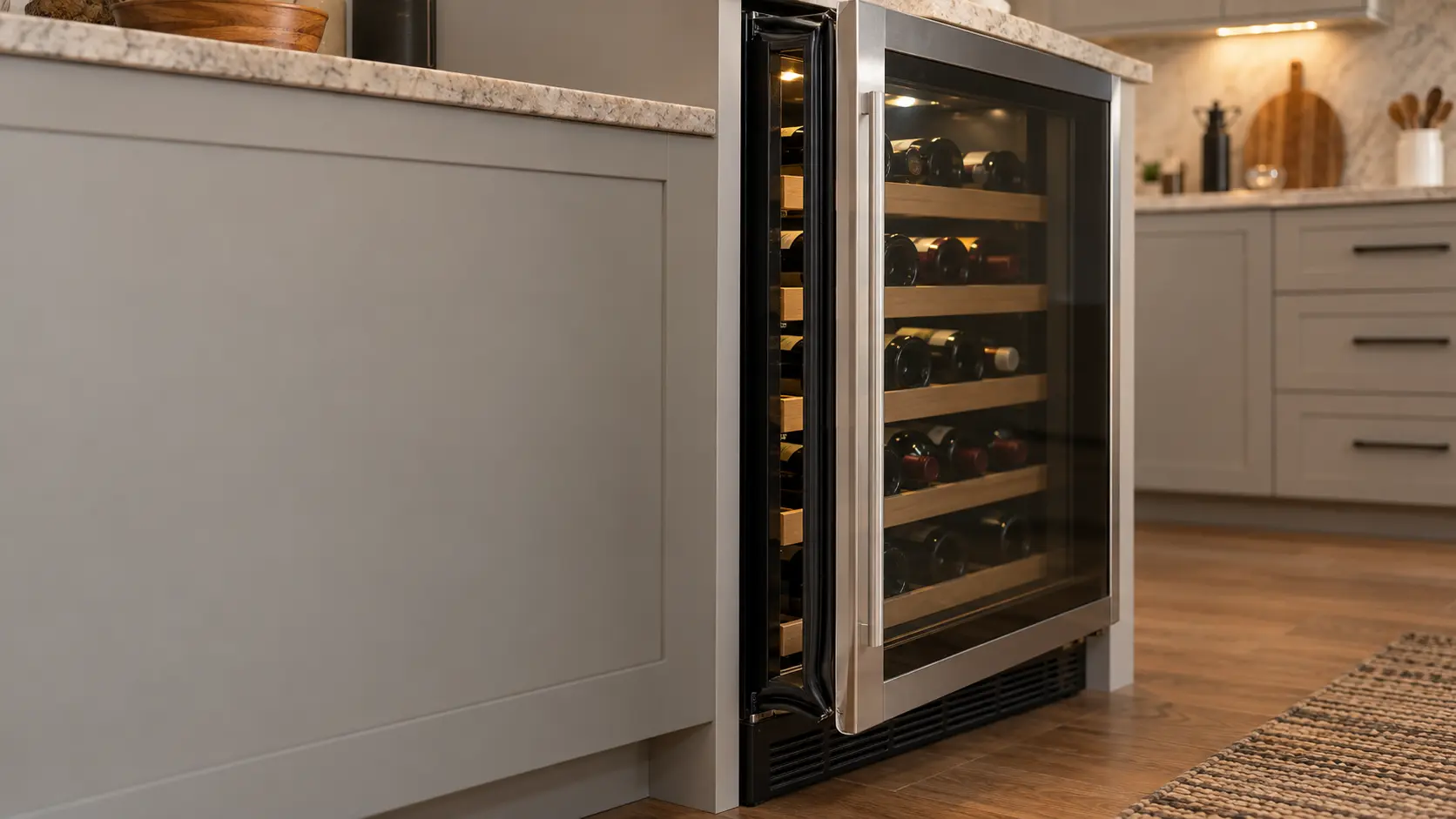
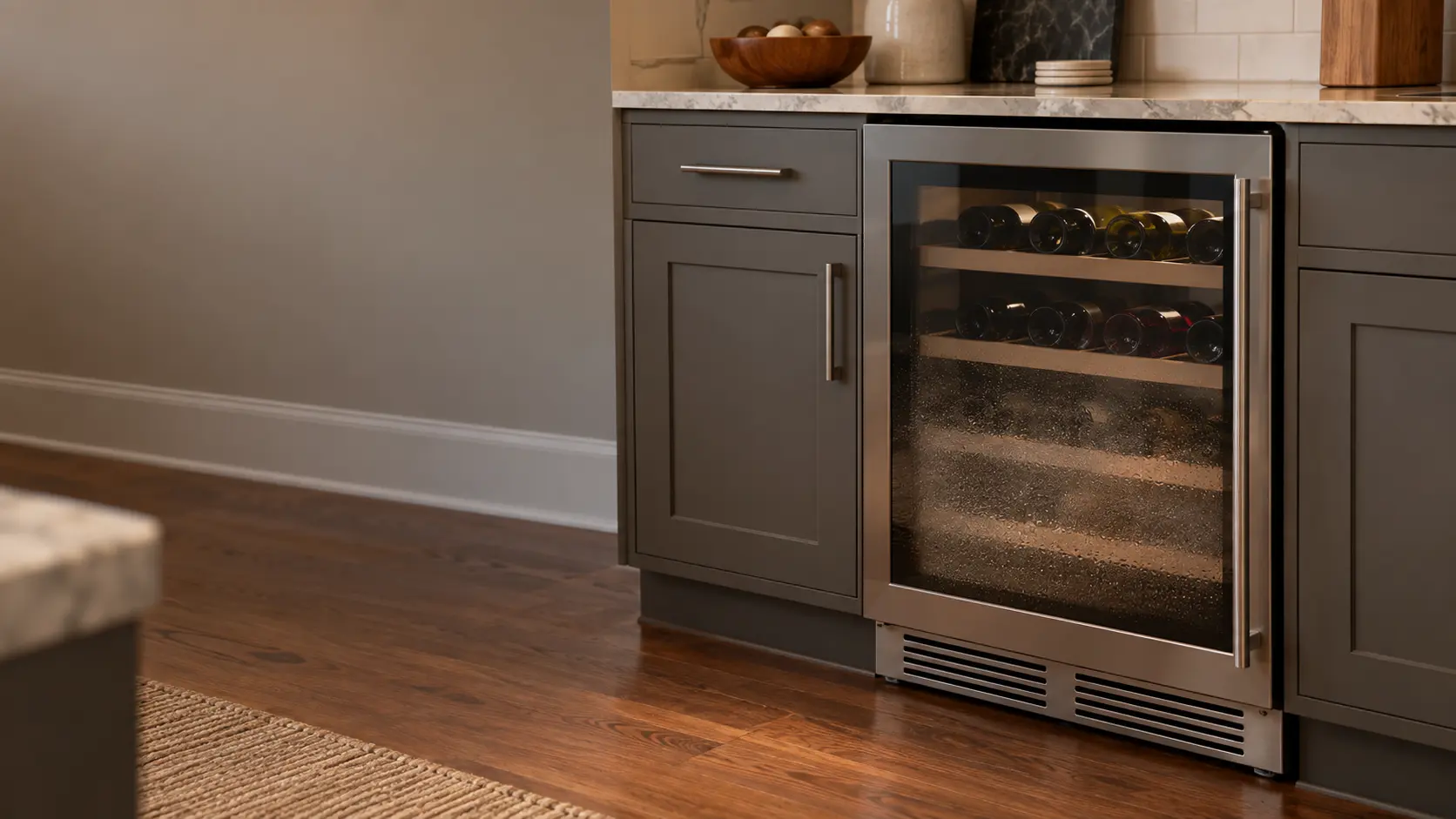
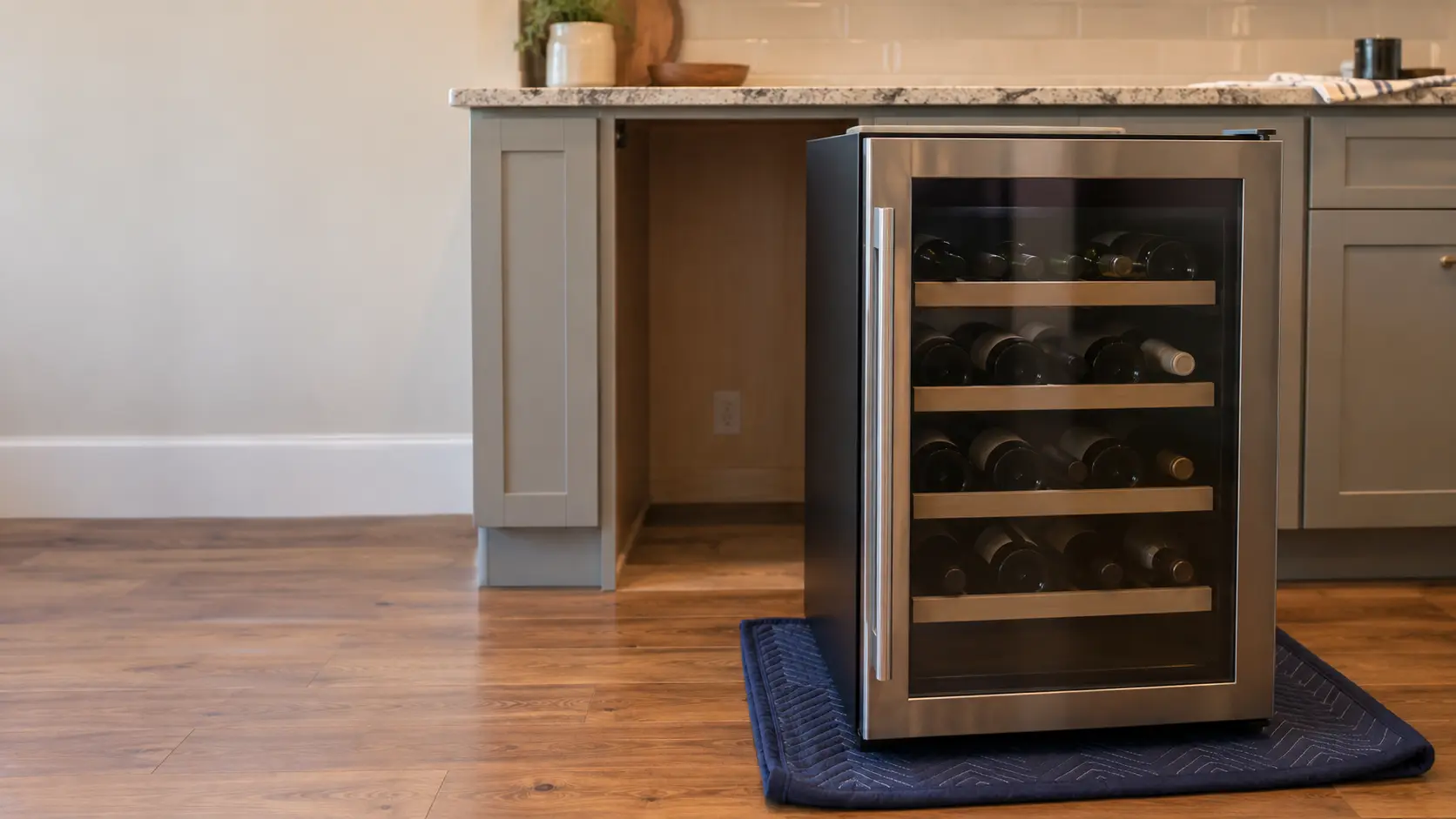
The top of an undercounter cooler has to clear the countertop while its door lines up with the drawers beside it. Level it first, then raise all four feet evenly until the gap under the counter is the one the manual lists; raising only the front corners to close a gap tilts the whole cabinet.
Full-height columns
On a tall wine column, a small tilt at the floor becomes a visible gap at the top of the door and a hinge that carries more weight than it should. Columns are also heavy enough loaded that their anti-tip hardware matters; leveling one that has been pulled forward is a two-person job at the least.
Freestanding units on hard floors
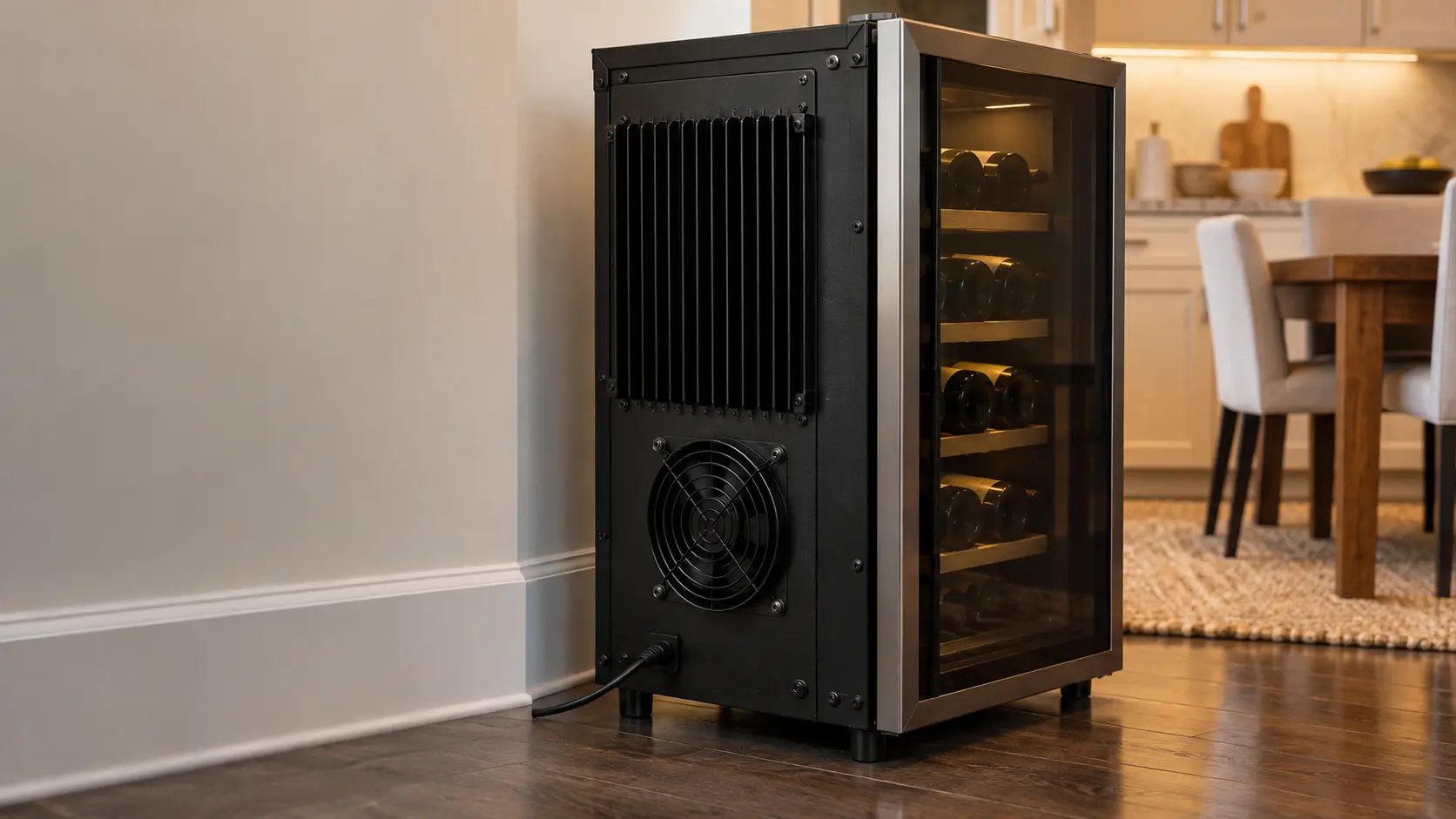
A small freestanding cooler on tile or hardwood can walk across the floor as the compressor cycles. Once it is level, a thin rubber pad under each foot stops the creep without changing the height.
Source: Zephyr — Presrv Wine Cooler Use, Care and Installation Guide (PRW24C01AG) — An unlevel unit causes noise and a door that will not shut; rotate the feet, right to lower and left to raise, using a carpenter's level over several adjustments; a firm surface that supports the fully loaded unit; contact with another appliance or furniture and items on top cause noise; list of normal operating sounds

Leveling it, one axis at a time
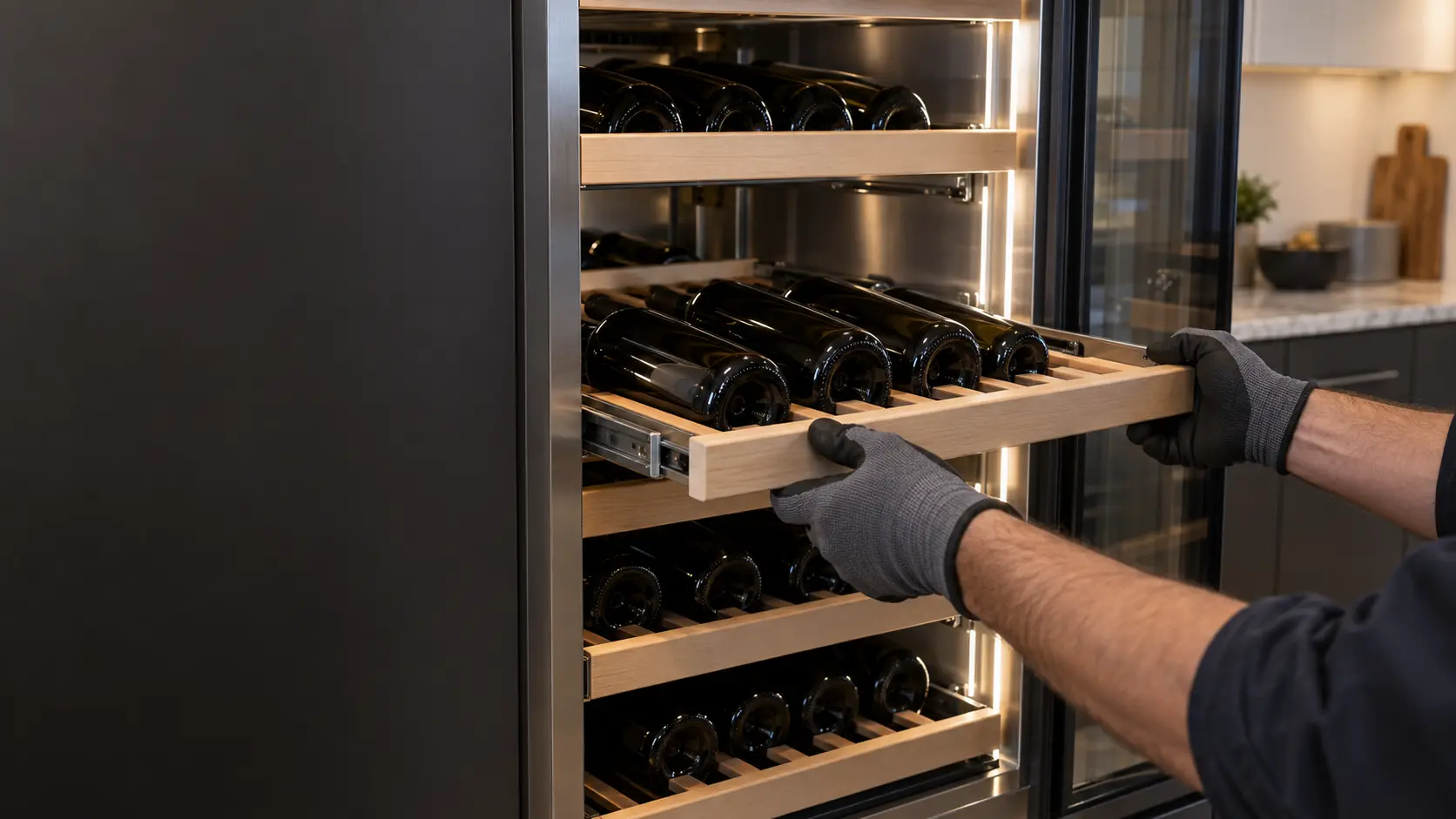
Zephyr asks for a firm, level surface strong enough to carry the unit fully loaded, and that last part matters: a floor that flexes under a full cabinet will read level when the racks are empty and tilt when they are full. Take the bottles out of the top two racks to reach inside, but leave the lower ones in place so the floor is loaded as it will be in use.
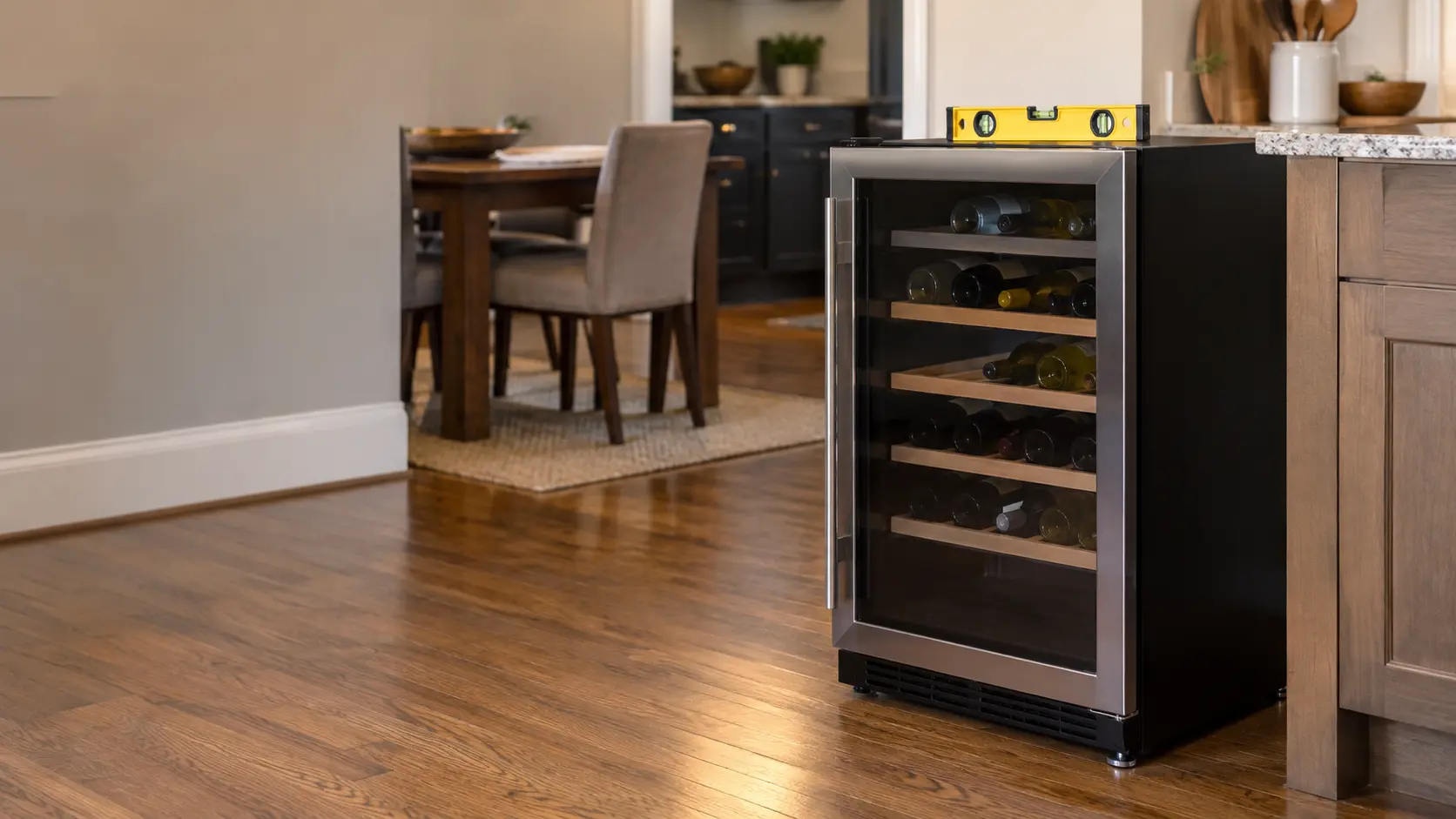
To level a wine cooler properly, check side to side first, with the level laid across the cabinet top or a middle rack, then front to back along the side of the cabinet. Correct one axis, recheck the other, and finish by opening the door halfway and letting go: a door that neither swings wide nor slams shut is a sign the cabinet is where it should be.
- Level across the top or a middle rack for side to side.
- Level along the side of the cabinet for front to back.
- Small turns, then a fresh reading each time.
- A final test with the door let go at half open.
Source: Zephyr — Presrv Wine Cooler Use, Care and Installation Guide (PRW24C01AG) — An unlevel unit causes noise and a door that will not shut; rotate the feet, right to lower and left to raise, using a carpenter's level over several adjustments; a firm surface that supports the fully loaded unit; contact with another appliance or furniture and items on top cause noise; list of normal operating sounds
Vibration that leveling will not cure
Zephyr names a second cause next to an unlevel cabinet: a unit touching another appliance or a piece of furniture. In cabinetry that means a side panel or a filler strip pressing on the cooler's skin, or a neighboring appliance whose drum or pump shakes the whole cabinet run. Slide a sheet of paper down each side of the unit; where it binds, the cabinet is touching.
The house itself can be the source. A cooler on a suspended wood floor above a laundry room, next to a home-theater subwoofer, or on a bar that gets leaned on all evening will feel all of it. Moving the cooler a few feet, or onto a solid wall's side of the room, sometimes does what no adjustment can.
- Paper test down each side for contact with cabinets.
- Items stored on top of a freestanding unit, which Zephyr notes can rattle.
- Loose racks or a rack rail that has slipped its clip.
- Heavy machines or speakers on the same floor structure.
Source: Zephyr — Presrv Wine Cooler Use, Care and Installation Guide (PRW24C01AG) — An unlevel unit causes noise and a door that will not shut; rotate the feet, right to lower and left to raise, using a carpenter's level over several adjustments; a firm surface that supports the fully loaded unit; contact with another appliance or furniture and items on top cause noise; list of normal operating sounds
Sounds that are normal and sounds that are not
Not every noise is vibration. Zephyr's manual lists gurgling as refrigerant flows at the end of a cycle, a pulsing or high-pitched sound from an efficient compressor, the internal fan running often, air forced over the condenser and water splashing into the drain pan as normal. Hard floors and walls make all of them sound louder than they are.
A grinding or ticking that comes and goes with the fan, a buzz that stops when you press on one side panel, or a loud knock when the compressor stops are not in that list. Those point to a fan blade touching frost, a loose mounting, or a compressor that has dropped onto its mounts, and leveling will not quiet any of them.
Source: Zephyr — Presrv Wine Cooler Use, Care and Installation Guide (PRW24C01AG) — An unlevel unit causes noise and a door that will not shut; rotate the feet, right to lower and left to raise, using a carpenter's level over several adjustments; a firm surface that supports the fully loaded unit; contact with another appliance or furniture and items on top cause noise; list of normal operating sounds