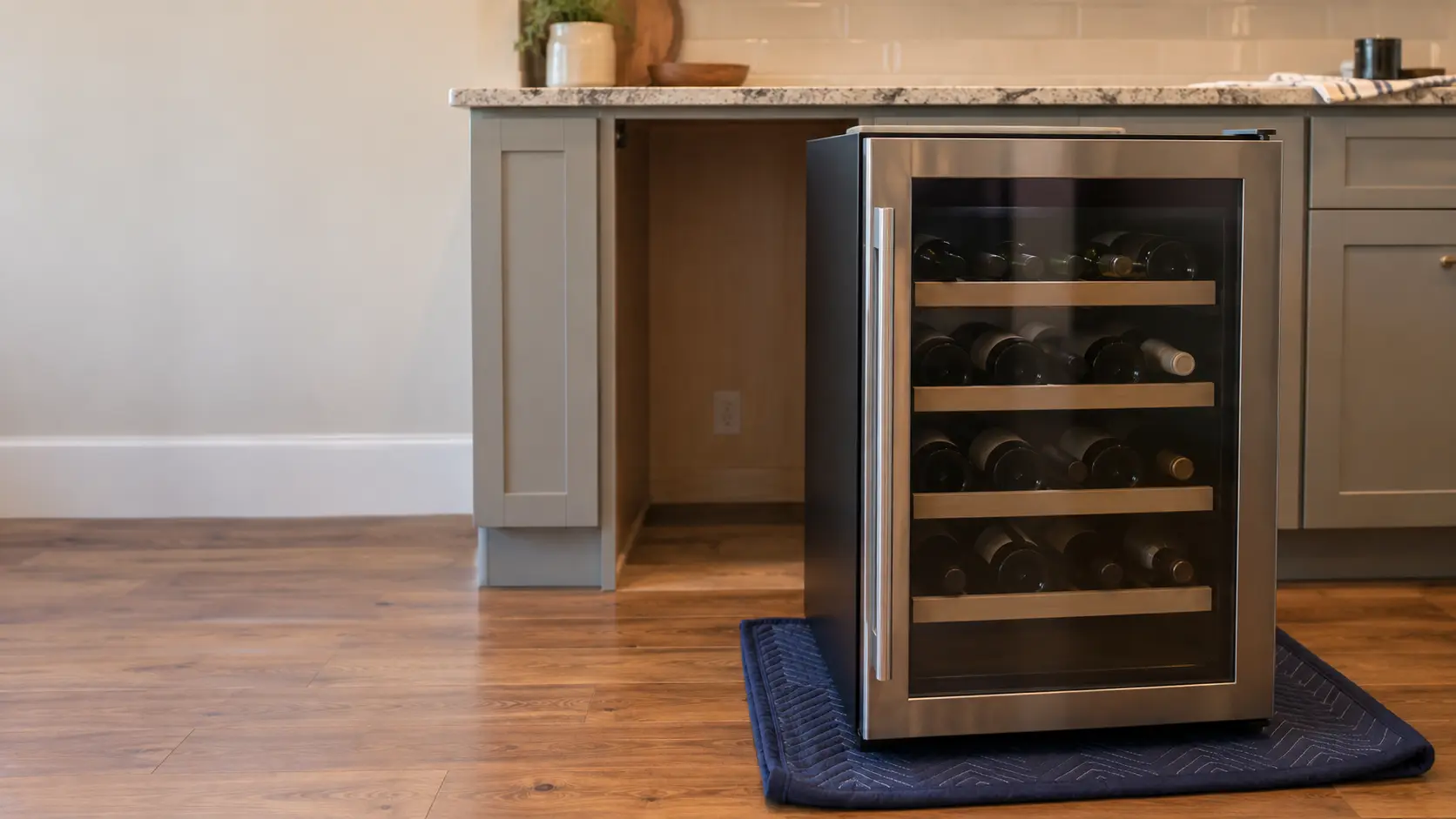

Where the cabinet goes, how it sits, what it plugs into
Installation and setup
guides.
Where a wine cooler can stand and where it struggles, the air it needs around it, and how to level it so the bottles rest without a tremor.
Mon–Sat, 8am–8pm
- Three guides
- Read before you book
- Says where to stop
Book a visit
Three short steps, about a minute.
or call (844) 709-0727
Loading appointment form…
The appointment form couldn’t load. Please try again.
Installation and setup,
guide by guide.
Many wine cooler problems are decided the day the unit goes in. A freestanding model boxed into cabinetry, a front grille covered by a new toe kick, a cabinet left rocking on an uneven floor, or a glass door facing the afternoon sun can each make a sound machine look broken. This section is about getting those decisions right the first time, or putting them right later.
All 18 guides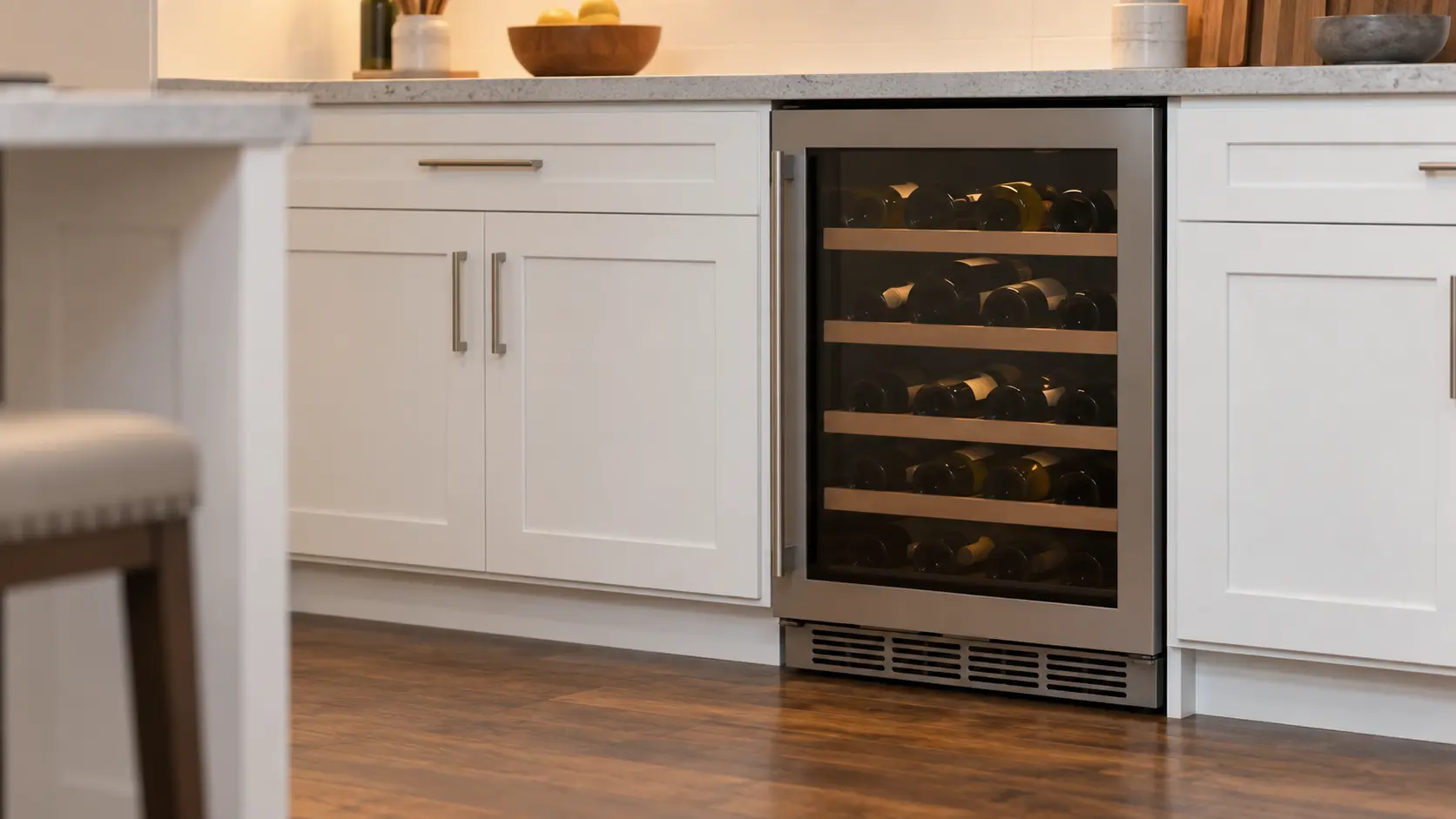
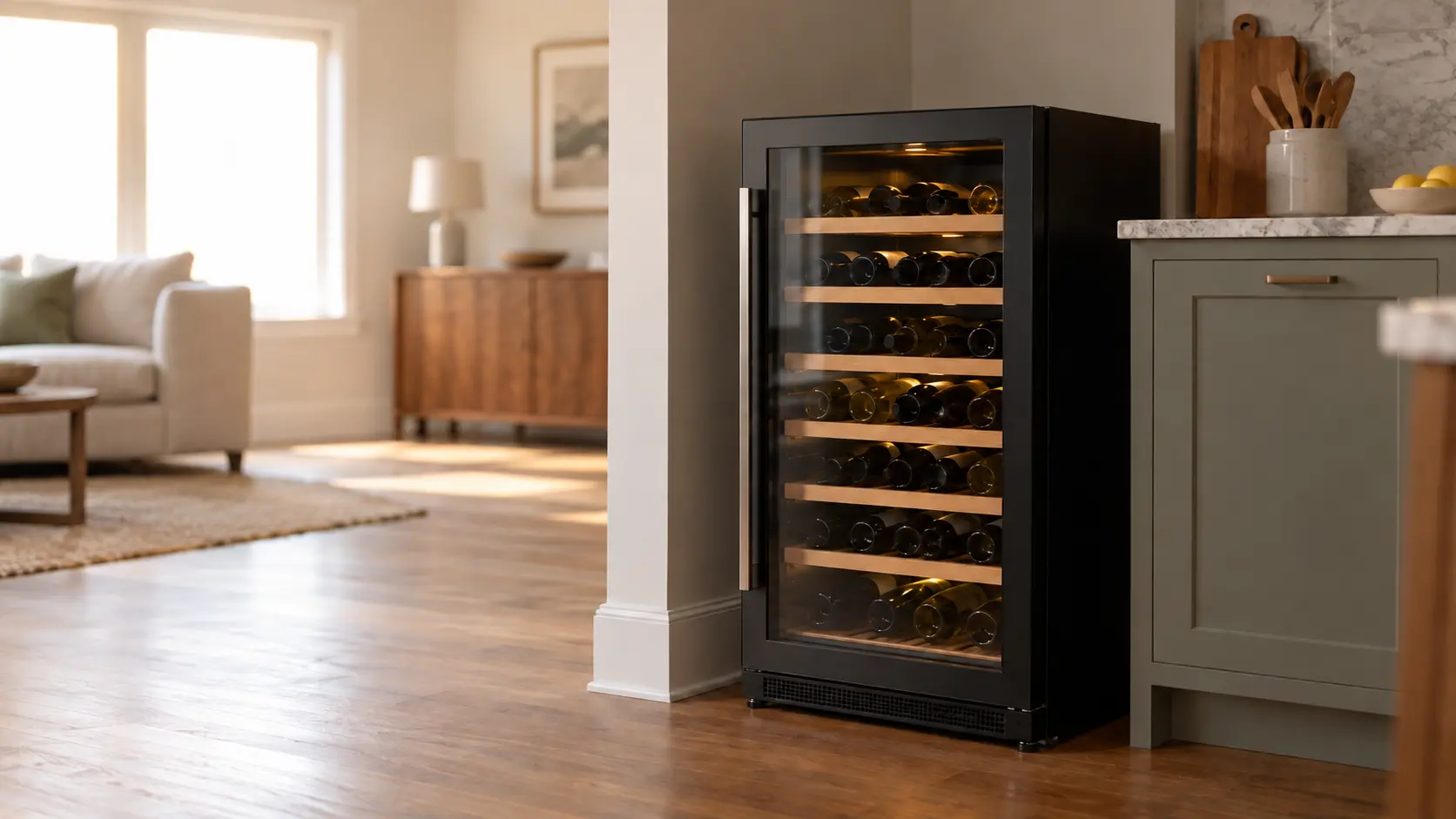
Where the cabinet goes, how it sits, what it plugs into.
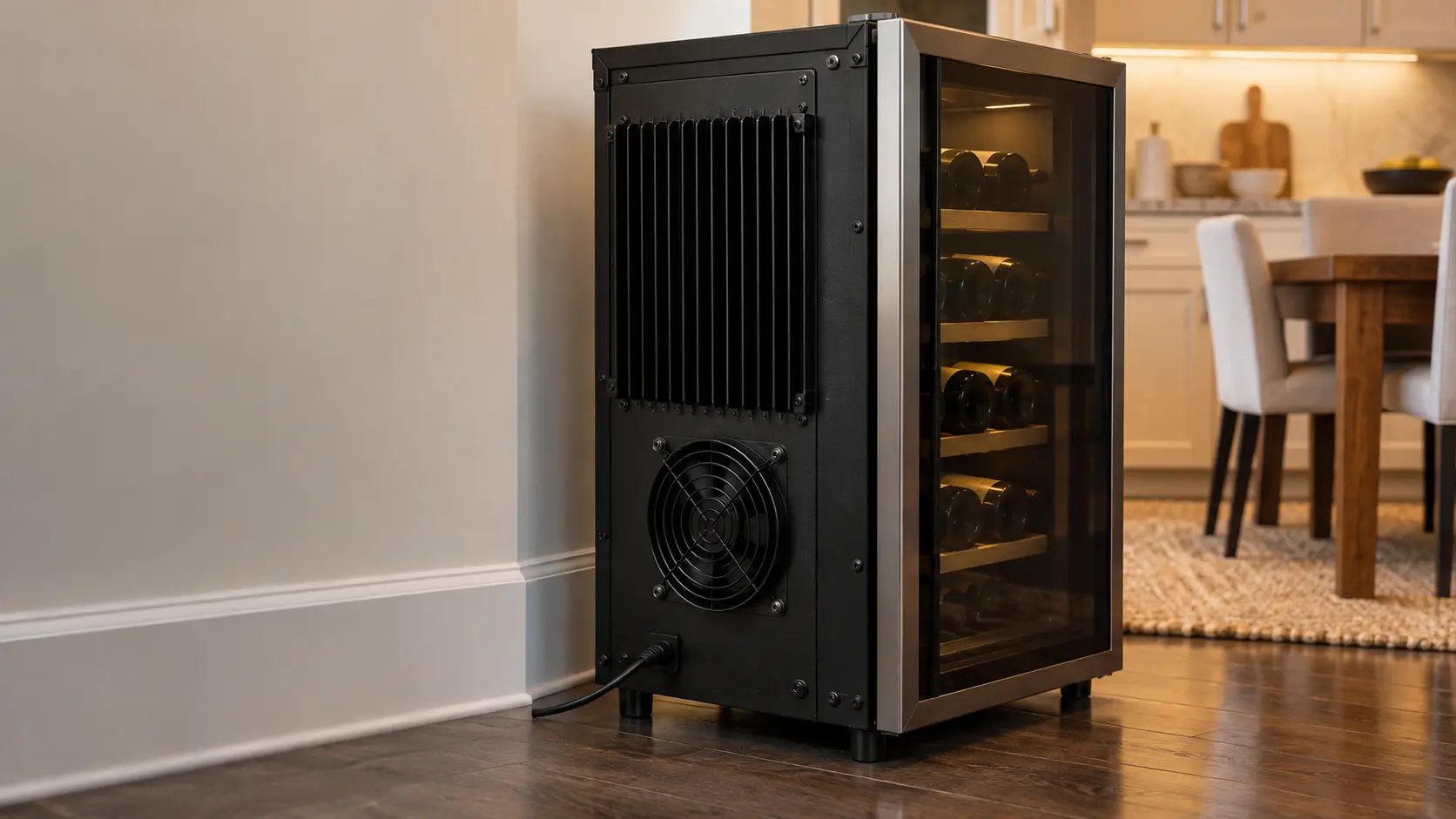
Each guide works from the makers' own installation pages rather than general advice, because the numbers differ by design: how much space a unit needs behind it, which room temperatures it tolerates, which way its feet turn. Where a figure is quoted, the manual or help page it comes from is printed under that part of the guide, and your own model's manual always wins.
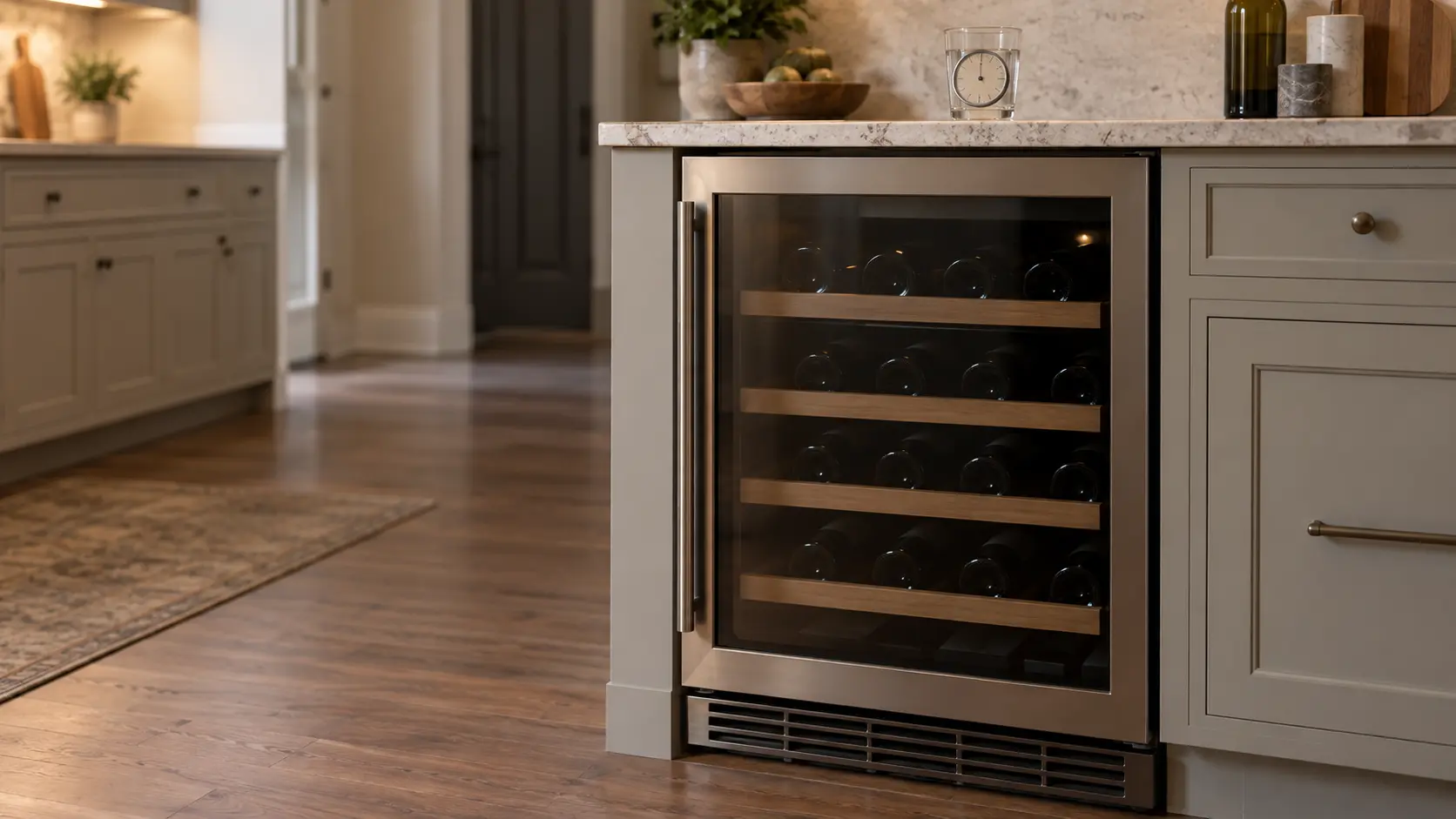
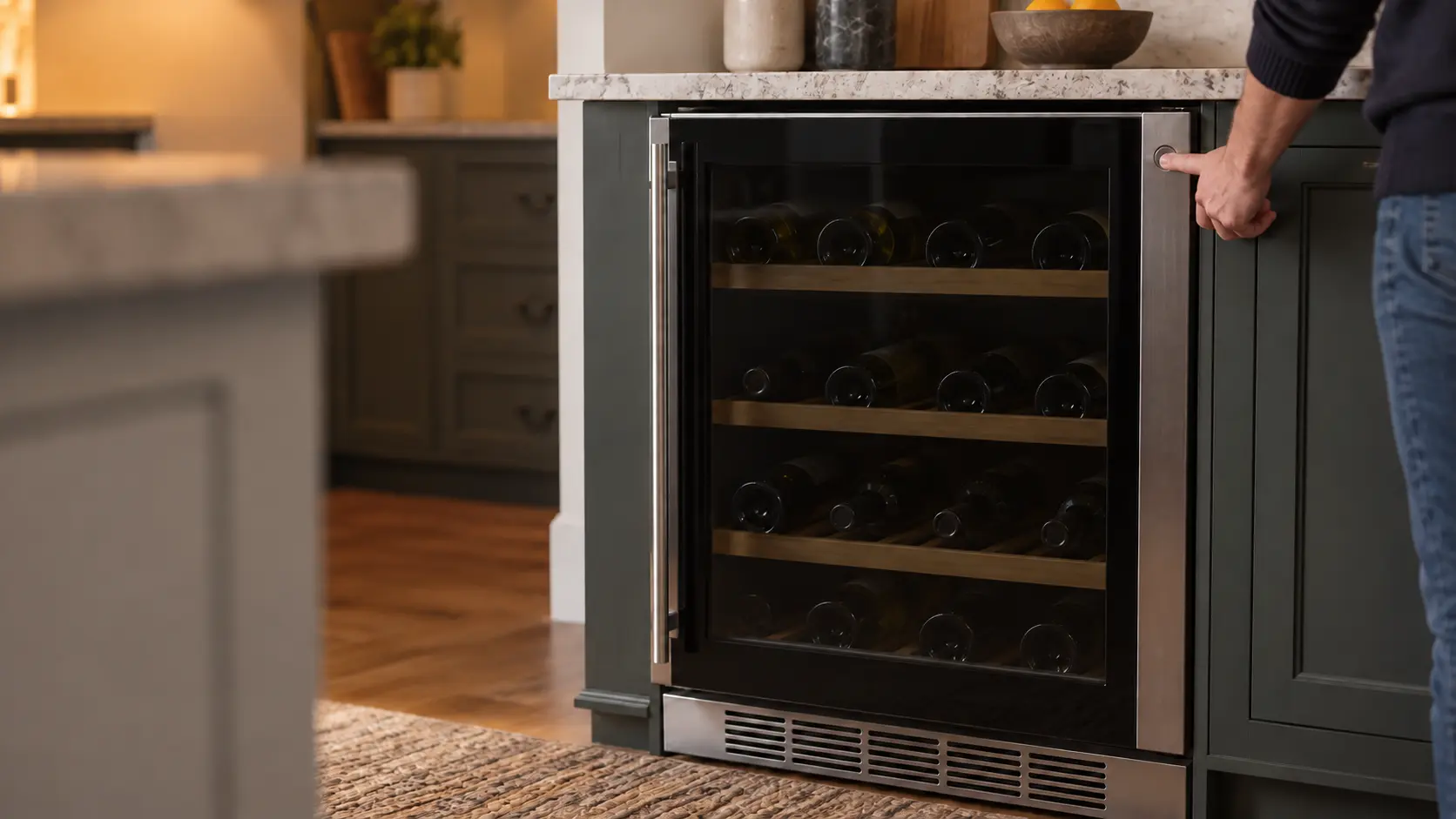
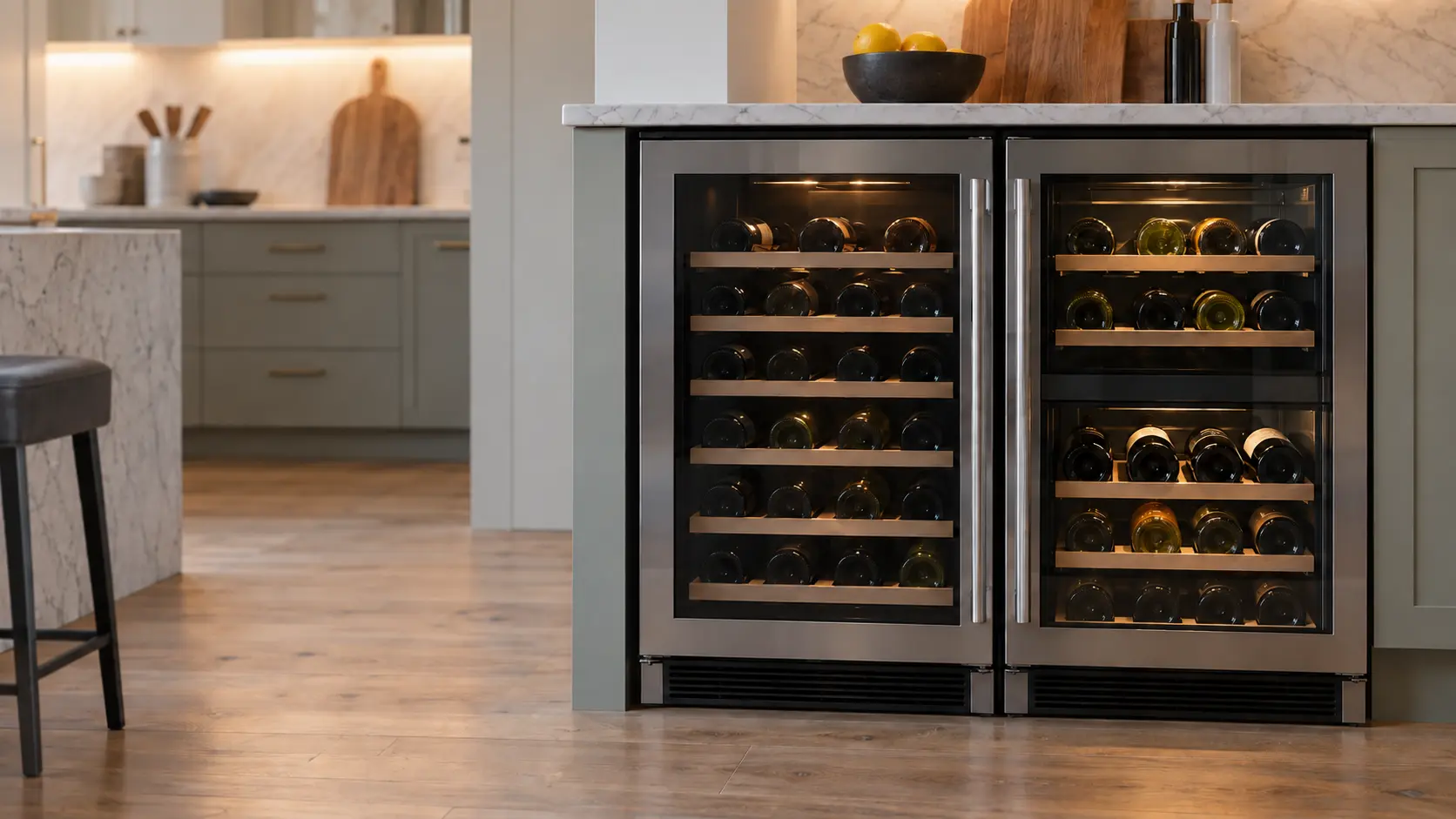
The guides are written for owners of every kind of wine cooler: the undercounter unit in a kitchen island or home bar, the full-height wine column set into a wall of cabinets, the freestanding compressor or thermoelectric unit in a dining room, and the dual-zone cabinet that holds reds and whites at two settings. Each notes where its advice differs between them.
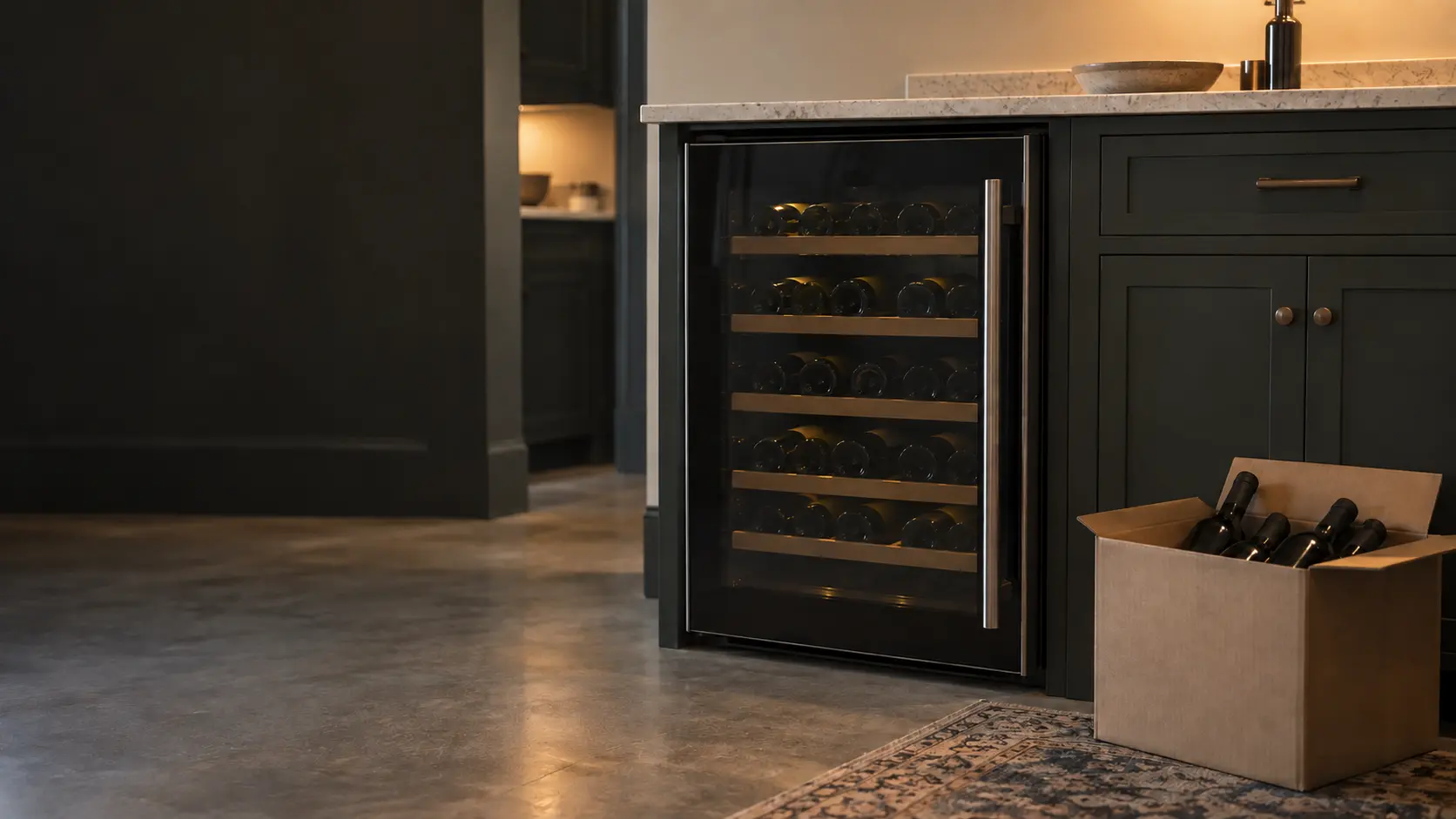
Read them before the cabinetmaker cuts the opening or the electrician places the outlet, when a unit moves to a new room, or when a cooler that ran well for years starts to struggle after a remodel. Each ends where an owner should stop: moving a loaded built-in, adding an outlet or circuit, and opening the machine compartment belong to an installer, an electrician or a technician.
Not sure where to start?The short answerVentilation for a Built-In Wine Cooler: Front Grilles, Back Gaps and Cutouts
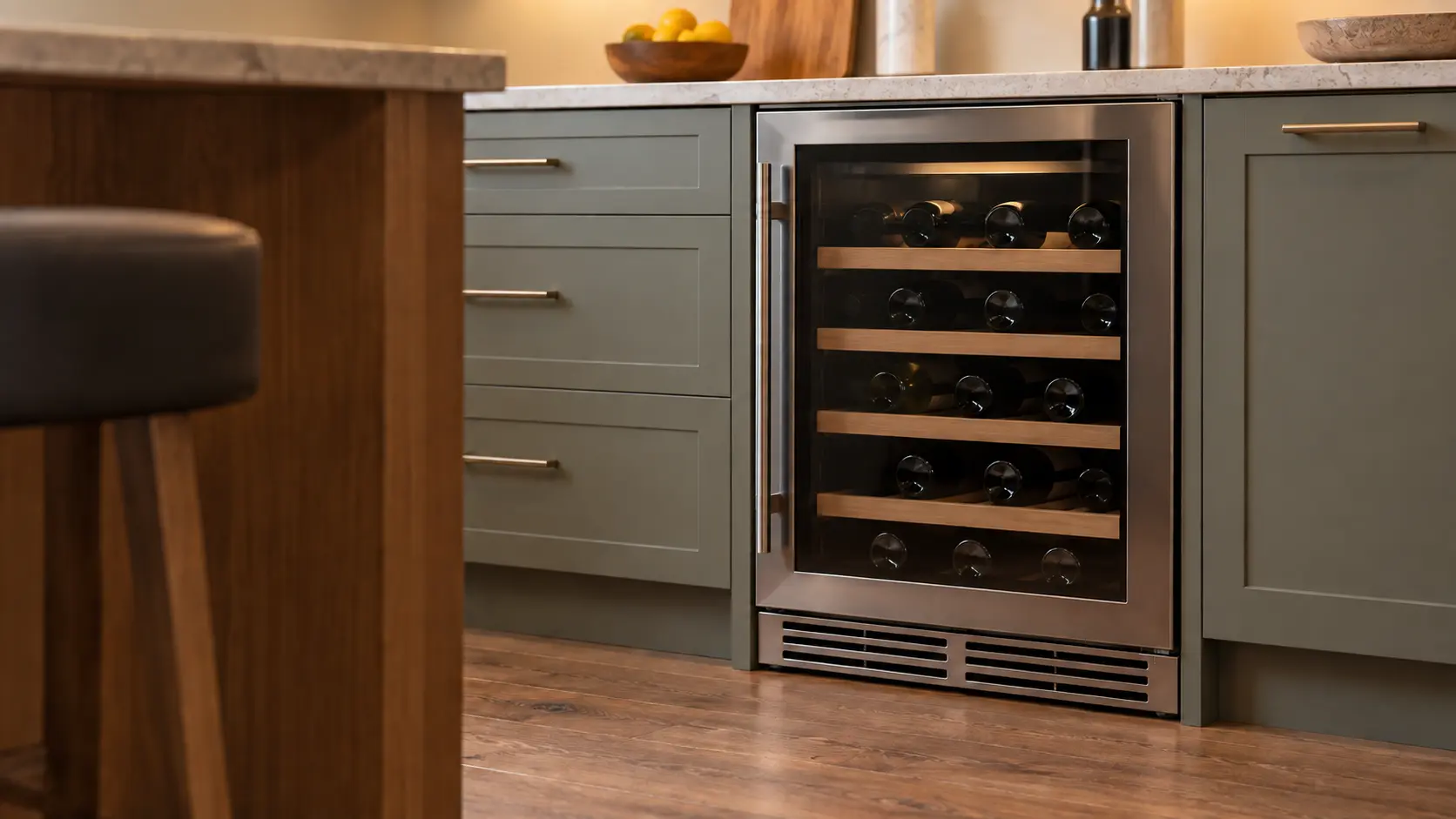
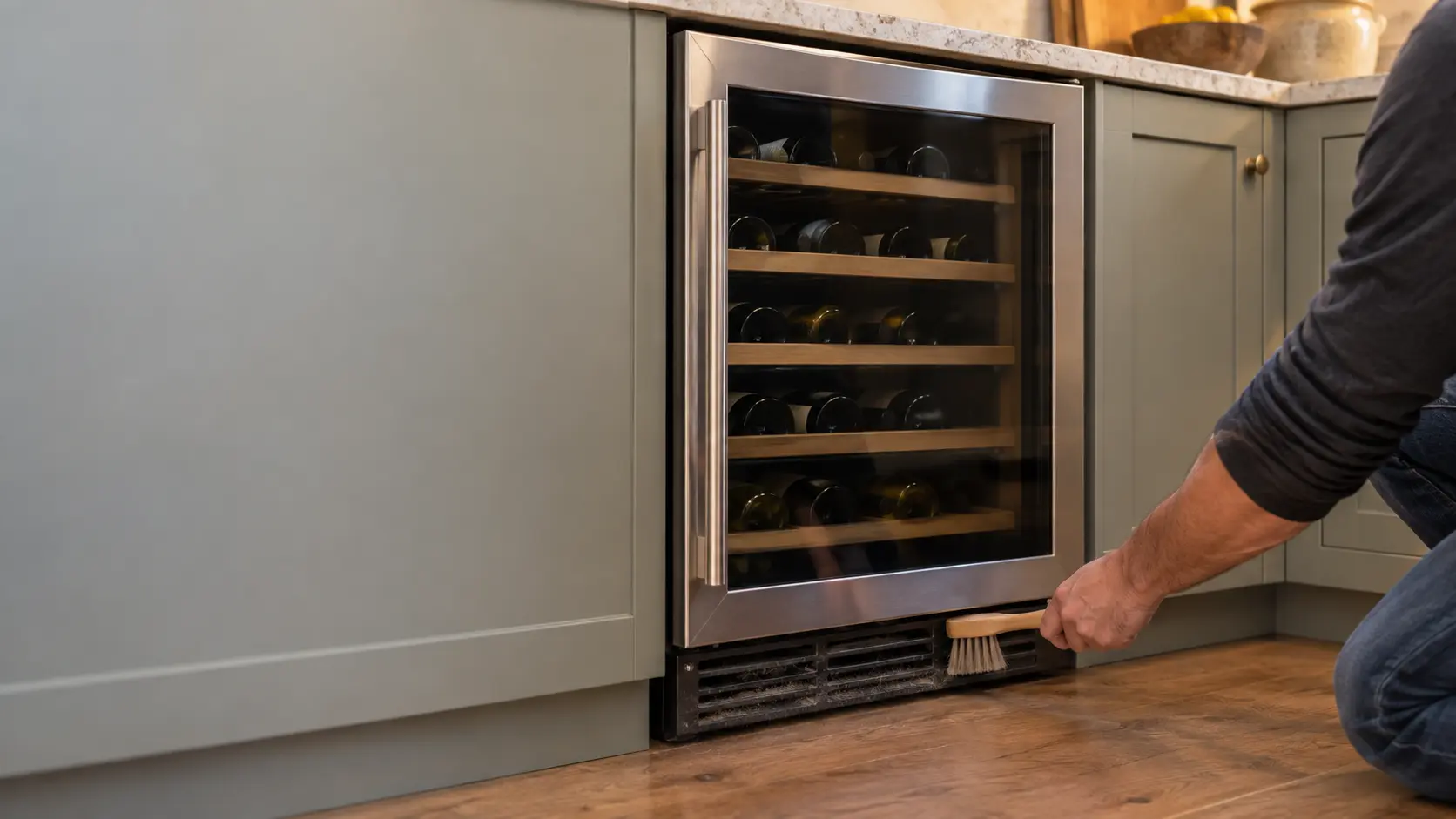
Built-in wine cooler ventilation comes down to where the unit breathes.
The short answerLeveling a Wine Cooler to Stop Vibration, Rattles and a Drifting Door
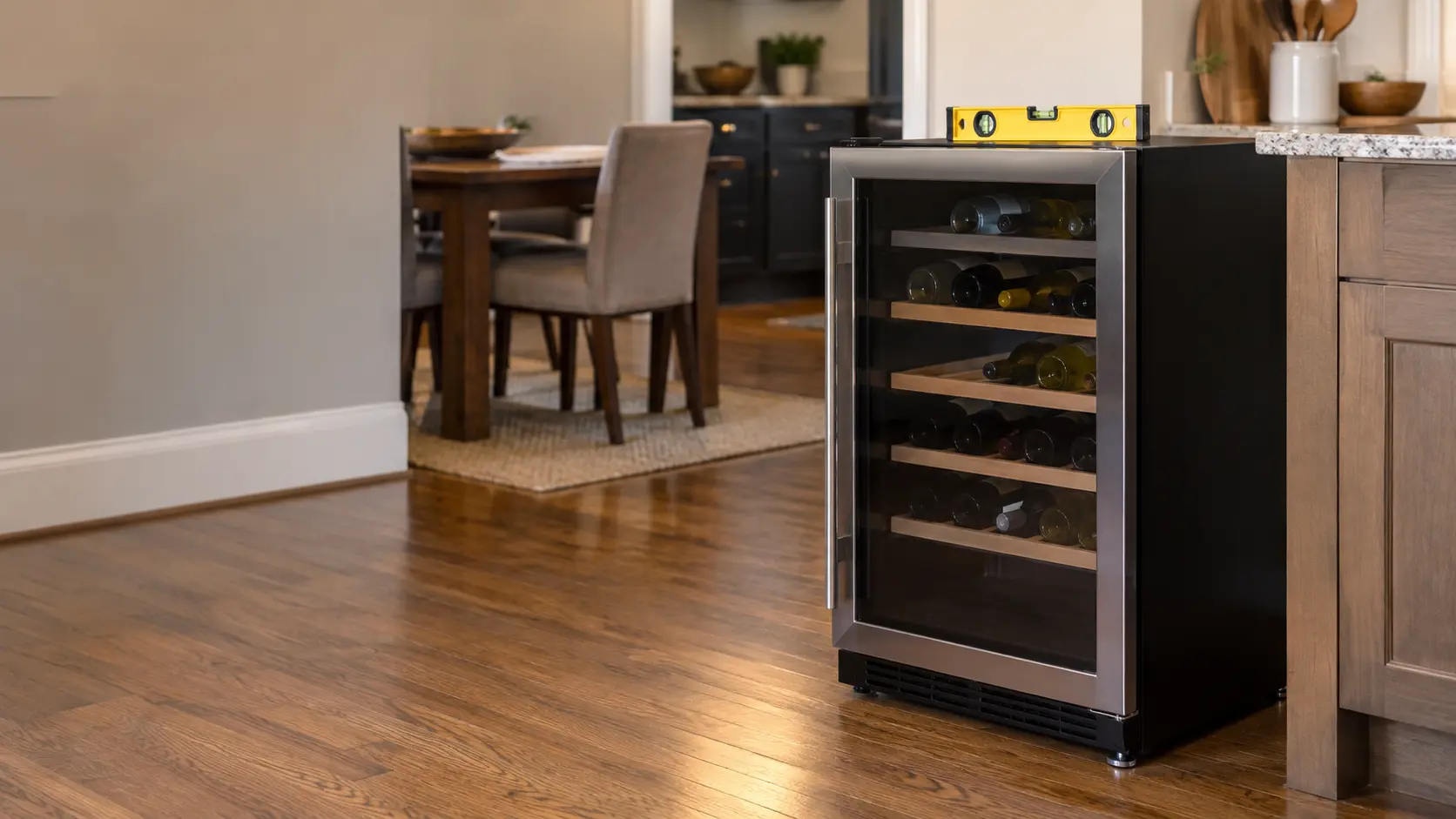
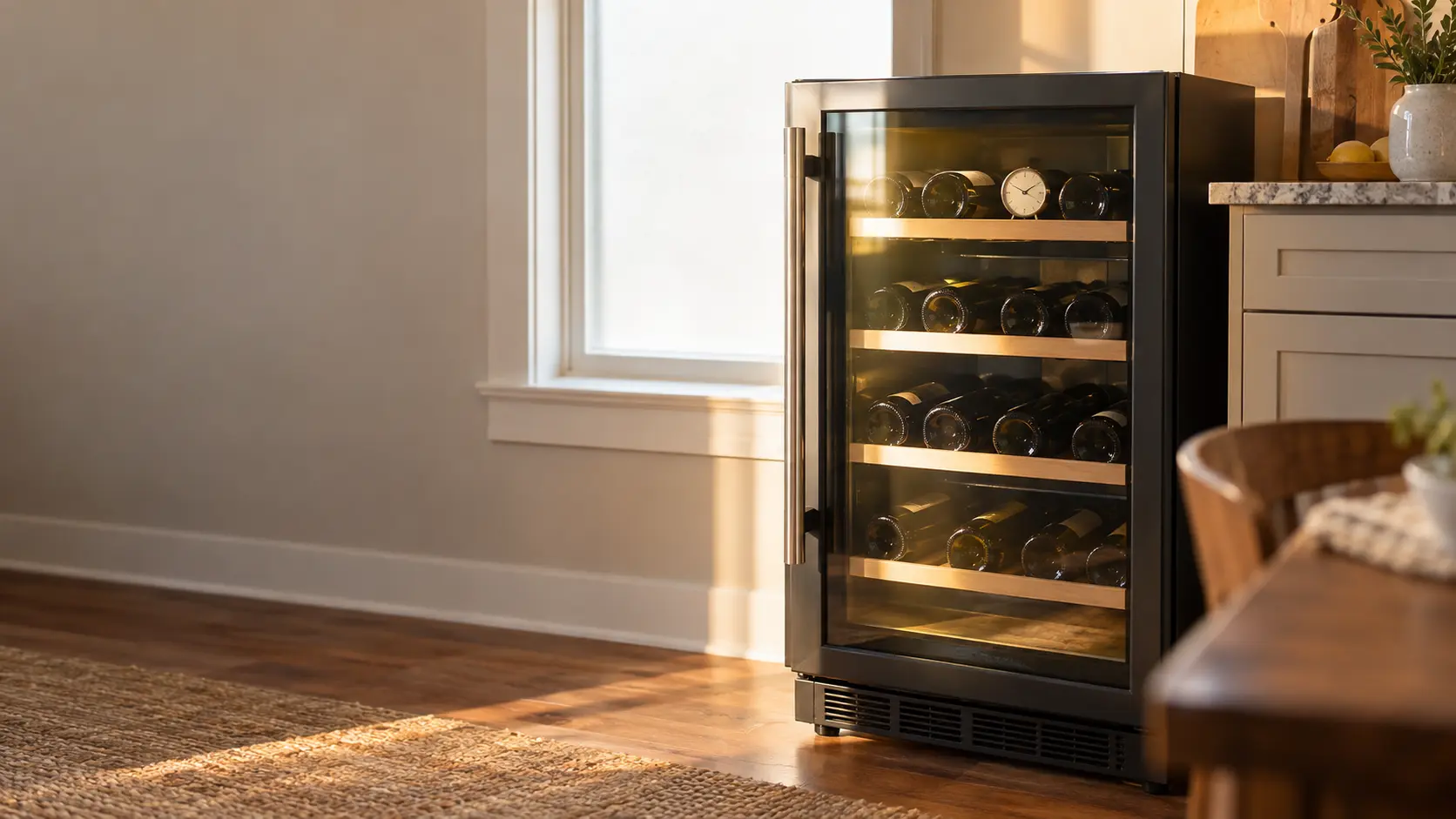
To level a wine cooler, empty the top racks, set a carpenter's level on the cabinet top and on a rack, and turn the front feet until it reads true side to side and front to back; on Zephyr's units a foot turned right lowers that corner.
The short answerWhere Not to Put a Wine Cooler: Heat, Sun, Damp, Weak Floors and Bad Outlets
Where to put a wine cooler is mostly a list of places to avoid: rooms outside the maker's ambient band (Zephyr lists 50°F to 90°F), direct sun, the side of a cooking appliance, damp laundry and basement corners, floors that flex or shake, and any outlet on an extension cord or a wall switch.
When reading
is not enough.
If the checks in these guides did not settle it, the visit picks up from there, stop by stop.
What repairs cost- 01Each zone measured first
- 02A figure before any work starts
- 03The usual wine cooler parts on board
- 04Settled back at cellar temperature
The problems
these answer.
Each has a page of its own, with the causes in the order worth checking.
All 17 problems

Questions about
installation and setup.
Can any wine cooler be installed under a counter?
What room temperature does a wine cooler need?
Why does my new wine cooler rattle?
How soon can I plug in a wine cooler after moving it?
The other
sections.
Split by what you are trying to find out rather than by which part of the appliance it concerns.
All guides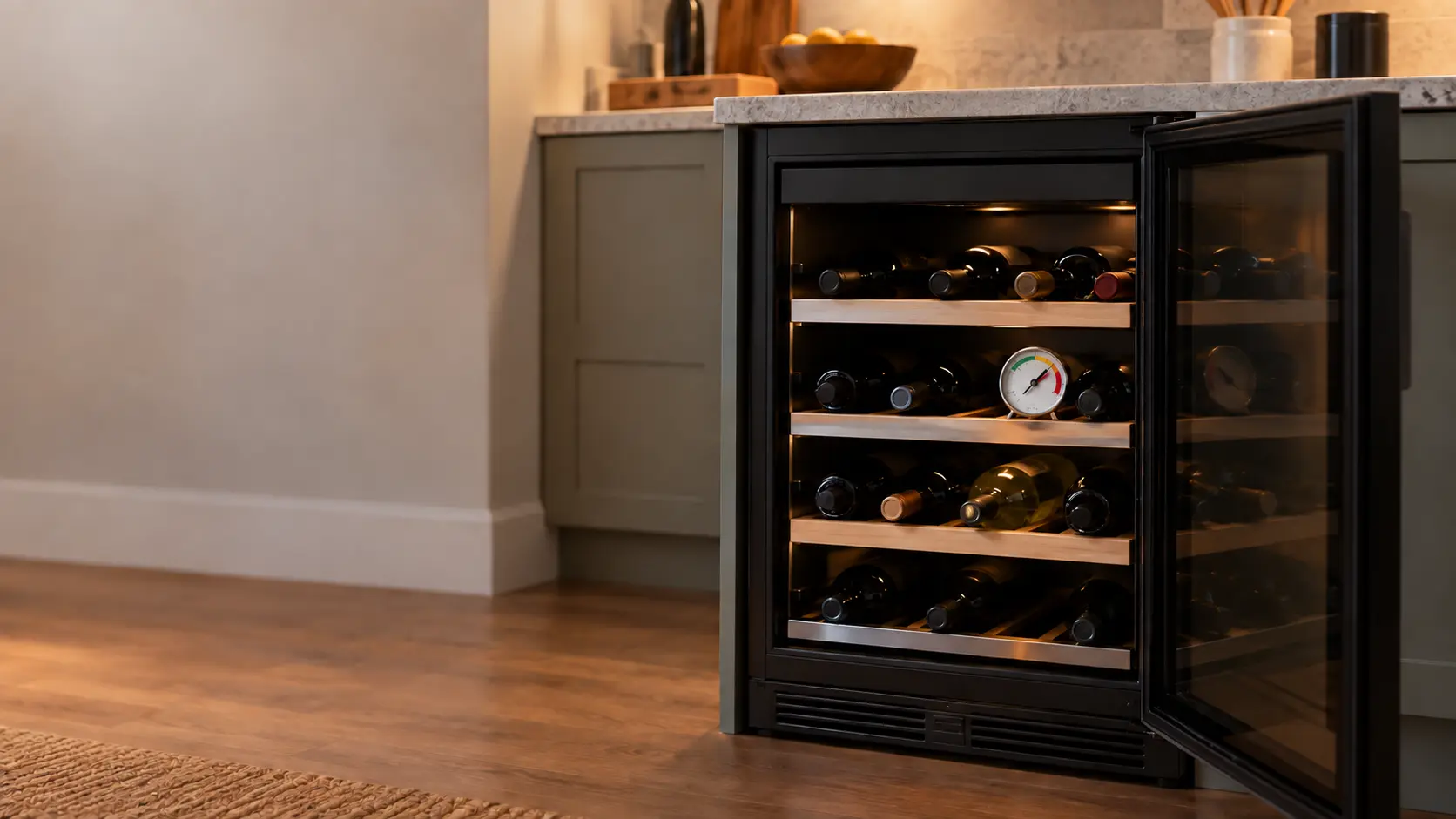
Back to your everyday
Let’s get your wine cooler working again.
Three short steps online, or one call. Tell us what you are seeing and pick a window that works.