Front-venting or rear-venting: the one question that decides everything
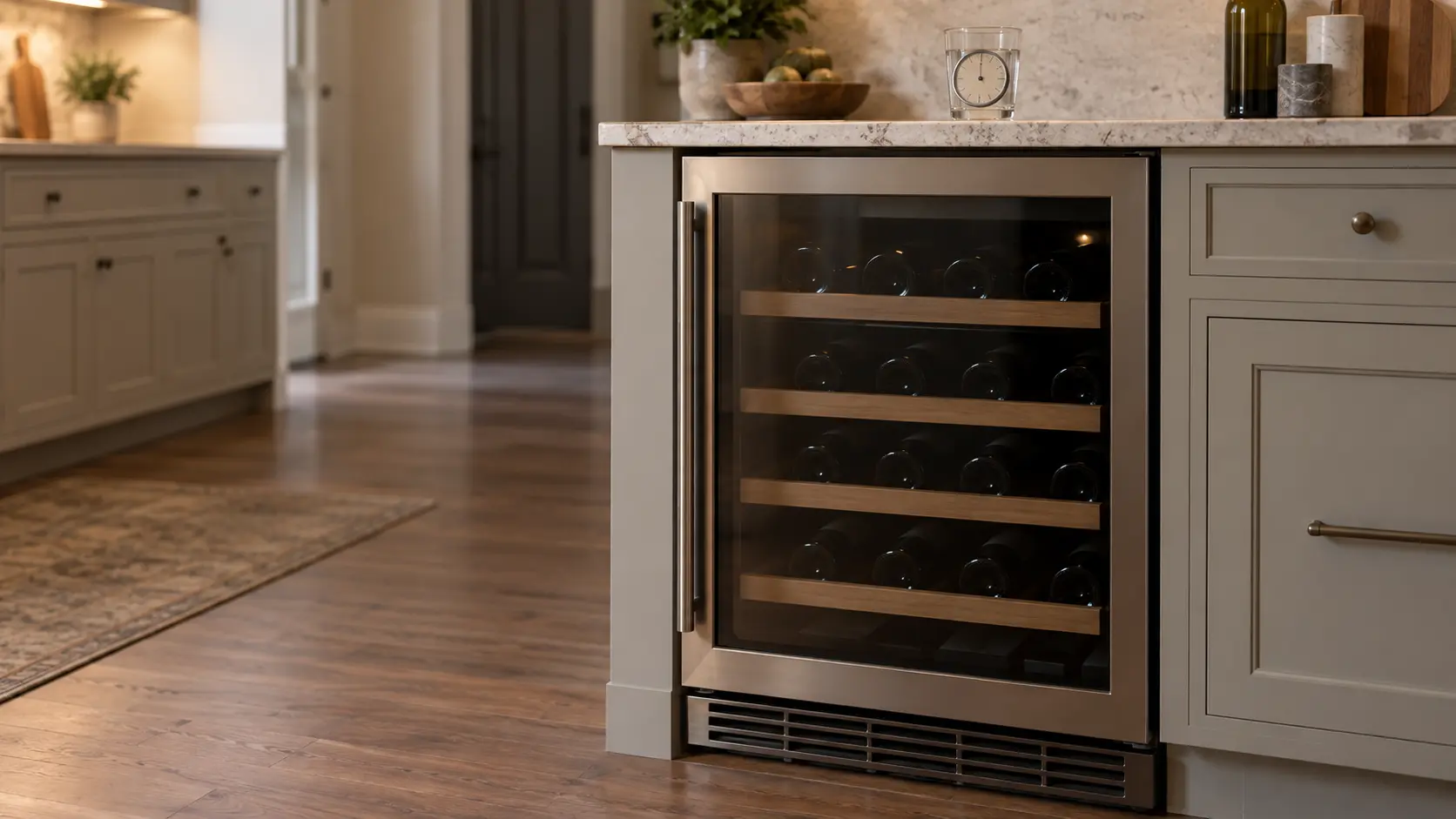
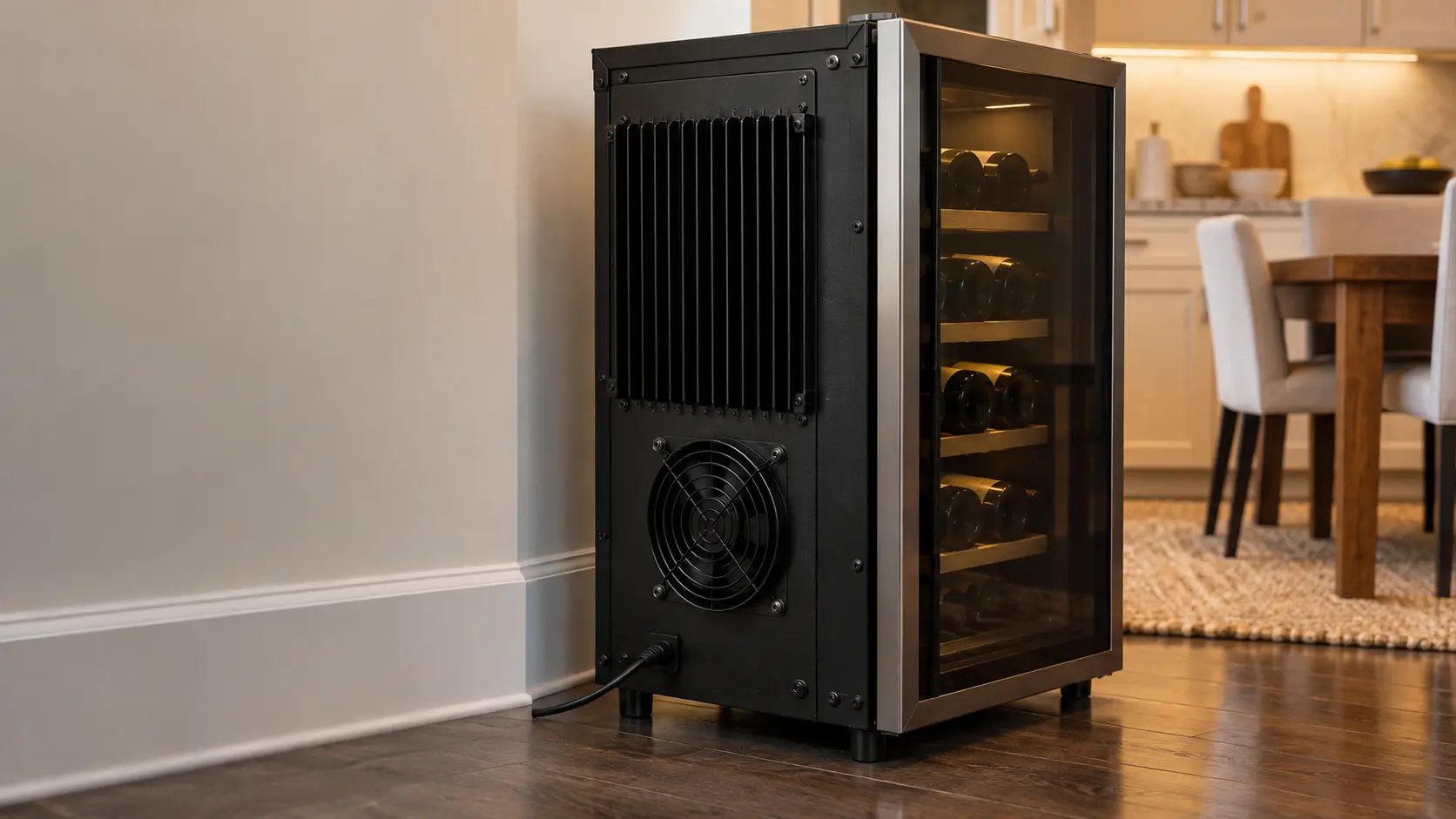
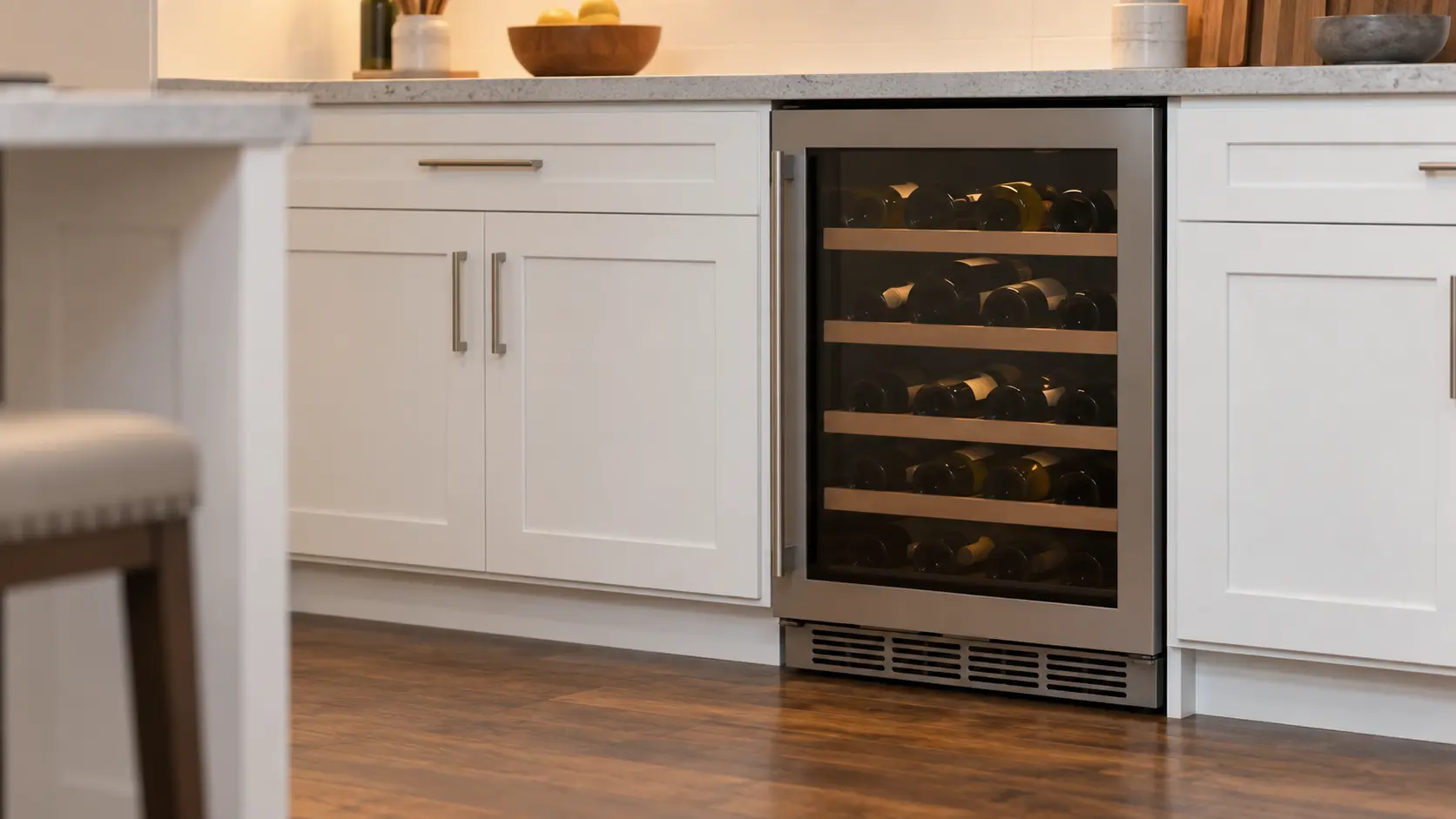
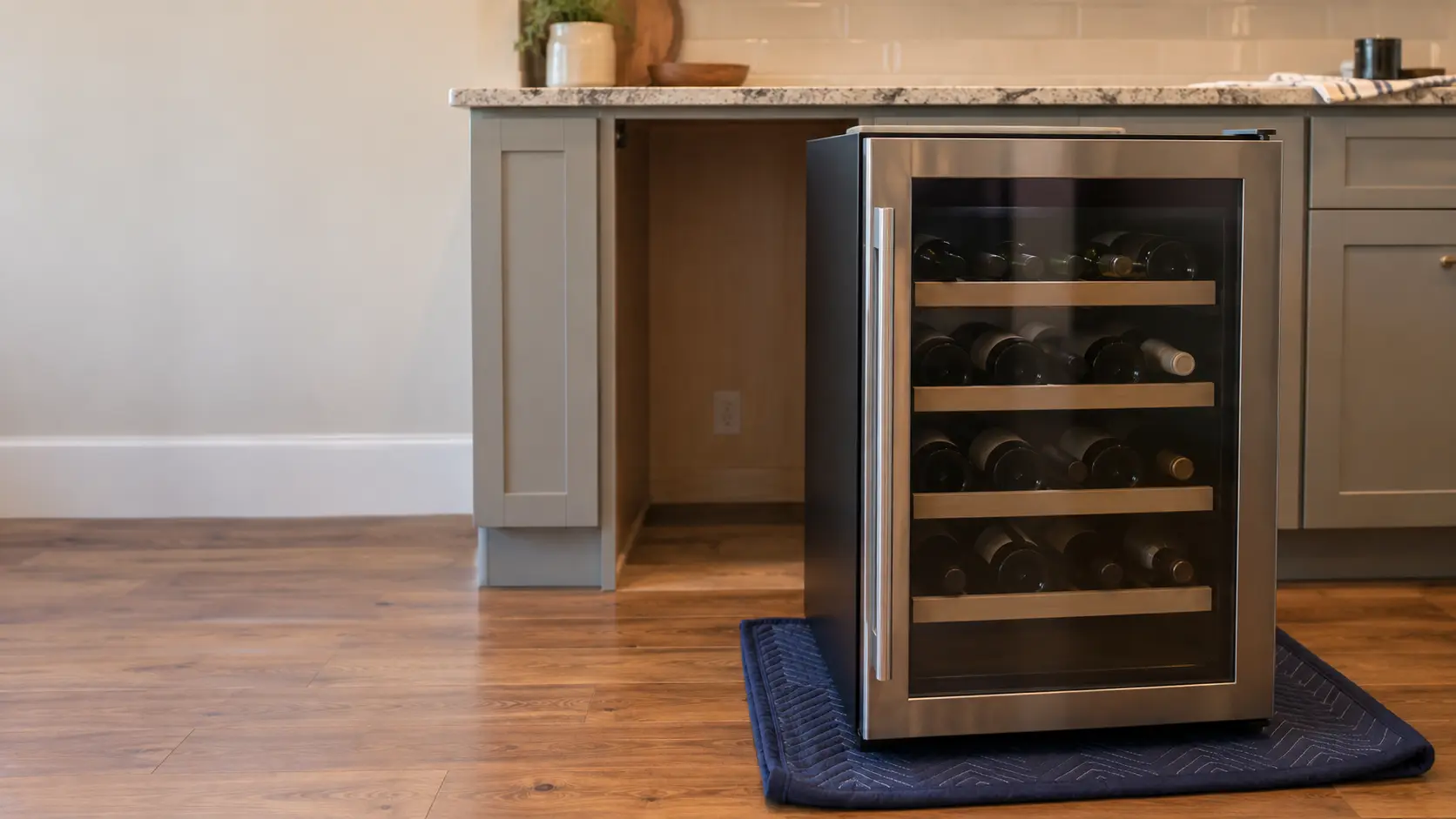
Vinotemp's own comparison puts it plainly: built-in coolers are designed to work in a confined space because they exhaust through the front, while freestanding coolers exhaust at the back and need at least 6 inches of clearance behind them. The difference is in the machine compartment. A front-venting unit takes its cooling air from the room and returns it through the kick-plate grille, so it does not depend on space behind or beside it.
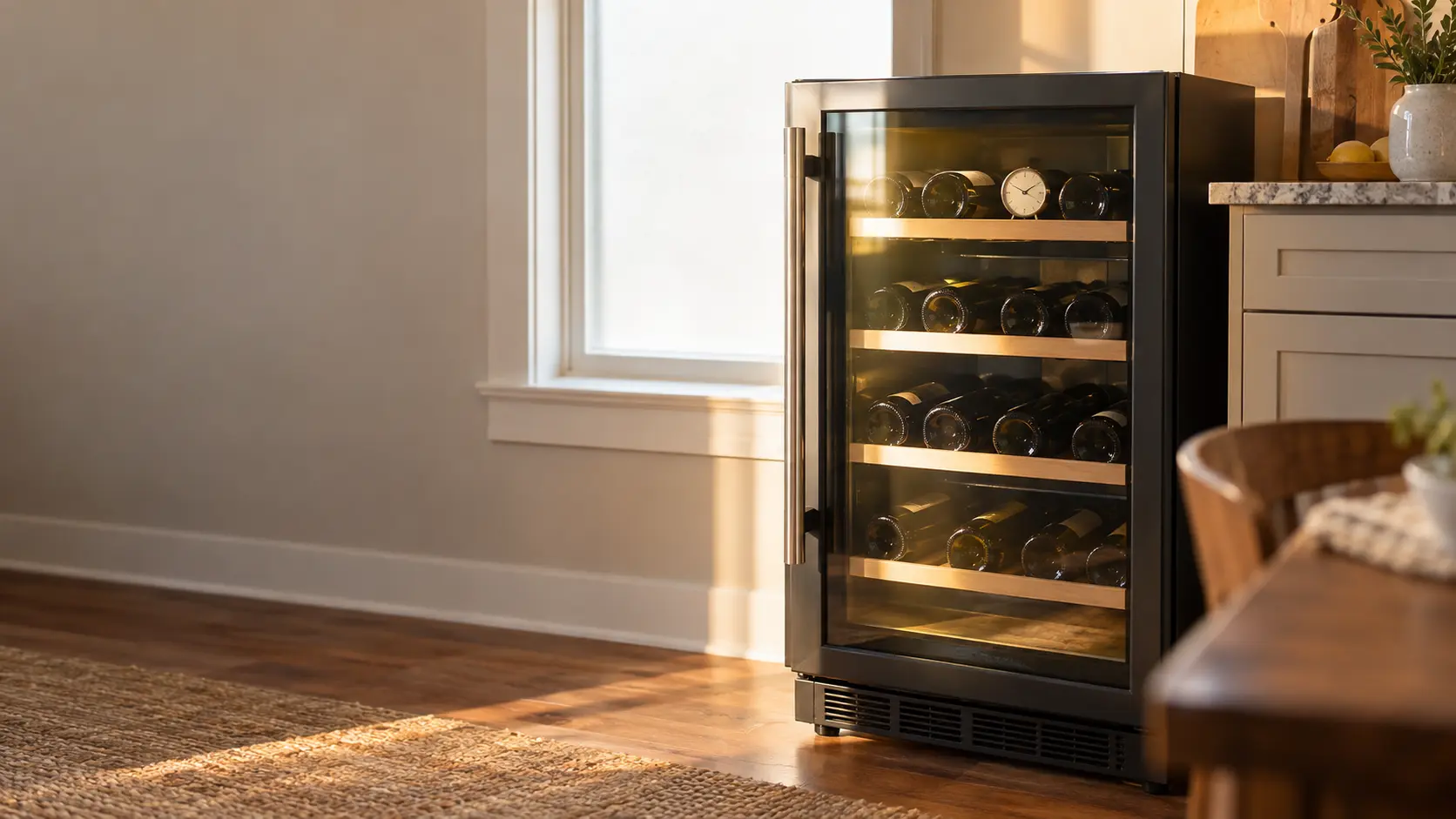
A rear-venting unit relies on air rising freely past a condenser on its back or on hot side walls. Slide one of those into a cabinet opening and the heat it rejects has nowhere to go but back around the cabinet. Its compressor runs longer, the cabinet walls warm, and the wine zone struggles to hold its setting on the first warm day.
How to tell which one you have
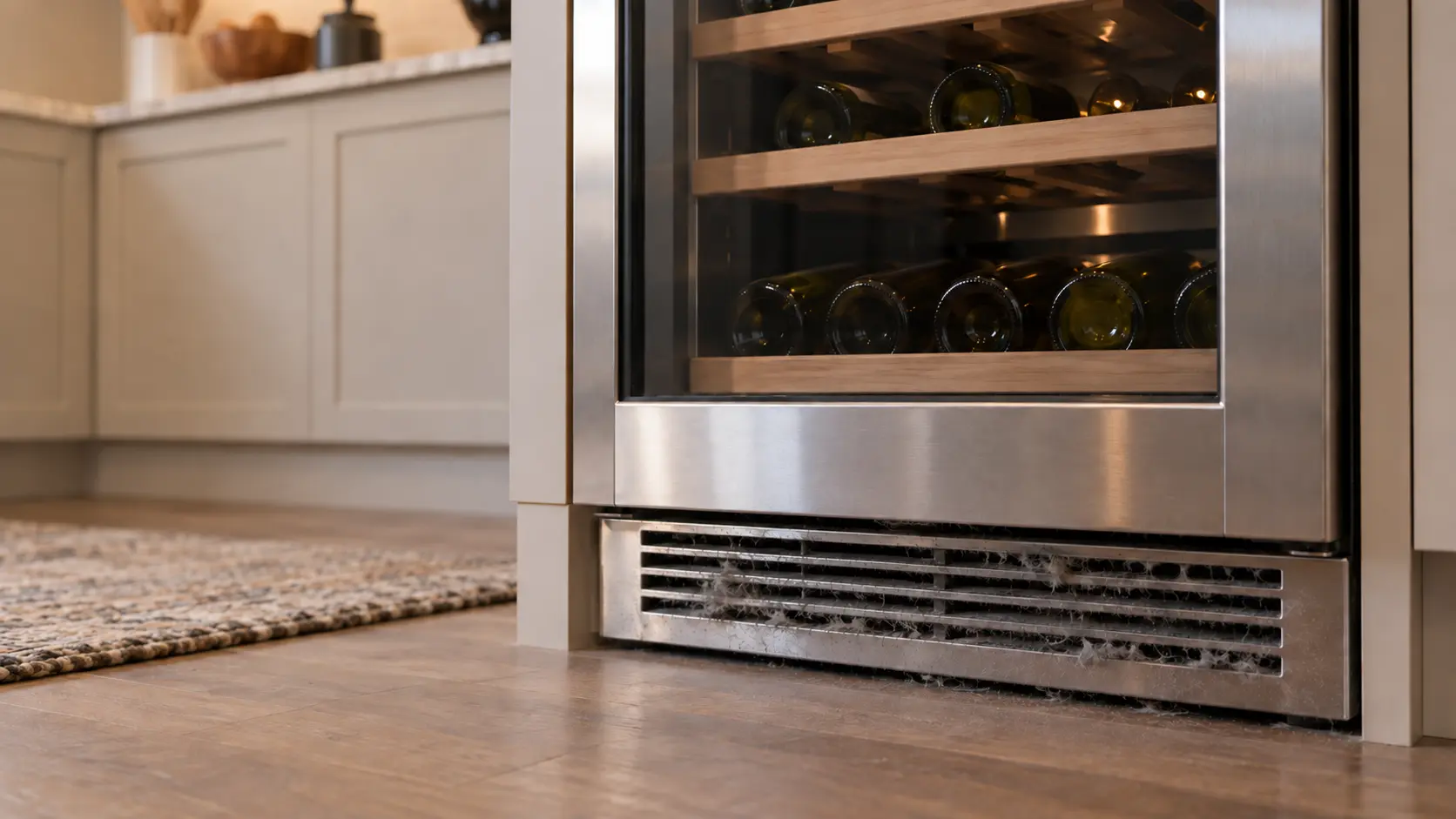
Look at the bottom front. A grille with slots running the full width of the toe kick, often with a fan audible behind it, marks a unit meant for cabinetry. A plain kick plate with the condenser coil or a heat-radiating back panel visible from behind marks a freestanding unit. The installation section of the manual settles it; most say in their first lines whether built-in use is allowed.
Thermoelectric units in cabinetry
Vinotemp describes thermoelectric coolers as having rear exhaust and being for freestanding installation only, and notes they can cool only about 20°F below the room. Built into an enclosed cabinet, a thermoelectric unit warms its own surroundings and loses what little margin it has.
Source: Vinotemp — Wine Coolers Frequently Asked Questions — Built-in coolers work in a confined space because of front exhaust; freestanding coolers have rear exhaust and need at least 6 inches behind; thermoelectric units are rear exhaust, freestanding only, and cool about 20°F below ambient
Inside the cabinet opening
Each maker publishes its own cutout, and for a front-vented model it is usually snug on the sides and top. Zephyr's guide for its undercounter model asks for 1 to 2 inches at the back, a minimum of 2-1/4 inches on the hinge side when the unit sits against a wall so the door and handle can swing, and an installation that lets the unit be pulled forward for service.
Two warnings in the same manual are easy to miss. Do not install the cooler behind a closed cabinet door, and do not pinch or kink the power cord between the unit and the cabinet. Both turn up in remodels where a wine cooler replaced a drawer bank and the opening was built before anyone read the installation page.
- Front grille fully exposed, flush with the cabinet toe kick, not recessed behind it.
- Back clearance as the manual lists, with the cord running free.
- Room on the hinge side for the door and handle to open fully.
- An opening that lets the unit slide forward without removing countertop or trim.
Source: Zephyr — Presrv Wine Cooler Use, Care and Installation Guide (PRW24C01AG) — 1 to 2 inches at the back; 2-1/4 inches minimum door clearance next to a wall; allow the unit to be pulled forward; not behind a closed cabinet door; do not pinch the cord; insufficient ventilation listed as a cause of frequent cycling and failure to reach temperature; grounded outlet, no extension cords, no switched outlet, not shared
What ends up blocking the grille after installation
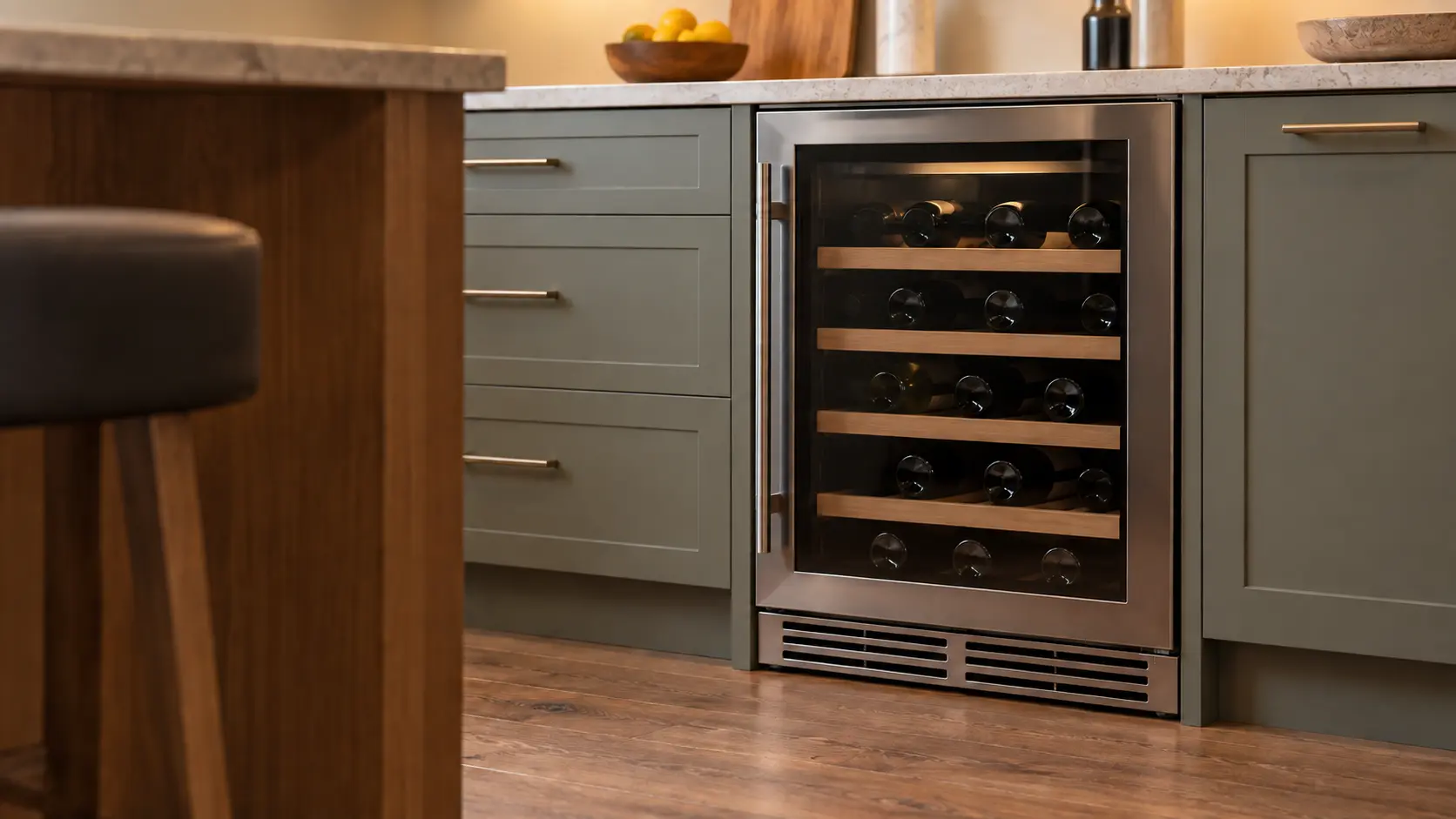
A cooler that ran well for its first year and then starts running constantly has often been choked by the room rather than failed. A new kick plate that a cabinetmaker fitted flush over the grille, a thick bar rug, a row of bar stools with a footrest, a basket of cleaning cloths parked in front: each takes away a slice of airflow the design depended on.
Dust does the same thing more slowly. The grille pulls air from floor level, where pet hair and lint collect, and a coated condenser behind it sheds heat poorly. Vacuuming the grille every few months is the cheapest thing an owner of a built-in wine cooler can do.
Custom panels and toe kicks
A panel-ready column or undercounter unit takes a door panel made to match the cabinets, and the kick area has to match the grille, not the cabinet run. When the toe kick is continuous wood across the whole island, make sure the section in front of the cooler has openings that line up with the unit's intake and exhaust.
Signs the unit is short of air
Zephyr's troubleshooting table lists missing ventilation among the causes of a unit that switches on and off too often and of one that never reaches its setting. From the outside, the pattern is a cooler that runs almost continuously, warm air that barely moves at the grille, cabinet sides that feel warm to the hand, and a wine zone a few degrees above the setting on hot afternoons.
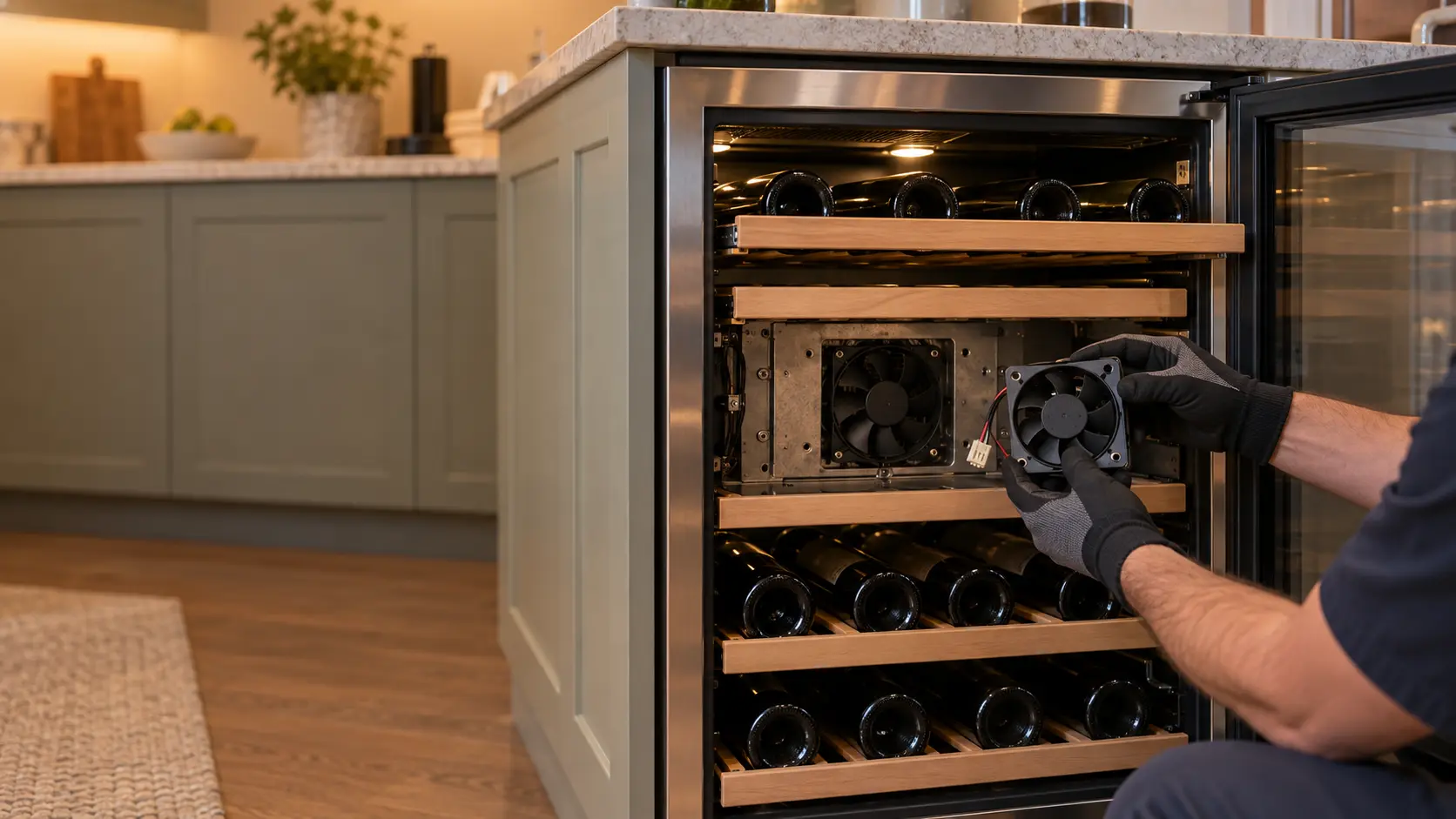
Built-in wine cooler ventilation is the first thing to rule out, because it is the only one of the possible causes an owner can put right in an afternoon. When the grille is clear, the space behind matches the manual and the symptoms stay, a weak condenser fan, a failing sensor or a sealed-system problem are next, and those are repairs.
- Running almost without pause, even at night.
- Warm cabinet sides or a warm countertop above the unit.
- A zone that drifts several degrees above its setting in warm weather.
- Little or no air moving at the toe-kick grille while it runs.
Source: Zephyr — Presrv Wine Cooler Use, Care and Installation Guide (PRW24C01AG) — 1 to 2 inches at the back; 2-1/4 inches minimum door clearance next to a wall; allow the unit to be pulled forward; not behind a closed cabinet door; do not pinch the cord; insufficient ventilation listed as a cause of frequent cycling and failure to reach temperature; grounded outlet, no extension cords, no switched outlet, not shared
The outlet behind the cooler
Zephyr asks for a properly grounded outlet, no extension cords or power strips, an outlet that no wall switch or pull chain can turn off, and no other appliances sharing it. In a built-in, the outlet usually sits in the neighboring cabinet or on the wall behind the opening, low enough that the unit still slides fully home.
Plan the outlet position before the cabinetry goes in. An outlet directly behind the compressor compartment takes up the depth the unit needs for clearance, and a plug wedged against the back of the cooler is exactly how cords get pinched.
Source: Zephyr — Presrv Wine Cooler Use, Care and Installation Guide (PRW24C01AG) — 1 to 2 inches at the back; 2-1/4 inches minimum door clearance next to a wall; allow the unit to be pulled forward; not behind a closed cabinet door; do not pinch the cord; insufficient ventilation listed as a cause of frequent cycling and failure to reach temperature; grounded outlet, no extension cords, no switched outlet, not shared