How quickly a dark cabinet drifts toward the room
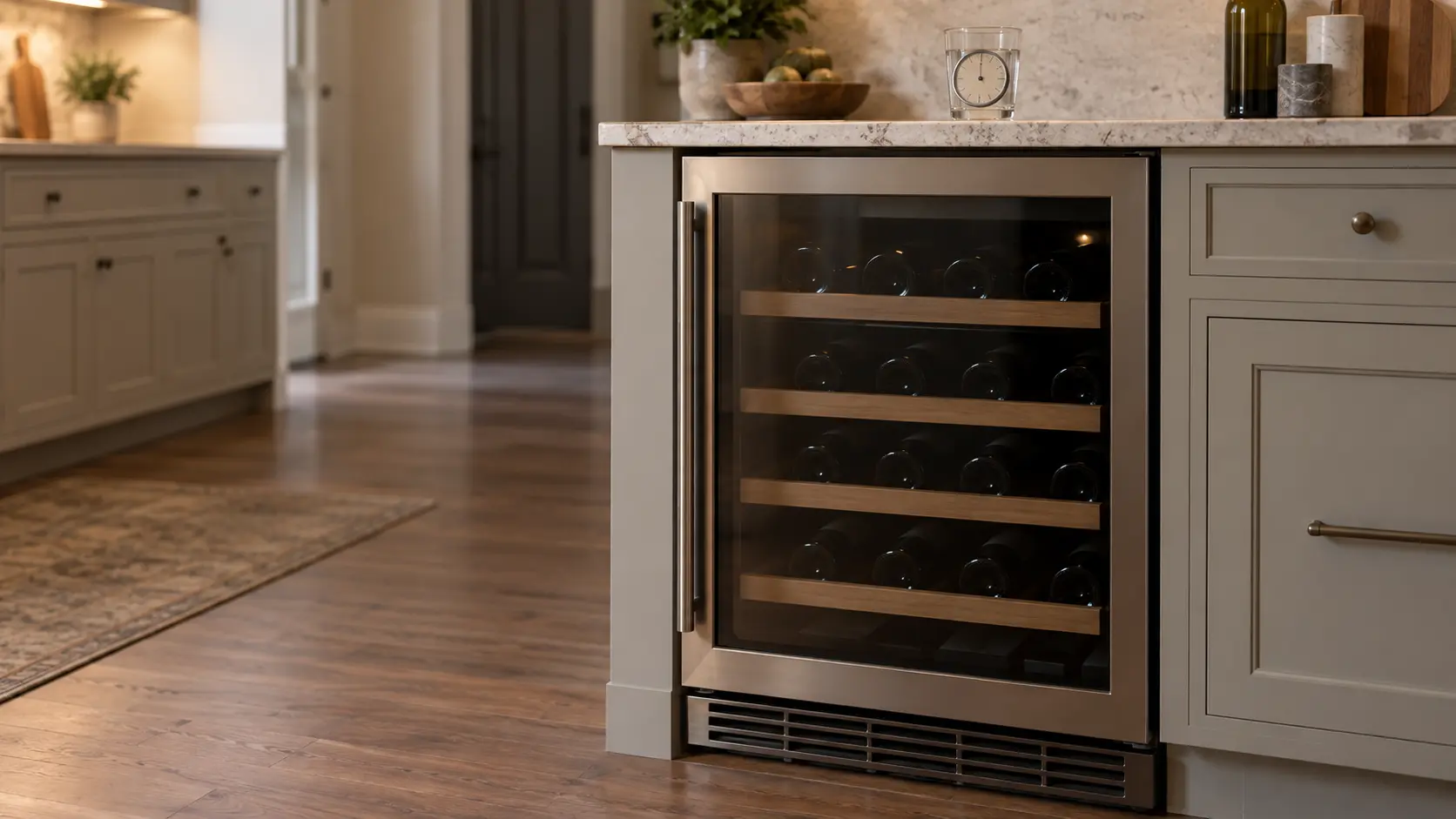
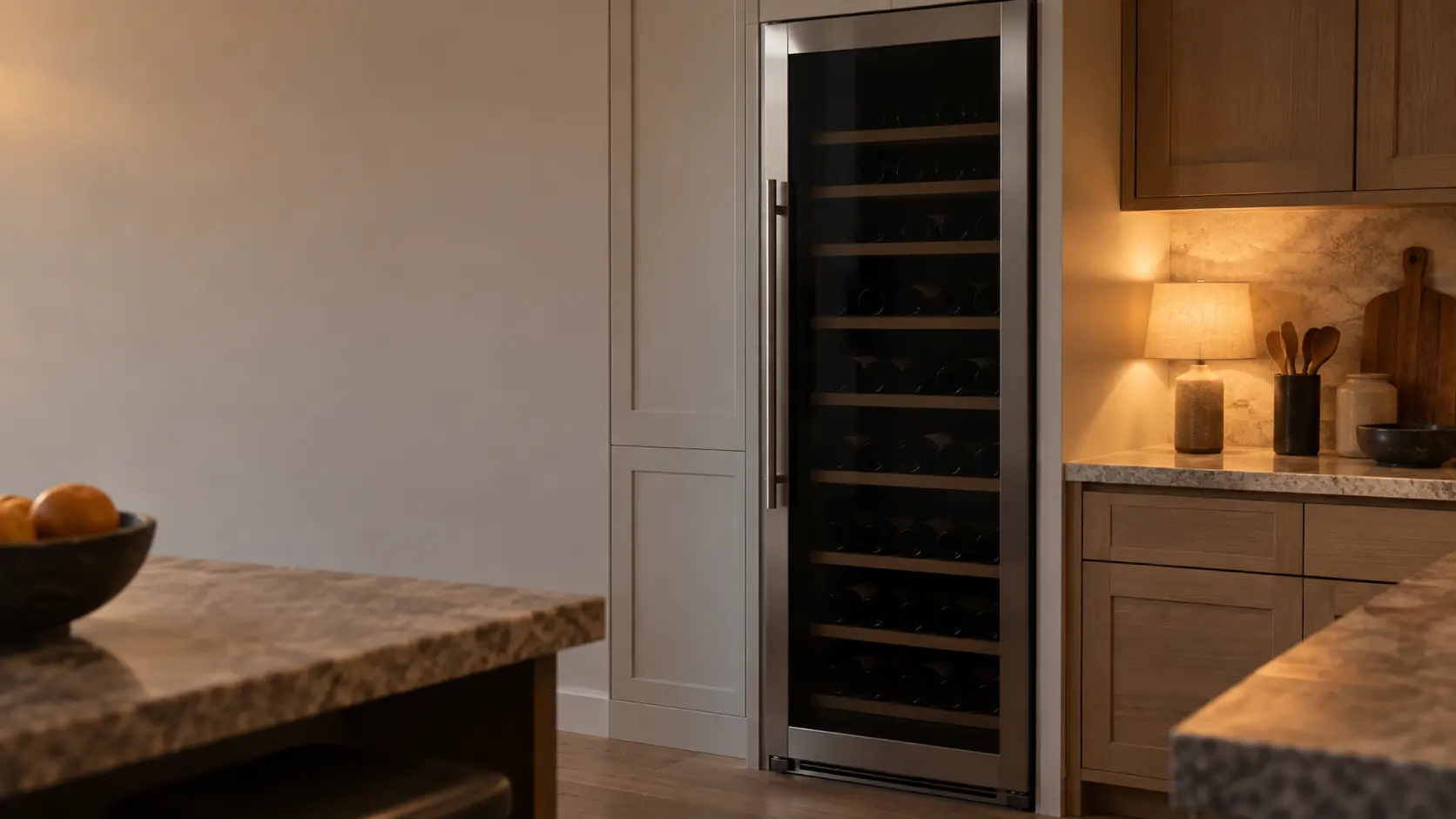
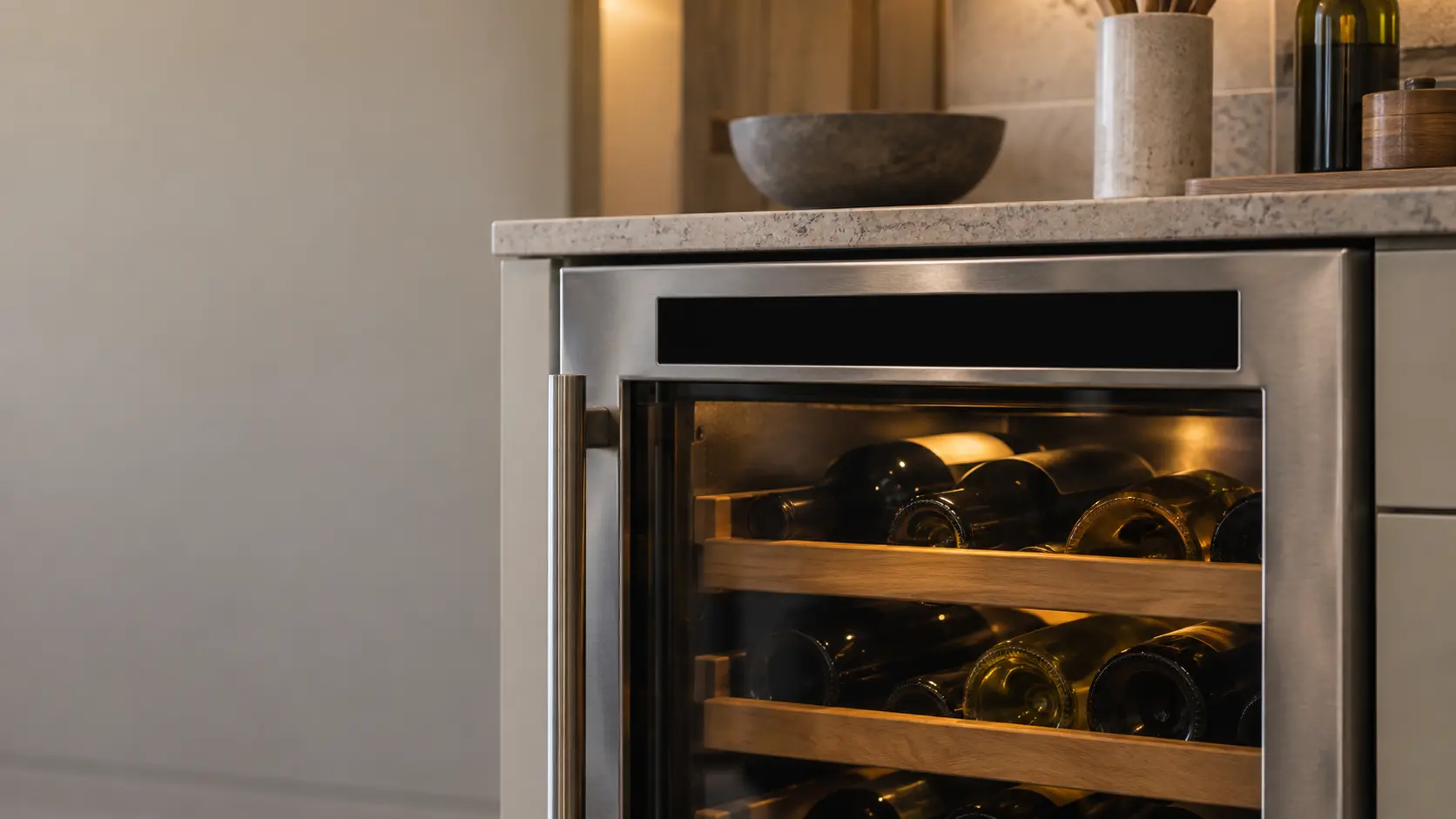
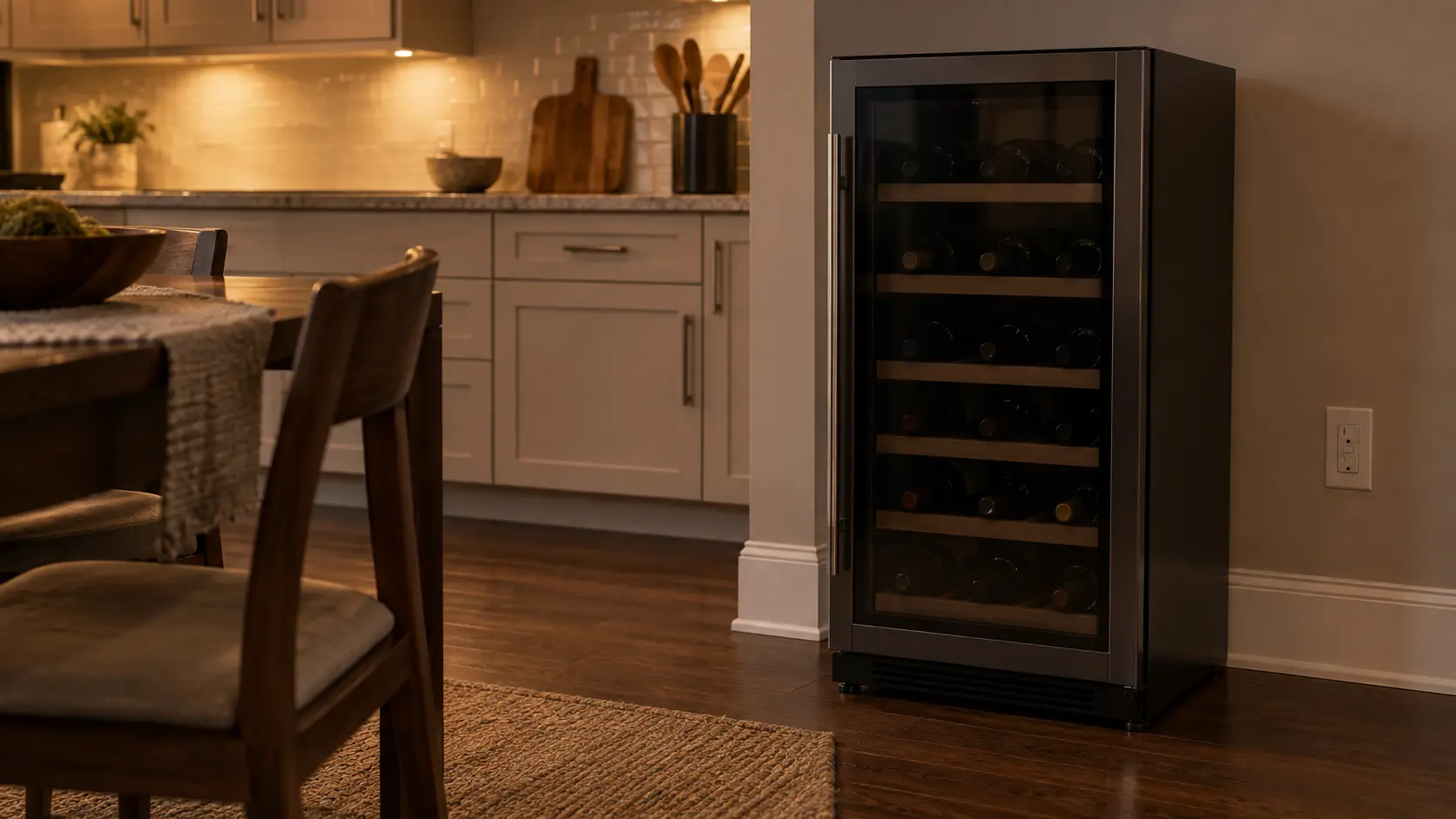
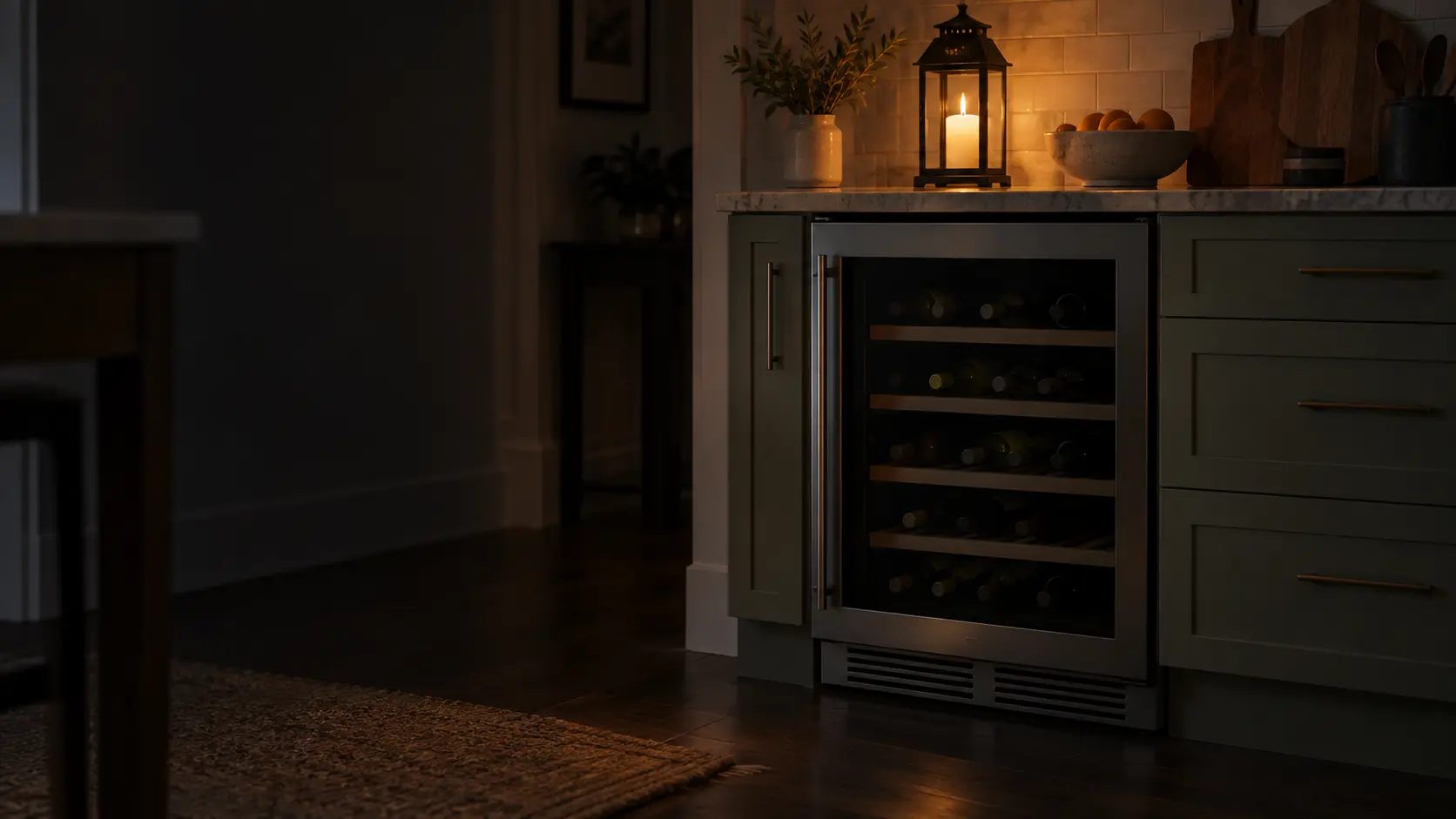
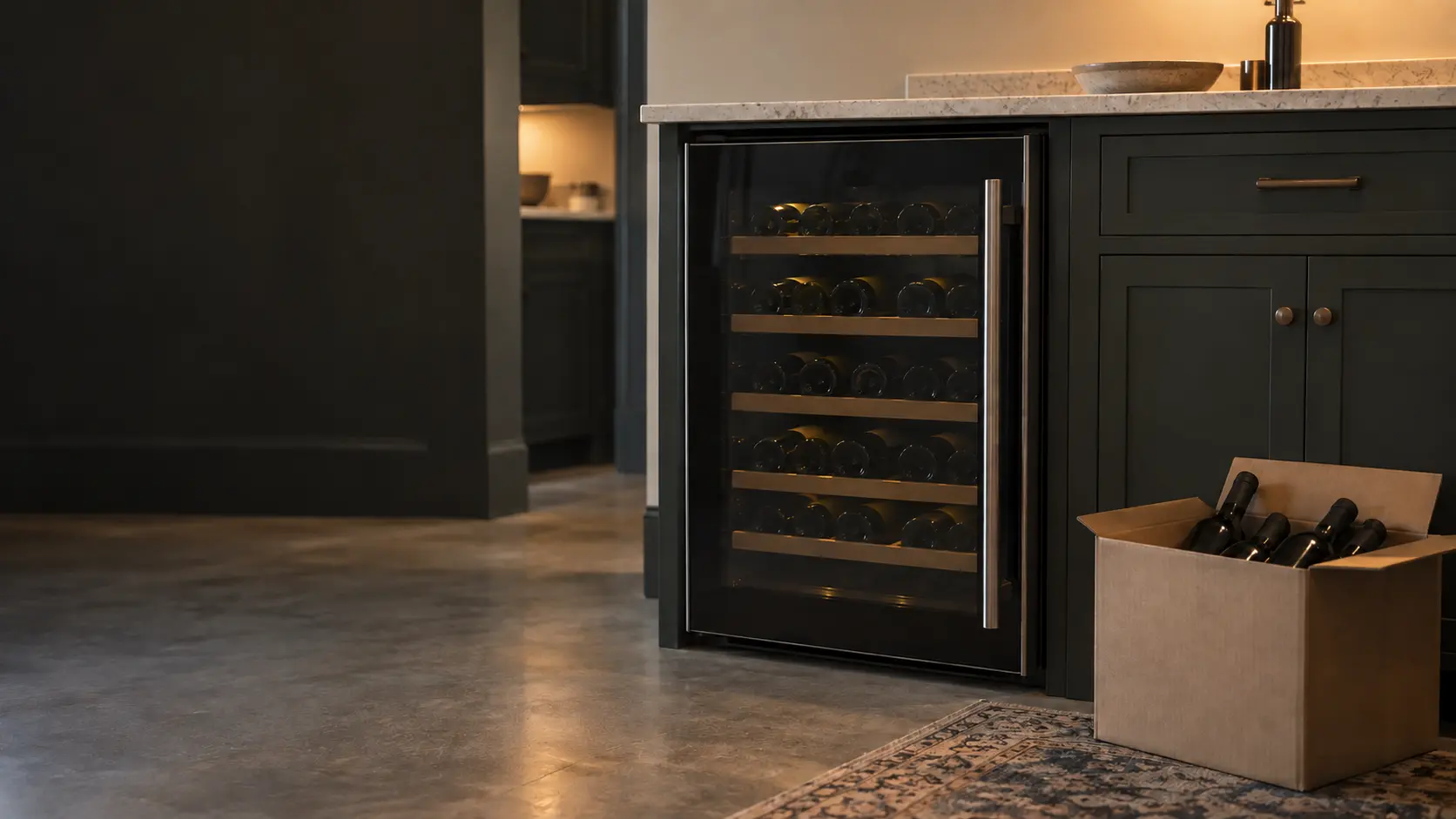
In a wine cooler power outage, a compressor unit holding 55°F in a 72°F house has only about 17 degrees of difference to lose, and it loses them slowly: dozens of bottles of liquid are a large thermal mass, and they warm far more slowly than the air around them. A glass door insulates less than a solid one, so a column with a solid door or a panel-ready front holds a little longer than a small freestanding unit with a full glass face.
The practical question is therefore where the room is heading. Purdue Extension's wine storage guidelines put long-term storage at 50°F to 60°F, accept 75°F or below for one to four weeks, and draw a hard line at 86°F, which wine should never see even for a short time. A one-day blackout in a comfortable house barely touches that table; a two-day blackout in July without air conditioning can cross it.
An outage in the heat of summer
When the grid fails in a heat wave, the air conditioning goes with it, and a kitchen or bar on the sunny side of the house can pass 85°F by mid-afternoon. That is the outage worth acting on. Purdue notes that heat pushes corks and can force wine past the closure, and that sparkling wine, already under high pressure, becomes more dangerous as it warms.
An outage in a cold snap
A cooler in an unheated basement or a closed-off room faces the opposite risk once the furnace stops. According to Purdue, even an hour at 32°F or below can throw tartrate crystals, and wine of 14 percent alcohol or less starts to freeze at 23°F, pushing corks out and eventually cracking bottles. Moving the most valuable cases to a warmer interior room is the fix here, not the basement.
Source: Purdue Extension — Wine Storage Guidelines (FS-58-W) — Long-term storage 50°F to 60°F; 75°F or below tolerable for 1 to 4 weeks; never 86°F or above; crystals after an hour at 32°F; wine of 14% alcohol or less freezes at 23°F; heat raises pressure in sparkling wine
The first hour: what to do and what to leave alone
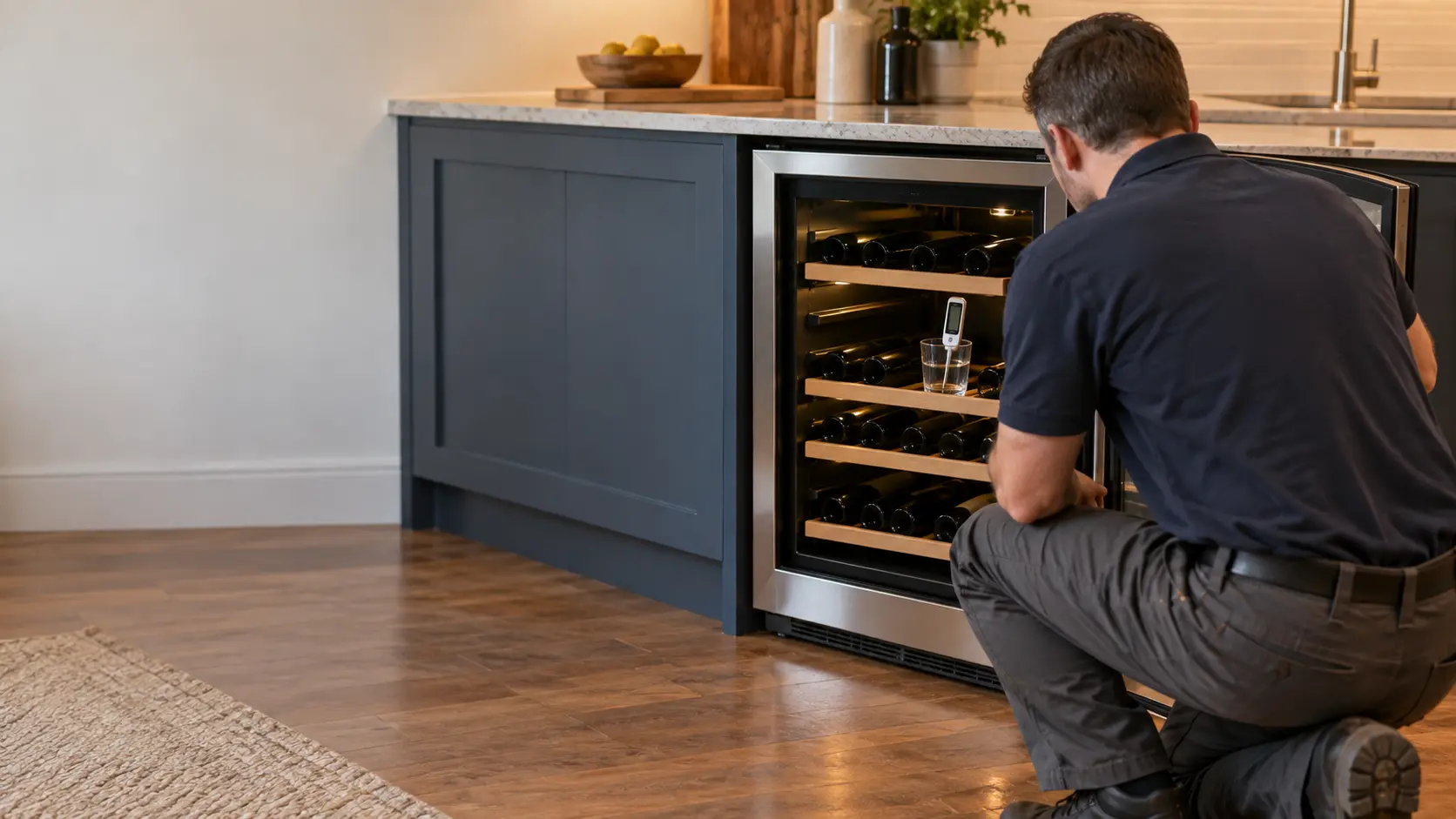
Every opening of the door trades cold air for room air, so the most useful thing you can do is decide once, open once and close it again. If you want a number to watch, stand an appliance thermometer in a glass of water on a middle rack before the door closes; water reads the temperature of the wine far better than a probe hanging in the air.
Ready.gov advises disconnecting appliances and electronics during an outage so the surge when power comes back does not damage them. For a wine cooler that means pulling the plug by the plug body, never by the cord, or switching it off at its control if the plug sits deep behind a built-in.
- Keep the door closed and put a note on it for the rest of the household.
- Place a thermometer in a glass of water on a middle rack, then leave it.
- Unplug or switch the cooler off so the return of power does not hit it with a surge.
- If the house is heating or freezing, make a short list of the bottles you would move first.
Source: Ready.gov — Power Outages — Disconnect appliances to avoid damage from surges; generators outdoors, at least 20 feet from windows, doors and attached garages, with heavy-duty extension cords; carbon monoxide detectors on every level
Cheese, leftovers and anything else that is not wine
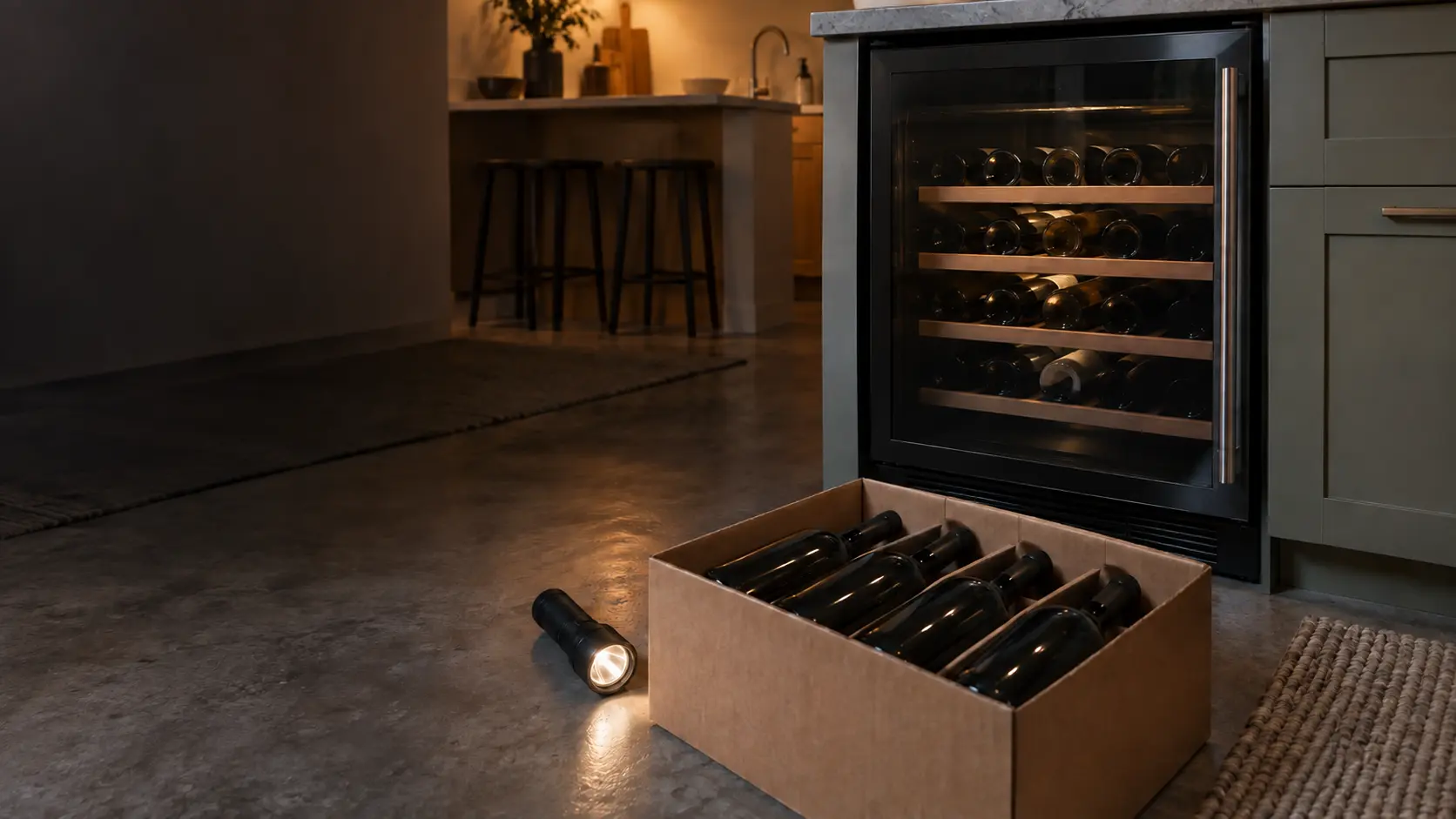
Wine coolers end up holding more than wine: a wedge of cheese, a jar of olives, a tray of appetizers before a party. Zephyr's manual for its single-zone model says the temperature band is set for wine and that perishable food may need a different storage environment. That warning matters more during an outage than at any other time.
FDA publishes two figures for perishables after a power cut, 4 hours above 40°F on one page and 2 hours on another; this site uses the stricter 2. A wine zone set in the mid-50s is already above 40°F, so perishable food stored there was never inside the safe band to begin with. Treat it as food that sat on a counter, and when you are unsure, throw it away without tasting it.
Source: Zephyr — Presrv Wine Cooler Use, Care and Installation Guide (PRW24C01AG) — Temperature band is optimized for wine and perishables may need other storage; no extension cords or power strips; wait at least five minutes before powering back on; FDA — Food and Water Safety During Power Outages and Floods — Discard perishable food held above 40°F for 4 hours or more (this site uses the stricter 2 hours); FDA — Power Outages: Key Tips for Consumers About Food Safety — Discard perishable food held above 40°F for 2 hours or more
Running the cooler from a portable generator
A wine cooler draws modest power, so a portable generator can carry it through a long outage, but only if the generator itself is placed safely. Ready.gov is specific: outdoors only, at least 20 feet from windows, doors and attached garages, kept dry, and connected to appliances with heavy-duty extension cords. Carbon monoxide alarms on every level of the house belong to the same set of instructions.
That cord is an outage measure only. Zephyr's manual says not to run its wine cooler on extension cords or power strips in everyday use, so once the grid is back, the plug goes straight into its own wall outlet again.
When the plug is hidden behind a built-in
An undercounter unit or a full-height column usually plugs into an outlet in the neighboring cabinet or behind the unit itself. Sliding a loaded built-in out of its opening to reach that plug during a blackout risks the floor, the trim and your back. If the cord cannot be reached from a cabinet, leave it where it is and rely on the thermometer instead.
Source: Ready.gov — Power Outages — Disconnect appliances to avoid damage from surges; generators outdoors, at least 20 feet from windows, doors and attached garages, with heavy-duty extension cords; carbon monoxide detectors on every level; Zephyr — Presrv Wine Cooler Use, Care and Installation Guide (PRW24C01AG) — Temperature band is optimized for wine and perishables may need other storage; no extension cords or power strips; wait at least five minutes before powering back on
When the lights come back on
Wait a few minutes after power is restored before switching the cooler back on; Zephyr's manual asks for at least five minutes whenever its unit has been powered off. CPSC's GFCI fact sheet adds a step people rarely think of: test every GFCI after a power failure, because a bar or basement outlet on a GFCI may not come back on its own.
Then give the cabinet time. Sub-Zero's guidance for warm wine storage is to wait 24 hours for the unit to come back to its set temperature, and its general note on refrigeration treats swings of about 5°F as normal. A display that stays blank, a zone that never recovers or a breaker that trips again is the point where the restart guide on this site ends and a diagnostic visit begins.
- Power restored: wait a few minutes, then plug in or switch on.
- Press test and reset on any GFCI that feeds the cooler's outlet.
- Read the thermometer in the glass of water after a few hours, not the display alone.
- Allow a full day before judging whether each zone has recovered.
Source: Zephyr — Presrv Wine Cooler Use, Care and Installation Guide (PRW24C01AG) — Temperature band is optimized for wine and perishables may need other storage; no extension cords or power strips; wait at least five minutes before powering back on; CPSC — What Is a GFCI? (fact sheet) — Test every GFCI after installation, at least once a month and after a power failure; Sub-Zero — Warm Wine Storage Troubleshooting — Allow 24 hours for a wine unit to return to its set temperature; Sub-Zero — Temperature Fluctuations — Swings of about 5°F are normal depending on door openings, humidity and room temperature