
Power first, towels second
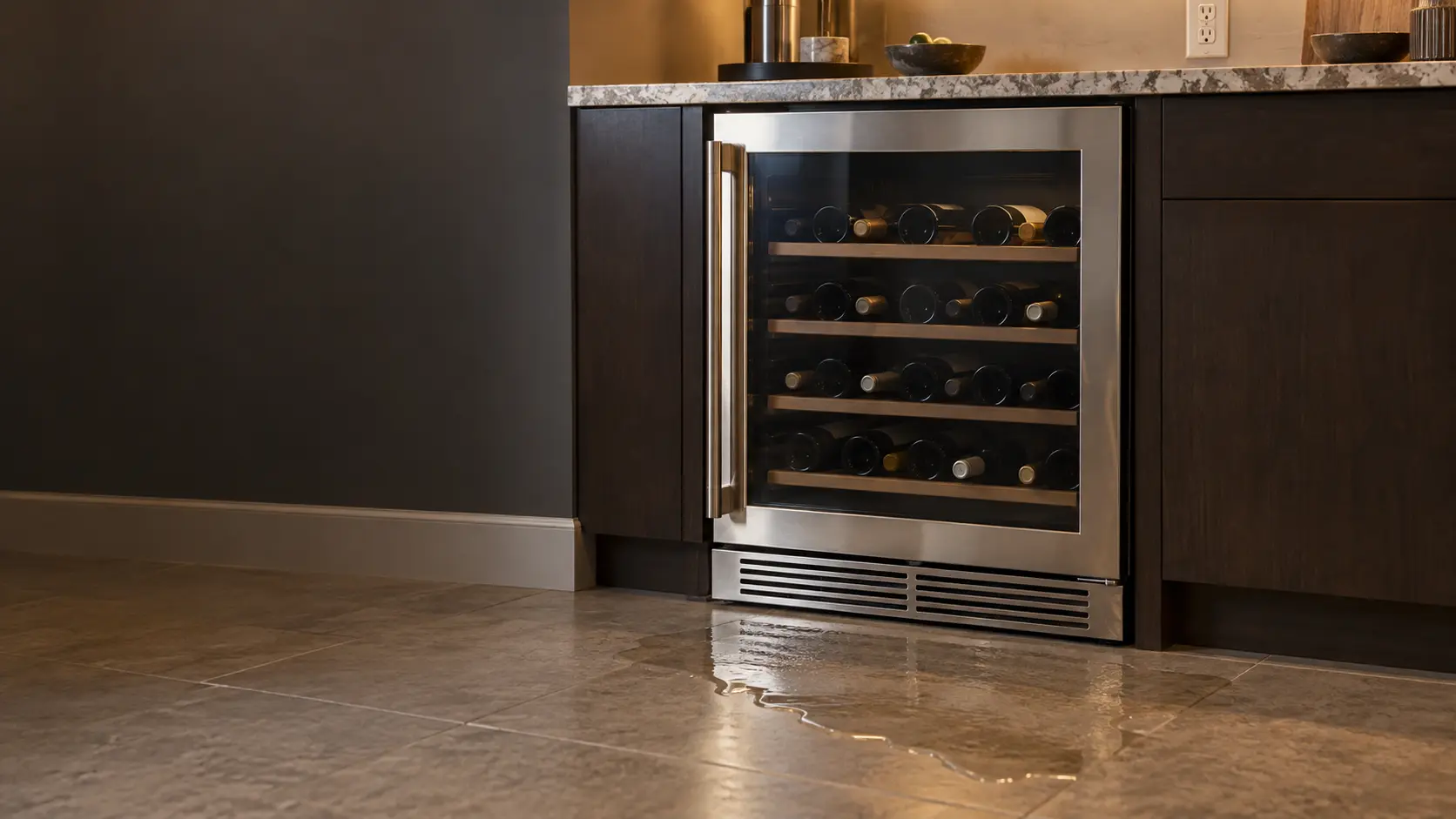
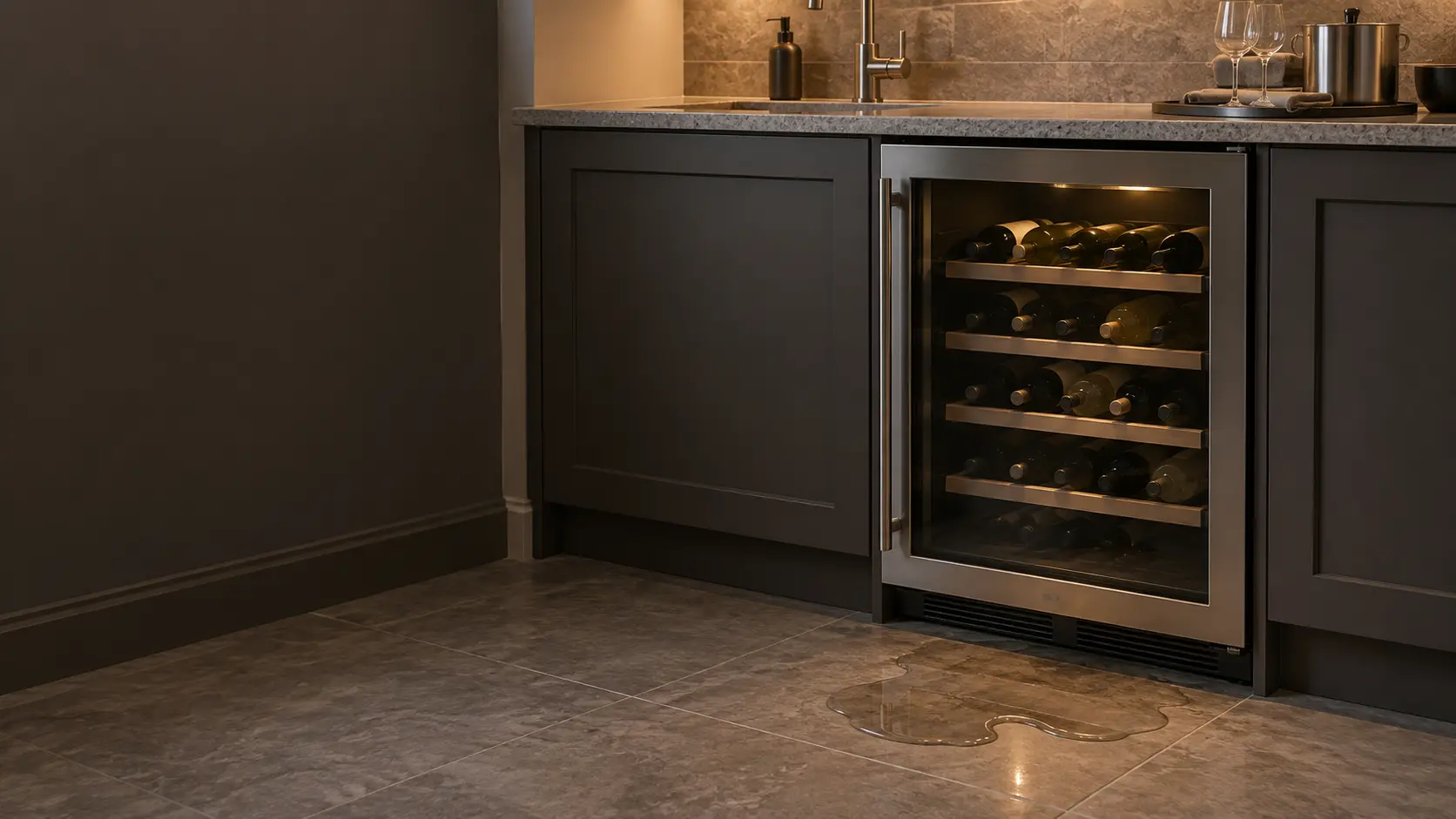
The instinct is to grab a towel and kneel in the puddle to look under the unit. Ready.gov's flood guidance says the opposite: do not touch electrical equipment if it is wet or if you are standing in water, and turn off the electricity only if it is safe to do so. A wine cooler leak that has reached the outlet cabinet turns an ordinary spill into a shock hazard.
Switch the cooler's circuit off at the breaker panel, and only if the panel and the floor in front of it are dry. If the panel sits in a damp basement or you would have to cross the water to reach it, leave everything as it is, keep people and pets away, and call an electrician. Zephyr's manual adds two rules that apply here too: never handle the plug with wet hands, and never pull the unit loose by its cord.
- Keep everyone, including pets, out of the wet area.
- Cut power at the breaker, from a dry floor, if you can reach it without touching water.
- Do not unplug the cooler with wet hands or while standing in the puddle.
- Only after the power is off: towels, a flashlight and a look underneath.
Source: Ready.gov — Floods — Do not touch electrical equipment if it is wet or if you are standing in water; turn off the electricity only if it is safe to do so; Zephyr — Presrv Wine Cooler Use, Care and Installation Guide (PRW24C01AG) — Do not touch the plug with wet hands or unplug by the cord; water running from the evaporator to the water bin is a normal sound; unplug to let heavy frost melt; an electrified cabinet calls for an electrician to test the grounding
What the GFCI at a wet bar is for
A GFCI watches the current going out and coming back on a circuit. CPSC's fact sheet says it cuts power when the two differ by as little as 0.006 amperes, faster than a blink, which is exactly what can happen when water finds the path between an outlet and the floor. It can sit in the outlet itself or in the panel as a breaker, and one GFCI outlet also protects outlets further along the same run.
The National Electrical Code dates CPSC lists show why older homes vary: kitchen receptacles from 1987, unfinished basements and crawl spaces from 1990, wet bar sinks from 1993. A bar built before those years may have no protection at all, which is one more reason to cut power at the panel rather than trust the outlet.
When the GFCI has already tripped
A dark cooler and a tripped GFCI together usually mean the device did its job. Pressing reset while the cabinet floor or the plug is still wet invites it to trip again, or worse, if it has been damaged. Dry the area, leave the cooler unplugged, and reset only once nothing near the outlet is damp.
Testing it on a calmer day
CPSC asks for every GFCI to be tested after installation, at least once a month and after a power failure. Press test, confirm the outlet goes dead, press reset. An outlet that will not trip, or will not reset, is a job for an electrician.
Source: CPSC — What Is a GFCI? (fact sheet) — A GFCI interrupts power when current differs by as little as 0.006 amperes; NEC dates for kitchens (1987), unfinished basements and crawl spaces (1990), wet bar sinks (1993); test after installation, monthly and after a power failure

Where the water under a wine cabinet comes from
Every compressor wine cooler makes water. Moisture from the air collects on the cold evaporator, runs down during each defrost and is carried to a pan near the compressor, where warm air evaporates it; Zephyr's manual even lists the sound of that water running into its bin as normal. Most leaks are this water arriving somewhere other than the pan.
Thermoelectric coolers have no compressor, but their cold side still pulls moisture out of the air, in much smaller amounts. A real puddle under a small thermoelectric unit is therefore worth a second look at everything around it before the cooler takes the blame.
A drain line or pan that no longer does its job
When the drain hole at the back of the cabinet clogs with debris or slime, water pools on the cabinet floor under the bottom rack and eventually spills out under the door. A pan that has cracked or slipped off its bracket sends clean water straight onto the floor behind the toe kick.
Frost that melted all at once
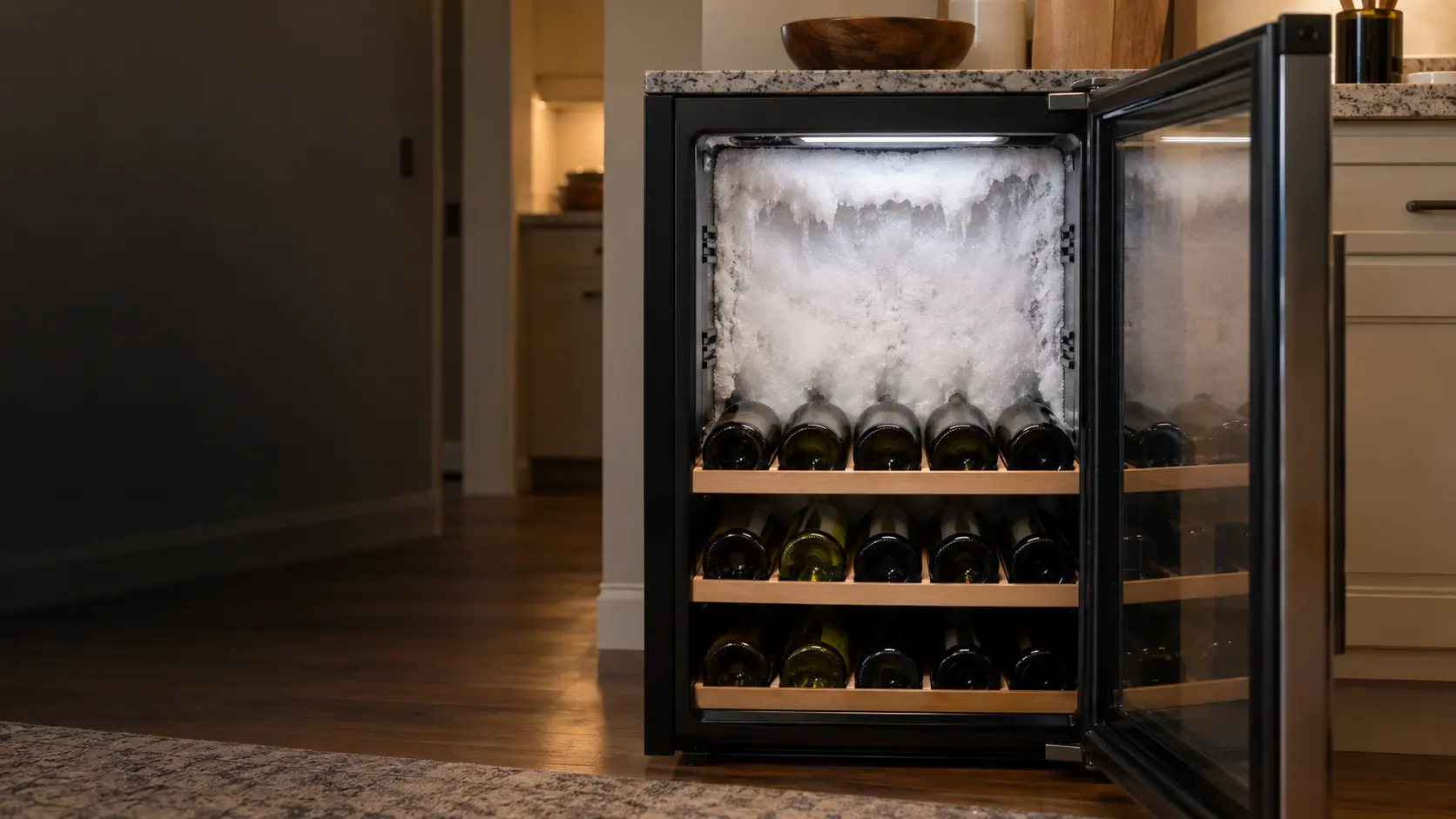
A cooler that has been running cold for weeks can build a sheet of ice on its back wall. Zephyr's troubleshooting page suggests unplugging the unit to let heavy frost melt, and when that happens, far more water arrives than the pan was sized for.
Water that was never the cooler's
Under a bar counter, the wine cooler is often the lowest thing in the cabinet run, so water from a sink trap, a faucet supply line or the ice machine next to it collects at its feet. Dry the floor and lay paper towels along each side: the side that gets wet first points to the source.
Source: Zephyr — Presrv Wine Cooler Use, Care and Installation Guide (PRW24C01AG) — Do not touch the plug with wet hands or unplug by the cord; water running from the evaporator to the water bin is a normal sound; unplug to let heavy frost melt; an electrified cabinet calls for an electrician to test the grounding
A sweating glass door in a humid room
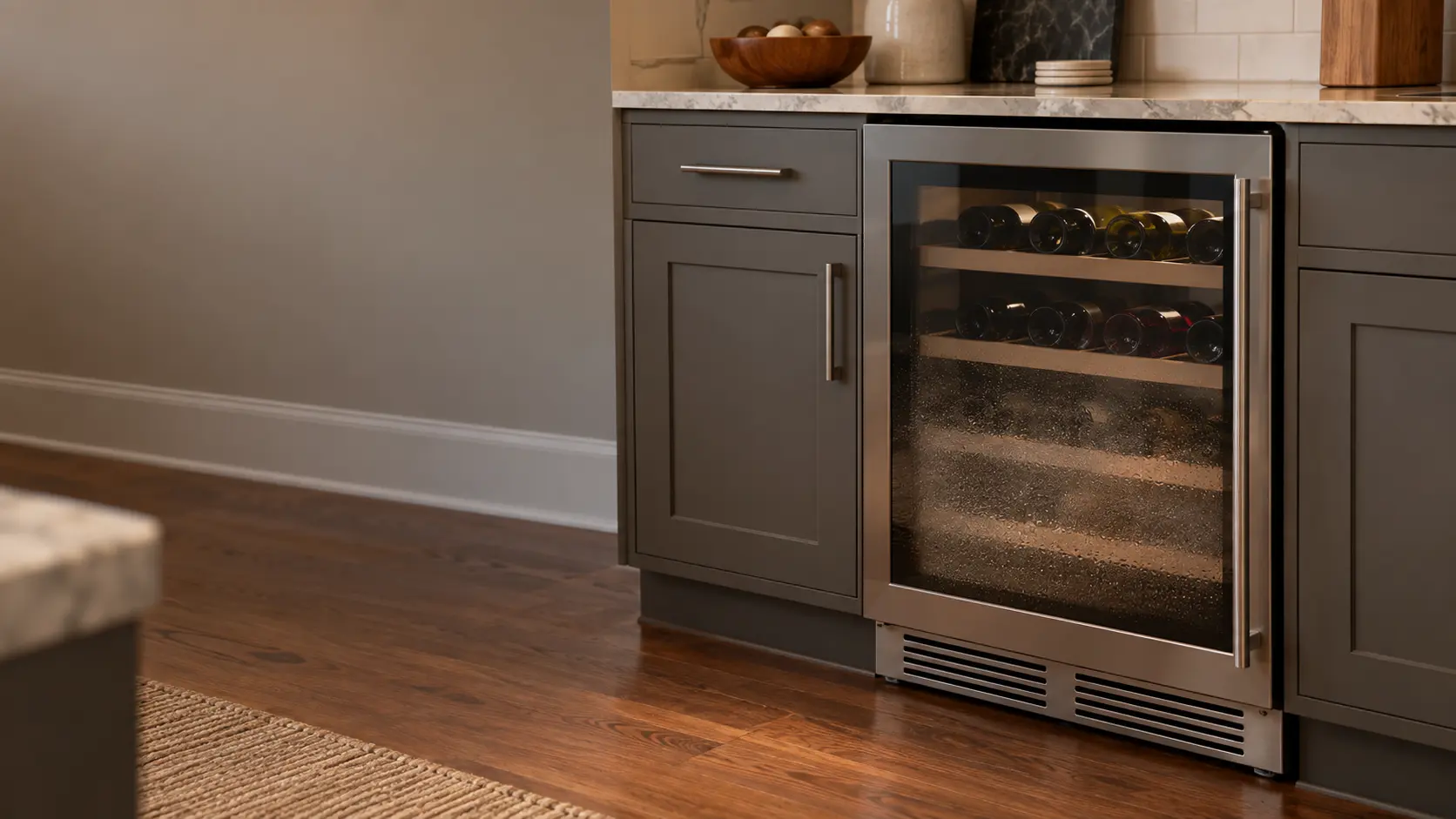
In summer, a glass door that is colder than the room collects condensation on its outer face, and the drops run down onto the floor in front. That water is harmless to the wiring as long as the outlet is not below it, but it points to a gasket that no longer seals or a room that is far more humid than the cooler was meant for.
Sub-Zero notes that excessive humidity does not damage wine itself but can rot labels and cardboard cases. If bottles have been sitting in a wet cabinet, lift them out, let them dry on a towel, and keep the cases off the floor until the source is found.
- Drops on the outside of the glass: room humidity or a tired door gasket.
- Water on the cabinet floor inside: the drain hole at the back.
- Clean water behind the toe kick: the pan or its drain tube.
- Water that reaches the cooler from one side: the sink or its neighbor.
Source: Sub-Zero — How Humidity, Temperature, Vibration and Sunlight Affect Wine — Excessive humidity does not damage wine but can rot labels and cardboard boxes
Before plugging it back in
A cooler whose base, cord or plug has been in water should stay unplugged until someone has looked at the wiring. Zephyr's troubleshooting table lists a cabinet that is electrified as a grounding problem for an electrician, not for the owner, and a tingling touch on the steel trim is a sign to stop at once.
While it is off, the wine is on the clock. At room temperature the collection has days rather than hours, but if the cabinet will stay dark for longer, the guide on moving bottles out of a failed cooler covers what to take and where to put it.
Source: Zephyr — Presrv Wine Cooler Use, Care and Installation Guide (PRW24C01AG) — Do not touch the plug with wet hands or unplug by the cord; water running from the evaporator to the water bin is a normal sound; unplug to let heavy frost melt; an electrified cabinet calls for an electrician to test the grounding