
Keeping the bottles, the wiring and the floor safe
The collection, power and water
guides.
How to protect the collection when the power fails or the cabinet warms, where to move the bottles that matter, and what to do about water near an outlet or a smell of burning.
Mon–Sat, 8am–8pm
- Three guides
- Read before you book
- Says where to stop
Book a visit
Three short steps, about a minute.
or call (844) 709-0727
Loading appointment form…
The appointment form couldn’t load. Please try again.
The collection, power and water,
guide by guide.
A wine cooler rarely puts anyone in danger, but the things around it can: the outlet in the next cabinet, the bar sink a foot away, the generator someone wheels in during a storm. And the collection inside it can be worth more than the appliance several times over, built up one case at a time over years. This section covers the moments when the people, the power and the wine are all at stake at once.
All 18 guides
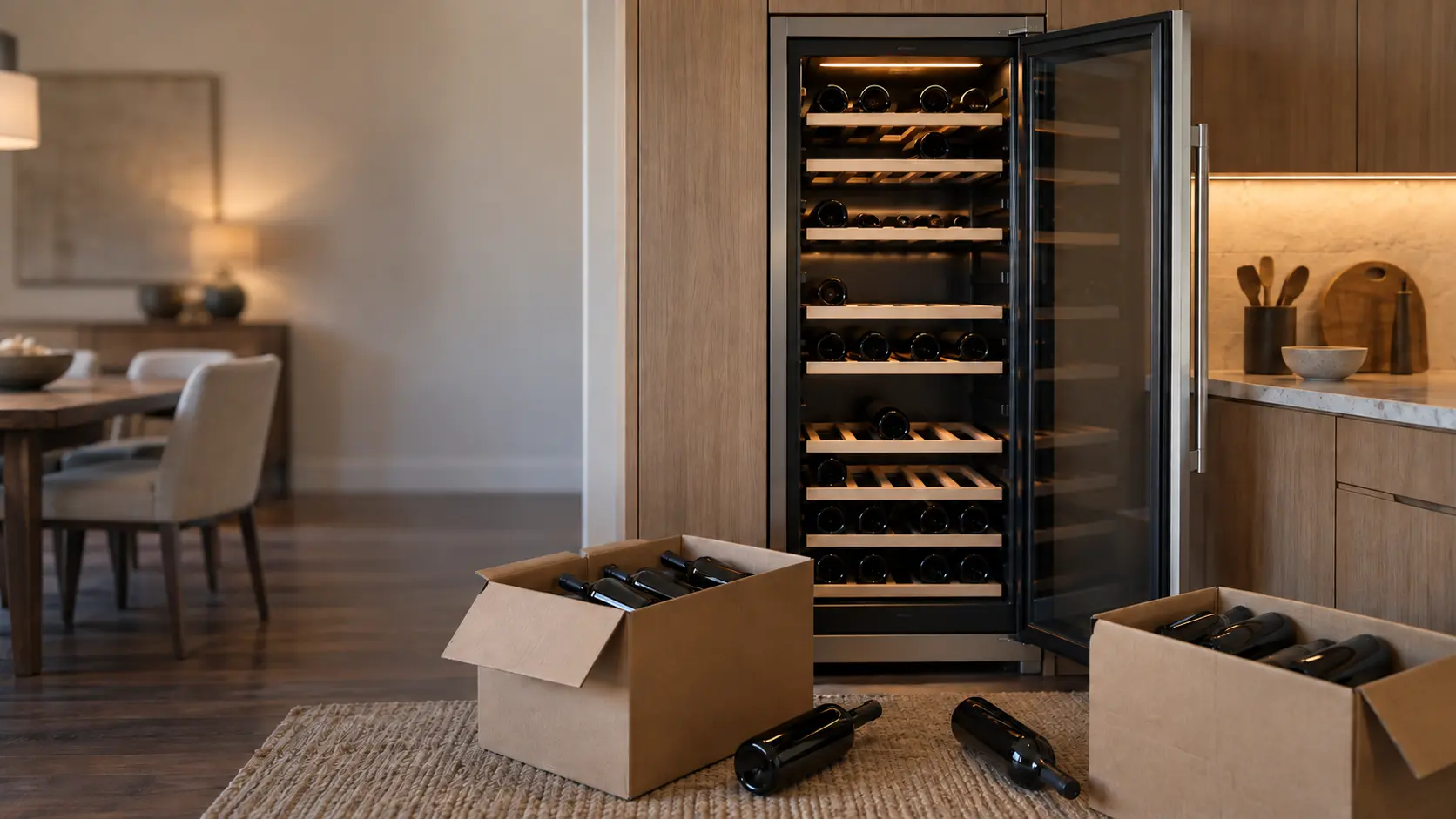
Keeping the bottles, the wiring and the floor safe.
The figures here come from sources that publish them officially. Storage temperatures and how long wine tolerates heat or cold follow Purdue Extension's wine storage guidelines; outage and flood safety follow Ready.gov; what a GFCI does and how often to test it follows CPSC; restart times and installation rules come from the makers' own manuals and help pages. Each source is printed under the part of the guide it supports.
Food turns up here only because wine cabinets end up holding cheese, charcuterie and party trays. A wine zone set in the fifties sits above the 40°F line FDA uses for perishables, so food kept there follows FDA's rules, and this site applies the stricter of its two figures: 2 hours above 40°F and it goes.
The three guides split by moment. When the power has just gone out, start with the outage guide. When water is on the floor near an outlet, the leak guide puts the power first and the search for the source second. When the cabinet has failed and a repair is days away, the guide on moving bottles helps you decide whether to move anything at all, and how.
Not sure where to start?The short answerProtecting Wine During a Power Outage: The Room Decides, Not the Clock
In a wine cooler power outage, keep the glass door shut, read a thermometer instead of guessing, and judge by the room: Purdue Extension lists 75°F or below as tolerable for one to four weeks, while 86°F is never acceptable.
The short answerA Wine Cooler Leak Near an Outlet: Power Off First, Then Find the Water
A wine cooler leak near an outlet is an electrical problem before it is a plumbing one.
The short answerMoving Bottles When the Wine Cooler Fails: What to Take, Where, and When
Moving wine bottles out of a failed wine cooler is worth it when the cabinet climbs past about 75°F, drops toward freezing, or will stay off for weeks.
When reading
is not enough.
If the checks in these guides did not settle it, the visit picks up from there, stop by stop.
What repairs cost- 01Each zone measured first
- 02A figure before any work starts
- 03The usual wine cooler parts on board
- 04Settled back at cellar temperature
The problems
these answer.
Each has a page of its own, with the causes in the order worth checking.
All 17 problems

Questions about
the collection, power and water.
Is wine in danger during a short power cut?
What should I do first when water reaches the outlet beside my wine cooler?
Can I keep cheese or leftovers in a wine cooler?
When is it worth taking the bottles out of a broken wine cooler?
The other
sections.
Split by what you are trying to find out rather than by which part of the appliance it concerns.
All guides
Installation and setup
Start from your question
The four questions most visits start with, each with the guide that answers it.
18 guidesWhere to start Where to startBack to your everyday
Let’s get your wine cooler working again.
Three short steps online, or one call. Tell us what you are seeing and pick a window that works.