
Wine Cooler Temperature Swings
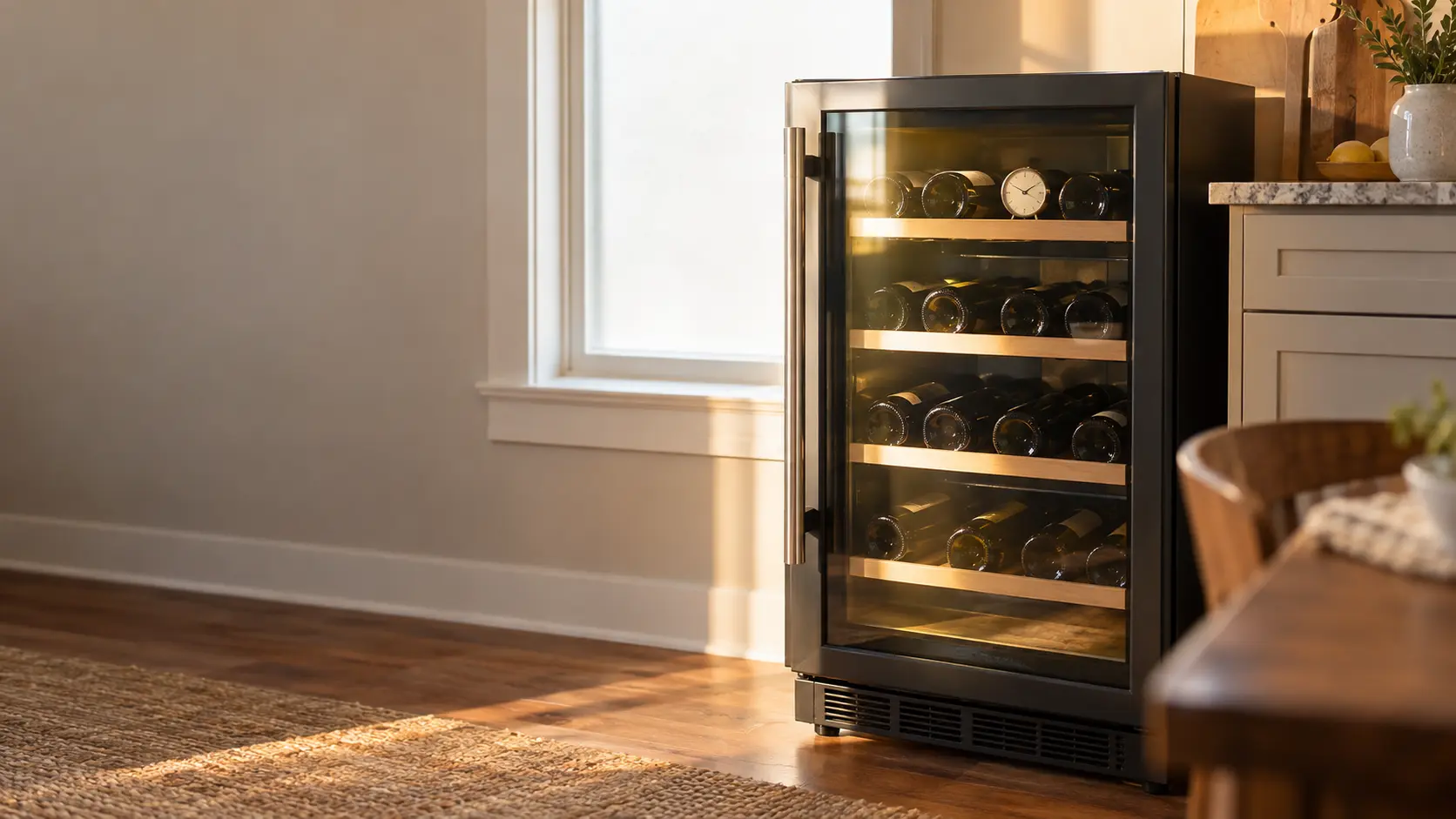
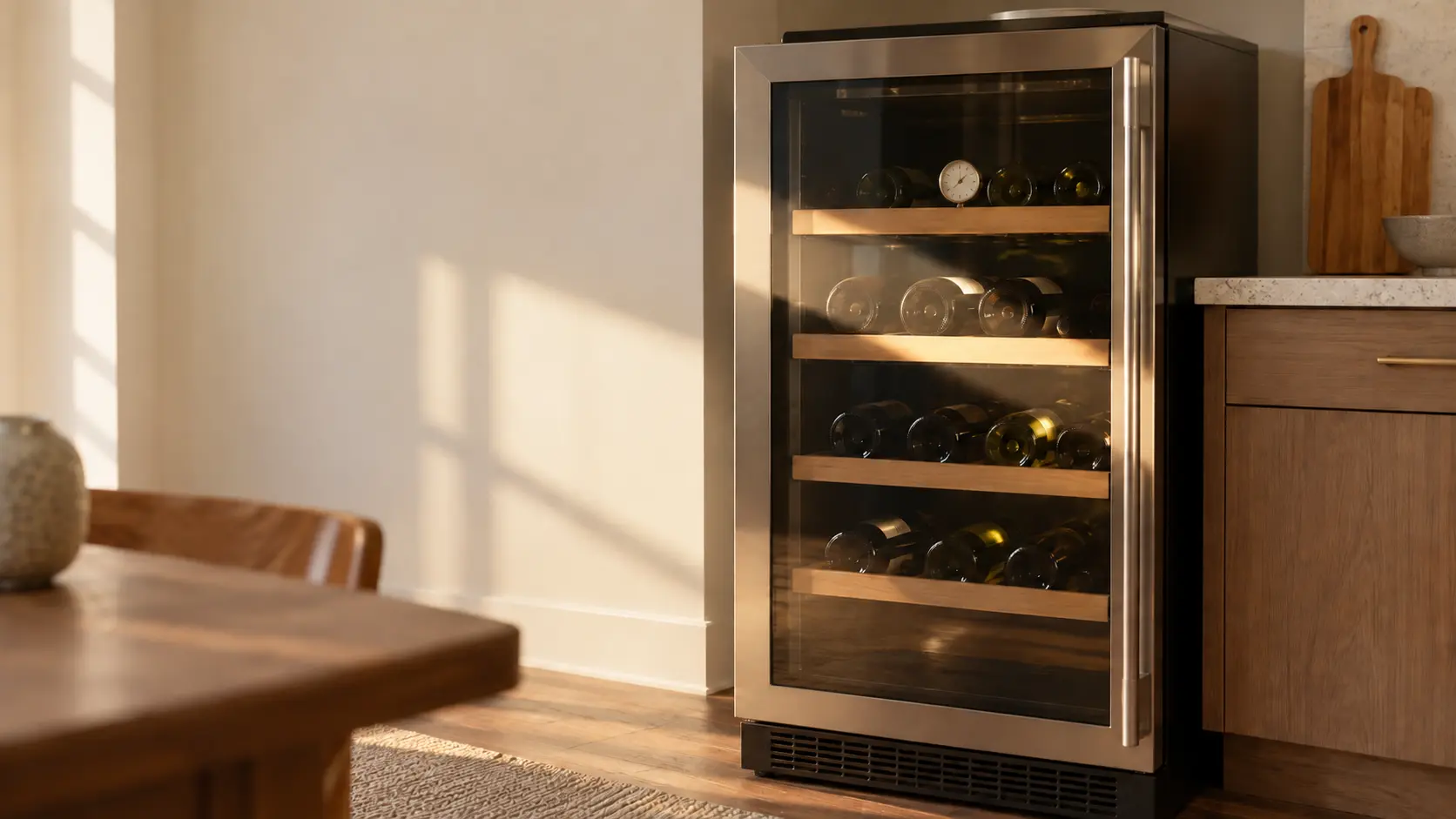
Wine cooler temperature swings show on a thermometer as a cabinet that reads 52°F in the morning and 62°F by evening, or as a display that keeps changing its number, while the bottles age unevenly behind the glass.
Mon–Sat, 8am–8pm
- 5 checks before you book
- 5 questions that narrow it
- 5 causes, cheapest first
Book a visit
Three short steps, about a minute.
or call (844) 709-0727
Loading appointment form…
The appointment form couldn’t load. Please try again.
What it
usually means.
Steadiness matters more to wine than any single number. A cabinet that climbs and falls by several degrees every day makes the wine expand and contract in the bottle, working a little air past the cork each time. Some movement in the air is normal: the air near the glass warms whenever the door opens, and a compressor cools in cycles. The wine itself, with far more mass, should hardly move. When a thermometer in a glass of water on the rack moves as much as the air does, something is off: a sensor that reacts too late, a fan that no longer circulates air between the racks, a door that does not close tight, afternoon sun on the glass door, or a thermoelectric unit working at the edge of what it can do in a warm room.
 The 5 causes, cheapest first
Answer these first
Does a thermometer in a glass of water move as much as the display, or only the air reading?
Does the swing follow the day, such as sun on the glass in the afternoon or a warm kitchen at dinner time?
Is the door opened often, or left open while bottles are chosen?
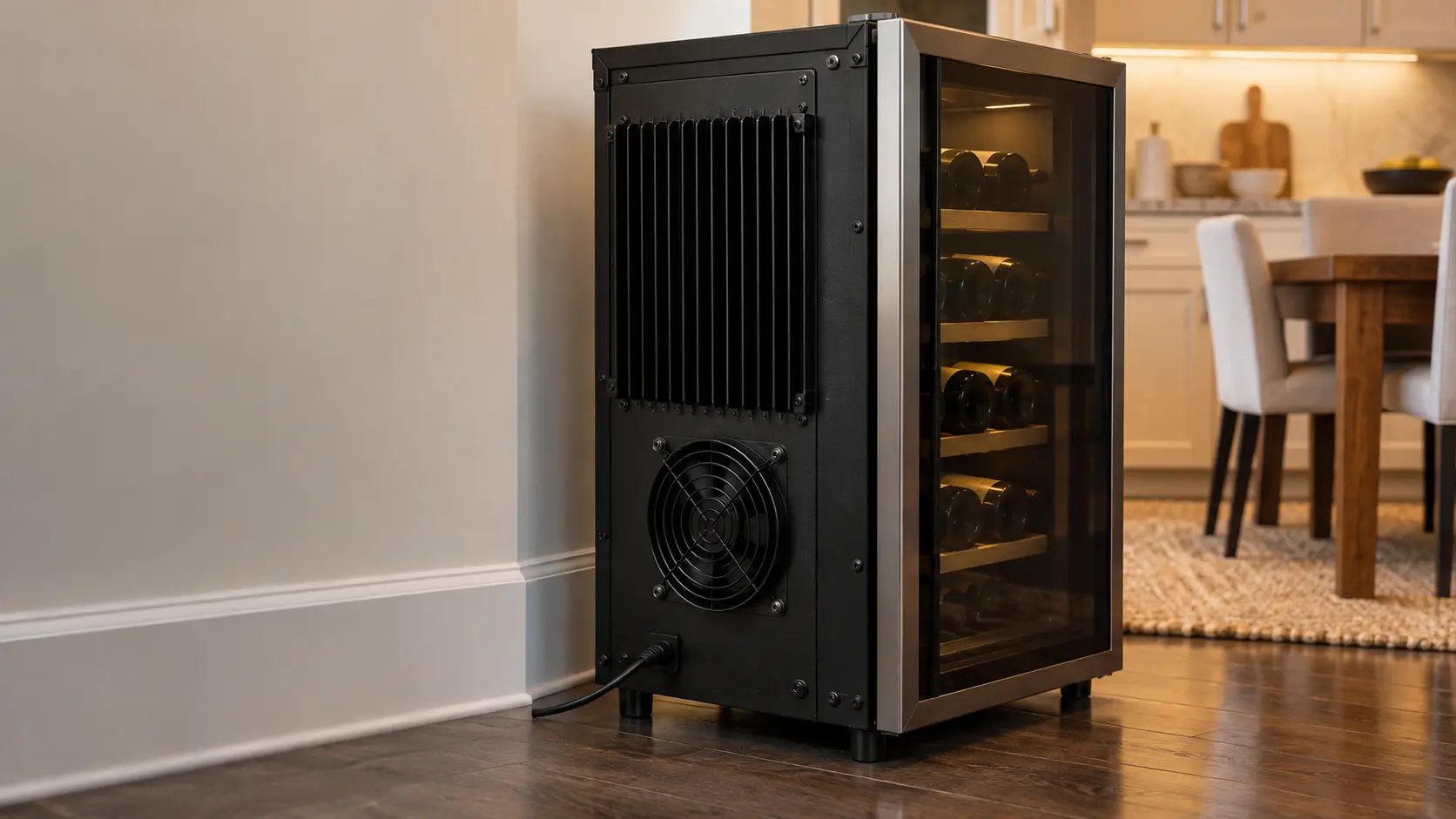
Is it a thermoelectric unit in a room that warms into the high 70s?
Can you feel the inside fan moving air, and is the top rack warmer than the bottom one?
Check these
before you book.
Wine cooler temperature swings: 5 checks, and none of them costs anything.
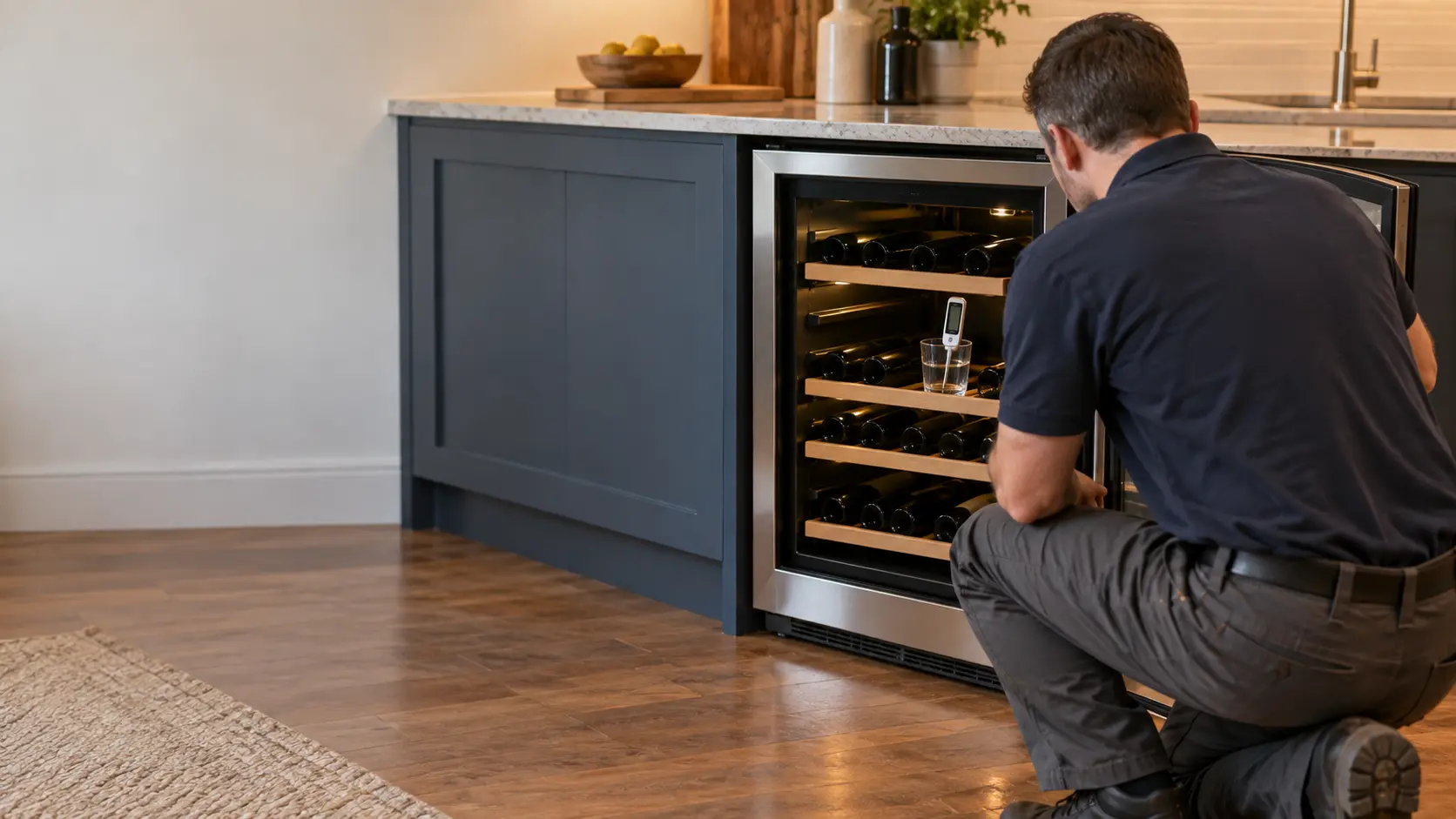
Leave a thermometer in a glass of water on the middle rack and read it morning and evening for two days.
Keep the door shut between visits to the collection, and choose bottles quickly.
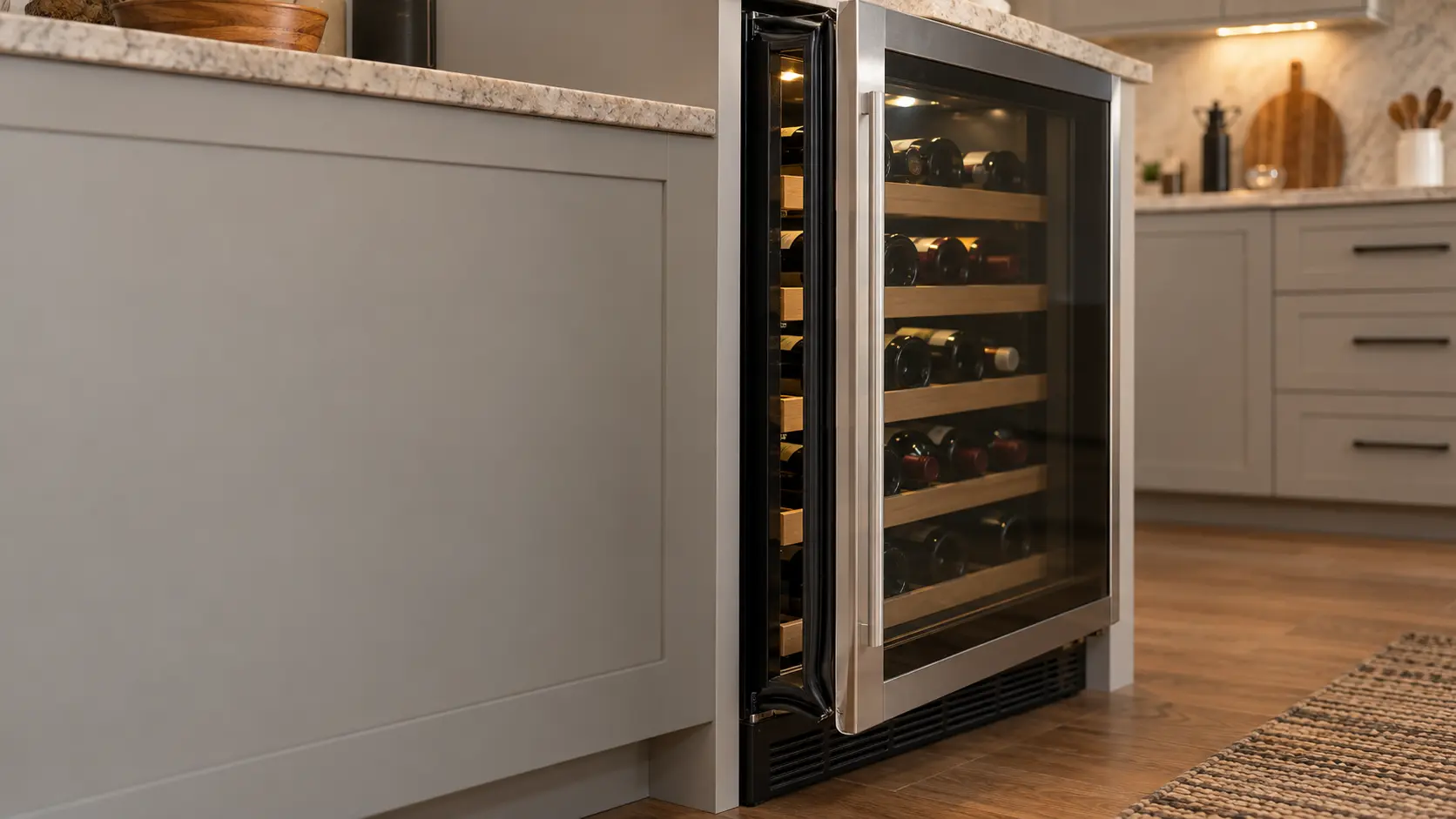
Check that no sun reaches the glass door at any hour and that no heat source stands beside the cabinet.
Also worth checking
- Open the door briefly and listen for the inside fan, and note whether the top rack feels warmer than the bottom one.
- Tell us the model, whether it is thermoelectric or compressor, and the readings you took.
How soon does it need a visit?
Swings of a few degrees are not urgent, but they add up over months of storage. Book a visit if the wine itself, measured in water, moves by more than about five degrees in a day.
The causes,
cheapest first.
5 things wine cooler temperature swings turns out to be, from sun or a heat source near the glass door to thermoelectric module at its limit.
The cost guide-
01 no repair
Sun or a heat source near the glass door
Direct sun, a heating vent or an oven next to the cooler loads the glass door with heat, and sunlight also harms wine. Moving the cooler or shading the glass fixes both.
-
02 low to moderate
Inside fan stopped
Without the inside fan the air settles in layers, warm at the top and cold at the bottom, and the sensor sees only one of them.
-
03 low to moderate
Sensor drifting or reacting late
A sensor that reads unevenly starts the cooling late and stops it late, so the cabinet overshoots in both directions.
-
04 low
Gasket letting room air in
A gasket flattened or torn at one corner lets warm air in all the time, and the cooler catches up only in bursts.
-
05 moderate
Thermoelectric module at its limit
A solid-state unit whose module is weakening holds its temperature at night and loses it in the warmest hours of the day.
-
What it costs
Every repair on the site's cost scale, side by side
Open the cost guide
What else
it could be.
Most often confused with wine cooler not cooling, then wine cooler fan not running.
All problems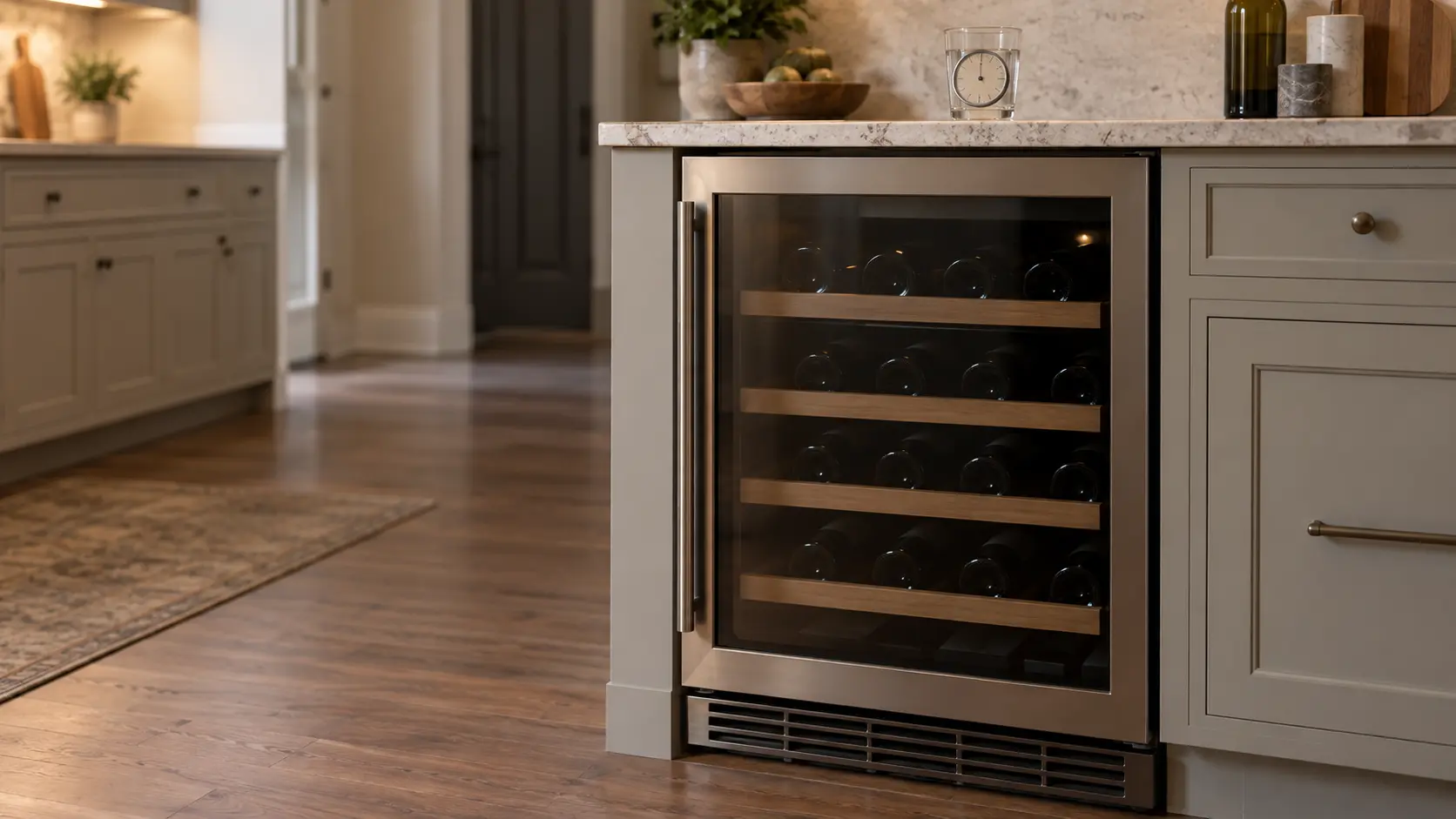
The makes
it happens on.
25 makes on this site; wine cooler temperature swings can show up on any of them. Each mark opens that make's own page.
All 25 brandsWine Cooler Temperature Swings,
where we come out.
9 metros, each with its own page.
All service areasTampa BayFL · 31 areas
Miami / South FloridaFL · 47 areas
New York MetroNY · 75 areas
HoustonTX · 36 areas
ChicagoIL · 50 areas
Los AngelesCA · 95 areas
San DiegoCA · 31 areas

Questions about
wine cooler temperature swings.
How much change is normal inside a wine cooler?
Does the display show the temperature of the wine?
Is the glass door the reason my cooler will not stay steady?
Can swings harm wine even when the average is right?
Back to your everyday
Still seeing wine cooler temperature swings?
Book with what you checked above — 5 answers save the technician the first part of the visit.