A bottle of water tells the real temperature
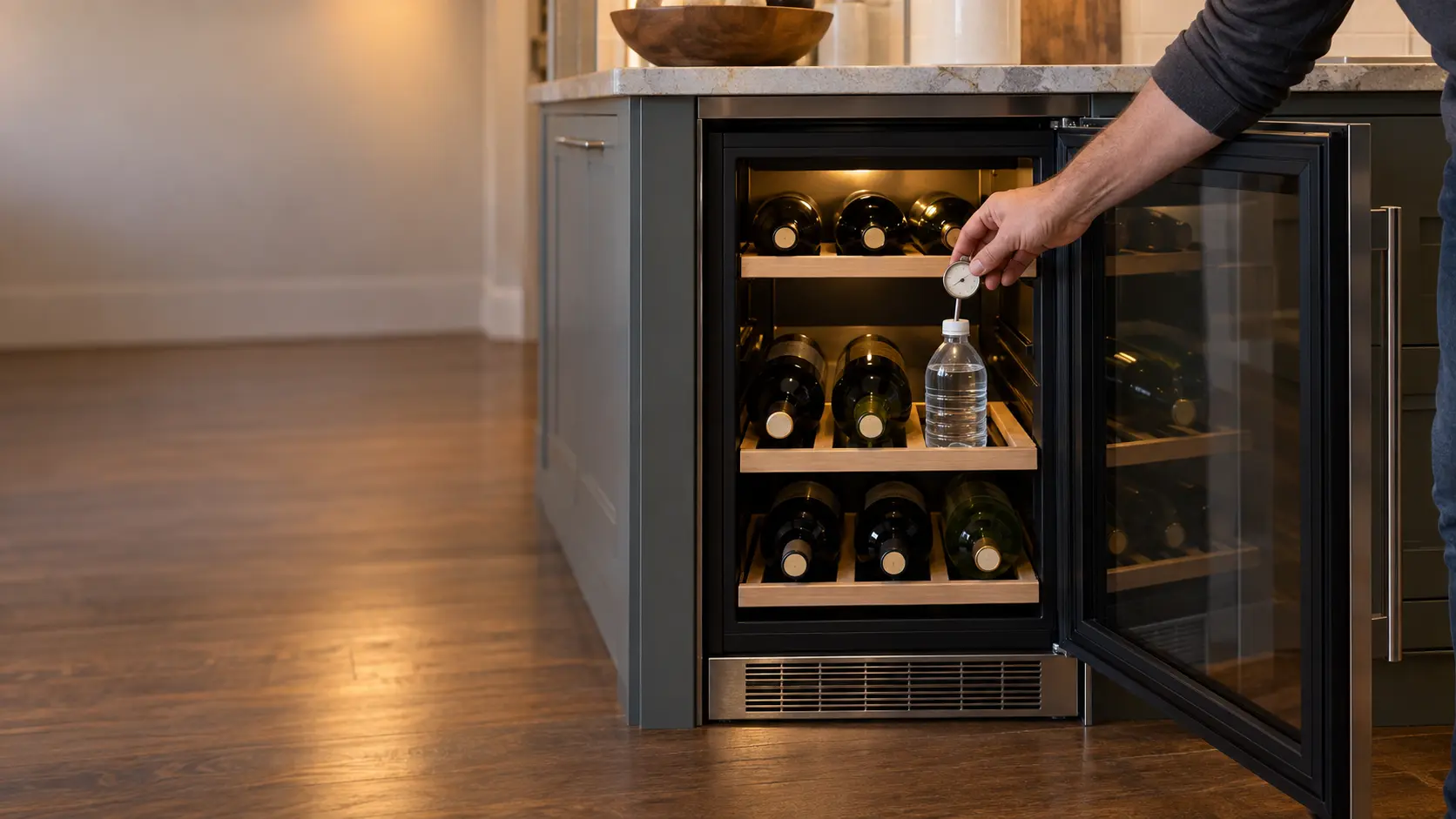
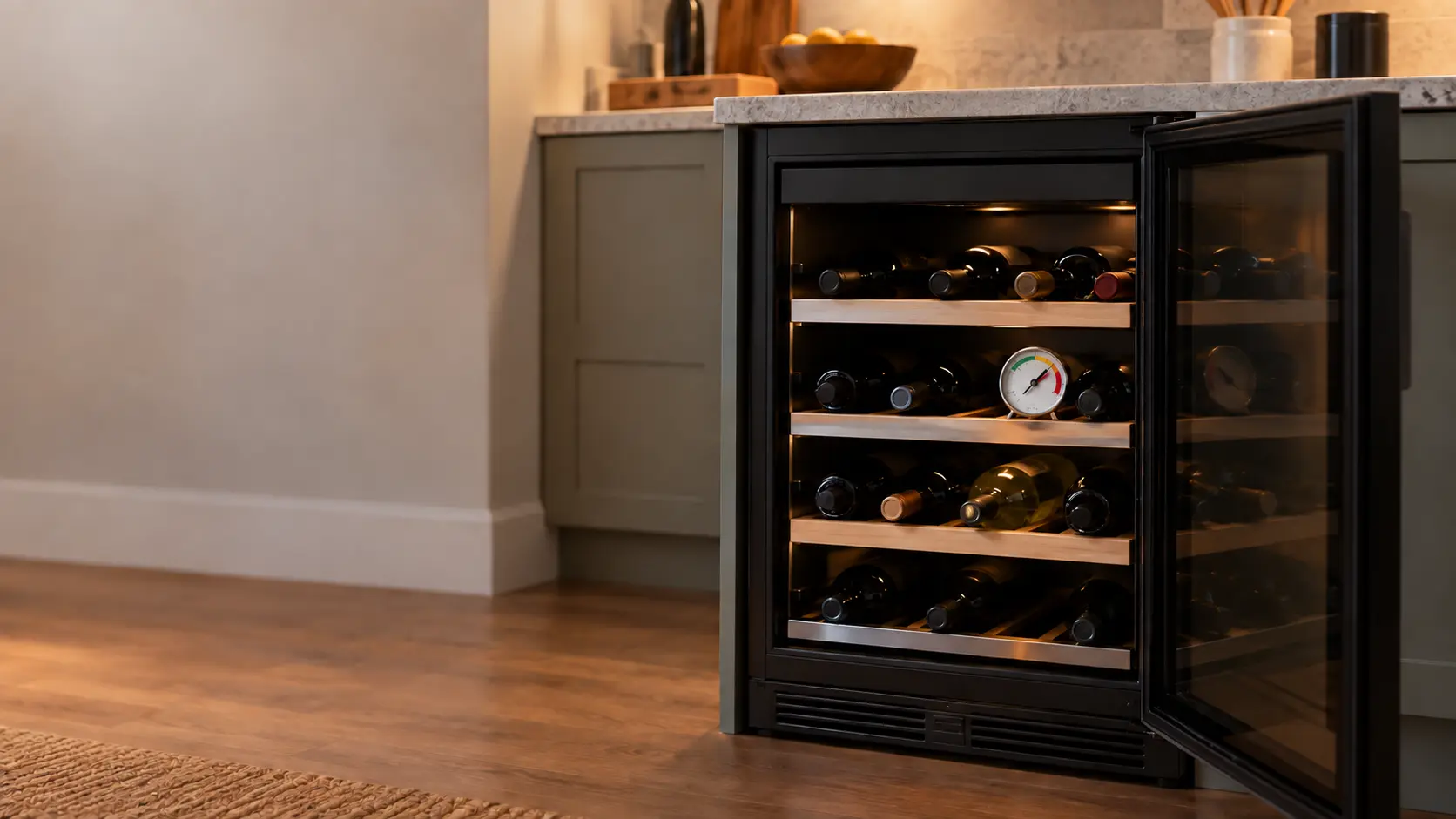
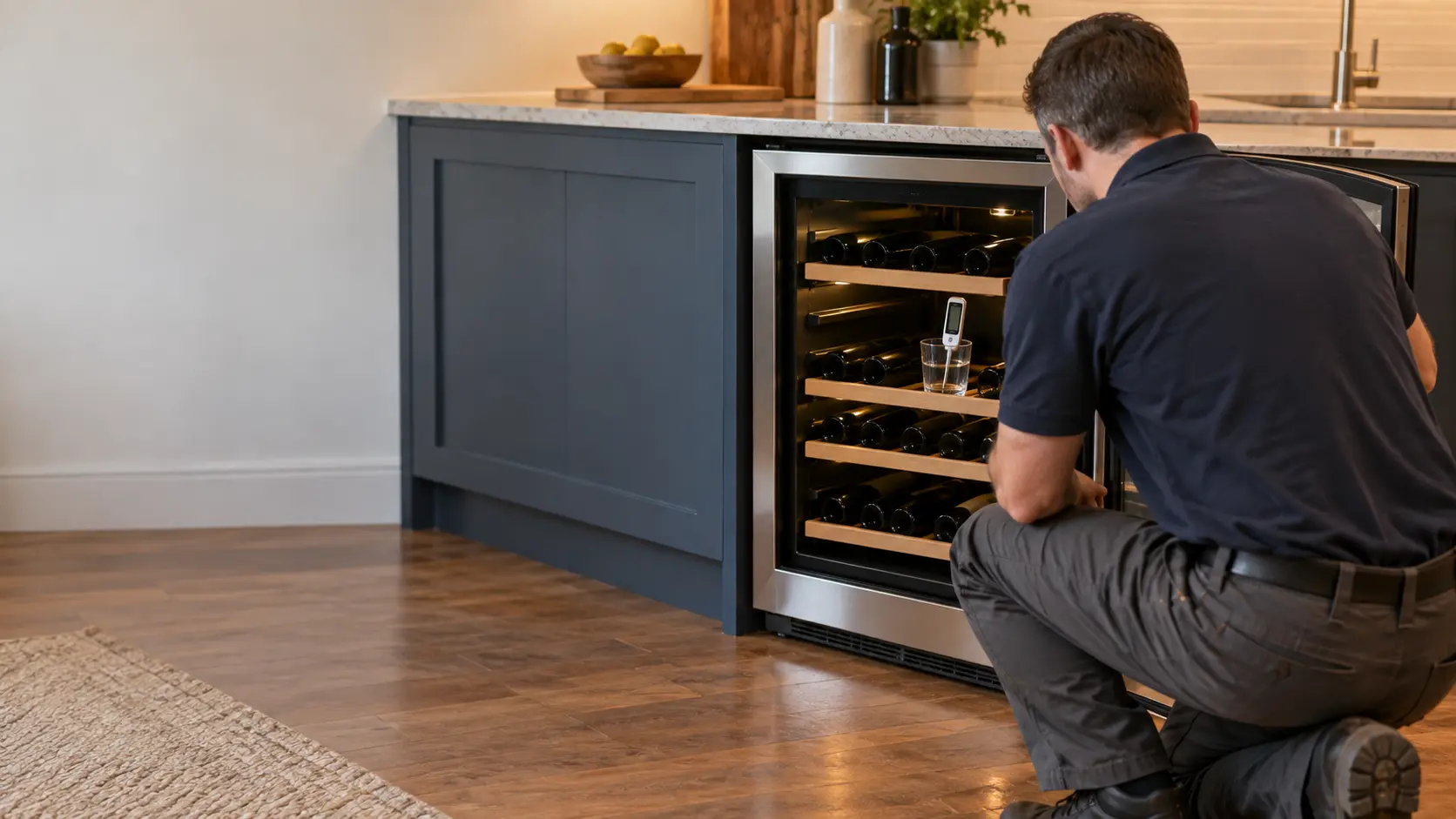
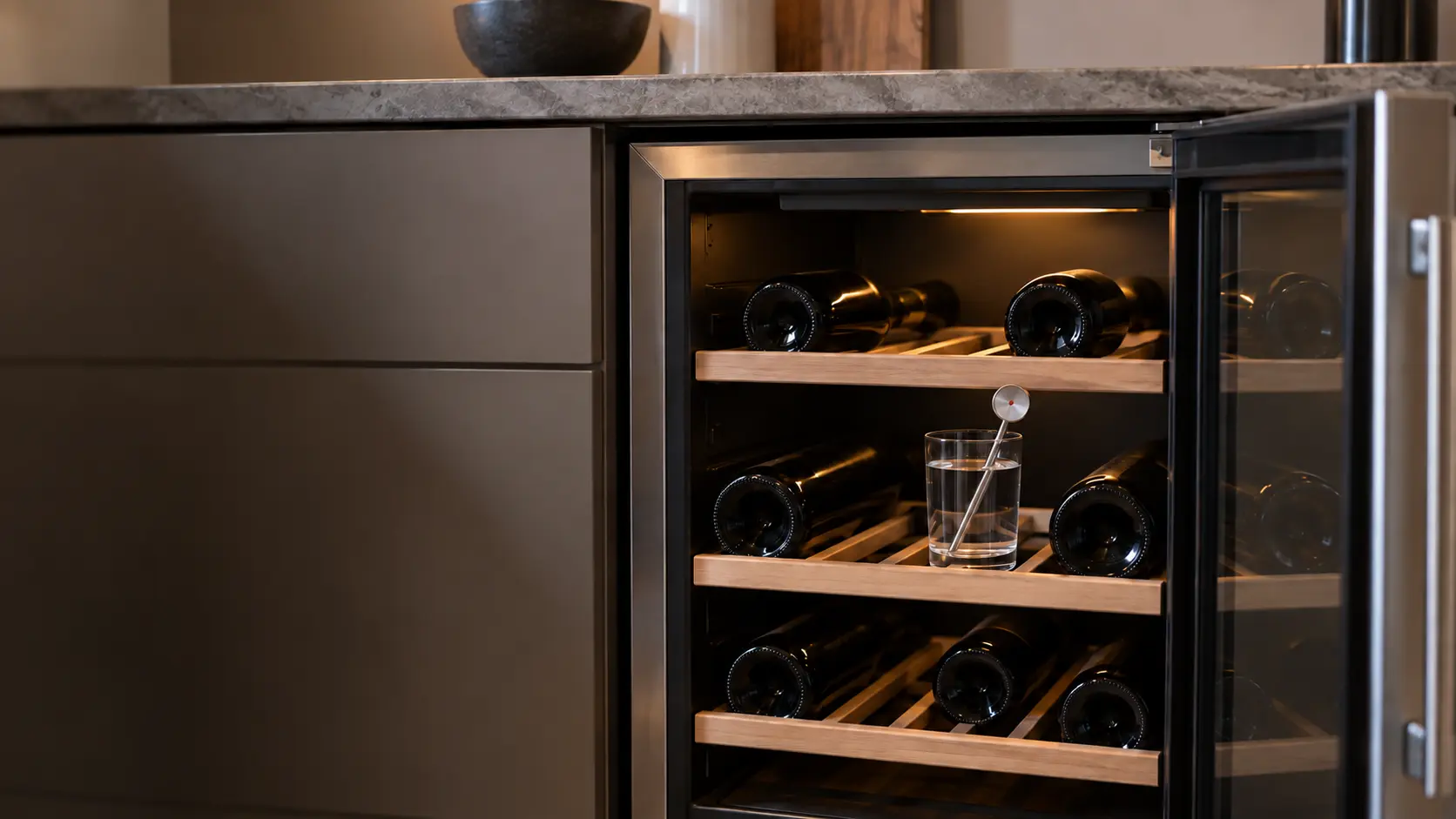
Bottles hold their temperature for hours, so a door that feels mild or a hand waved inside the cabinet proves little. U-Line's guide describes a better test: partly fill a plastic bottle with water, put an accurate thermometer in it, cap it and leave it on a middle rack for 24 hours without opening the door. The water behaves like wine and ignores the quick swings of the air.
Before trusting the display, find out what it shows. On U-Line's dual-zone Wine Captain models the number is the set point, and the actual reading appears only after holding the Warmer key for about five seconds. Marvel's undercounter wine models show the real inside temperature, and a gap between that figure and the setting simply means the cabinet is still working toward it.
- Water within 2 or 3 degrees of the setting: the cabinet is cooling; look at swings or door habits instead.
- Water 5 to 10 degrees warm: suspect the room, the grille or a door that is not quite closing.
- Water close to room temperature after a full day: cooling has stopped, and the bottles come before the diagnosis.
Source: U-Line — Dual Zone Wine Captain models use and care guide — Check product temperature with a capped water bottle and thermometer for 24 hours; the display shows the set point and the actual reading after holding Warmer about five seconds; built-in models need no side, top or rear clearance but the front grille must stay clear; check showroom mode when the display works but the unit does not cool; Blackout mode darkens the display for 36 hours while cooling continues; change the set point in single steps and wait 24 hours; wine kept stable between 40°F and 65°F remains sound; Marvel — Owner's guide and service manual, undercounter wine models (MLWC324) — The displayed temperature is the actual inside temperature; recommended installation range 55°F to 100°F; in showroom mode the display and light work while the compressor and fans are not energized
Two ways to make cold, and two ways to lose it
Wine coolers use one of two cooling methods, and they give up in different ways. Check the manual or the spec sheet before going further, because a symptom that is routine on one design is serious on the other.
Compressor cabinets
Nearly every built-in undercounter unit, every full-height column and the larger freestanding cabinets move heat with a compressor under the cabinet, a cold plate behind the rear liner and a condenser that releases the heat into the room. GE describes frost collecting on that rear wall while the unit cools and melting away in the off cycle. When the compressor hums yet the rear wall never chills or frosts, refrigerant is not reaching it. A click, a short hum and silence, repeating every few minutes, means the compressor is trying to start and failing.
Thermoelectric cabinets
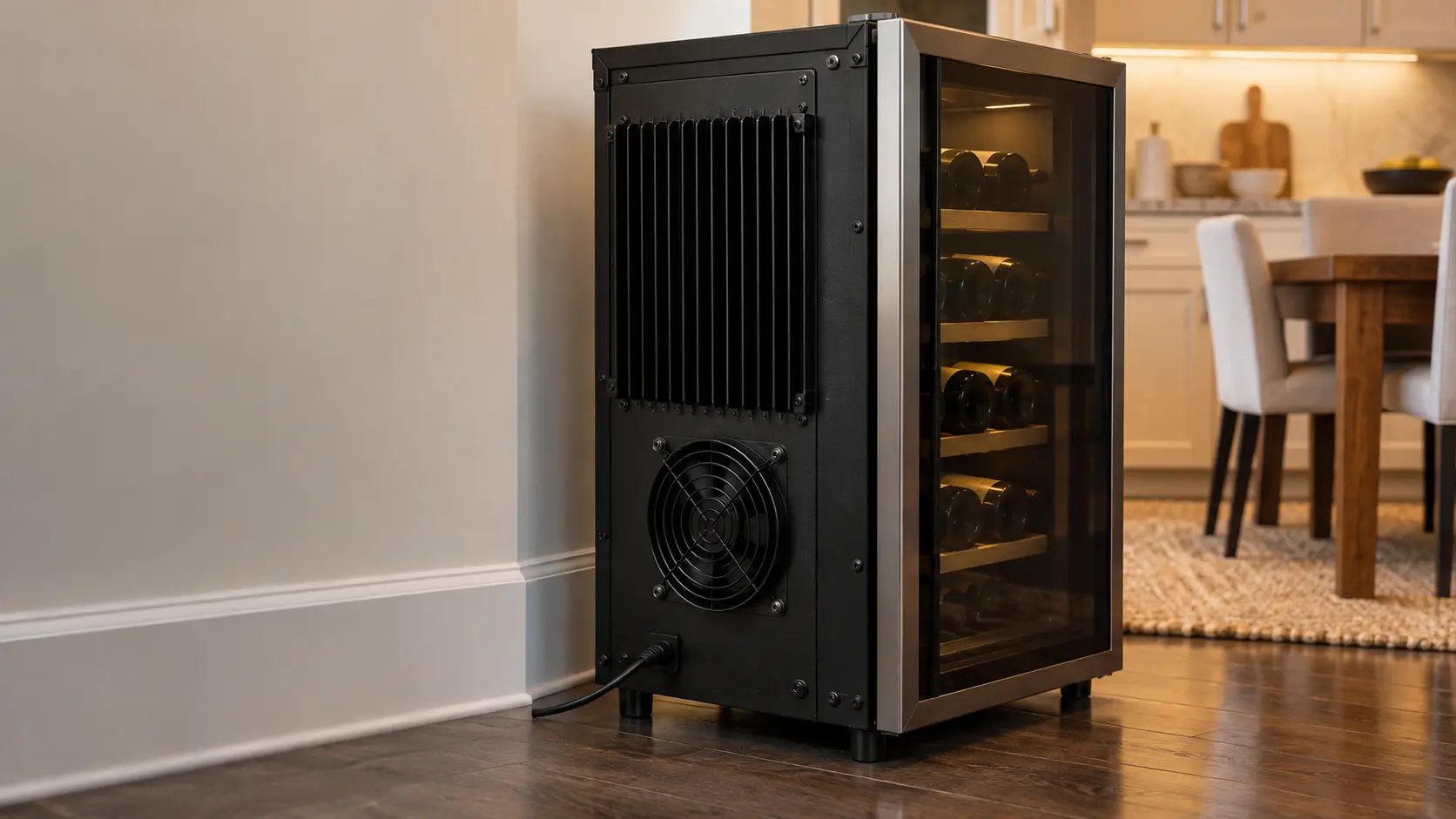
Smaller freestanding units use a solid-state module pressed between two finned heat sinks, with a small fan on each side. Newair says most of them will not go below about 50°F and have trouble once the room passes 80°F, and that a module starved of ventilation overheats and burns out. A dead inside fan, a dusty outer heat sink and a failed module all look alike from the front: the cabinet drifts slowly toward room temperature while the light and the display carry on normally.
The room and the grille come before any part
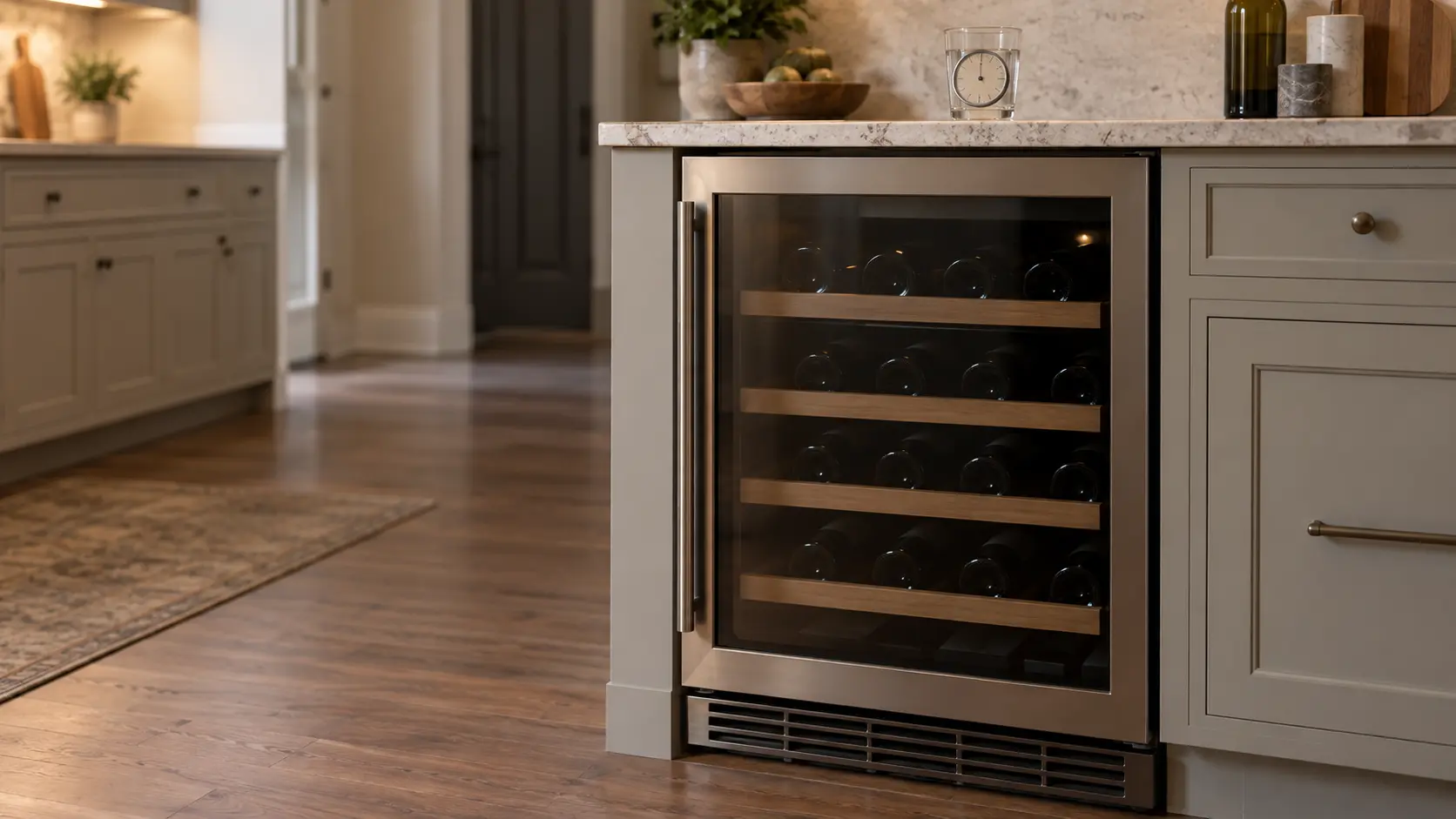
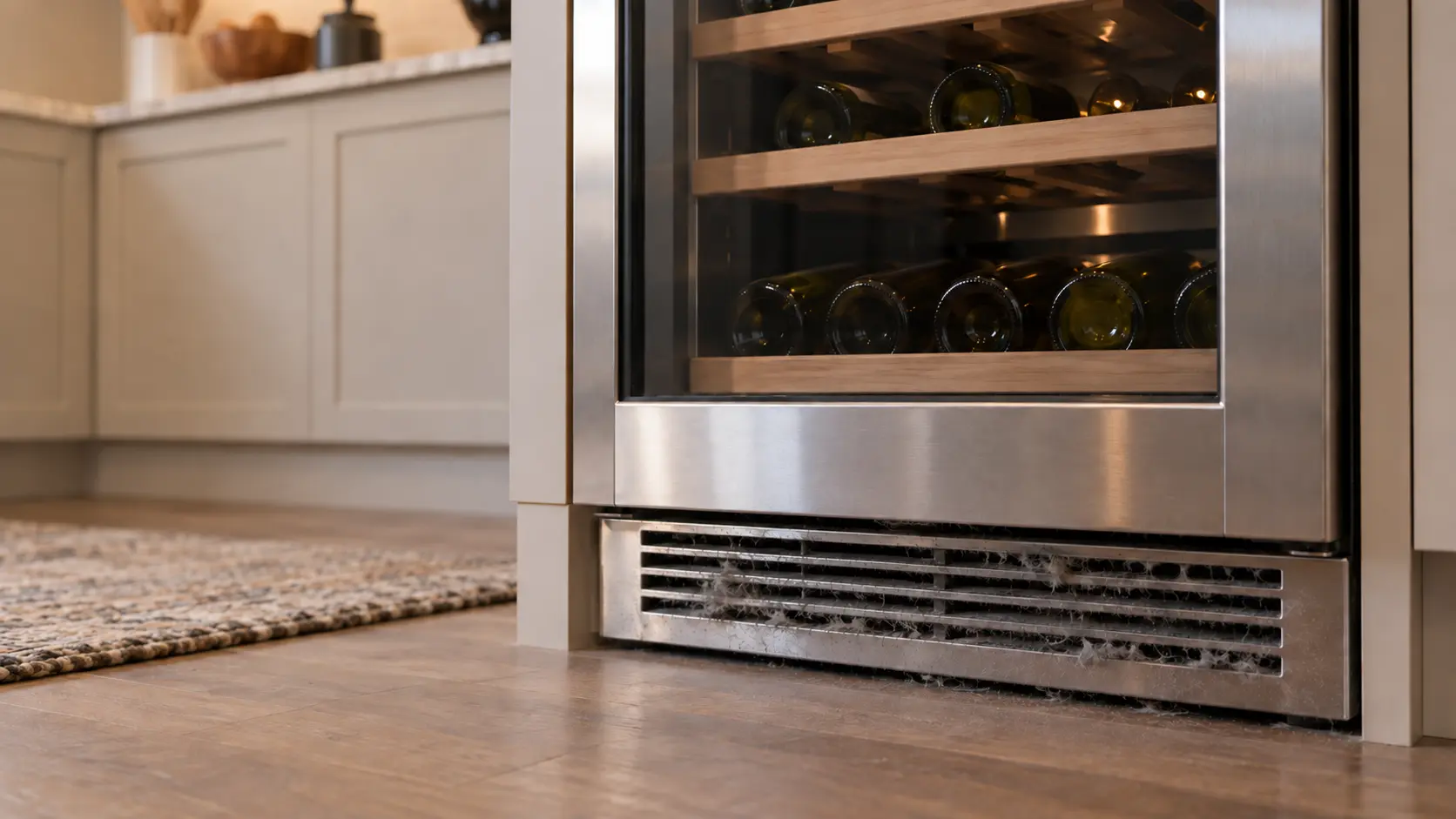
Every cooler has to put the heat it removes somewhere, and the path depends on the design. A built-in unit breathes through the grille at the bottom front; U-Line's built-in models need no gap at the sides, top or back, but that grille must stay open. A freestanding compressor cabinet uses the air around it instead: a GE wine chiller article asks for 1.5 inches at each side and 2 inches at the top and back, and warns that less brings warm temperatures and long run times.
The room sets limits too. Marvel gives 55°F to 100°F for its undercounter models. GE's articles differ by model: one wine chiller loses its cooling ability with the room at 40°F, its wine centers should not go into a room that falls below 55°F, and both warn against spaces above 90°F. A cooler moved to a basement for the winter or a sunroom for the summer can stop holding temperature with nothing broken at all.
- Vacuum the bottom-front grille with the power off; lint and pet hair collect there first.
- Pull a freestanding unit out of any cabinet niche it was never designed to sit in.
- Feel for warm air leaving the grille or the back while it runs; none at all suggests the condenser fan.
- Look for afternoon sun on the glass, or an oven or a dishwasher vent right beside the cabinet.
Source: U-Line — Dual Zone Wine Captain models use and care guide — Check product temperature with a capped water bottle and thermometer for 24 hours; the display shows the set point and the actual reading after holding Warmer about five seconds; built-in models need no side, top or rear clearance but the front grille must stay clear; check showroom mode when the display works but the unit does not cool; Blackout mode darkens the display for 36 hours while cooling continues; change the set point in single steps and wait 24 hours; wine kept stable between 40°F and 65°F remains sound; Marvel — Owner's guide and service manual, undercounter wine models (MLWC324) — The displayed temperature is the actual inside temperature; recommended installation range 55°F to 100°F; in showroom mode the display and light work while the compressor and fans are not energized; GE Appliances — Wine Chiller: wine is too warm or too cold — At 40°F in the room the wine chiller no longer cools; avoid rooms above 90°F; minimum clearances 1.5 inches at each side and 2 inches at top and back, less gives warm temperatures and long run times; GE Appliances — Wine Center: moisture or condensation on the outer door — Do not install a wine center where the room goes below 55°F or above 90°F
Settings and modes that imitate a breakdown
Several control features can make a healthy cabinet look dead, or keep a dead-looking one quietly working. Rule them out before assuming a part has gone.
Showroom and demo modes
Marvel describes a showroom mode in which the display and the interior light work normally while the compressor and fans receive no power, and U-Line lists showroom mode as the first thing to check when the display functions but the unit does not cool. A cooler that stood on a sales floor, or whose keys a child pressed in the right order, can sit in this state for weeks. The key sequence that ends it is printed in the manual for each model.
Sabbath, blackout and keypad locks
The reverse happens as well. U-Line's Blackout, or Sabbath, mode darkens the light and the display for 36 hours while cooling carries on underneath, and GE's wine chillers show LOC when the keypad is locked, which blocks any change to the setting. Neither one warms the wine, yet both convince owners that the control has died.
Where the cause usually sits on each style
The same warm cabinet points to different parts depending on how the unit is built and where it stands.
Undercounter units and full-height columns
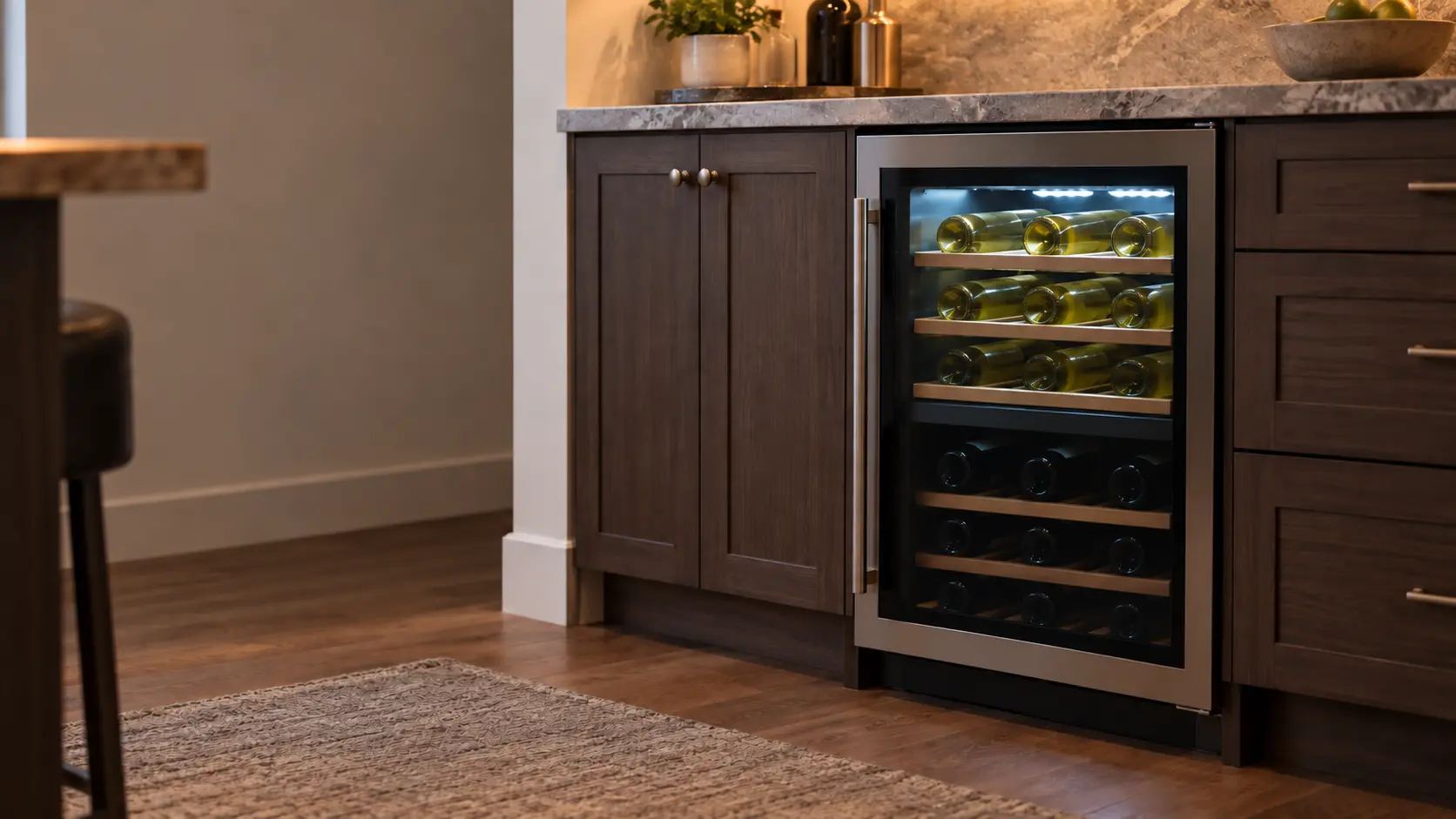
Built into cabinetry, these depend entirely on the front grille and the condenser fan behind it. A toe-kick panel fitted over the vents after installation, or a fan that no longer turns, is the leading suspect when the cabinet warms slowly over several weeks. A column adds height, so a weakening fan inside shows first as a warm top rack while the bottom racks stay near the setting.
Dual-zone cabinets
When only one zone warms while the other holds, the compressor is usually fine and the trouble sits in whatever shares the cold between the zones: a damper, a zone fan or that zone's sensor. When both zones warm together, treat the unit like a single-zone cabinet and start again at the grille and the room.