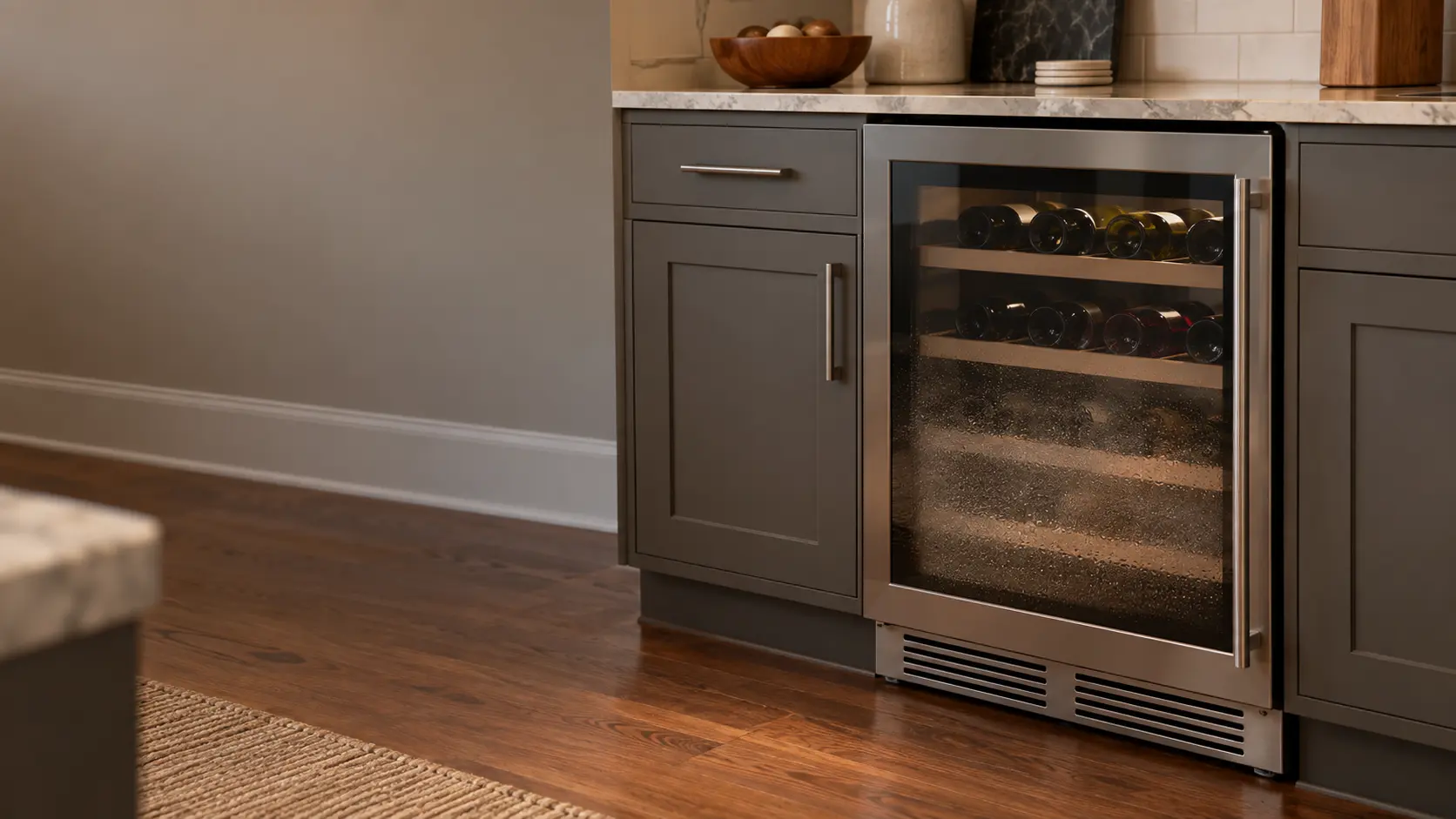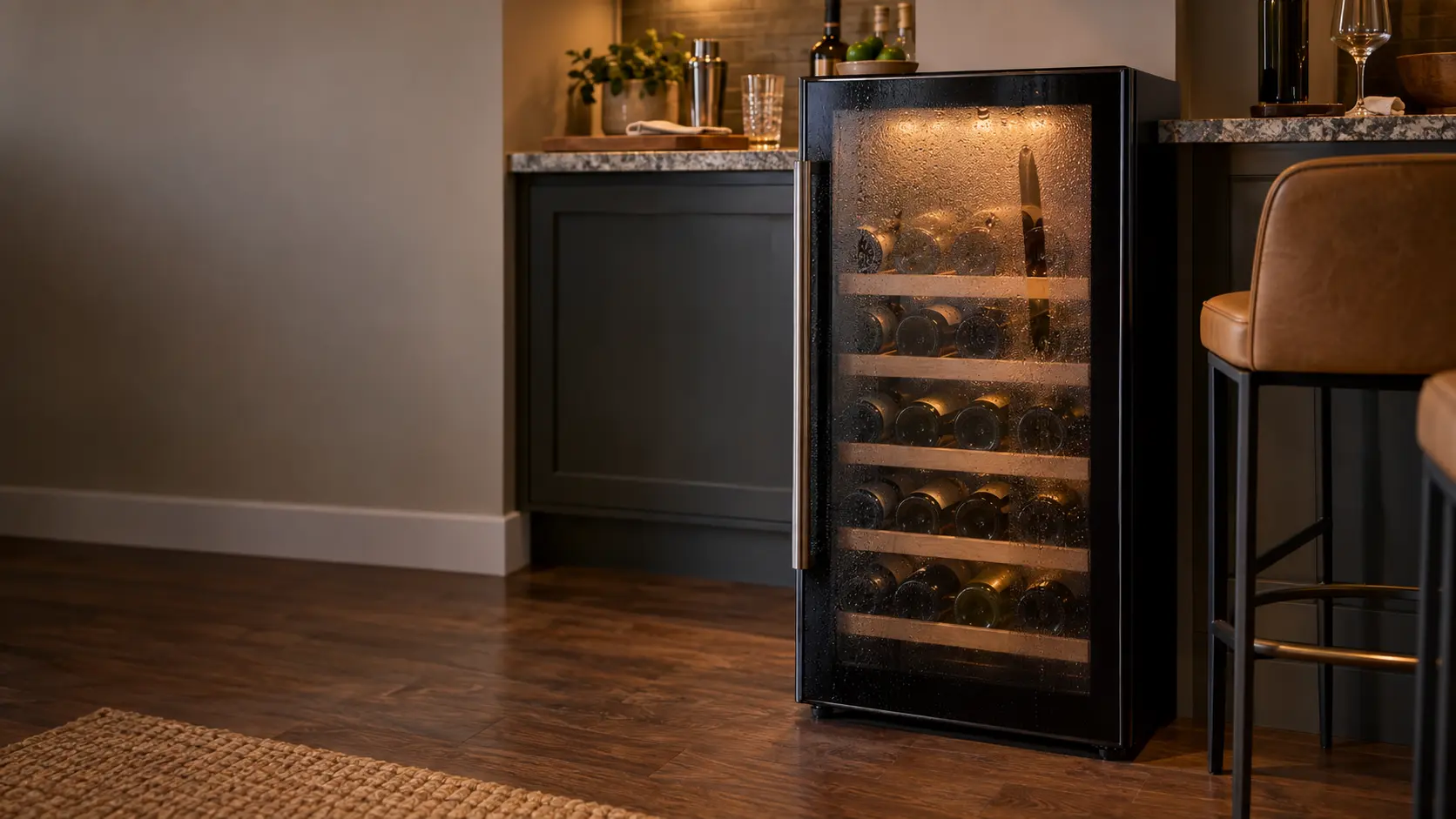
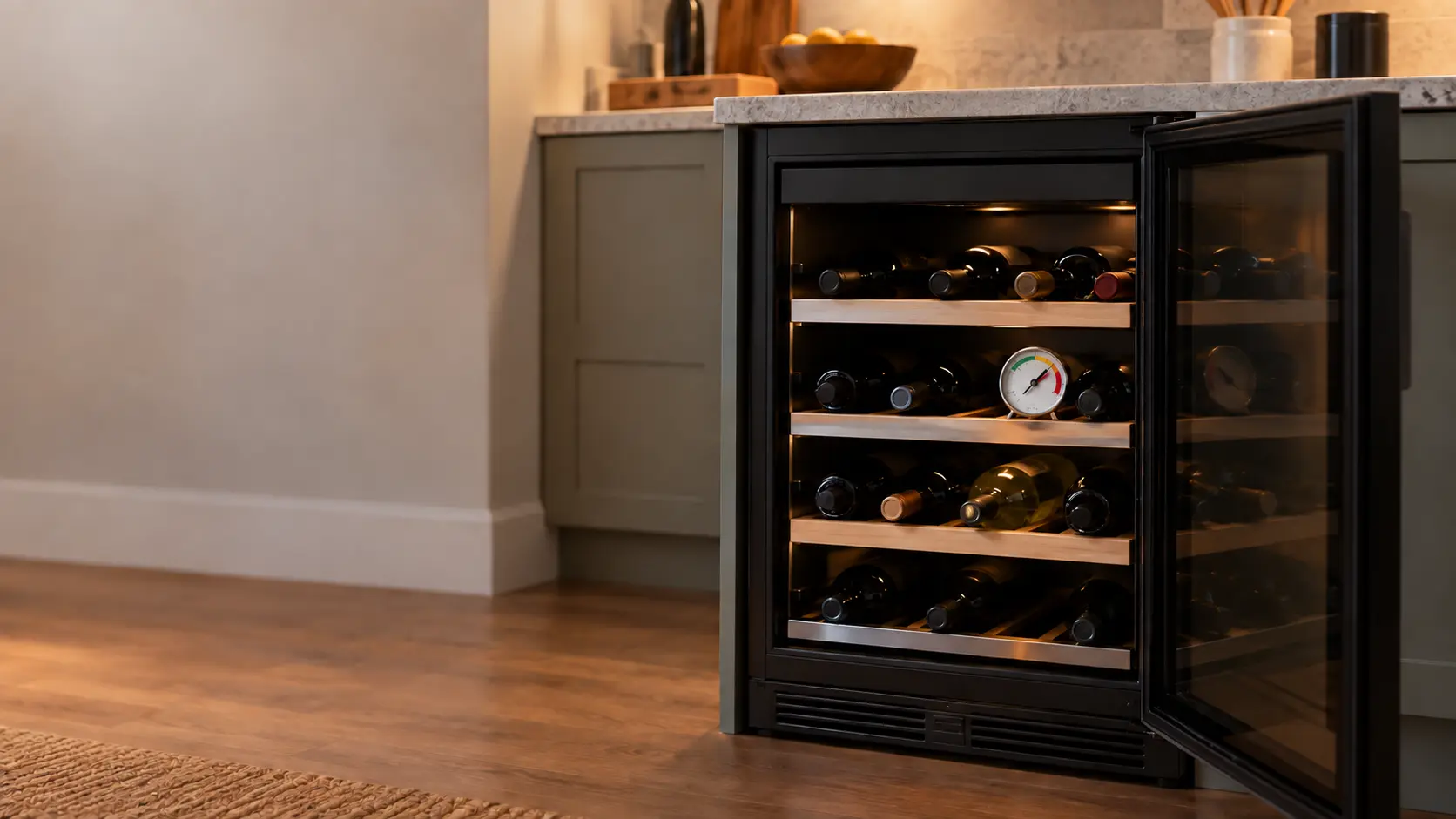
First, find which side of the glass is wet
Run a dry fingertip across the fogged area from the room side. If it leaves a clear line, the moisture sits outside. If nothing changes, open the door and try the inner face. If neither face clears, the fog is trapped between the panes of a double or triple glazed door, and no amount of wiping will reach it.
The answer splits the problem into three unrelated ones, so settle it before changing any setting. Take a photo of the pattern, too: an even haze, a band along the bottom and a streak down the handle side each tell a slightly different story.
- Clears from the room side: humidity meeting cold glass.
- Clears only from inside: room air entering the cabinet.
- Clears from neither side: the sealed glass unit has let air in.
Water on the outside: the room is doing it
GE describes moisture on the outside of a wine center door as typically normal and names the cause: a low setting combined with heat and humidity. U-Line's and Marvel's troubleshooting tables say much the same in one line, adding that it clears as the humidity drops. The glass is often the coldest surface in the room, and on a muggy day it falls below the dew point of the air touching it.
Places that make it worse
GE mentions units near a pool, where the water may bead and run. Indoors the equivalents are a bar sink right beside the cabinet, a pot boiling a foot away, a basement with no dehumidifier, or an air vent blowing damp outdoor air at the door in summer. A cooler in a sunny dining room with the windows open in August is working in all of those at once.
What an owner can change
Raise the setting of the zone behind the fogged glass if it holds whites near 45°F and the bottles could live a few degrees warmer. Run the kitchen exhaust or a dehumidifier, and turn a supply vent away from the door. GE also says that enclosing a wine center on the top and three sides does not encourage moisture on the outside, as long as the front is left open for air.
Source: GE Appliances — Wine Center: moisture or condensation on the outer door — Condensation on the outside of the door is typically normal with a low setting and high heat and humidity; near a pool it may bead and run; a bottle can stop the door closing; clean the gasket and check it for tears, looseness or gaps; enclosing the top and three sides does not encourage outside moisture if the front is unobstructed; U-Line — Dual Zone Wine Captain models use and care guide — Condensation on external surfaces comes from excessive humidity; E3 indicates the door may have been open too long; level the unit front to back and side to side and align the door if it is not level or not sealing; the door is low-E coated, gas-filled thermal glass; no solvent-based or abrasive cleaners; Marvel — Owner's guide and service manual, undercounter wine models (MLWC324) — Condensation on external surfaces means excessive humidity and dissipates as humidity decreases

Water on the inside: warm air is finding a way in
The inner face of the door should stay dry once the cabinet has settled, because the air inside has already given up its moisture on the cold rear wall. Fog on the inside, beads along the bottom edge, or a film that returns within minutes of wiping means room air is entering somewhere.
- Paper drags at every point around the door: the seal is sound.
- Paper slides out freely along one side: that stretch of gasket, or the hinge.
- The door stops a finger short of closing: a bottle or a rack is in the way.
The gasket
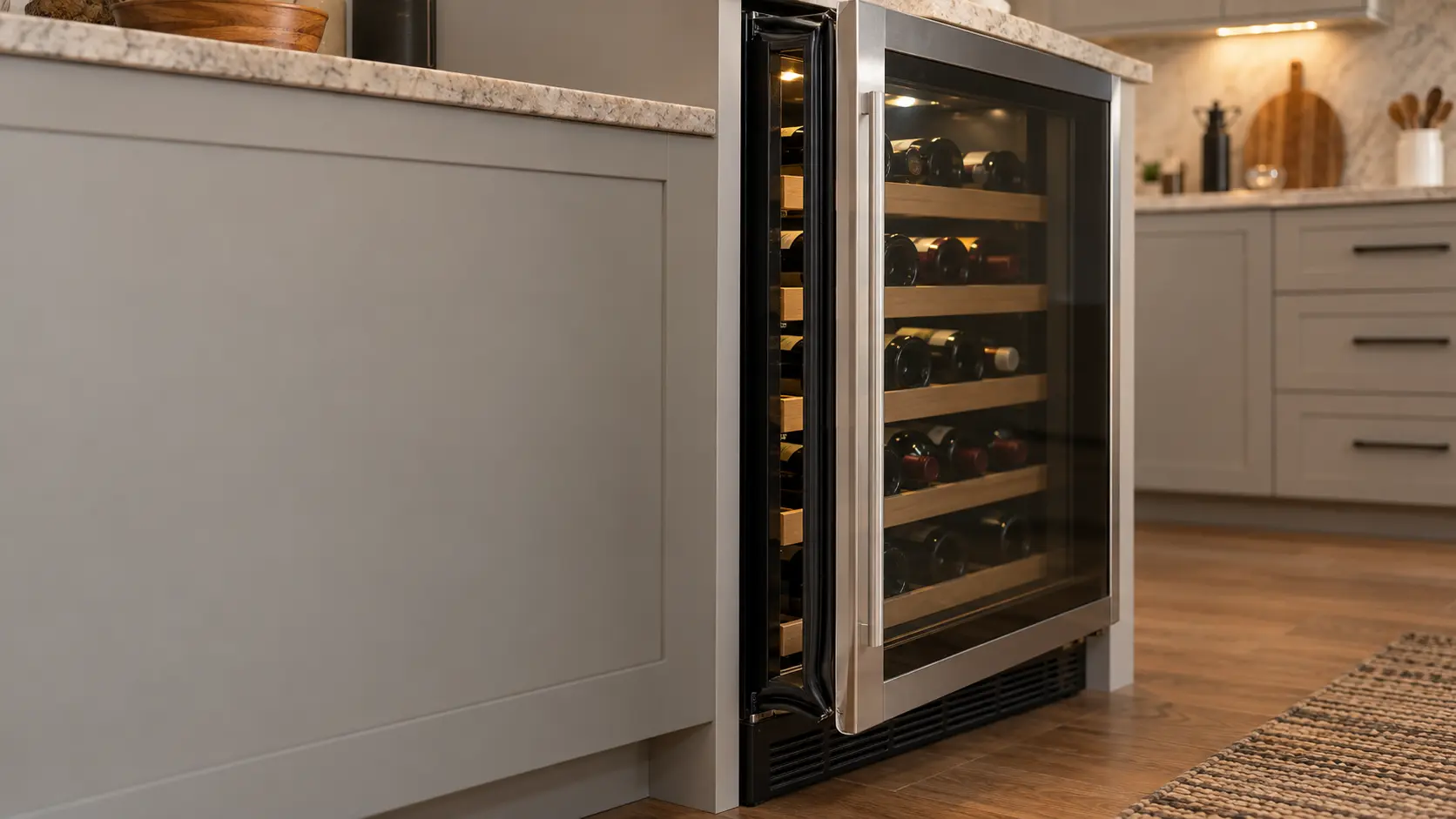
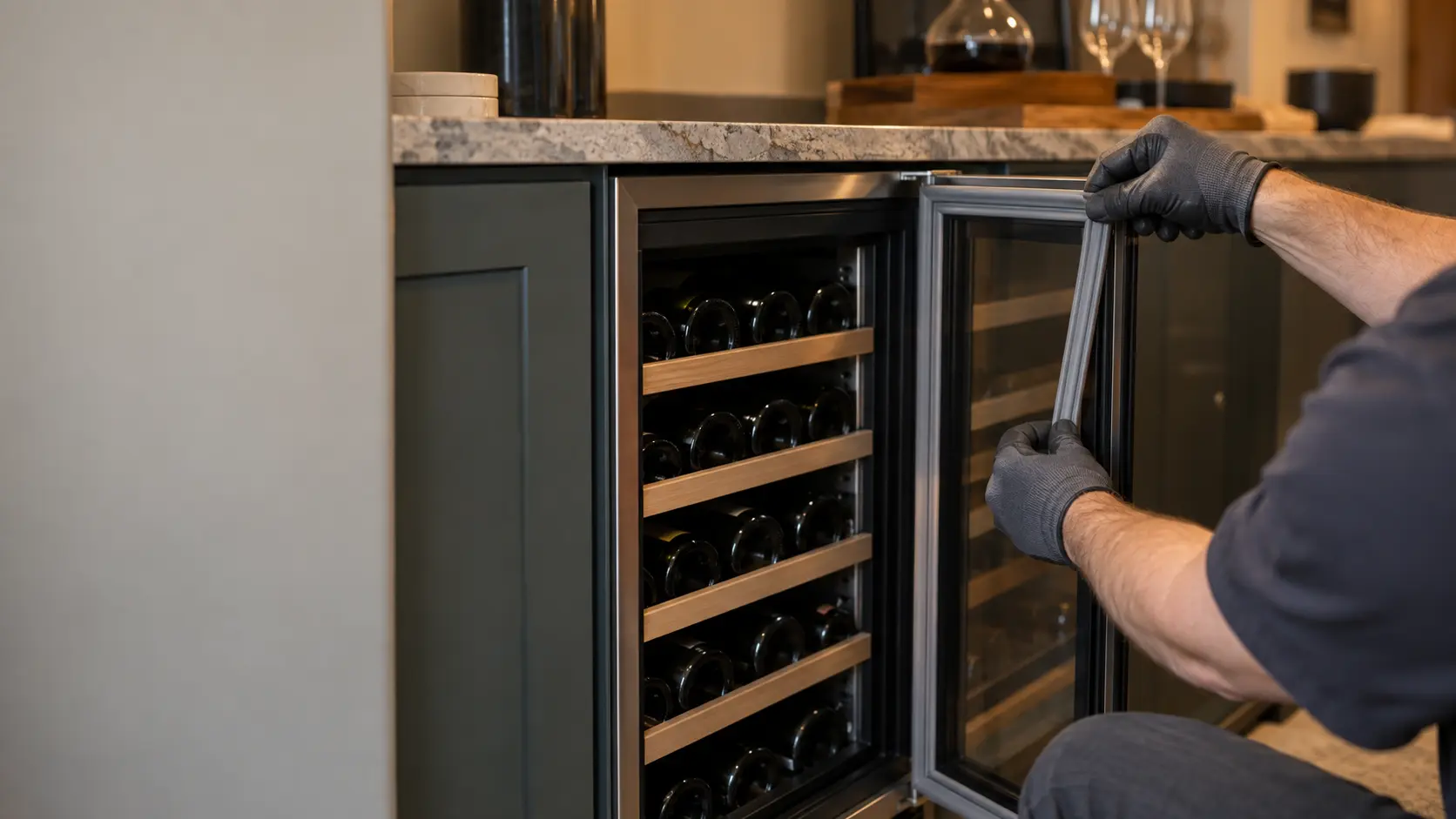
Look along the magnetic gasket for a flattened stretch, a tear at a corner or a section that no longer pulls in against the cabinet. Close the door on a strip of paper at several points; it should drag each time you pull it out. GE asks owners to clean the gasket and check it for tears, looseness or gaps, and a sticky film of spilled wine can hold a good seal away from the frame.
A door that does not stay shut
GE calls it door bounce: a bottle neck sticking out past a rack edge stops the door just short of closing. Pull each rack out, push it fully home, turn any bottle that stands proud and watch whether the door now closes on its own. U-Line's controls show E3 when the door has been open too long, which is often the first hint that it is not closing at all.
Leveling and hinges
A cabinet leaning forward lets the door drift open a fraction, and one twisted on an uneven floor pulls a corner of the gasket away. U-Line's guide wants its units leveled front to back and side to side, and it describes realigning a door at the hinge when it is not level or not sealing.
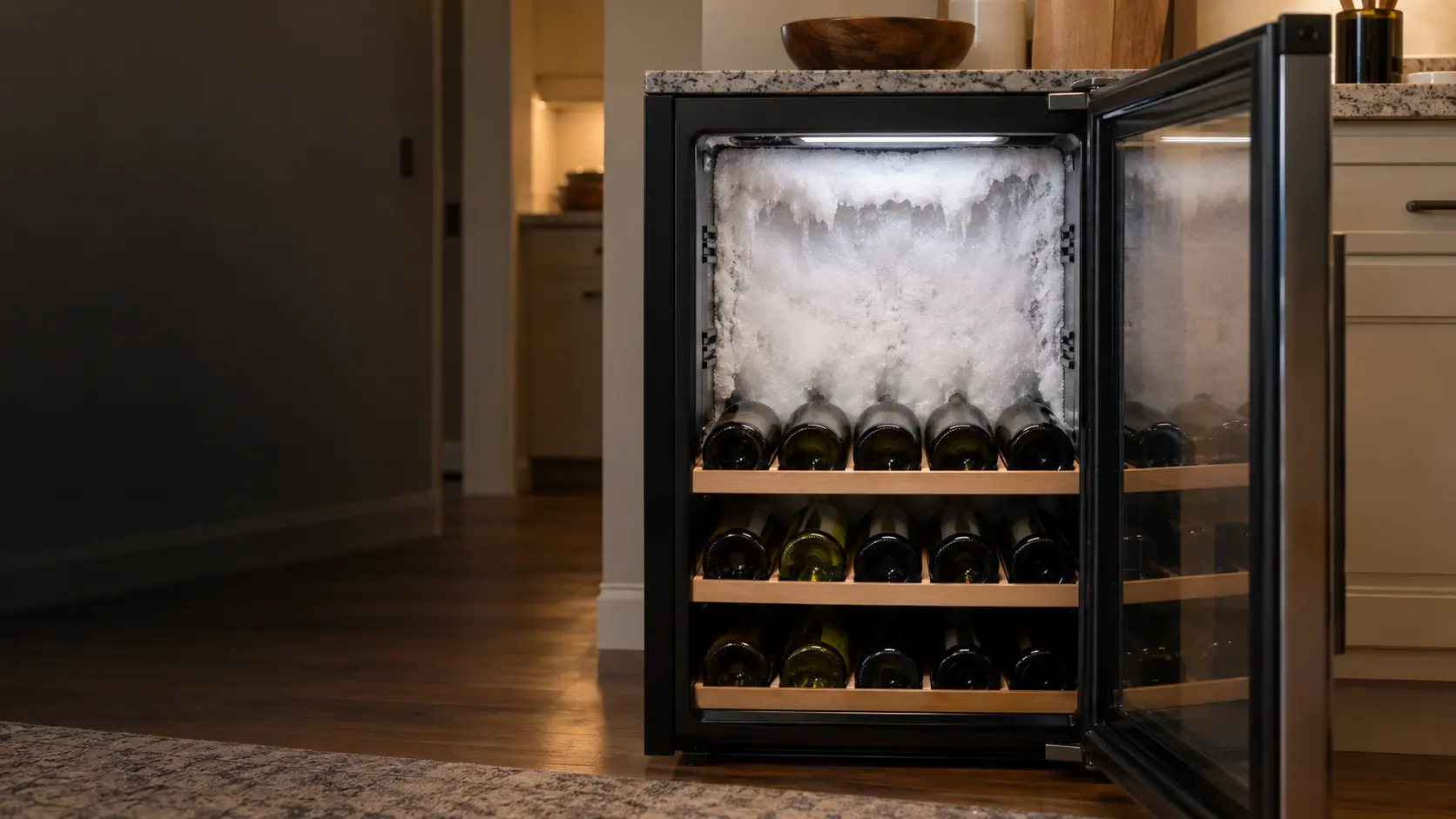
Source: GE Appliances — Wine Chiller: frost, ice and water on the inside back wall — Frost on the back liner melts in off cycles and drains down the back wall into a trough and a drain pan above the compressor; a bottle blocking the door, called door bounce, lets frost and ice build
Fog trapped between the panes
Many wine cooler doors are sealed double or triple glazed units; U-Line's, for example, uses a low-E coated, gas-filled pane. When the edge seal of such a unit gives out, damp air creeps into the gap and clouds it from within, often as a gray band along the bottom that nothing can wipe away. The cure is a new glass pack or door rather than a gasket, and the model plate decides which one fits.
Source: U-Line — Dual Zone Wine Captain models use and care guide — Condensation on external surfaces comes from excessive humidity; E3 indicates the door may have been open too long; level the unit front to back and side to side and align the door if it is not level or not sealing; the door is low-E coated, gas-filled thermal glass; no solvent-based or abrasive cleaners
When the water reaches the floor
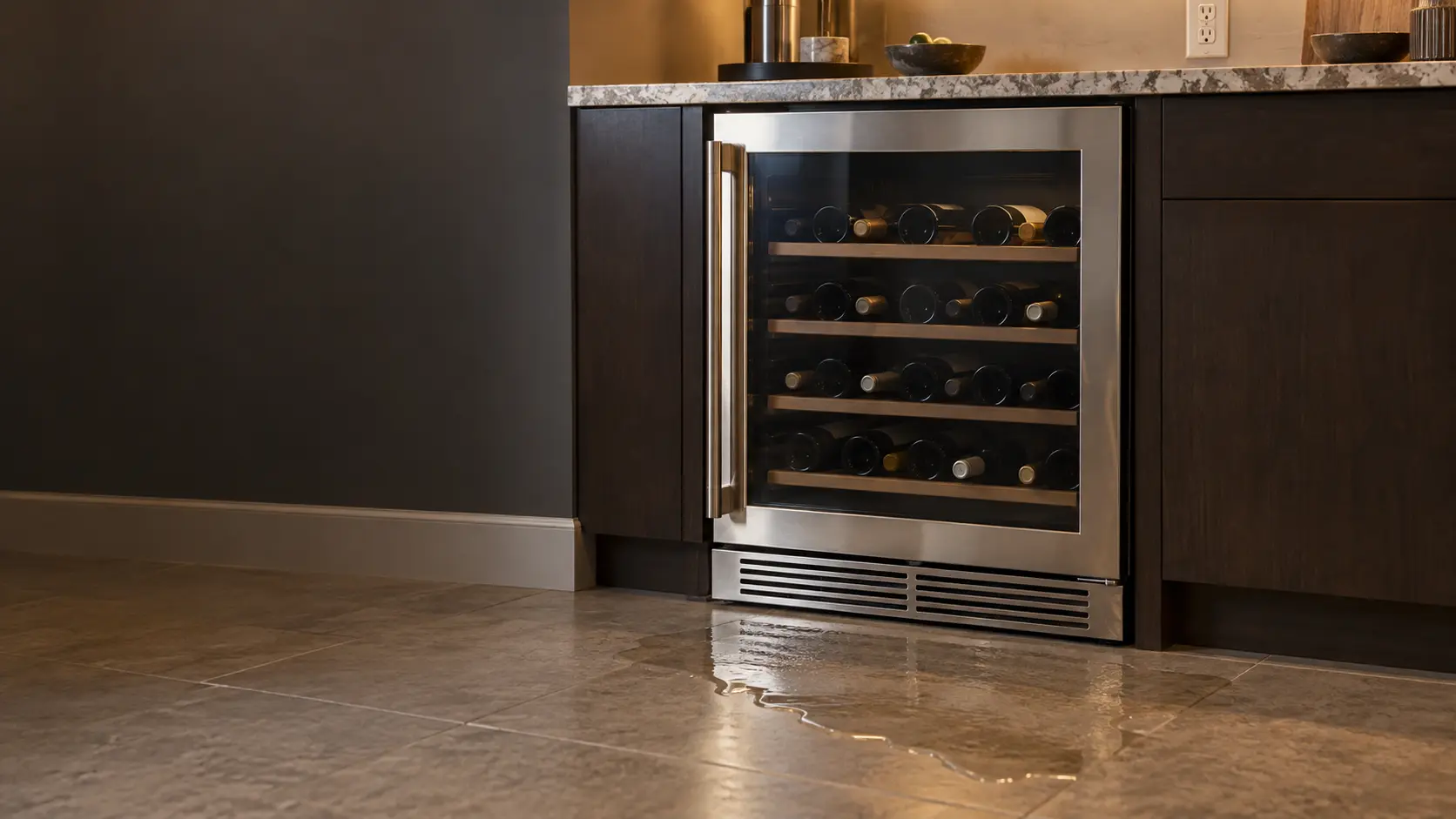
Condensation running down the outside glass can drip onto the floor in front of an undercounter unit and pass for a leak. Dry the floor and the glass, then watch: water that returns only under the door on humid evenings is condensation. Water spreading from beneath the cabinet or from the back points instead to the drain path, since GE describes melt running down the rear wall into a trough and a pan above the compressor. Near a floor-level outlet, that is a reason to unplug the unit from a dry spot.
Source: GE Appliances — Wine Chiller: frost, ice and water on the inside back wall — Frost on the back liner melts in off cycles and drains down the back wall into a trough and a drain pan above the compressor; a bottle blocking the door, called door bounce, lets frost and ice build