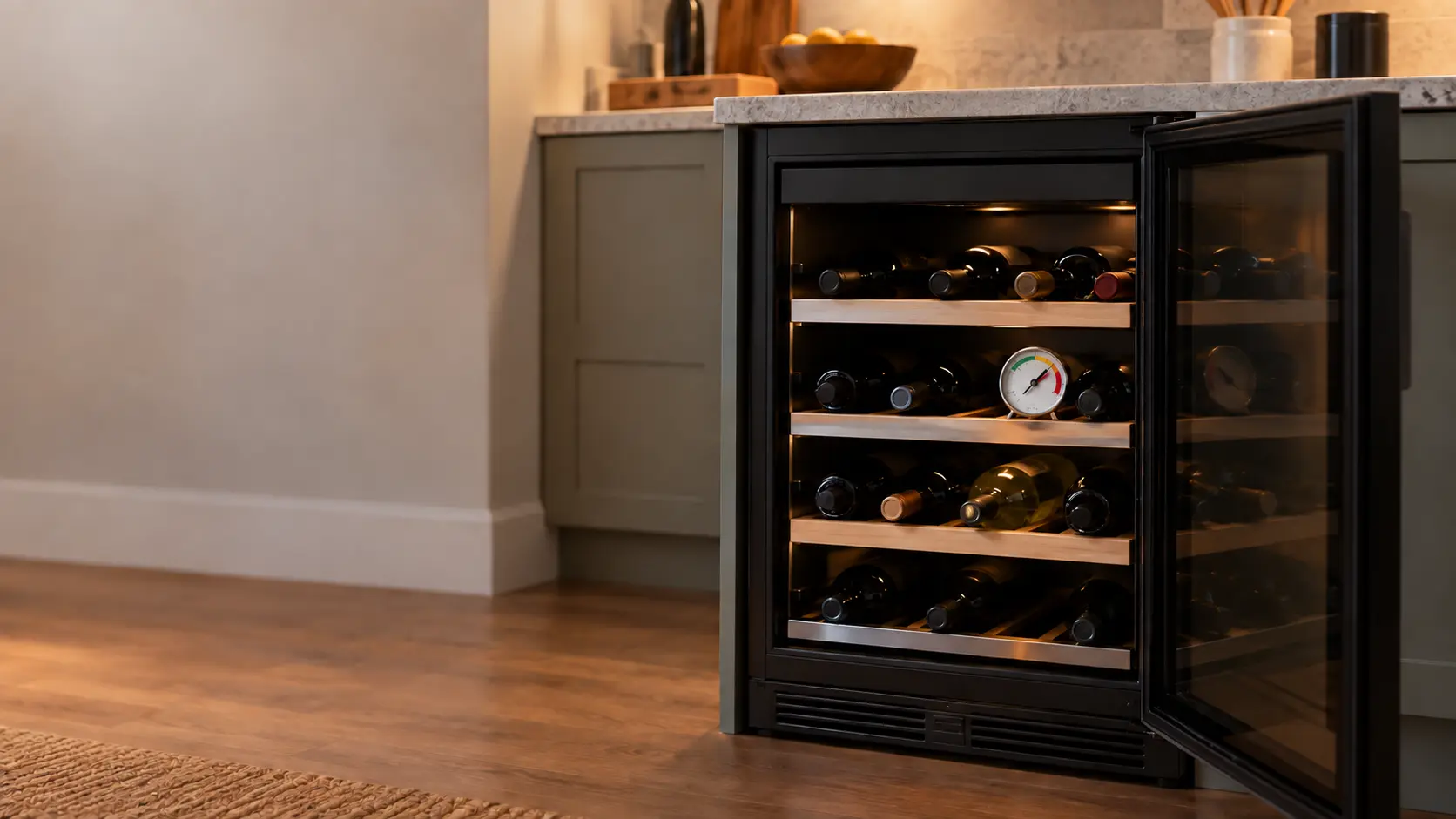

Reading the signs a wine cabinet gives
Common problems
guides.
What the cabinet is telling you when the reds feel warm, one zone wanders from its setting, the glass door clouds over, or the cooling hums on for hours.
Mon–Sat, 8am–8pm
- Three guides
- Read before you book
- Says where to stop
Book a visit
Three short steps, about a minute.
or call (844) 709-0727
Loading appointment form…
The appointment form couldn’t load. Please try again.
Common problems,
guide by guide.
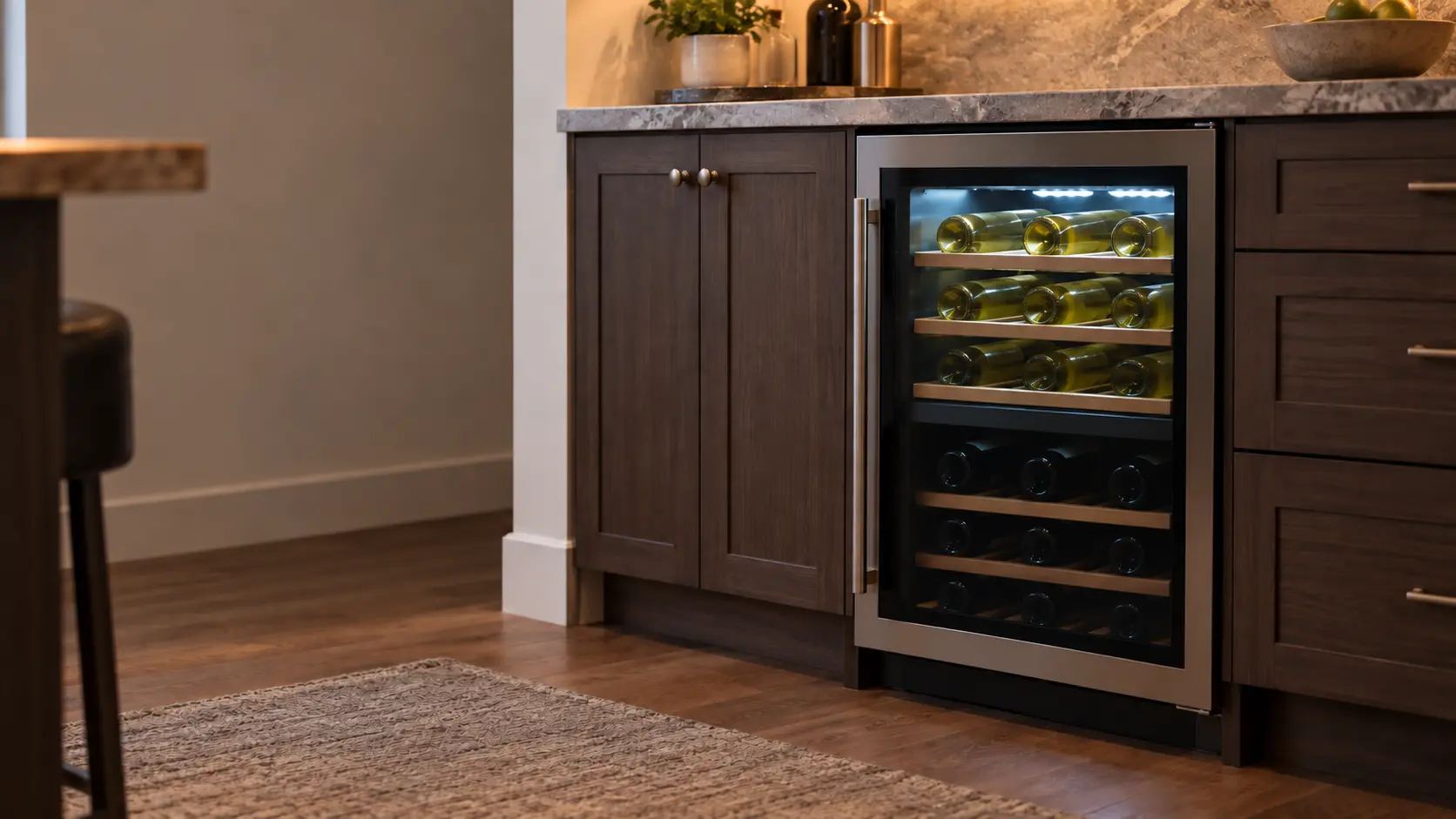
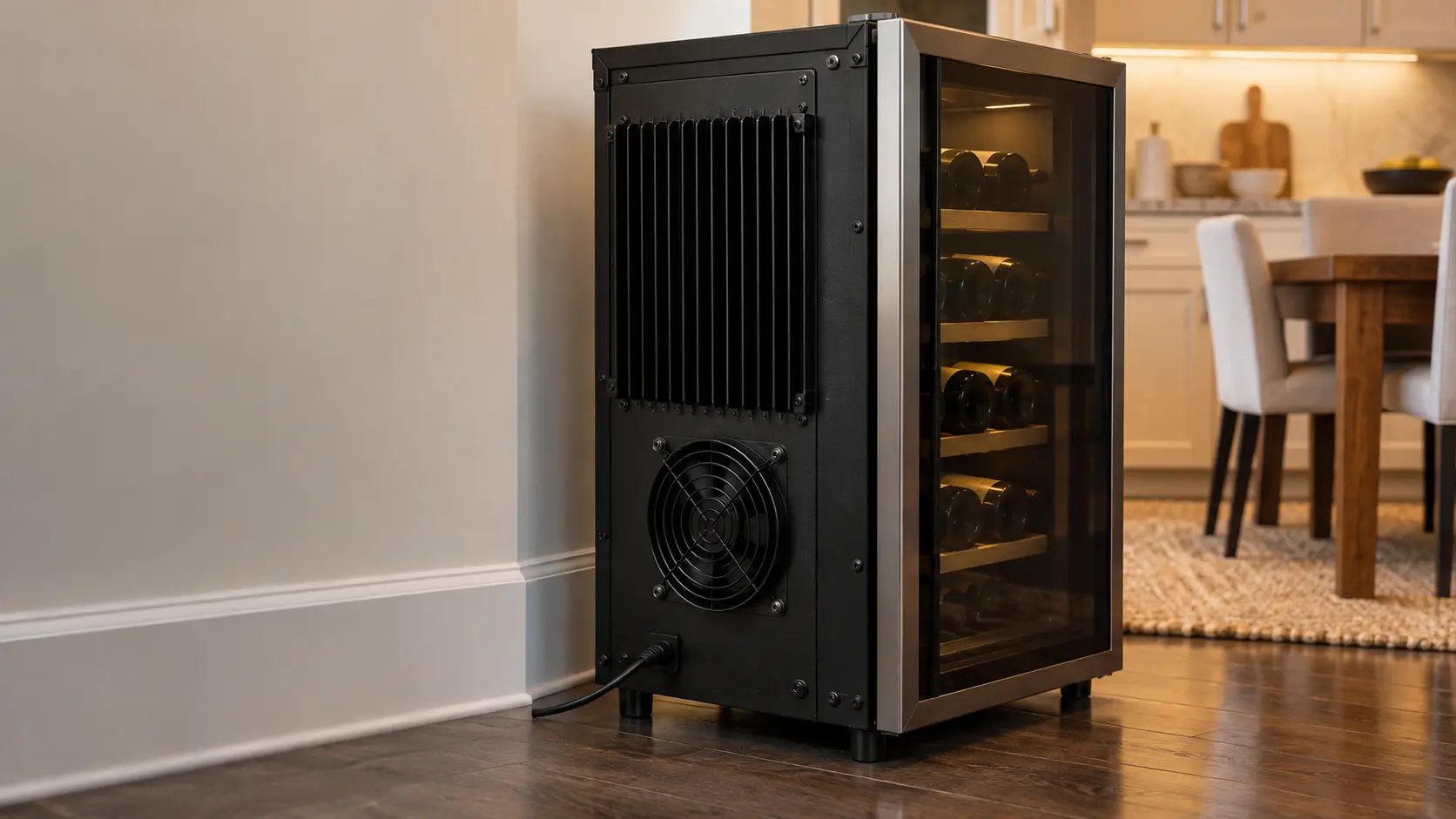
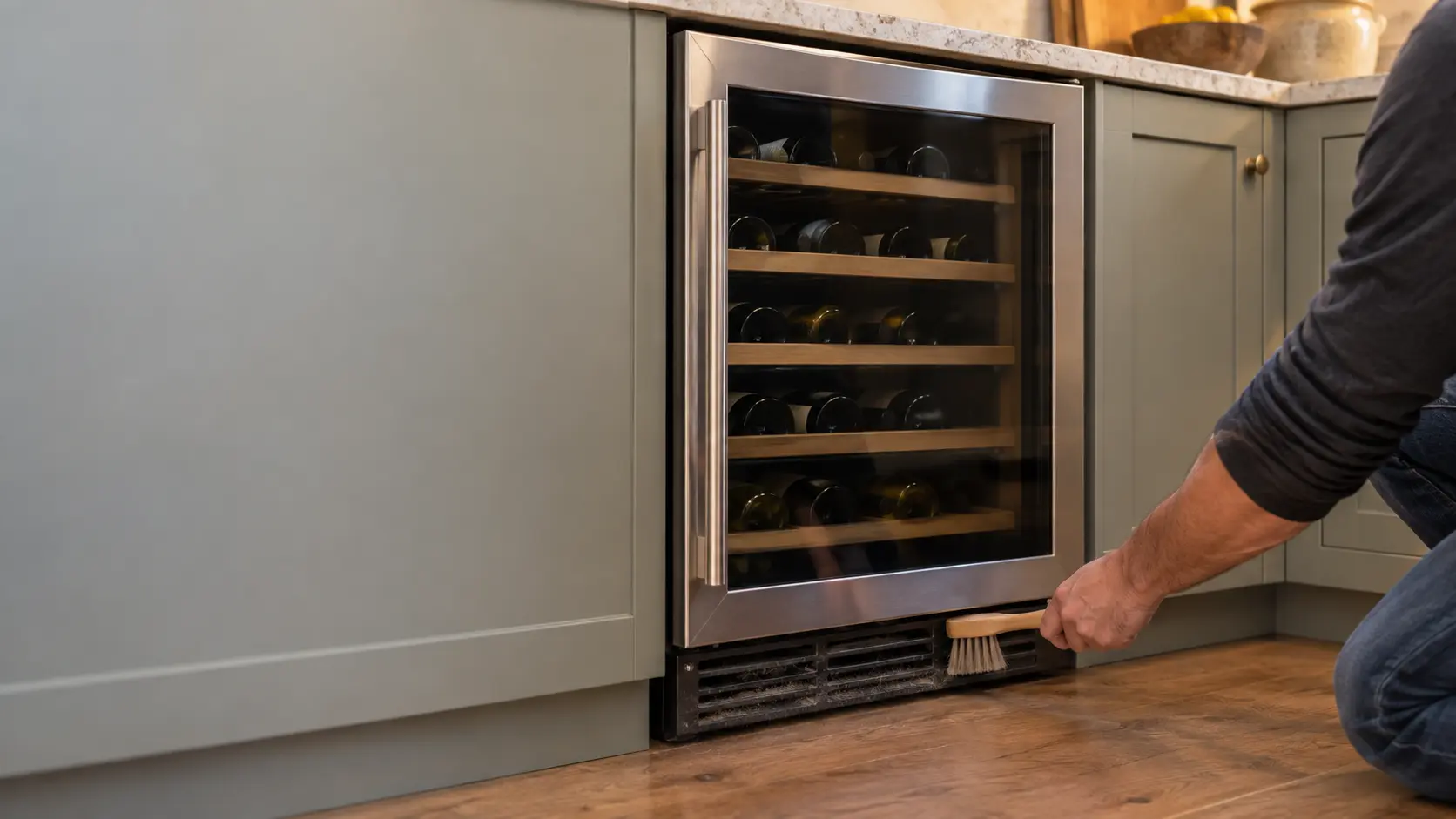
These guides start from the thing an owner notices first on a wine cooler: bottles that feel warmer than they should, a display that will not hold still, a glass door streaked with water. Each one explains what that behavior usually means on an undercounter unit, a full-height column, a freestanding cabinet and a dual-zone model, and which explanation deserves attention first.
All 18 guides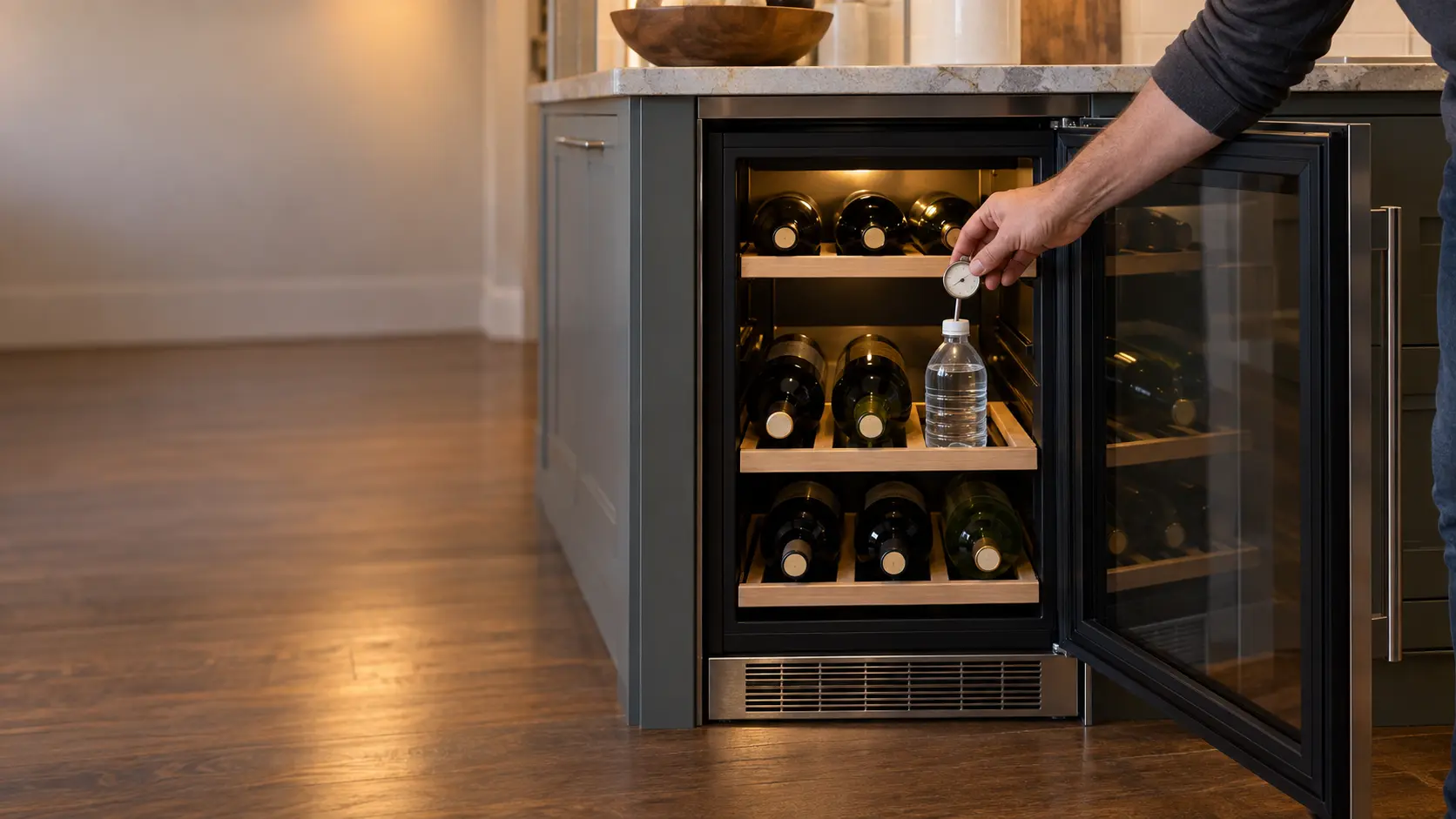
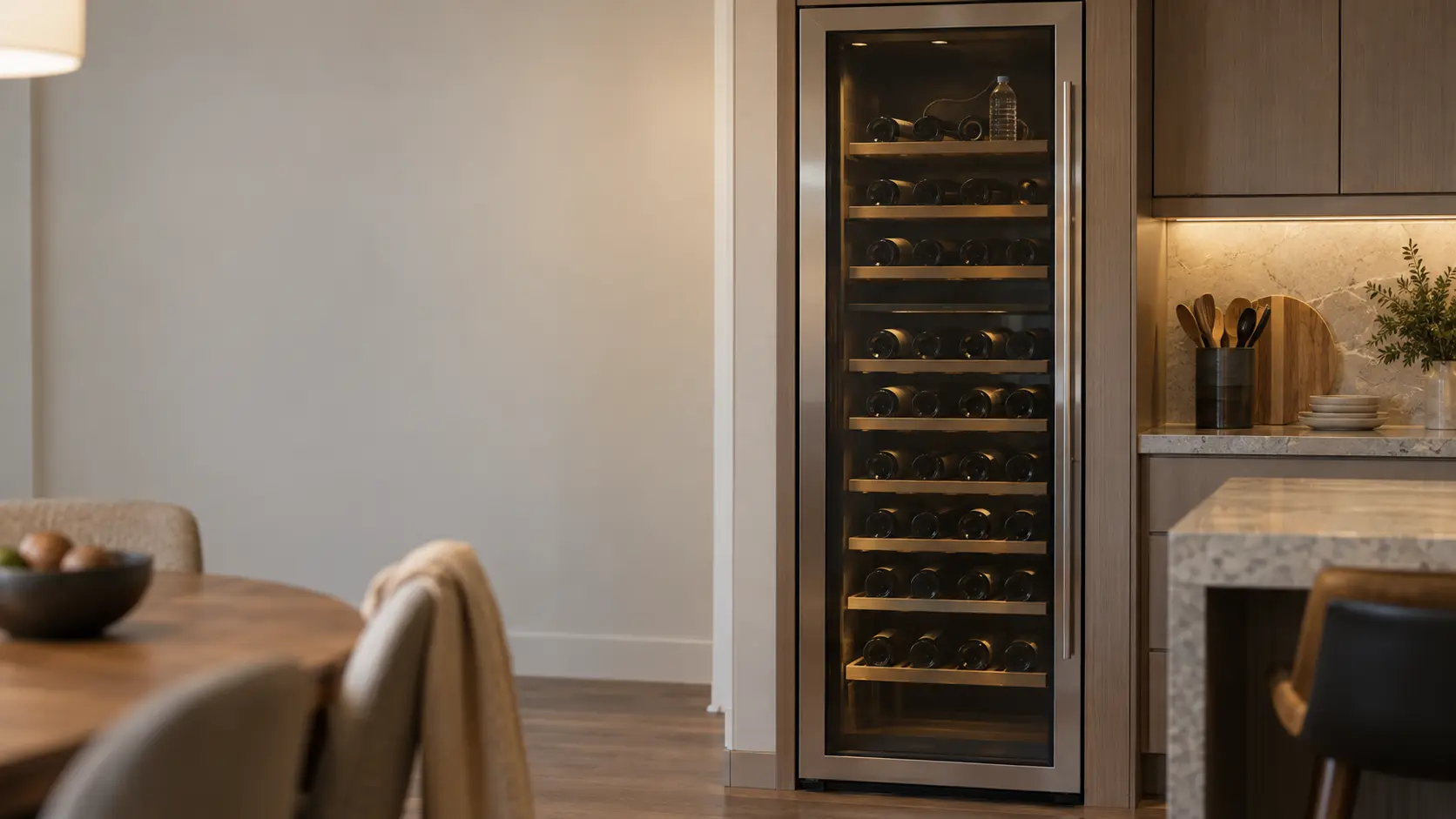
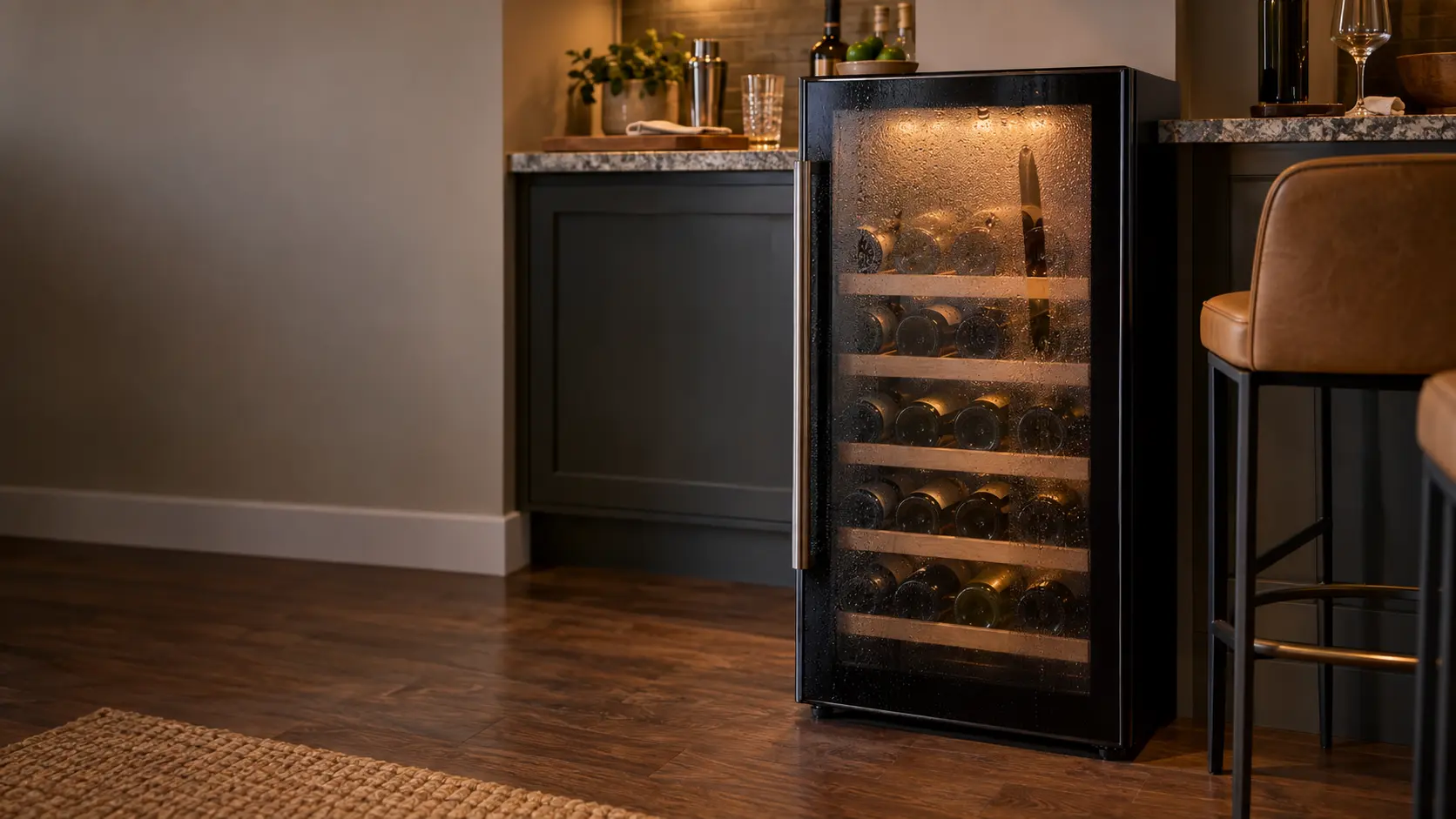
Reading the signs a wine cabinet gives.
Wine asks less of a cabinet than food does and punishes different mistakes. A few degrees warm for a day is rarely the worry; repeated swings, heat and a door that never quite seals are. The guides are ordered around that, and they tie their temperatures to what the makers' own manuals publish, so a thermometer reading has something firm to be measured against.
Read one of these when the cooler is behaving oddly and the collection is not yet at risk. If the cabinet is already close to room temperature, keep the door closed and move the most valuable bottles somewhere cool and dark; the guides on the collection, power and water cover that step, and the diagnosis can follow once the bottles are safe.
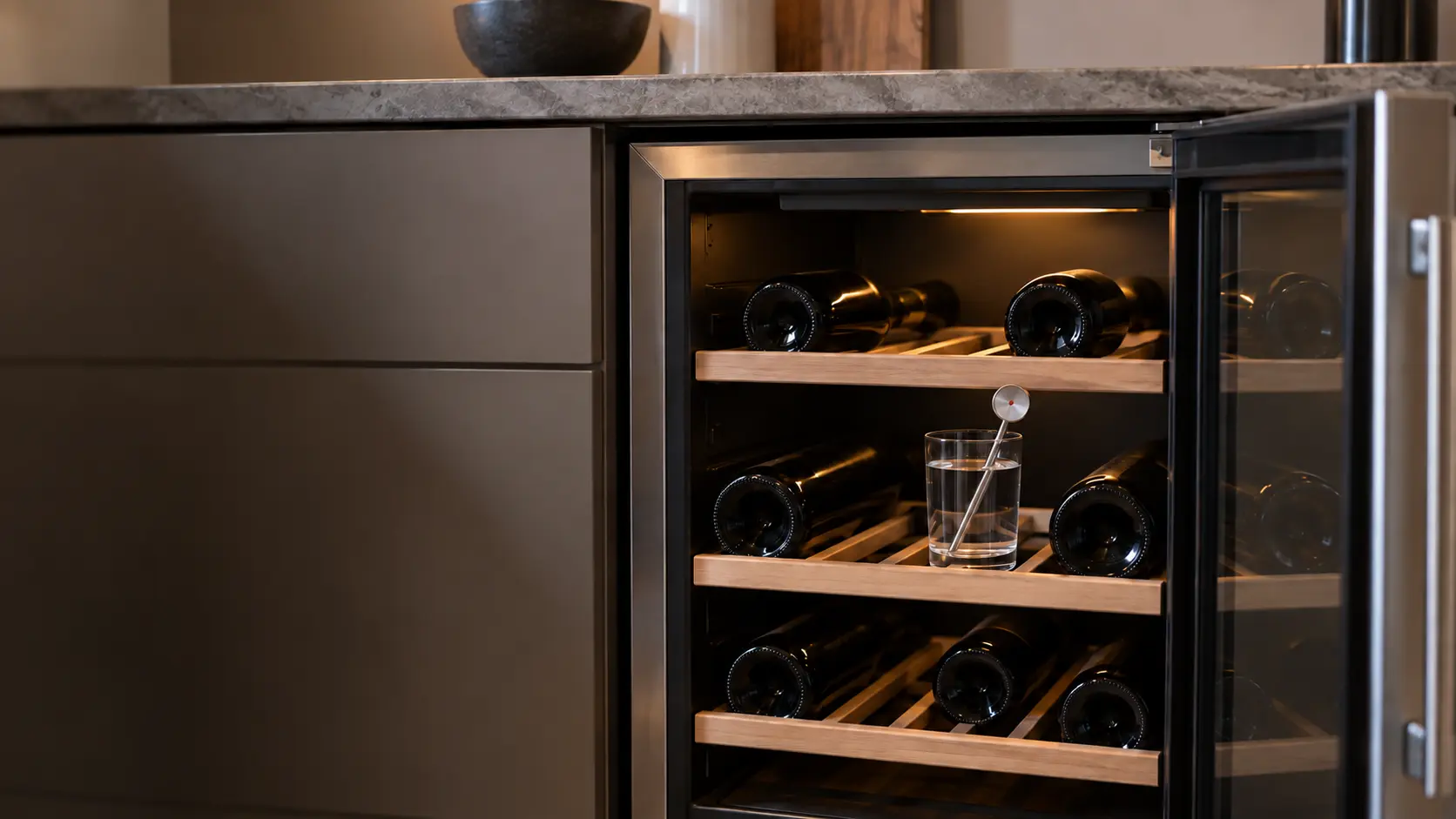
The three guides here share one method: measure a capped bottle of water rather than the air, and watch for a day before touching anything. A cabinet losing its cold belongs to the first guide, a number that wanders to the second, and water on the glass to the third, where the side of the pane that fogs tells you most of the story. Note the model, the room temperature and your readings as you go.
Not sure where to start?The short answerWhy a wine cooler stops cooling, from the grille to the sealed system
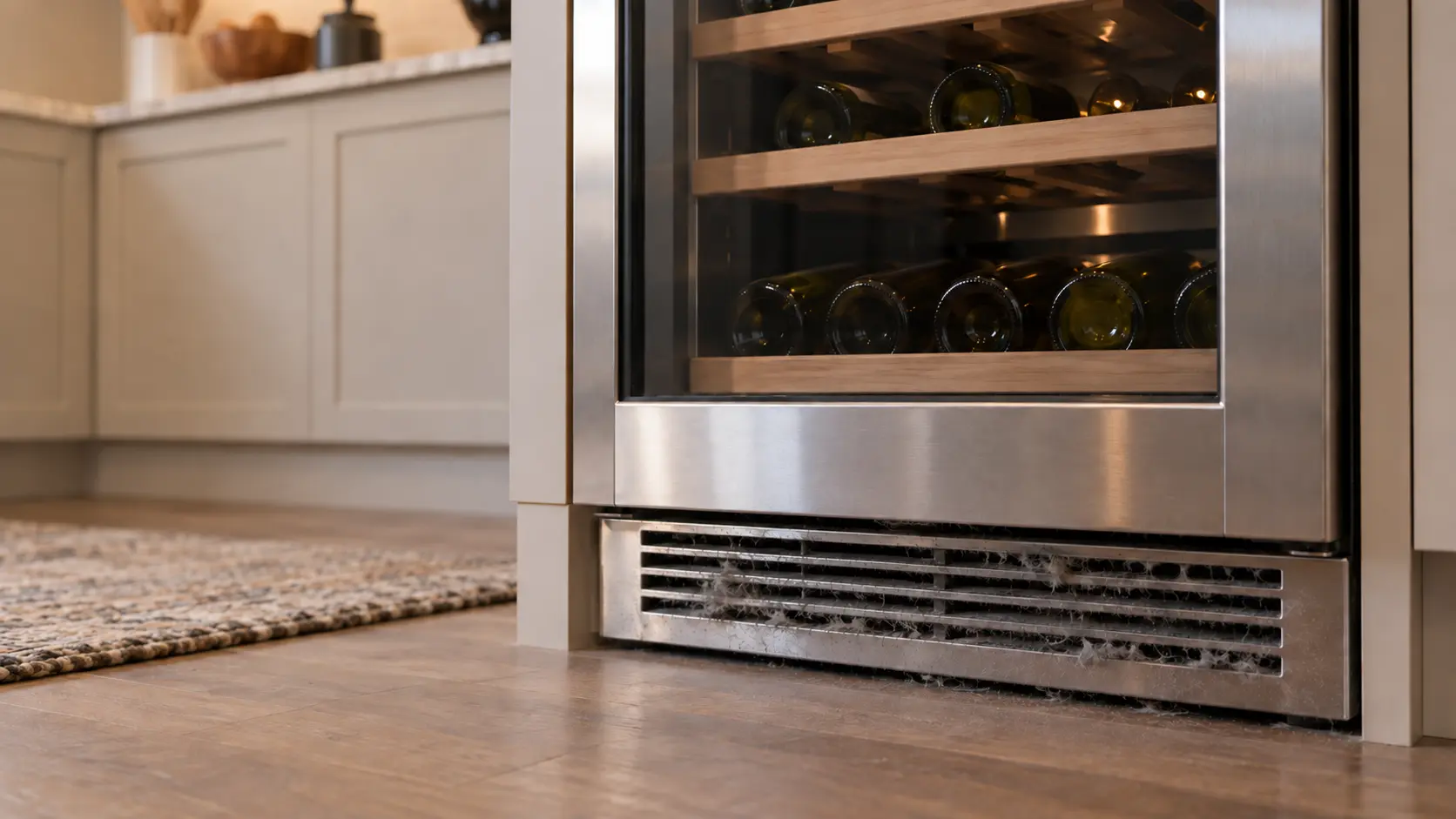
A wine cooler not cooling is most often boxed in, left in a showroom mode, or standing in a room outside its rated limits.
The short answerWhy the temperature keeps swinging, and how much is normal
A wine cooler temperature fluctuating by a few degrees on the display is usually the air cycling, not the wine.
The short answerWhy the glass door fogs up: outside, inside or between the panes
Wine cooler door condensation on the outside of the glass is usually normal in humid weather, especially with a cold setting.
When reading
is not enough.
If the checks in these guides did not settle it, the visit picks up from there, stop by stop.
What repairs cost- 01Each zone measured first
- 02A figure before any work starts
- 03The usual wine cooler parts on board
- 04Settled back at cellar temperature
The problems
these answer.
Each has a page of its own, with the causes in the order worth checking.
All 17 problems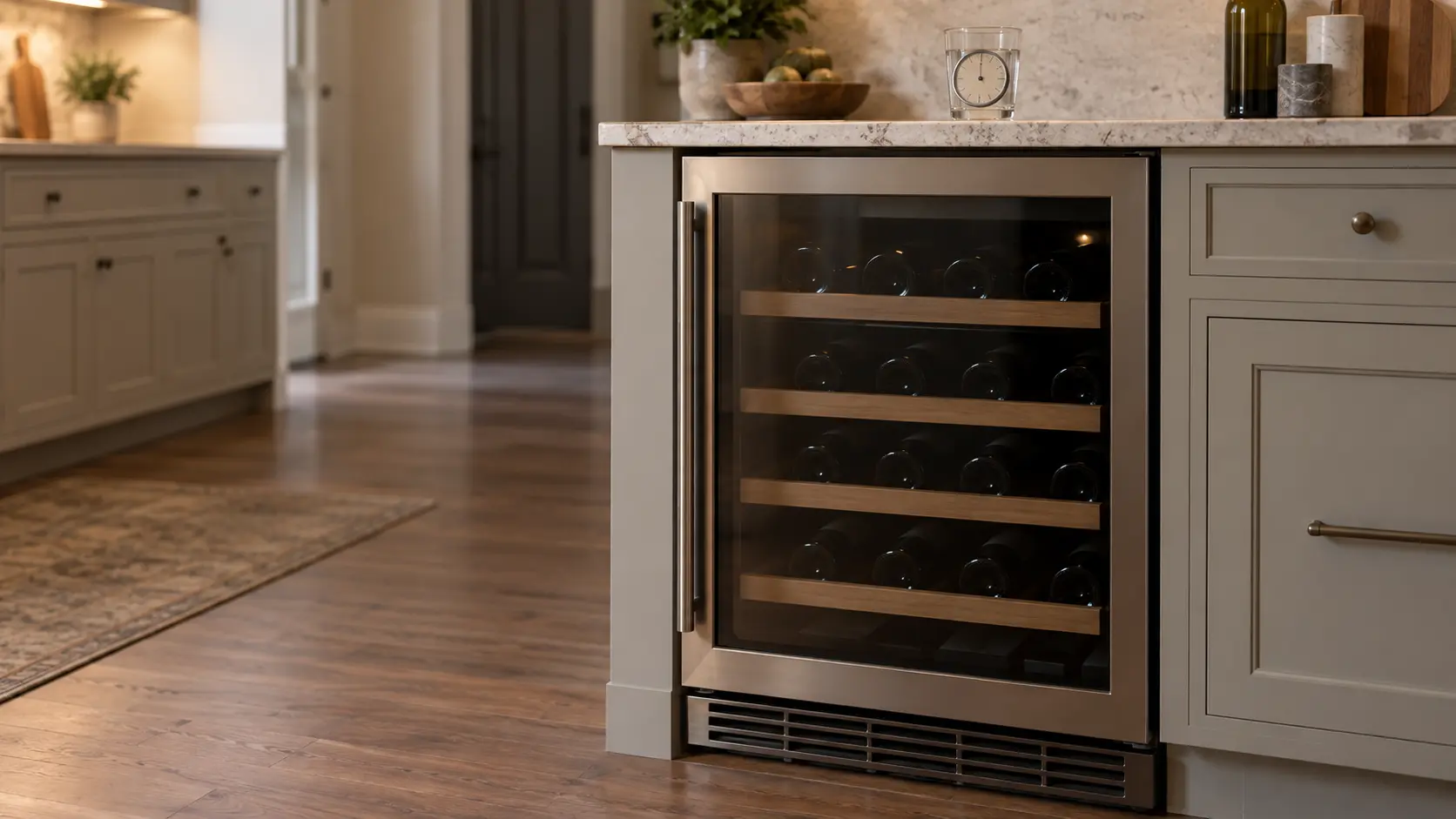

Questions about
common problems.
Which of these three problems can an owner usually settle alone?
Does it matter whether my unit is compressor or thermoelectric?
Do these guides cover a wine drawer inside a larger kitchen appliance?
What should I note before calling about one of these symptoms?
The other
sections.
Split by what you are trying to find out rather than by which part of the appliance it concerns.
All guides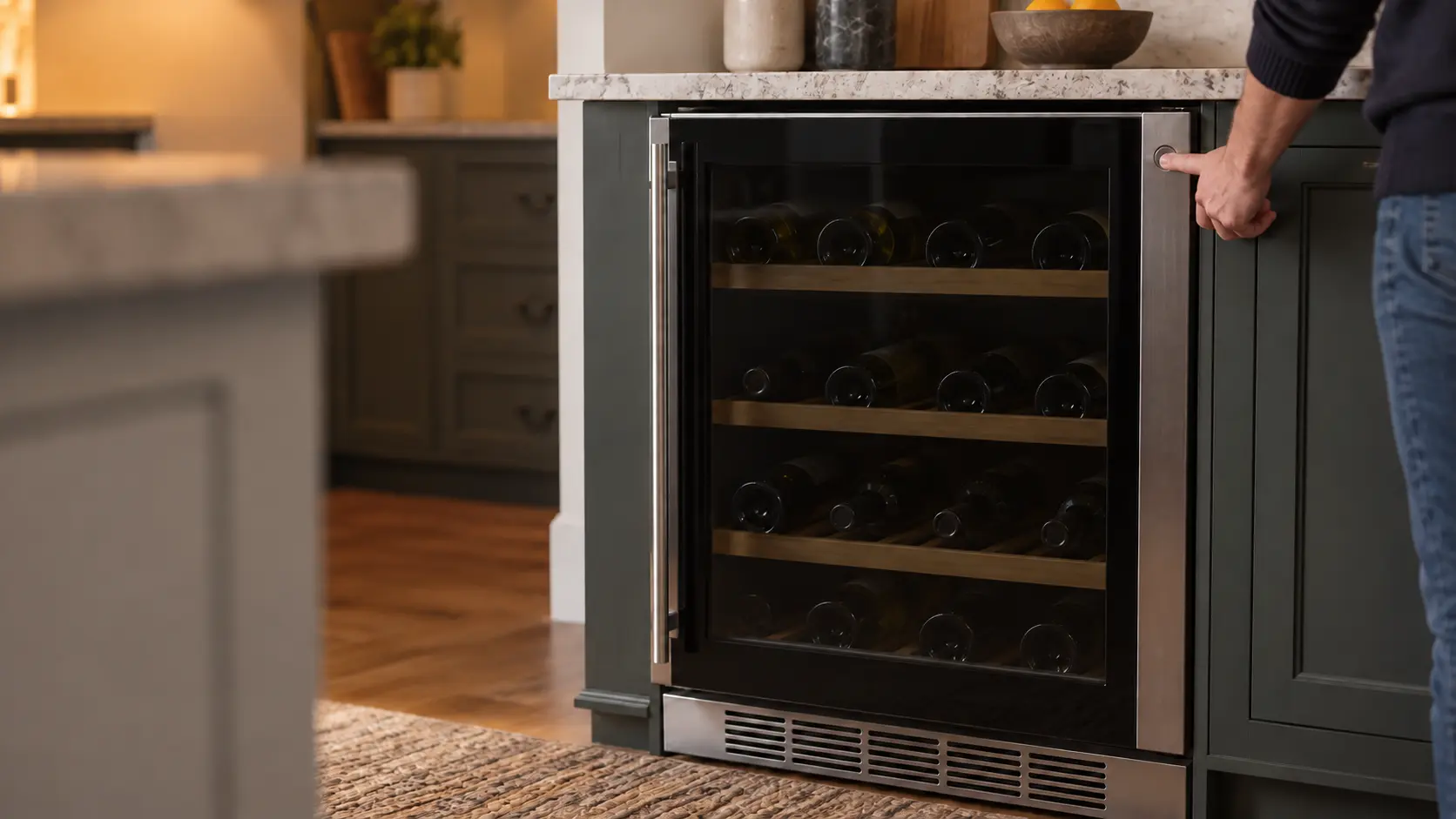
Installation and setup
Start from your question
The four questions most visits start with, each with the guide that answers it.
18 guidesWhere to start Where to startBack to your everyday
Let’s get your wine cooler working again.
Three short steps online, or one call. Tell us what you are seeing and pick a window that works.