The air swings; the wine should not
A compressor cabinet works in cycles. It runs until a sensor reports that the air has reached the lower edge of its band, stops, and waits for the air to climb back. The display on many models follows that air, so a movement of several degrees within an hour can be perfectly normal while the bottles, with far more mass, barely change.
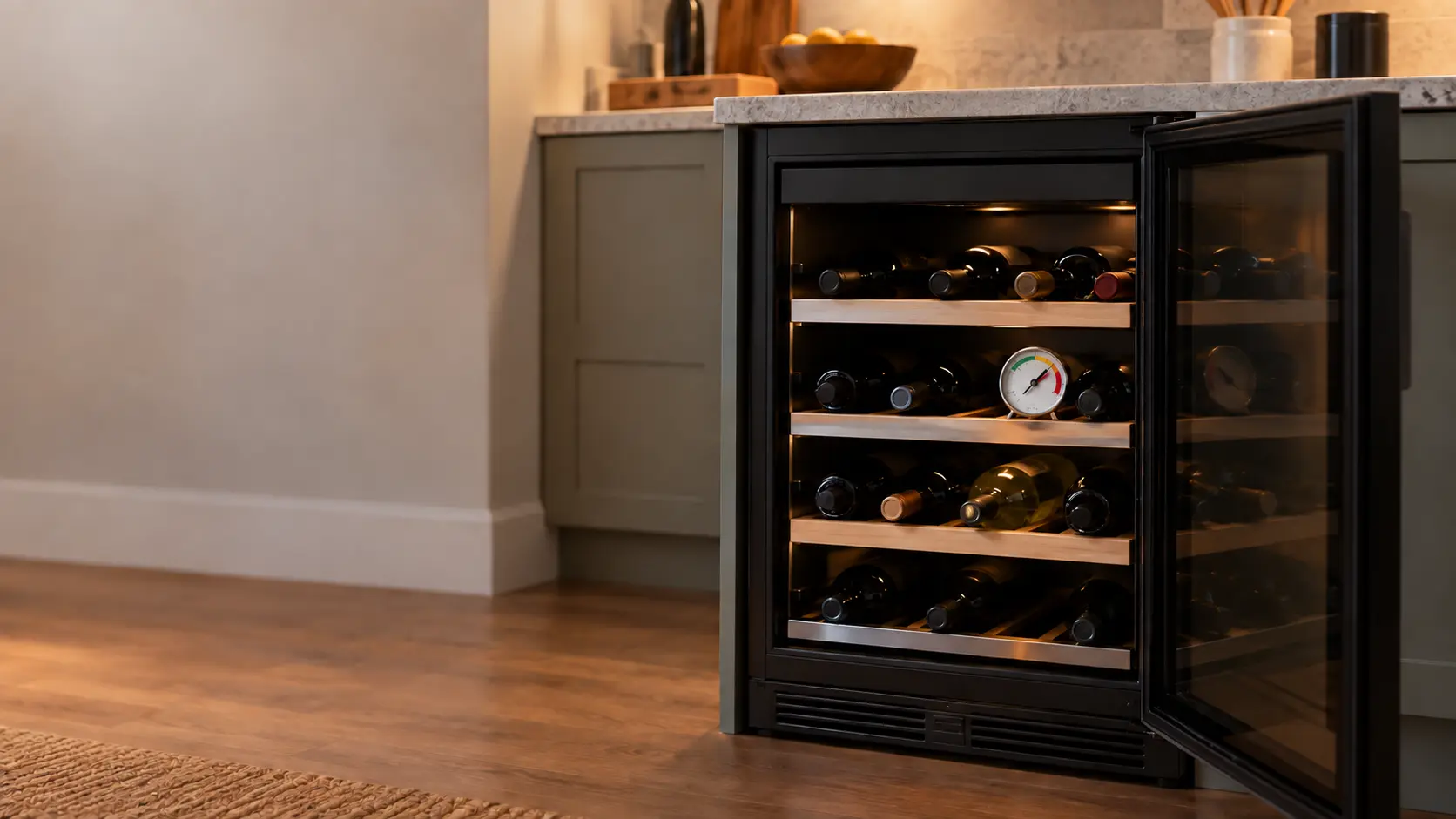
The fair test is the one U-Line prints: a capped plastic bottle of water with an accurate thermometer inside, left on a rack for 24 hours with the door shut. Read it at the same hour on two or three days. U-Line's guide says wine kept in a stable place between 40°F and 65°F stays sound, calls a 1 to 2 degree drift acceptable, and warns that larger swings can weaken a cork's seal.
- Water steady while the display moves: ordinary cycling, and nothing to repair.
- Water moving along with the display: something is changing the whole cabinet, not only the air.
- Water drifting one way over several days: treat it as a cooling problem rather than a swing.
Source: U-Line — Dual Zone Wine Captain models use and care guide — Capped water bottle and thermometer test over 24 hours; wine stable between 40°F and 65°F remains sound, a 1 to 2 degree fluctuation is acceptable and larger ones can affect the cork's seal; the setting, room, sun, door openings, light time (mainly the top rack) and a blocked grille affect inside temperature; timed light turns off after four hours; adjust in single steps and wait 24 hours
Everyday habits that move the numbers
U-Line and Marvel print nearly the same list of things that change the inside temperature: the setting, the room, sun or a nearby heat source, how often and how long the door stays open, how long the interior light stays on, and a blocked grille or condenser. Most swings owners notice trace back to one of those.
The door and the light
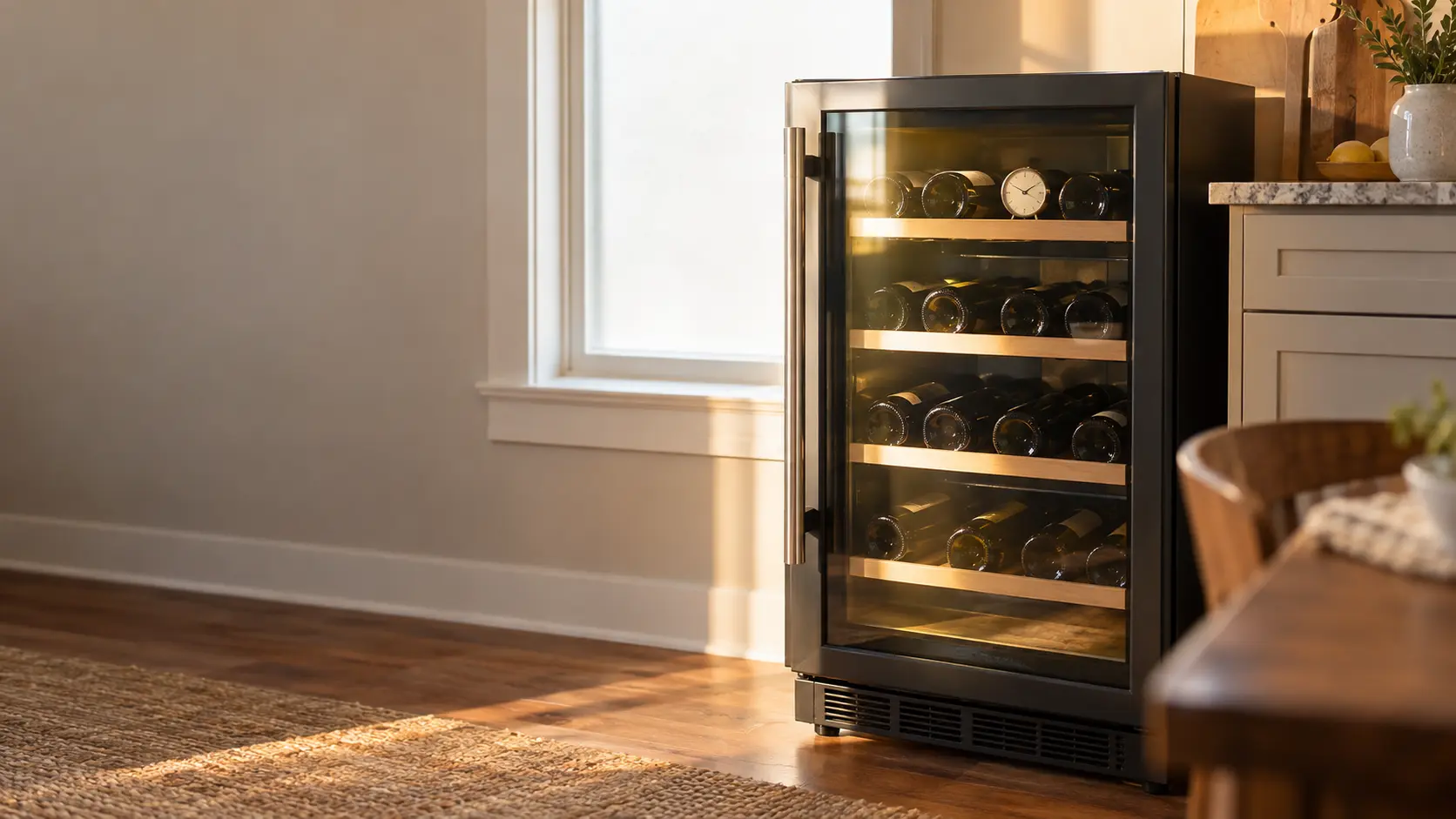
A glass door opened ten times during a dinner party trades the cold air for room air each time, and the display will show it for hours afterward. The light matters more than people expect: U-Line notes that the time it stays lit mainly warms the top rack, and its timed light switches itself off after four hours. A light left on through a long weekend is a common reason for one warm shelf.
Loading and the racks
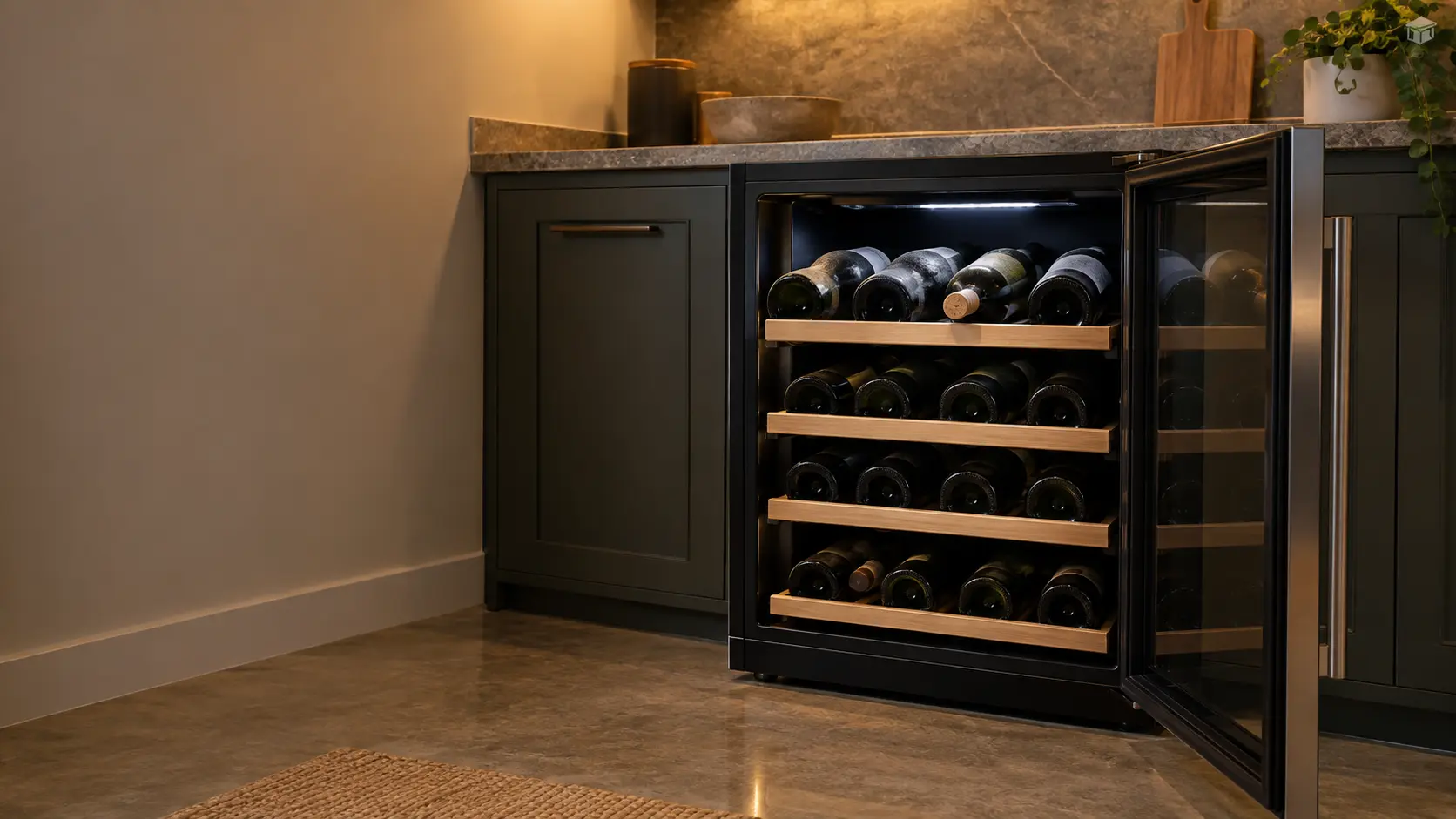
A case carried in from a warm car takes a while to absorb; GE allows up to 48 hours for an empty wine chiller filled all at once to reach its setting. Bottles pushed hard against the rear wall can chill too far, and GE notes that frost may form on a bottle touching that wall. Leave a finger's width between the bottles and the liner so the air can circulate.
Seasons and rooms
A cabinet working near the edge of its room limits swings more. GE says its wine chiller no longer cools with the room at 40°F, and a thermoelectric cabinet cannot warm itself at all: Newair notes that its inside drops along with a room below 50°F. In summer the same cabinet may struggle at the other end, so a swing that appears every July and vanishes every October is usually the room.
Source: U-Line — Dual Zone Wine Captain models use and care guide — Capped water bottle and thermometer test over 24 hours; wine stable between 40°F and 65°F remains sound, a 1 to 2 degree fluctuation is acceptable and larger ones can affect the cork's seal; the setting, room, sun, door openings, light time (mainly the top rack) and a blocked grille affect inside temperature; timed light turns off after four hours; adjust in single steps and wait 24 hours; Marvel — Owner's guide and service manual, undercounter wine models (MLWC324) — Causes that affect inside temperature include the setting, the room, sun or heat sources, door openings, light time and a blocked grille or condenser; 55°F is the long-term storage temperature for red and white wine

When the swing points to a part
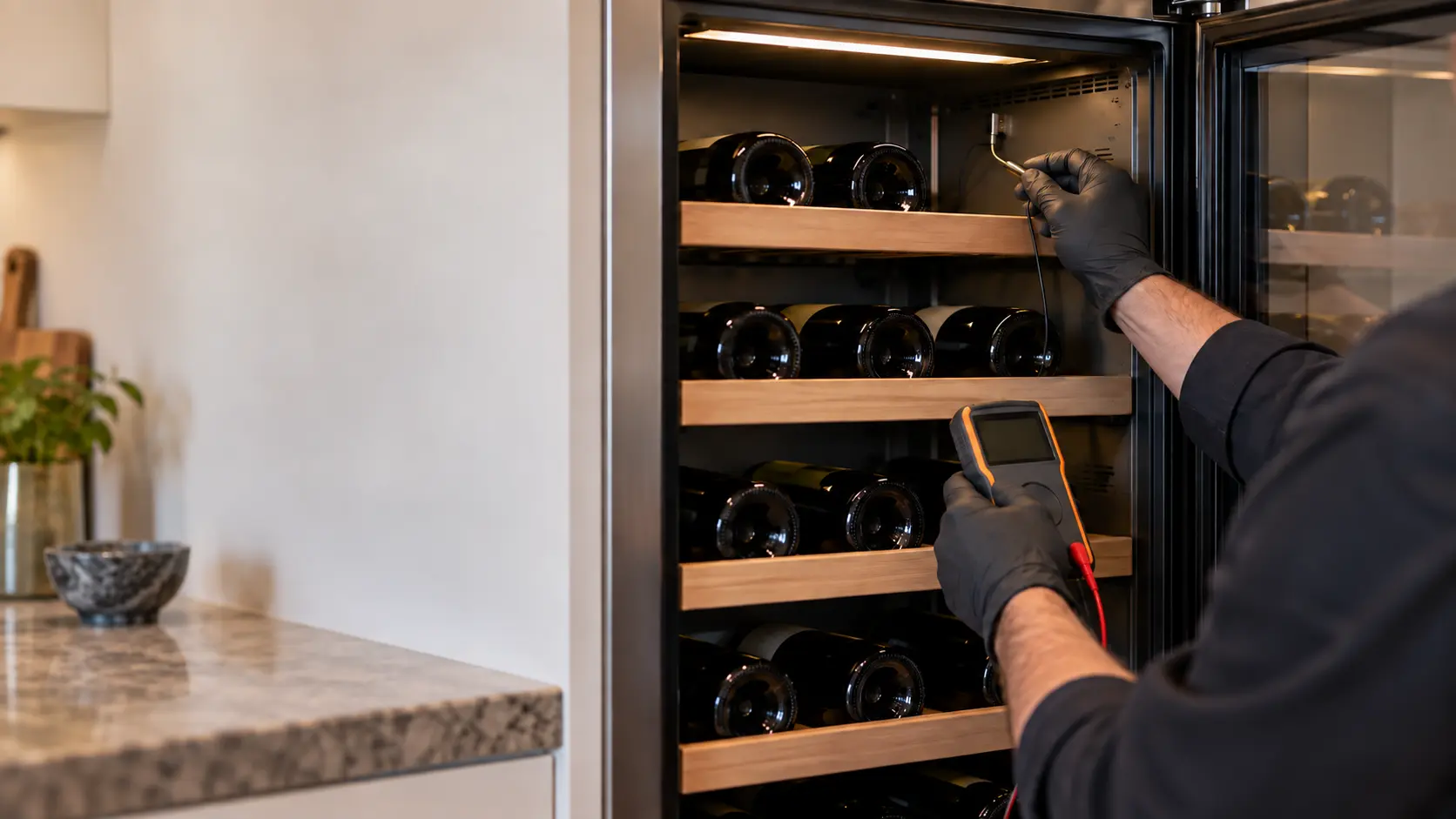
Some patterns are not habits. A display that jumps several degrees within seconds, or reads 20°F one moment and 70°F the next, is almost always the sensor or its wiring, because real air in a closed cabinet cannot change that quickly. A cabinet that overshoots far past its setting and then warms well above it on every cycle suggests a sensor that has drifted or a control that no longer reads it correctly.
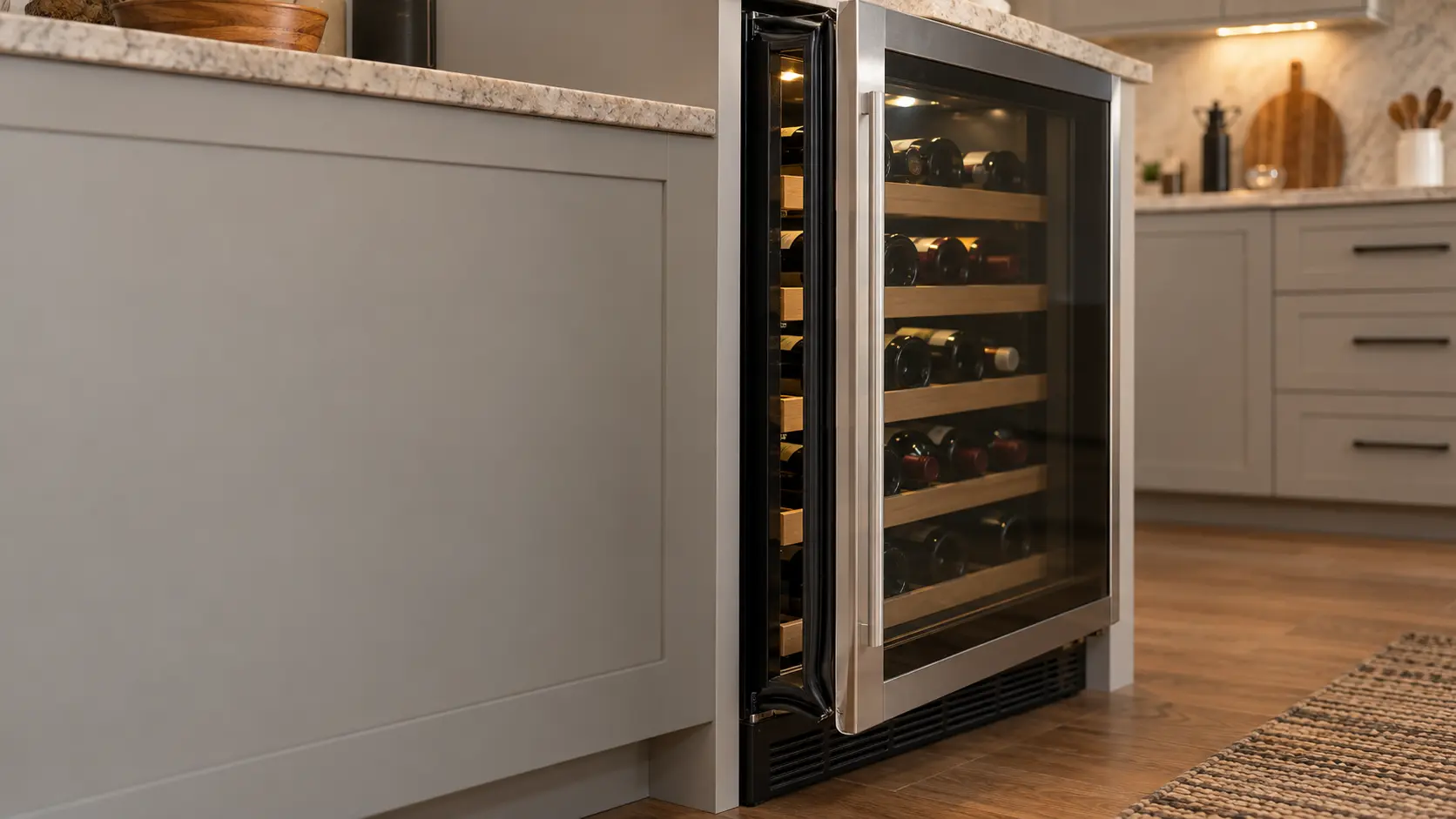
On a dual-zone unit, watch each zone on its own. If one wanders while the other holds, the damper, the zone fan or that zone's sensor is involved rather than the compressor. If the swing starts only after the door has been closed for a while, look at the gasket: a seal lifting at one corner lets a steady trickle of room air in, and the control keeps chasing it.
- Readings that jump faster than air could move: the sensor or its wiring.
- Deep cold overshoots followed by slow warming: a drifting sensor or control.
- One zone swinging alone: its damper, fan or sensor.
- Quick frost on the rear wall alongside the swings: air entering past the door.
How much variation each style shows
Not every cabinet is built to the same tolerance, so judge a reading against the design in front of you.
Freestanding and thermoelectric units
Newair says a compressor cooler may differ by as much as 10 degrees from top to bottom, while a thermoelectric one keeps a more even spread. The catch is that a thermoelectric unit tracks the room and has no heater, so a small freestanding cabinet in a room that changes by 15 degrees between afternoon and night will show much of that change inside.
Built-in units and columns
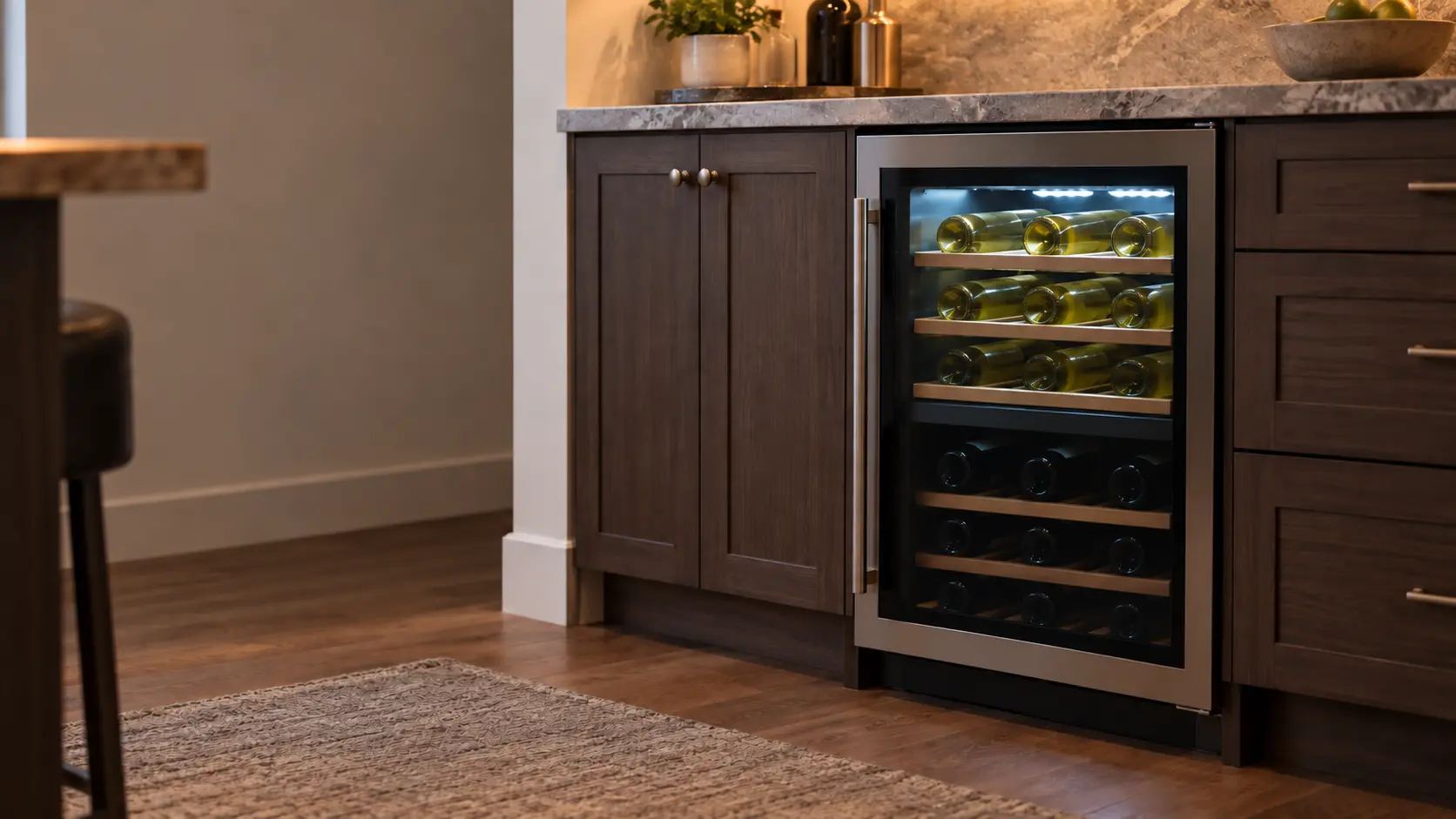
Built-in undercounter units and full-height columns usually have a fan moving air across the racks and, on many, a separate sensor for each zone, so their spread from top to bottom should be small. A column with a warm top third and a cold bottom is more often a fan that has slowed than a setting problem, and it tends to get worse week by week.
Setting it so it stays put
Change the set point one step at a time and wait 24 hours between changes, as U-Line asks, rather than chasing a number on the display. Marvel suggests 55°F as the long-term storage setting for reds and whites alike. A cabinet left there, with serving temperature handled by moving a bottle to a colder zone an hour ahead, cycles less and swings less than one reset every evening.
Source: U-Line — Dual Zone Wine Captain models use and care guide — Capped water bottle and thermometer test over 24 hours; wine stable between 40°F and 65°F remains sound, a 1 to 2 degree fluctuation is acceptable and larger ones can affect the cork's seal; the setting, room, sun, door openings, light time (mainly the top rack) and a blocked grille affect inside temperature; timed light turns off after four hours; adjust in single steps and wait 24 hours; Marvel — Owner's guide and service manual, undercounter wine models (MLWC324) — Causes that affect inside temperature include the setting, the room, sun or heat sources, door openings, light time and a blocked grille or condenser; 55°F is the long-term storage temperature for red and white wine