
Frost or Ice on the Back Wall of a Wine Cooler
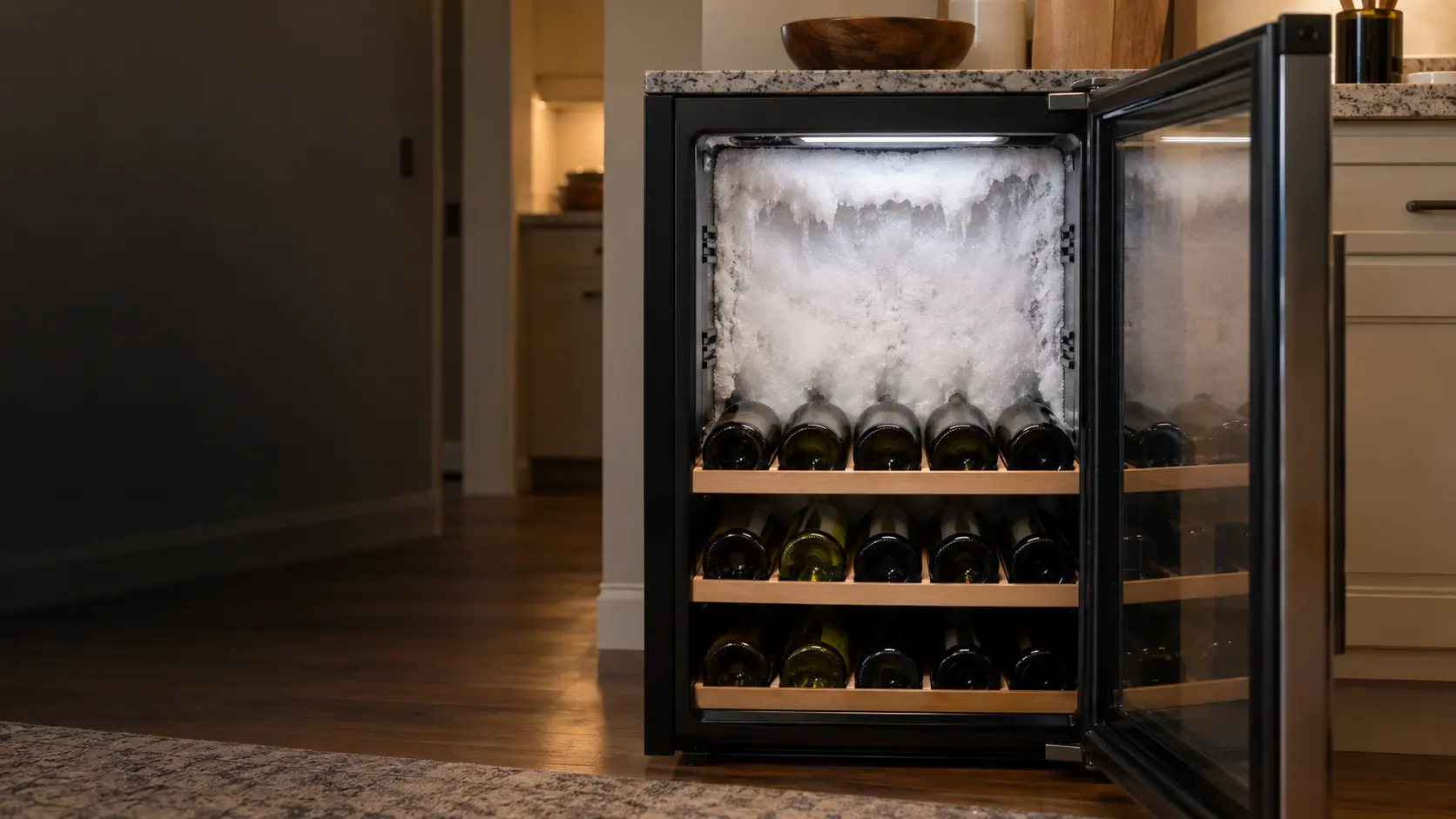
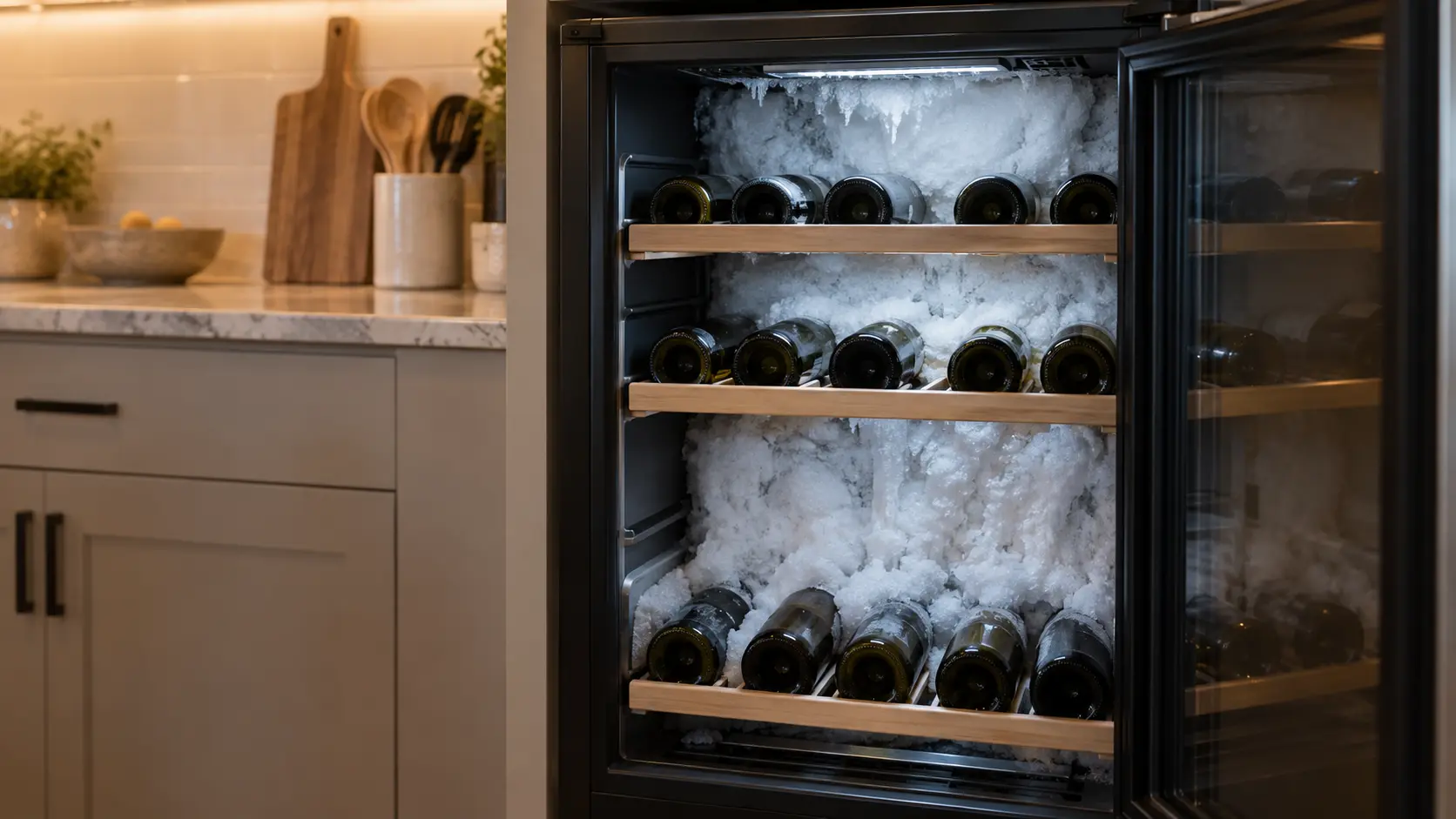
Wine cooler ice buildup starts as a white bloom on the plate at the back of the cabinet and grows into a sheet of ice that reaches the rear bottles, blocks the drain channel and melts into puddles under the bottom rack.
Mon–Sat, 8am–8pm
- 5 checks before you book
- 5 questions that narrow it
- 5 causes, cheapest first
Book a visit
Three short steps, about a minute.
or call (844) 709-0727
Loading appointment form…
The appointment form couldn’t load. Please try again.
What it
usually means.
Many compressor wine coolers cool through a plate or coil on the back wall of the cabinet rather than a coil hidden behind a panel. A thin frost that forms while the compressor runs and melts away during the rest between cycles is simply how these units work. Thick ice that never clears means the plate is taking in more moisture than it can shed, or never rests long enough to melt it. Humid room air leaking past the door gasket is the usual source. A sensor that keeps the compressor running, a drain channel so blocked that water refreezes at its foot, or a setting far below 55°F can all add to it. Ice pressed against the rear bottles chills them unevenly and soaks their labels as it melts.
 The 5 causes, cheapest first
Answer these first
Is it a light frost that comes and goes, or a solid sheet that stays for days?
Is the ice heavier at the bottom near the drain, or spread across the whole plate?
Does the door close firmly, and is the gasket torn or flattened anywhere?
Is the setting low, such as 45°F or below?
Is there water on the cabinet floor or under the front of the unit?
Check these
before you book.
Wine cooler ice buildup: 5 checks, and none of them costs anything.
Switch the cooler off, move the bottles to a cool dark place, and let the ice melt on its own with the door open and towels on the cabinet floor; never chip at it.
While it thaws, clear the drain hole at the foot of the back wall.
Check the gasket for tears and test it with a strip of paper at the corners.
Also worth checking
- Put the bottles back once the cabinet is cold again, confirmed with a thermometer in a glass of water.
- Tell us how soon the ice came back, if it does, and the model number.
How soon does it need a visit?
Ice on the back wall is not urgent unless it has choked the cooling and the cabinet is warming, or melt water is reaching the floor near an outlet.
The causes,
cheapest first.
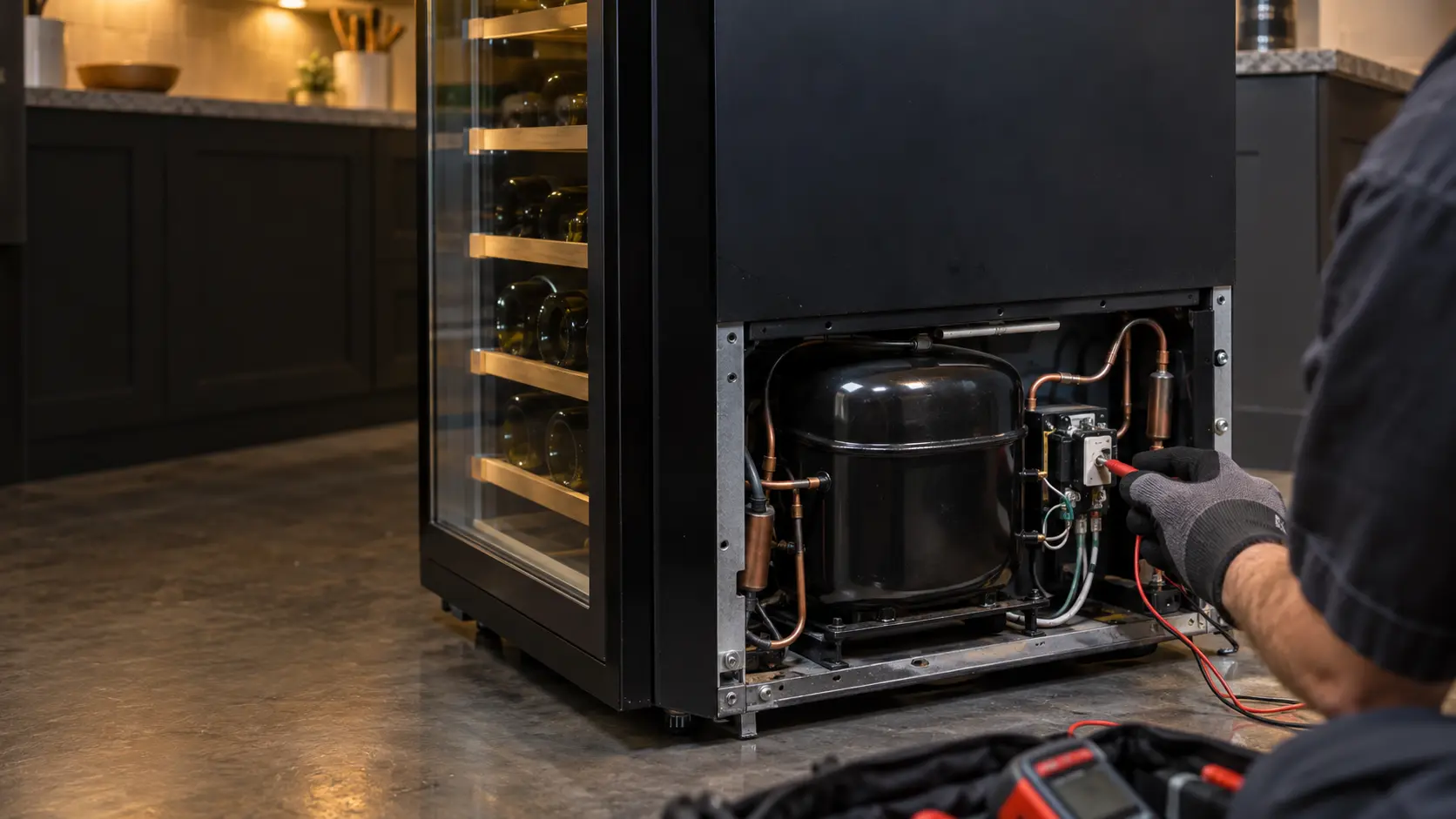
5 things frost or ice on the back wall of a wine cooler turns out to be, from door left open on humid days to fan not moving air across the plate.
The cost guide-
01 no repair
Door left open on humid days
Browsing the racks with the door wide open in a humid kitchen lets in more moisture than the plate can shed. Keep openings brief.
-
02 low
Gasket letting humid air in
Room air carries moisture; a door that does not seal feeds the plate a steady supply, and the frost never gets the chance to clear.
-
03 low
Drain channel blocked and refreezing
When melt water cannot leave, it pools at the foot of the plate and freezes there on the next cycle, building ice from the bottom up.
-
04 low to moderate
Sensor keeping the compressor on
Without rests, the plate never warms above freezing, and each cycle lays down another layer.
-
05 low to moderate
Fan not moving air across the plate
On units with a fan at the cold plate, a stopped fan lets the plate over-cool and frost heavily while the upper racks warm.
-
What it costs
Every repair on the site's cost scale, side by side
Open the cost guide
What else
it could be.
Most often confused with wine cooler leaking water on the floor, then wine cooler door not sealing.
All problems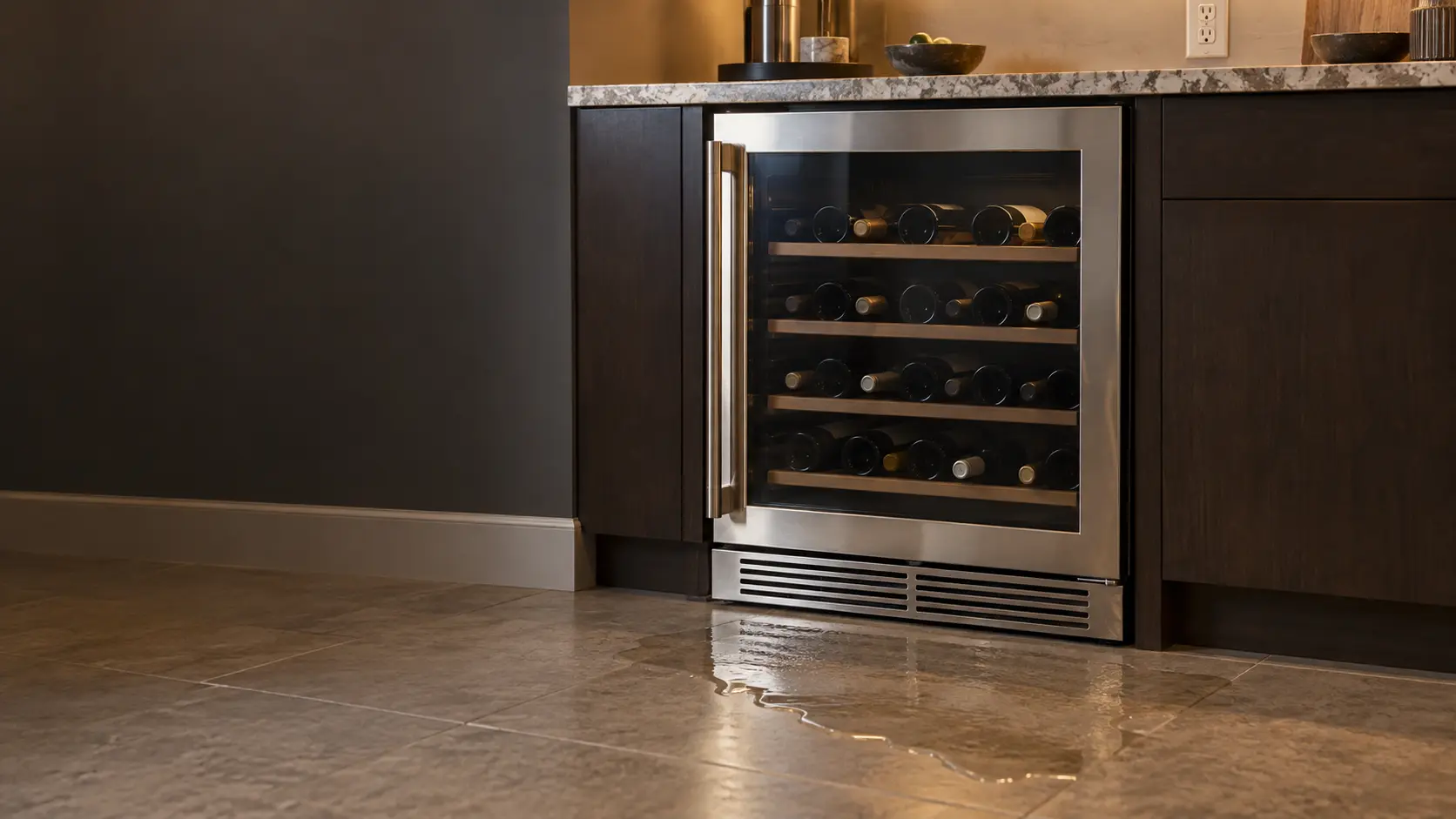
The makes
it happens on.
25 makes on this site; frost or ice on the back wall of a wine cooler can show up on any of them. Each mark opens that make's own page.
All 25 brandsFrost or Ice on the Back Wall of a Wine Cooler,
where we come out.
9 metros, each with its own page.
All service areasTampa BayFL · 31 areas
Miami / South FloridaFL · 47 areas
New York MetroNY · 75 areas
HoustonTX · 36 areas
ChicagoIL · 50 areas
Los AngelesCA · 95 areas
San DiegoCA · 31 areas

Questions about
frost or ice on the back wall of a wine cooler.
Is a little frost on the back wall normal?
Can I scrape the ice off with a knife?
Why does the ice return a week after I defrost the cabinet?
Does ice on the plate harm the bottles touching it?
Back to your everyday
Still seeing frost or ice on the back wall of a wine cooler?
Book with what you checked above — 5 answers save the technician the first part of the visit.