Why a dusty coil matters more for wine than for milk
A food appliance with a clogged coil fails loudly: the milk turns and someone notices within a day. A wine cabinet fails quietly. It runs longer, the compressor gets hotter, and the inside creeps from 55°F toward 60°F over weeks, with short swings each time the door opens. Nothing spoils, so nobody looks, and the wine spends a season warmer and less steady than it should.
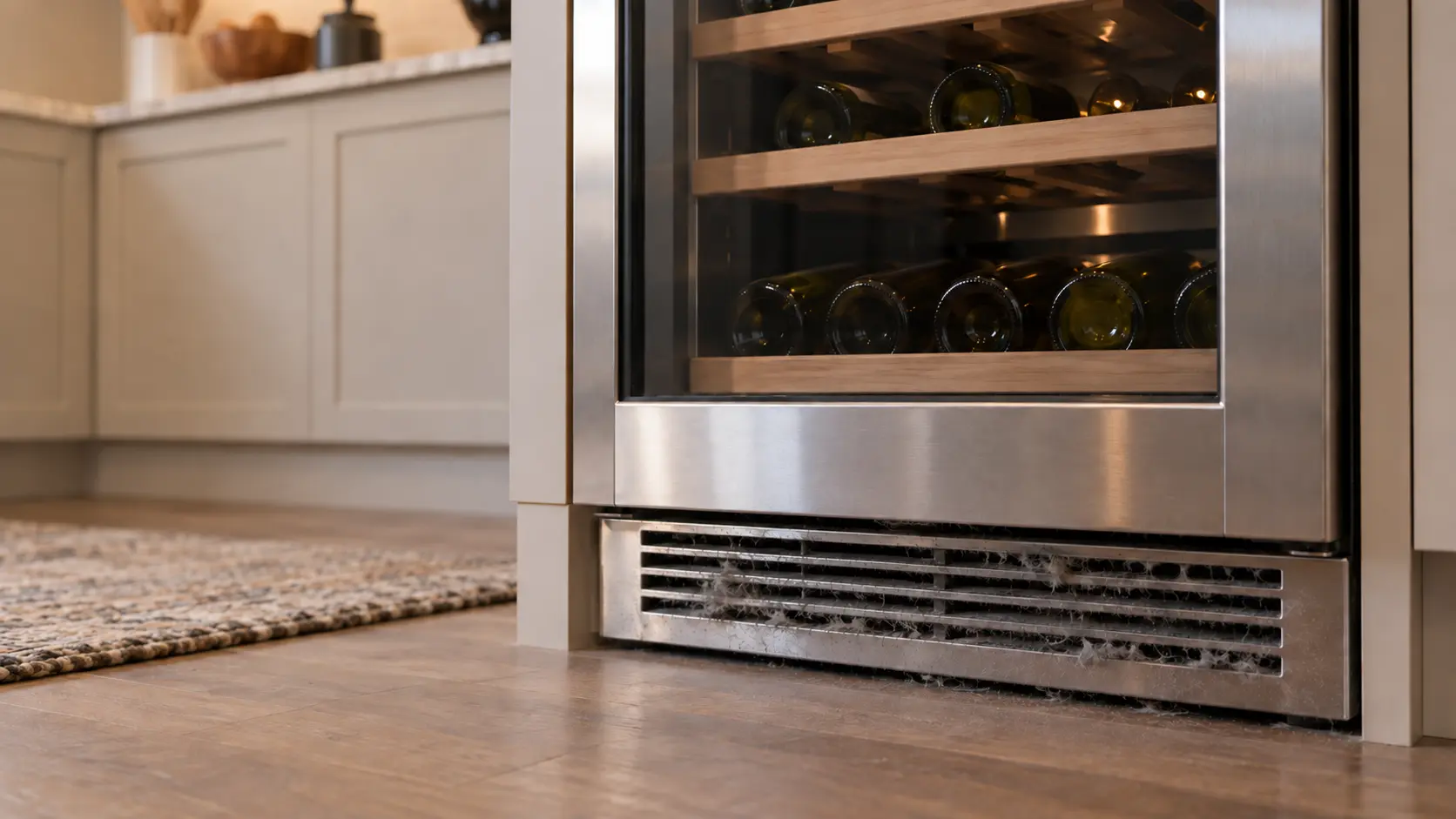
Sub-Zero ties a neglected condenser directly to lost temperature on its wine units. The same logic applies to every brand: the refrigerant can only release heat as fast as air can carry it off the coil, and a felt of dust turns that coil into an insulator.
Source: Sub-Zero — Designer wine storage condenser cleaning — Clean the condenser every six to twelve months; a neglected condenser can cause temperature loss; use a soft brush and vacuum or low-pressure air; cleaners are not recommended; temperatures may take up to 24 hours to recover
Where the condenser or heat sink sits on each kind
Knowing where the heat leaves is half the job, and it differs by design. Look before you pull anything out.
Undercounter units and wine columns
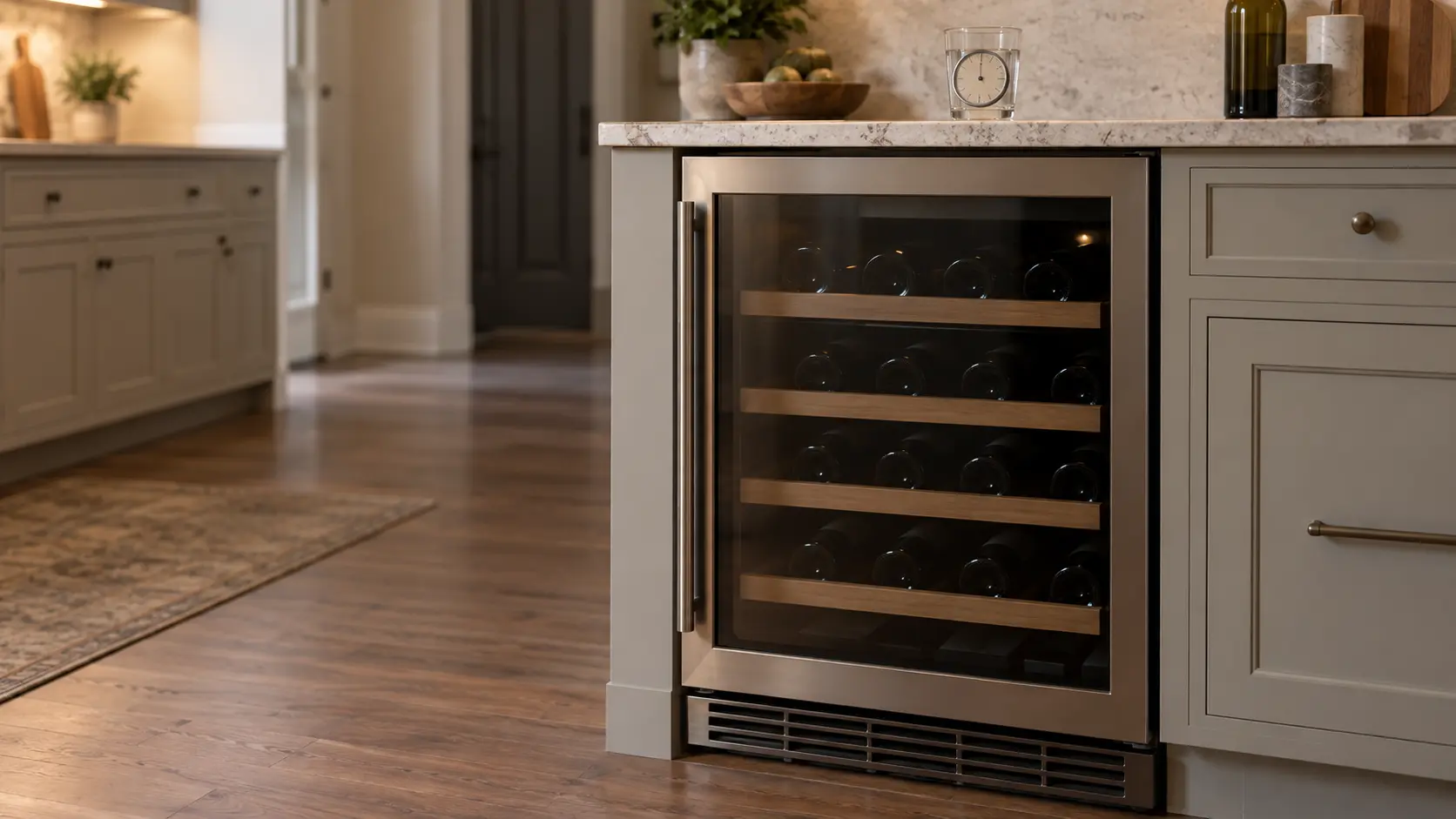
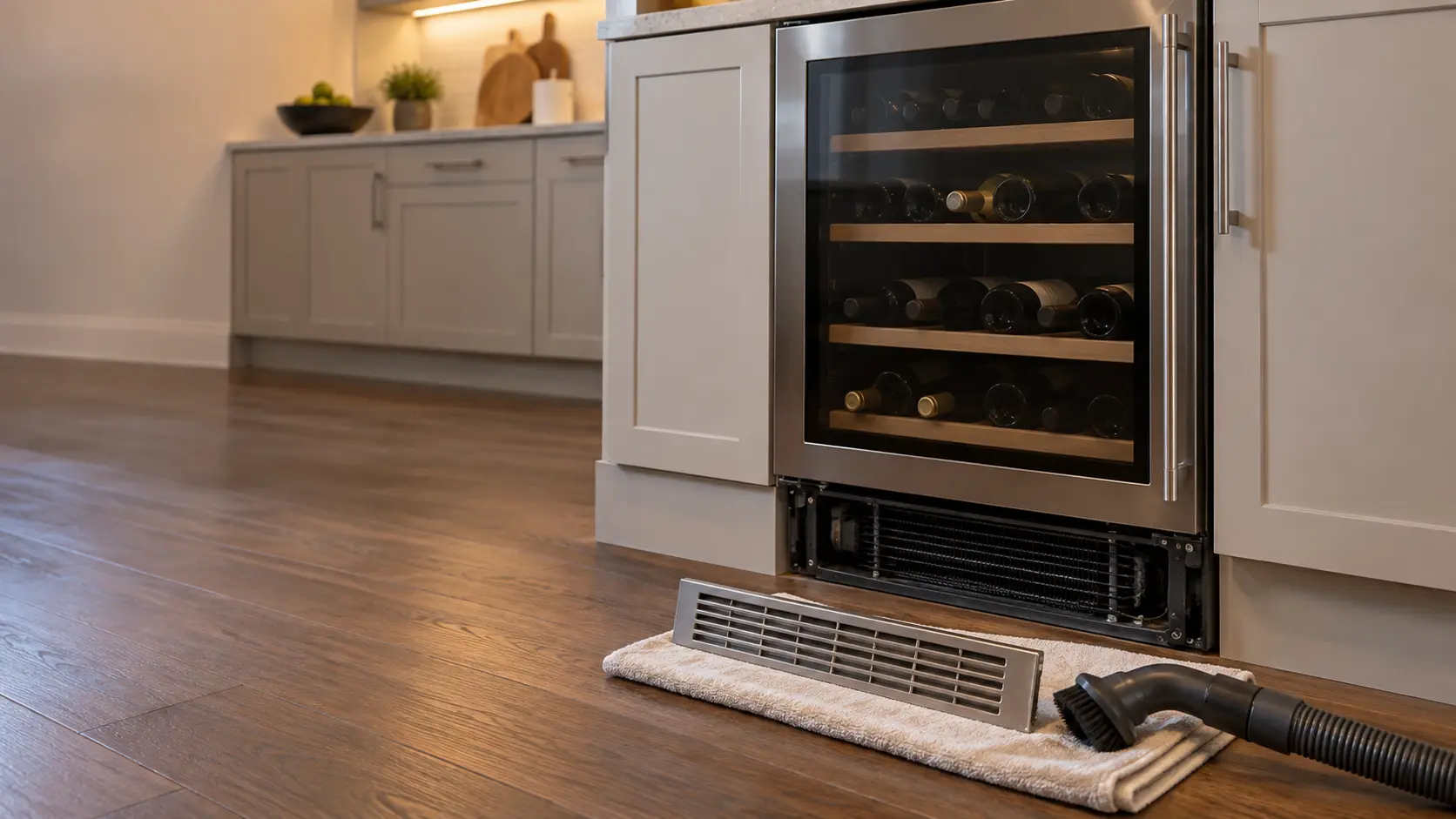
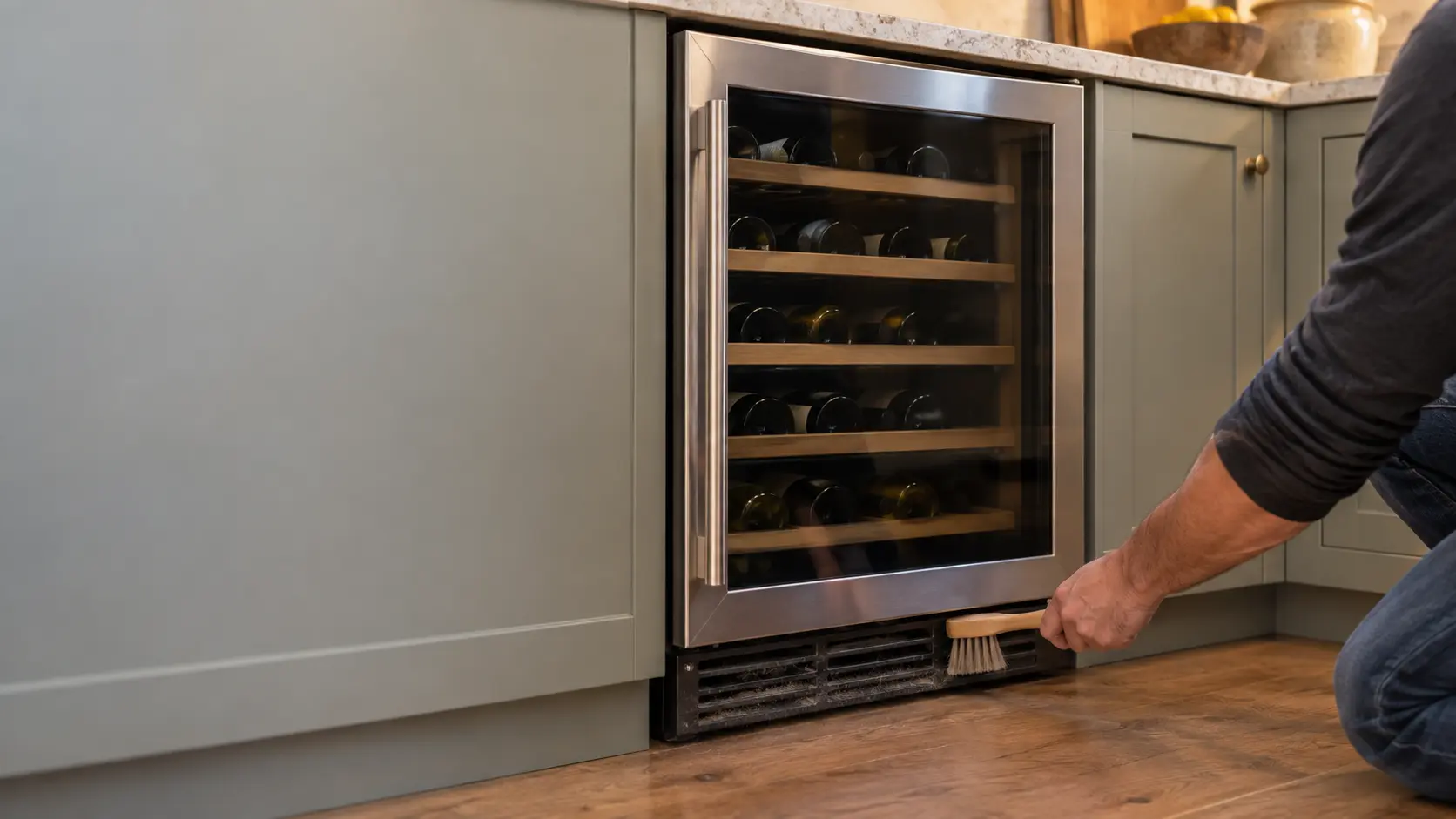
Built-in models breathe through the grille at the bottom front, often called the kickplate or toe grille. The condenser sits just behind it, sometimes with a mesh screen in front. Some columns hide the kickplate until the door swings open, and on a few tall models the lowest drawer or rack comes out to give your hands room.
Freestanding compressor models
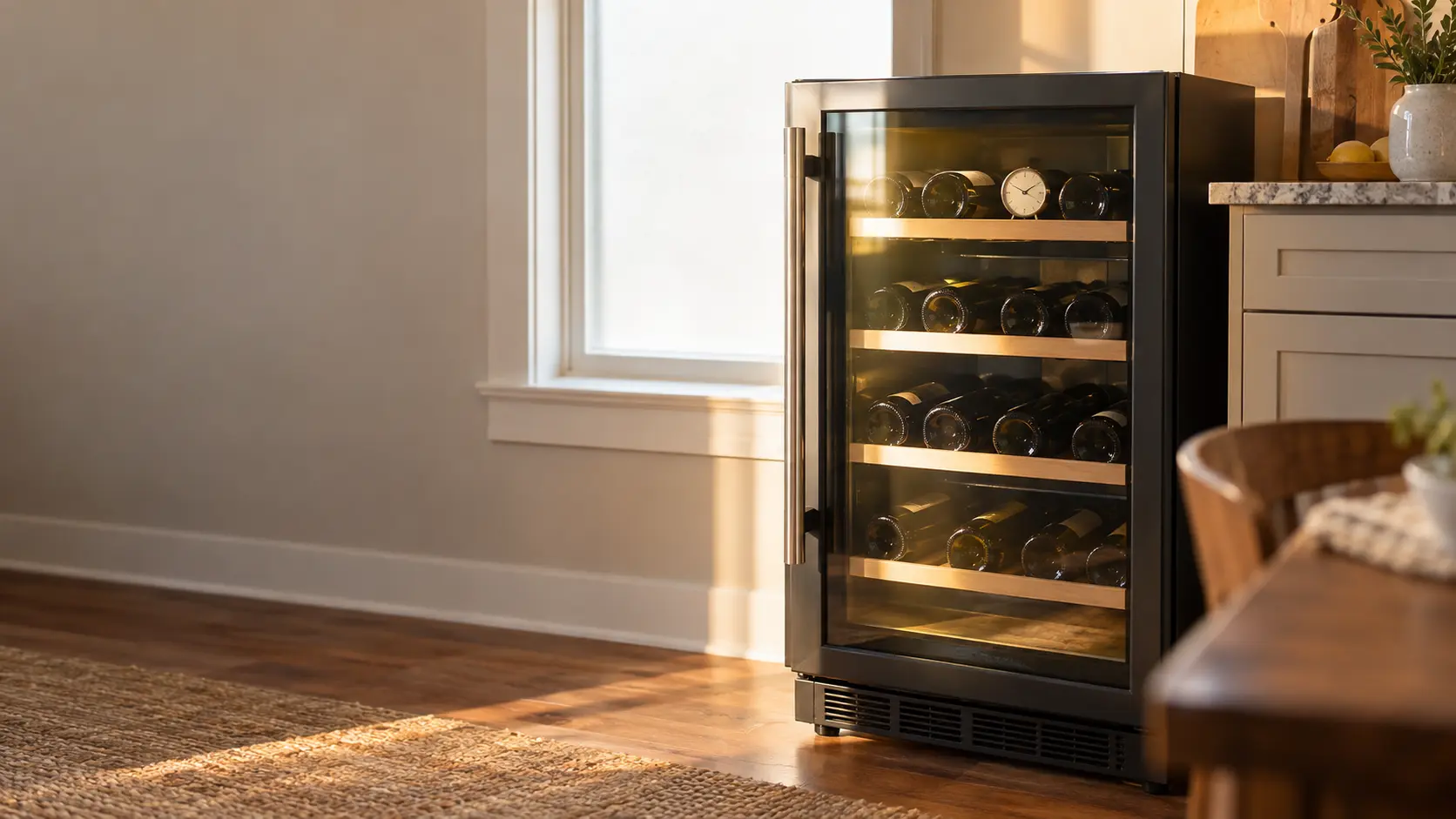
Look at the back. Some have an open black coil, others a thin metal grille over a coil, and some bury the condenser in the side walls, in which case the sides feel warm and the job is keeping the gaps around the cabinet clear and dust-free.
Thermoelectric cabinets
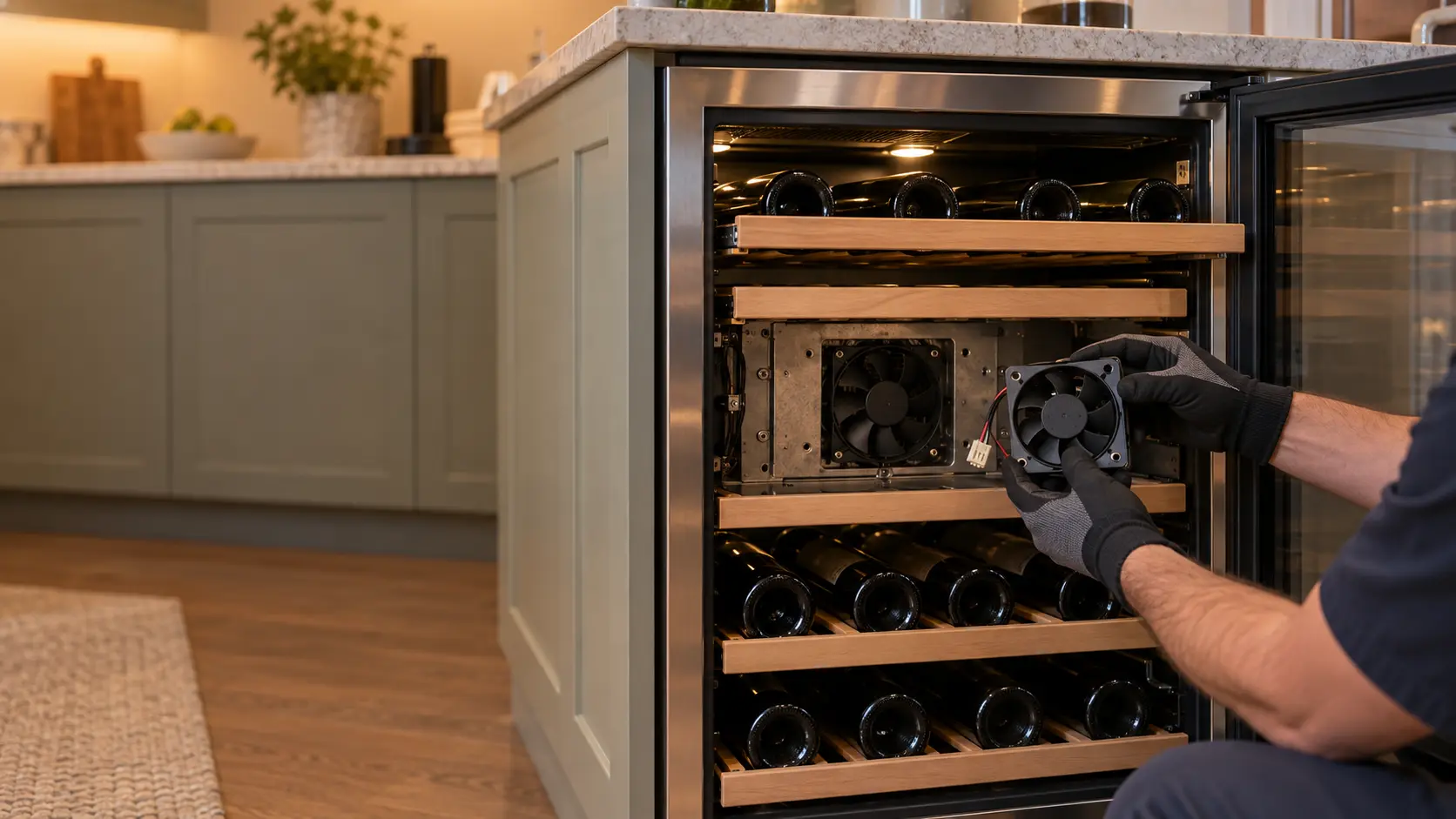
There is no condenser, but there is a finned aluminum heat sink and a fan behind a vented rear cover. Dust packs the fins the same way it packs a coil, and with only a small margin below room temperature to begin with, a thermoelectric unit loses cooling faster than a compressor one when they clog.
Source: Sub-Zero — Designer wine storage condenser cleaning — Clean the condenser every six to twelve months; a neglected condenser can cause temperature loss; use a soft brush and vacuum or low-pressure air; cleaners are not recommended; temperatures may take up to 24 hours to recover
Keeping the air path open, not just clean
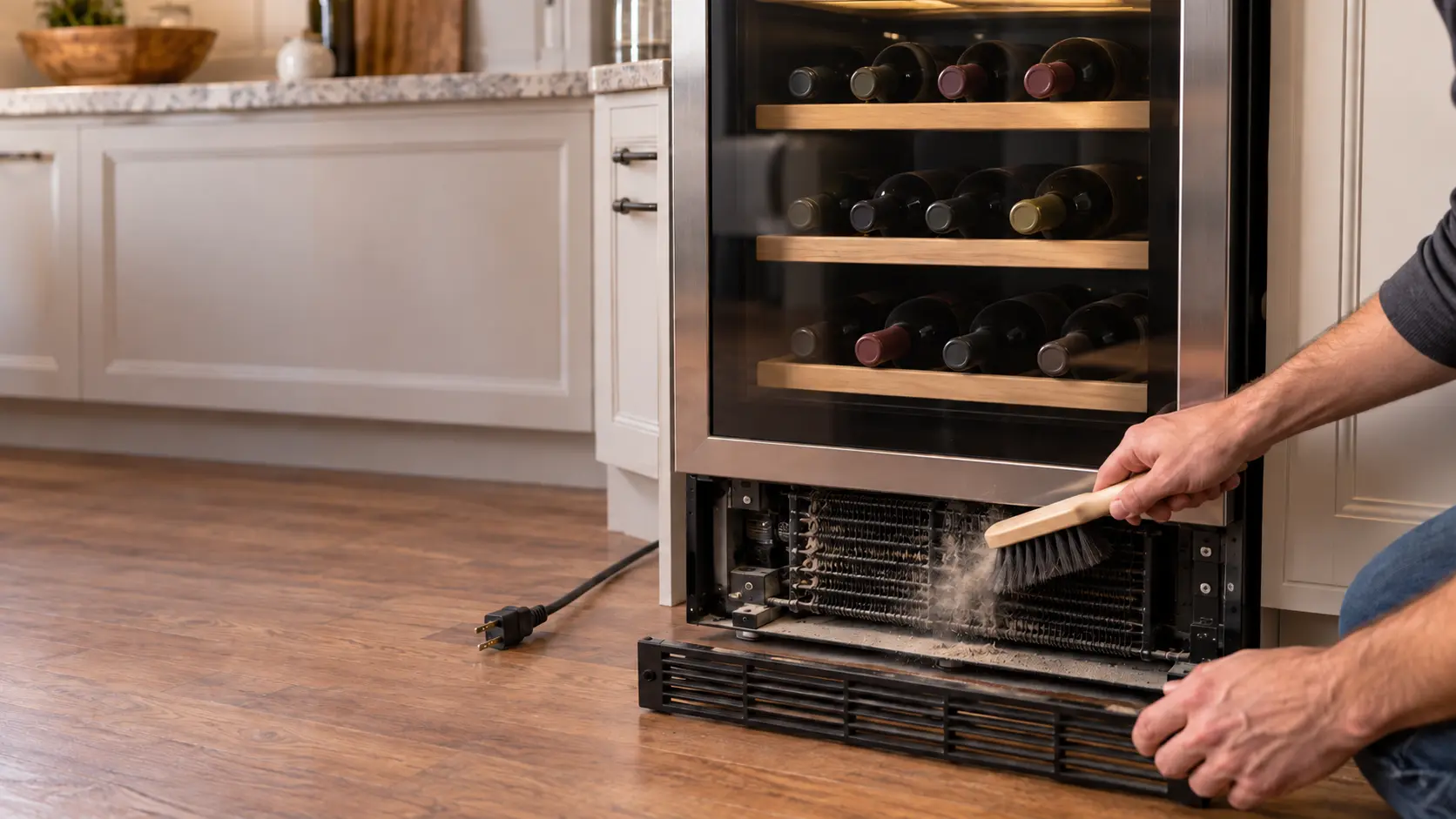
A spotless coil still cannot work if the air has nowhere to go. The most common blockages we find are not dust at all: a rug or floor mat pushed against a kickplate, a basket of dog toys parked in front of it, a freestanding cabinet slid tight against a wall, or a unit rehoused in a new cabinet run it was never designed for.
Vinotemp asks for open space on all four sides of its freestanding coolers. Built-in models are designed to take their air from the front, so the rule there is simply that nothing may sit against the grille.
- Nothing stored or stacked against the toe grille of a built-in unit.
- Rugs and mats kept clear of the kickplate.
- Freestanding cabinets pulled out from walls and furniture on every side.
- Radiators, heating vents, a range or a dishwasher's exhaust kept away from the air intake.
Source: Vinotemp — Wine refrigerator buying guide — Freestanding thermoelectric coolers need clearance on all four sides
What to expect afterward
Sub-Zero notes that temperatures can take up to 24 hours to return to normal after the condenser is cleaned, so resist adjusting the setting that evening. If the cabinet still has not settled after a full day, or the compressor now runs without stopping, the dust was a symptom rather than the cause and a stopped condenser fan or a cooling problem deserves a look.
How fast a coil clogs depends far more on the room than on the brand. A quick look through the grille with a flashlight at the halfway point tells you whether your home sits at the dusty or the clean end of the interval, and the answer usually holds for years.
Write the date inside a cabinet door or on your phone. Twice a year is easy to remember if it follows the clock change in spring and fall.
- Pets that shed, or a cabinet near a laundry or a carpeted room: every six months.
- A bar where the kickplate faces foot traffic: check the grille every three months and clean when gray.
- A clean, hard-floored room with no pets: once a year is often enough.
Source: Sub-Zero — Designer wine storage condenser cleaning — Clean the condenser every six to twelve months; a neglected condenser can cause temperature loss; use a soft brush and vacuum or low-pressure air; cleaners are not recommended; temperatures may take up to 24 hours to recover