Why the cork is the part that notices
A bottle under a screw cap or a glass stopper does not care what the air is doing. A natural cork does. Liebherr explains that when the air stays too dry the cork can dry out and shrink, air finds its way past it, and the wine oxidizes and ages early. At the other end, air that stays above about 80 percent humidity lets mold settle on the cork and softens the labels until they peel.
Bottles lying on their sides keep the wine against the inside face of the cork, which helps, but the outer end still sits in the cabinet air for years. That end is what the humidity reaches.
Bottles for next month and bottles for next decade
For wine drunk within a year or so, humidity is a minor concern. It starts to matter for the bottles bought to age: five, ten, fifteen years with the same cork exposed to the same air. Those deserve a cabinet you have actually measured.
Sparkling wine and anything sealed with a synthetic cork sit somewhere in between; check how the producer closed the bottle before worrying about it.
Source: Liebherr FreshMAG — Storing wine: the most important factors — Humidity of 50 to 80 percent protects corks; too dry lets corks shrink and wine oxidize, above 80 percent allows mold and damages labels; measure humidity and use water trays if needed; some models offer HumiditySelect or a 50 to 80 percent HumidityControl setting
Measuring wine cooler humidity instead of guessing
Few cabinets show humidity on their display. A small digital hygrometer, the kind sold for humidors and greenhouses, placed on a middle rack for a couple of days gives a truer picture than any rule of thumb. Liebherr's own advice is to measure where the wine is kept before adjusting anything.
Read it at the same time each day and note the spread as well as the average. A reading that jumps every time the door opens and then recovers is normal; one that sits near 35 percent all winter, or above 85 percent through a humid summer, needs attention.
On a dual-zone cabinet, measure each section separately. The colder zone usually runs its cooling more often and can read noticeably drier than the warmer one, so a single reading taken in the middle of the cabinet may describe neither section accurately.
- Place the hygrometer away from the back wall and the fan, where readings run high or low.
- Give it a day to settle before trusting the first number.
- Compare a heated-season reading with a humid-season one: many homes differ by 20 points or more.
Source: Liebherr FreshMAG — Storing wine: the most important factors — Humidity of 50 to 80 percent protects corks; too dry lets corks shrink and wine oxidize, above 80 percent allows mold and damages labels; measure humidity and use water trays if needed; some models offer HumiditySelect or a 50 to 80 percent HumidityControl setting

When the cabinet runs too dry
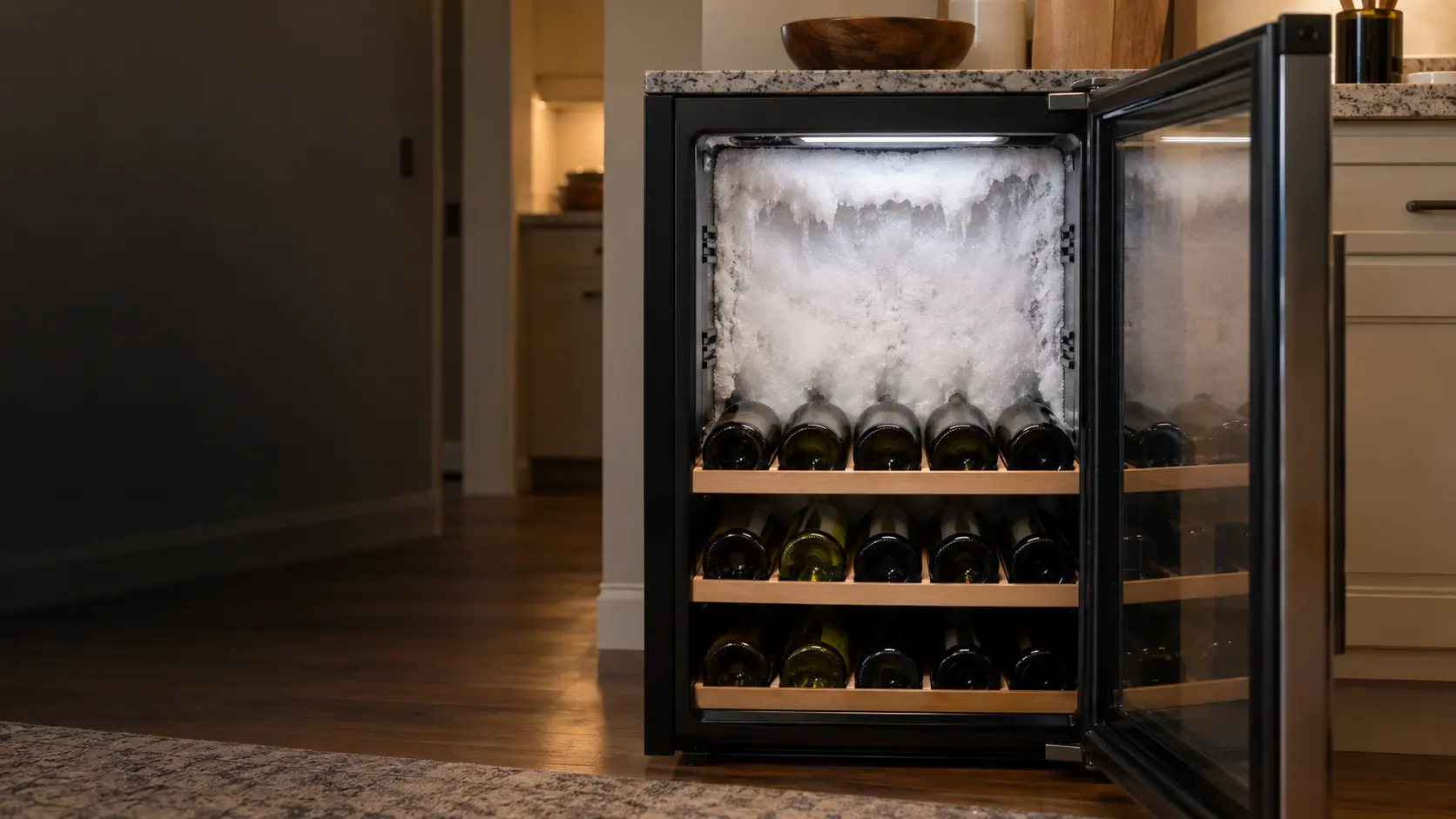
Compressor cabinets pull moisture out of the air every time the evaporator gets cold enough to collect it, and a heated house in winter supplies very dry air to begin with. A cabinet whose compressor runs long cycles, because of a dusty condenser or a warm room, dries its air further.
Liebherr suggests a water tray in the storage space to raise humidity, and some of its cabinets let the owner choose a higher setting or a target between 50 and 80 percent. On an ordinary unit, a shallow dish of water on the bottom shelf, topped up weekly, often lifts the reading enough.
Thermoelectric cabinets
A thermoelectric module runs its cold side only modestly below room temperature, so it tends to take less water out of the air than a compressor coil does. Owners of these units see dryness problems less often, and dampness problems a little more.
Source: Liebherr FreshMAG — Storing wine: the most important factors — Humidity of 50 to 80 percent protects corks; too dry lets corks shrink and wine oxidize, above 80 percent allows mold and damages labels; measure humidity and use water trays if needed; some models offer HumiditySelect or a 50 to 80 percent HumidityControl setting
When the cabinet runs too damp
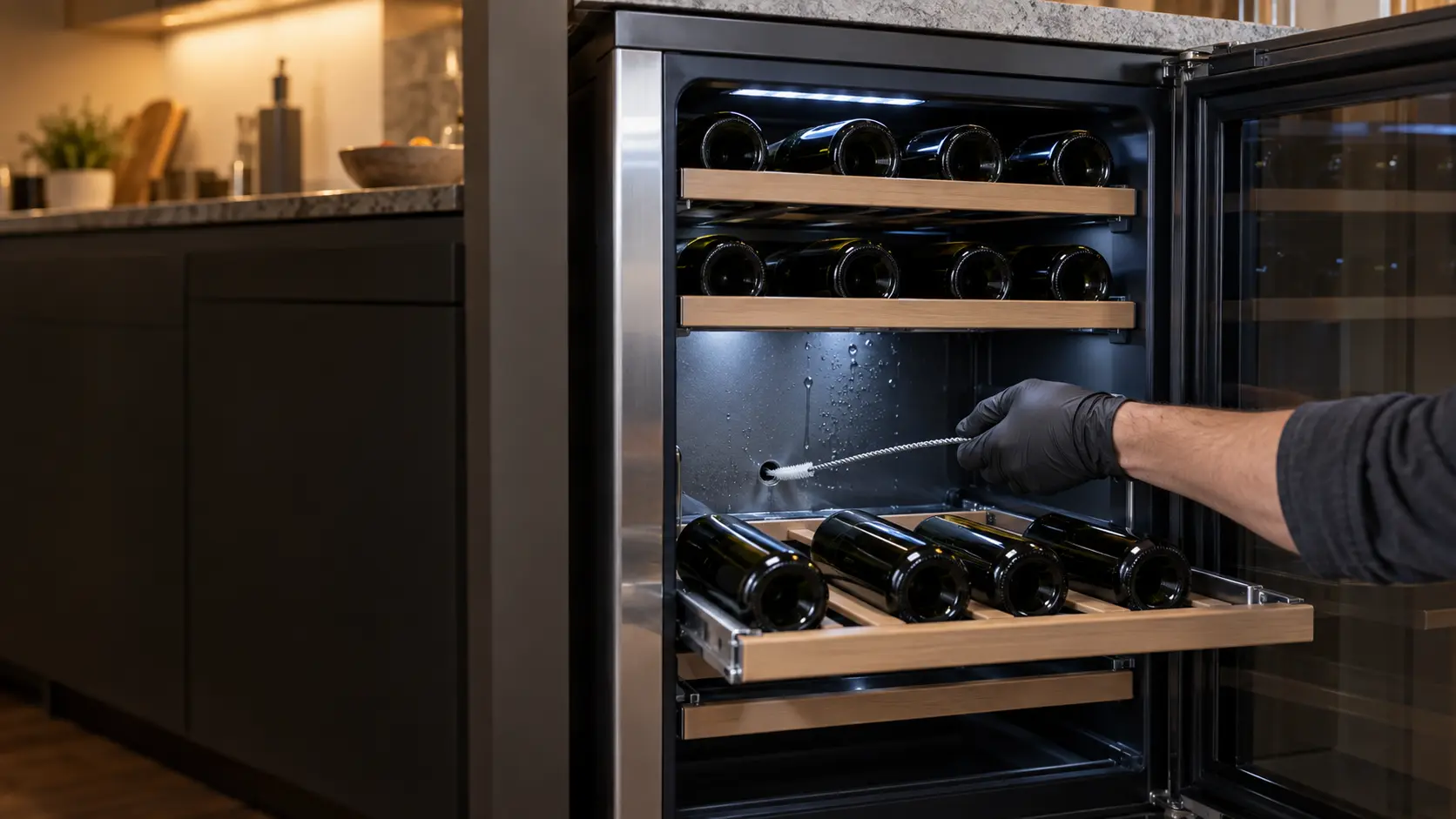
The signs are a musty smell when the door opens, gray spots on the tops of corks, labels curling, water beading on the inner glass or a puddle under the racks. Before blaming the air, check what is supposed to carry water away: most compressor cabinets drip the moisture they collect into a drain channel behind the back wall, and a blocked drain keeps putting it back into the cabinet.
Stale air makes dampness worse. EuroCave describes how still, humid air in a closed cabinet encourages odors, mold and bacteria, and fits a charcoal filter to let a slow stream of fresh, filtered air in; it recommends replacing that filter every year. If your cabinet has one, a clogged filter can be the difference between a clean smell and a cellar smell.
- Wipe mold from corks and racks with a cloth dampened in mild soapy water, then dry.
- Check the door gasket: a gap lets humid room air stream in all day.
- Find the drain opening at the base of the back wall and make sure water runs away freely.
- Replace the charcoal filter if the cabinet has one and it is over a year old.
Fog on the glass door
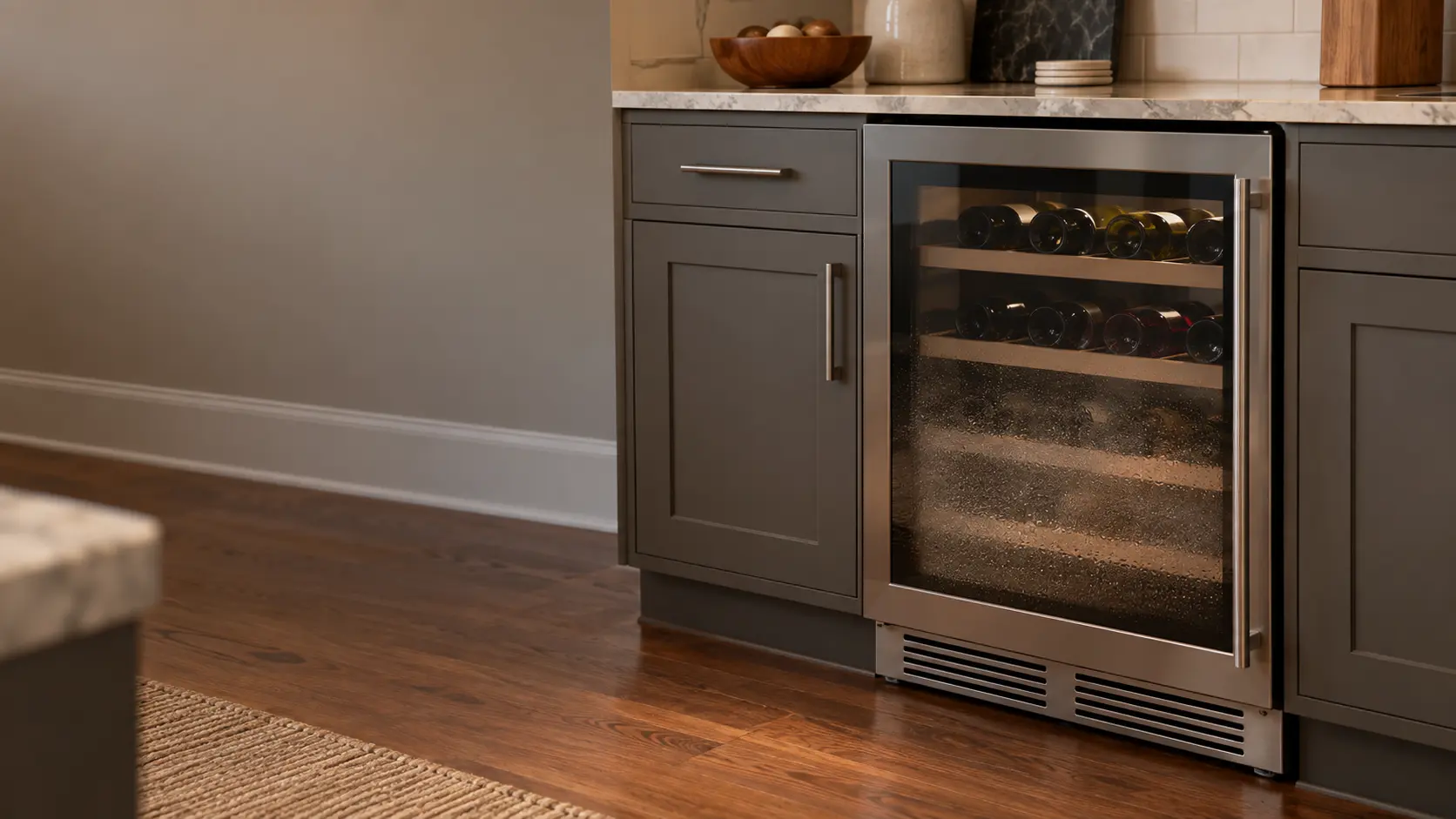
Droplets on the inside of the glass mean the air in the cabinet is carrying more moisture than it can hold at that temperature, often right after a restock with bottles brought in from a warm room. That clears within hours. Fog that stays for days, or forms on the outside of the glass in a humid summer kitchen, is a separate issue with the door seal or the glass itself rather than the humidity setting.
Source: EuroCave — What is the charcoal filter in my wine cabinet for? — Stagnant, humid air encourages odors, mold and bacteria; the charcoal filter admits purified air and should be replaced every year