
Start by checking what the display claims
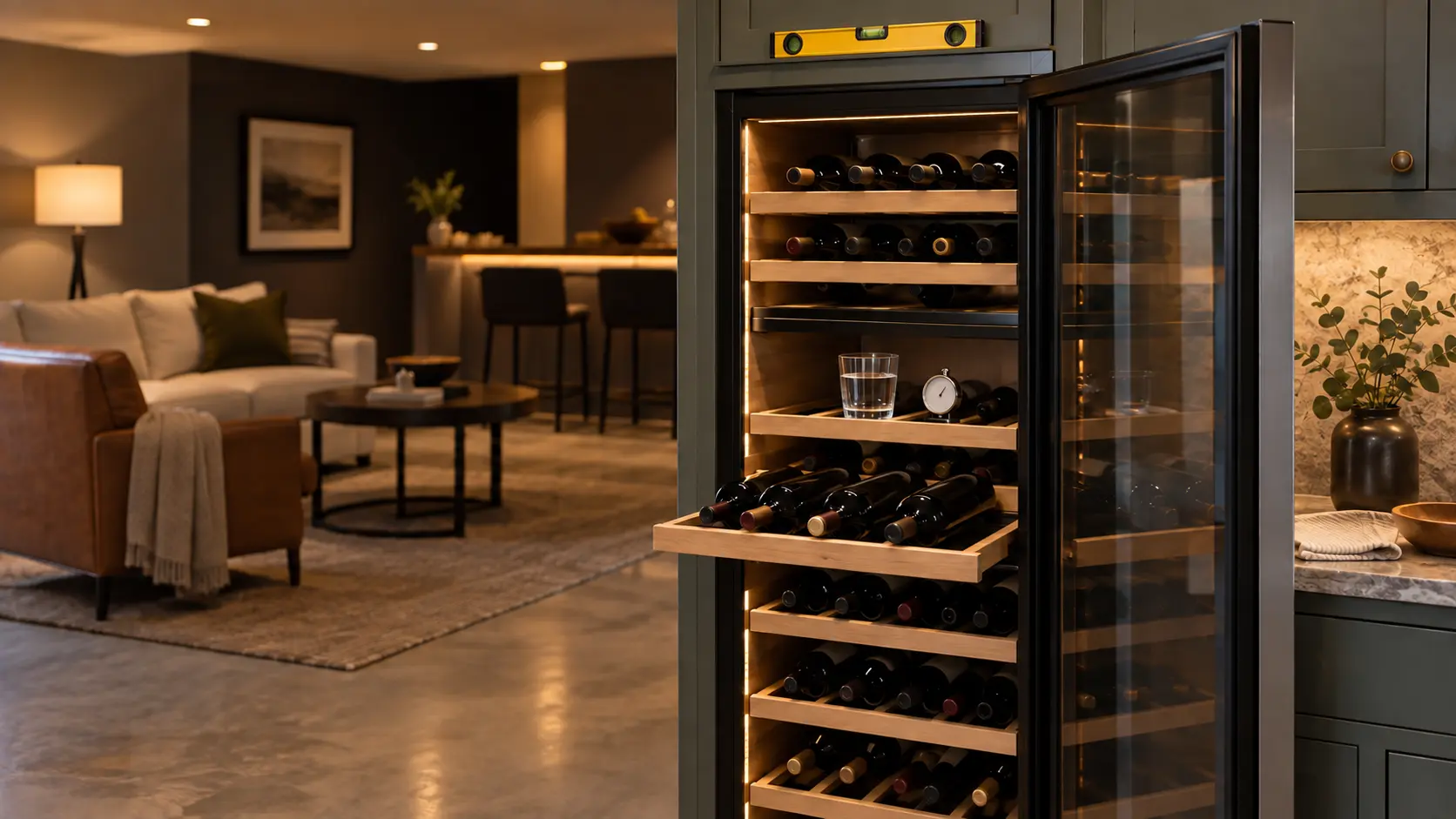
A display shows what one sensor reads, usually near the air path. The wine may be sitting a few degrees away from that number. Stand a cheap appliance thermometer in a tumbler of water on a middle rack overnight and look at it before breakfast; water changes temperature slowly, like wine, so it ignores the brief spikes that come with an open door.
If the glass reads within a couple of degrees of the setting, the control is honest. A wider gap is worth noting and rechecking a week later, because a sensor drifting out of calibration is one of the quieter ways a collection ends up stored too warm or too cold for years.
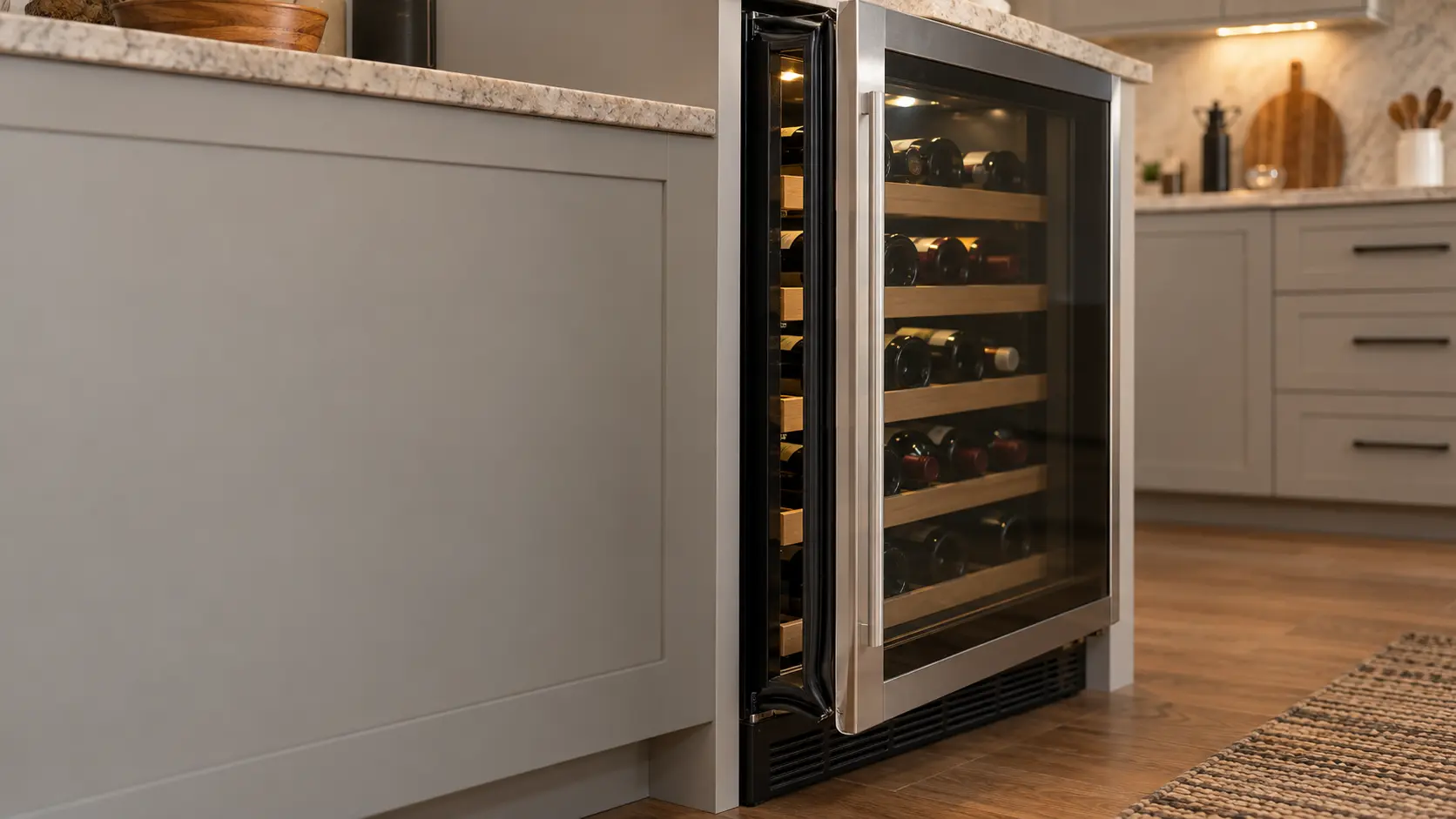
On a dual-zone cabinet
Do the same test in each section on the same night. A zone that reads fine while its neighbor is off by several degrees points toward that zone's sensor, fan or damper rather than the whole machine.
The door, the gasket and the hinges
Glass doors are heavy and wine cooler hinges carry that weight every time someone reaches for a bottle. Over a year, screws loosen, the door drops a little on the handle side, and the gasket stops meeting the frame along the top corner.
Shut a sheet of printer paper in the door at the top, the bottom and halfway up each side, then tug it free each time. A healthy gasket grips the sheet firmly at every spot; one that lets it slip away without resistance has lost contact there. Look along the gasket for tears, flattened sections and a sticky film, and wash it with warm water and mild soap.
- Door swings closed and seals by itself from halfway open.
- No light gap visible around the frame with the room darkened and the interior light on.
- Hinge screws snug, the door level with the cabinet top.
- Door lock, if fitted, turns freely.

Level, still and quiet
Lay a small level across the top of a freestanding unit, or across the bottom rack of a built-in one, front to back and side to side. Floors settle and feet get knocked, and a cabinet that has tipped forward lets its door hang open a crack.
Then listen. The hum of a compressor starting, fan air and the odd tick as parts warm and cool are normal. A rattle often means a rack touching the back wall or a bottle resting against the glass; a grinding or scraping sound usually means a fan blade striking something or a bearing wearing out, and that one should be looked at before the fan stops altogether.
Racks and rollers
Slide each rack out fully and back. Wooden fronts crack along the grain and roller tracks collect grit; a rack that sticks gets yanked, and yanking shakes every bottle on it. Check that the stops still hold the rack when it is pulled all the way out.
Air, water and the filter
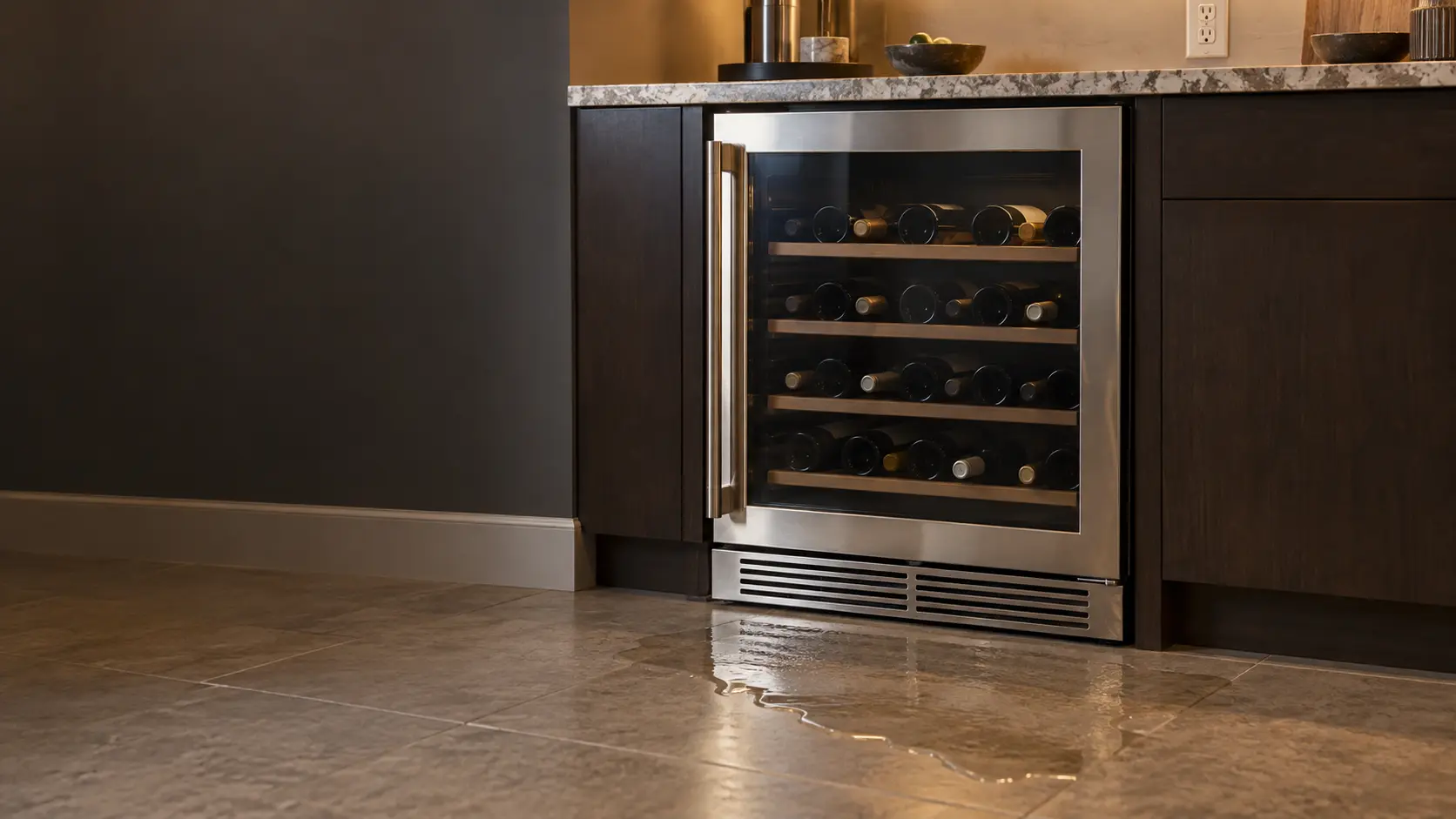
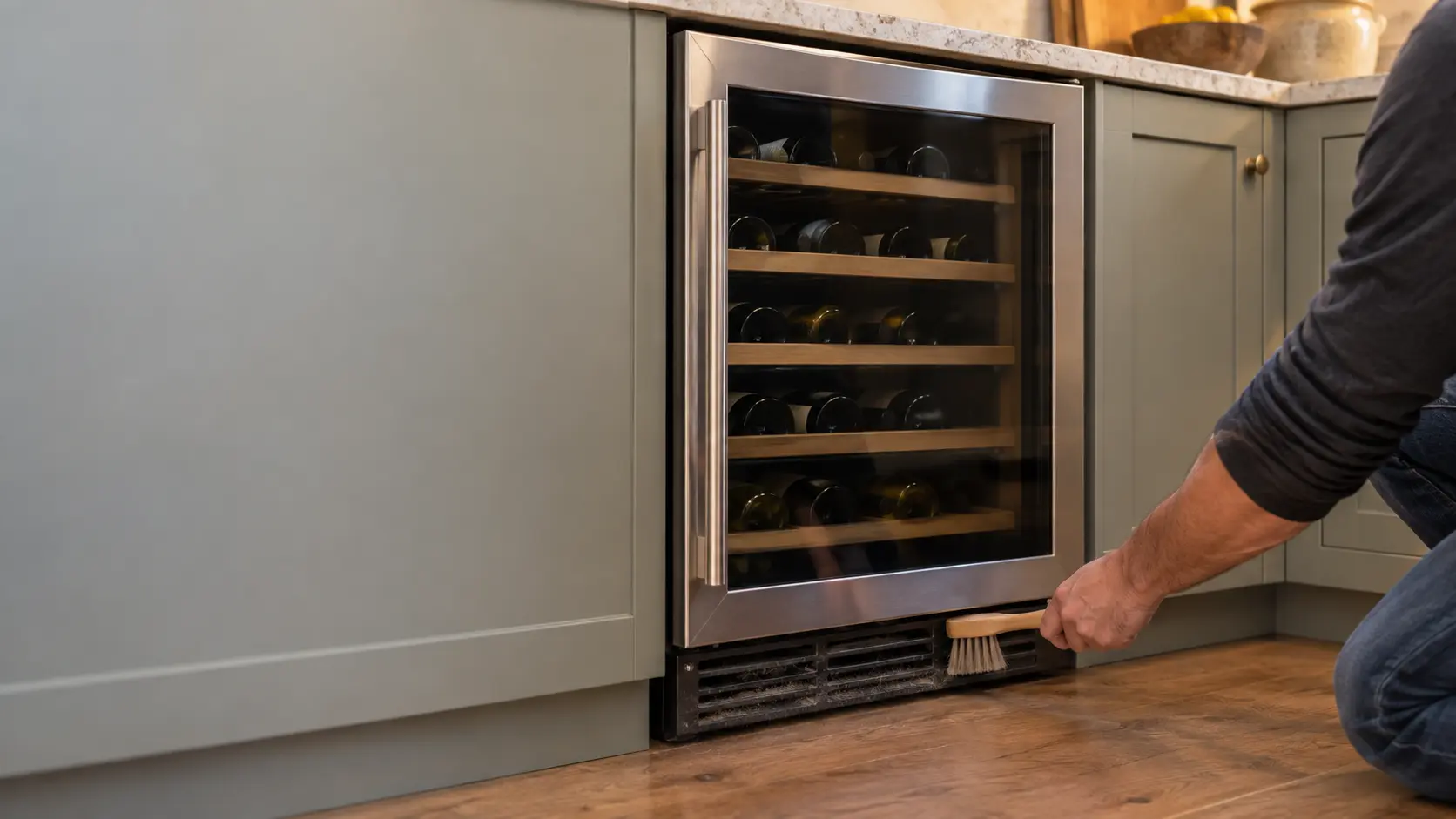
Clean the condenser behind the toe grille or at the back, or the heat sink on a thermoelectric model; the condenser guide on this site walks through it. With the bottom rack out, find the drain opening at the base of the back wall and pour a small cup of warm water into it to confirm it runs away rather than pooling.
If the cabinet uses a charcoal filter, usually a small cartridge in a slot on the back wall or ceiling, fit a new one. A hygrometer left inside for a day at this point tells you whether the humidity guide needs reading too.
Light and display
Switch the interior light on and off and check that every button on the panel responds. A display with missing segments or a light that flickers is a minor repair now, and a much more annoying one when it goes dark on the night of a dinner party.
Source: Sub-Zero — Designer wine storage condenser cleaning — Clean the condenser every six to twelve months; EuroCave — What is the charcoal filter in my wine cabinet for? — Replace the wine cabinet's charcoal filter every year
Paperwork worth ten minutes
Photograph the model and serial plate, wherever your maker put it inside the cabinet, and keep the picture with the purchase date. Then type the brand and model into the recall search run by the Consumer Product Safety Commission. Each recall notice there names the affected models and the remedy the company is offering.
Finally, look at the plug and cord. The cord should run straight to a wall outlet, not an extension lead or a power strip, with no crushing behind the cabinet and no discoloration at the plug.
A short log turns wine cooler maintenance from a vague intention into something you can check, and it gives a technician a history on the day one is needed.
- The model and serial numbers, and the purchase date.
- The date of each condenser cleaning and filter change.
- Thermometer readings from each yearly check, so drift shows up over time.
- Any repair done, with the part replaced.
Source: U.S. Consumer Product Safety Commission — Recalls — CPSC publishes product recalls, each naming the affected products and the remedy offered