
Small habits that spare the cabinet
Maintenance and prevention
guides.
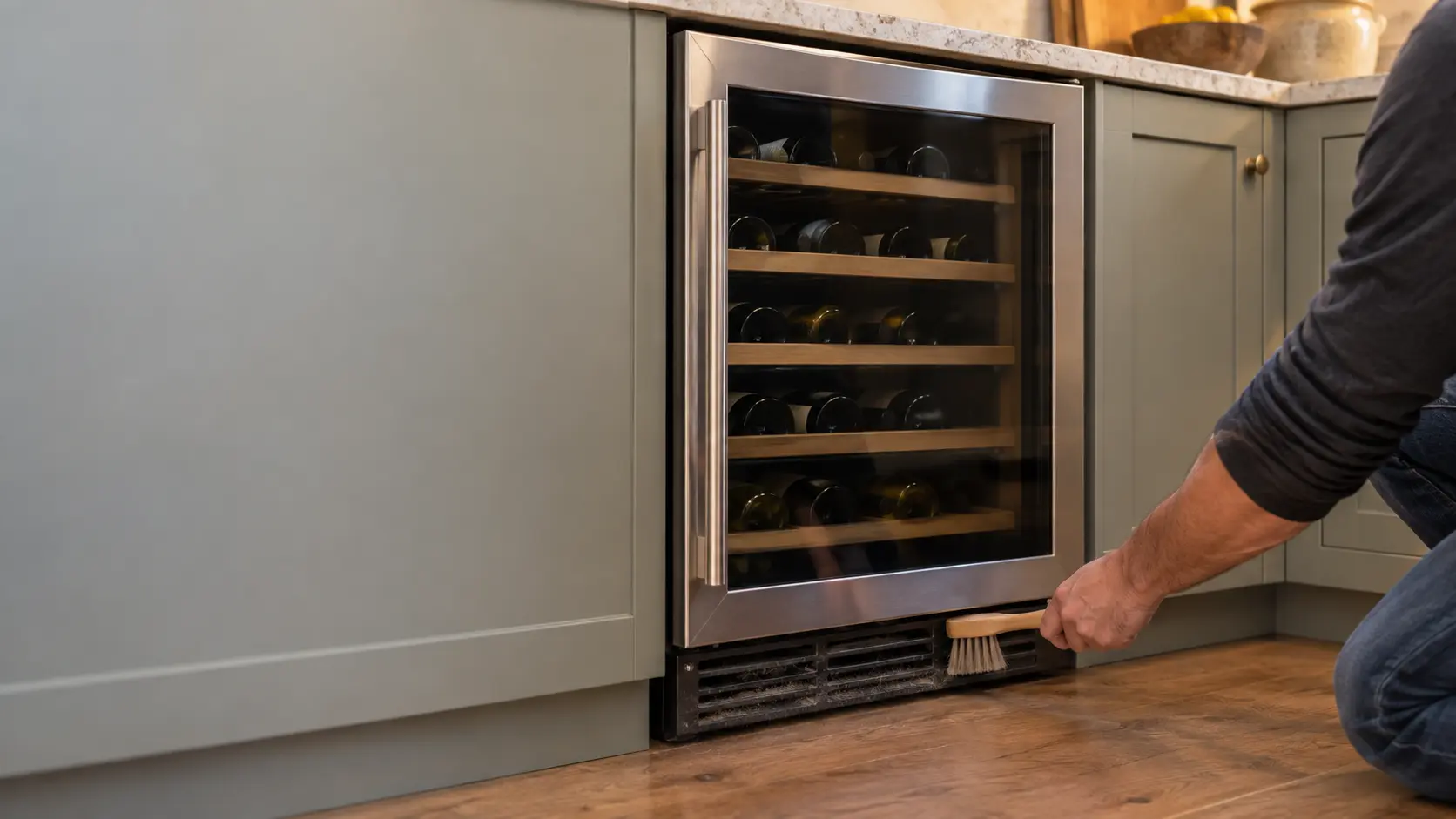
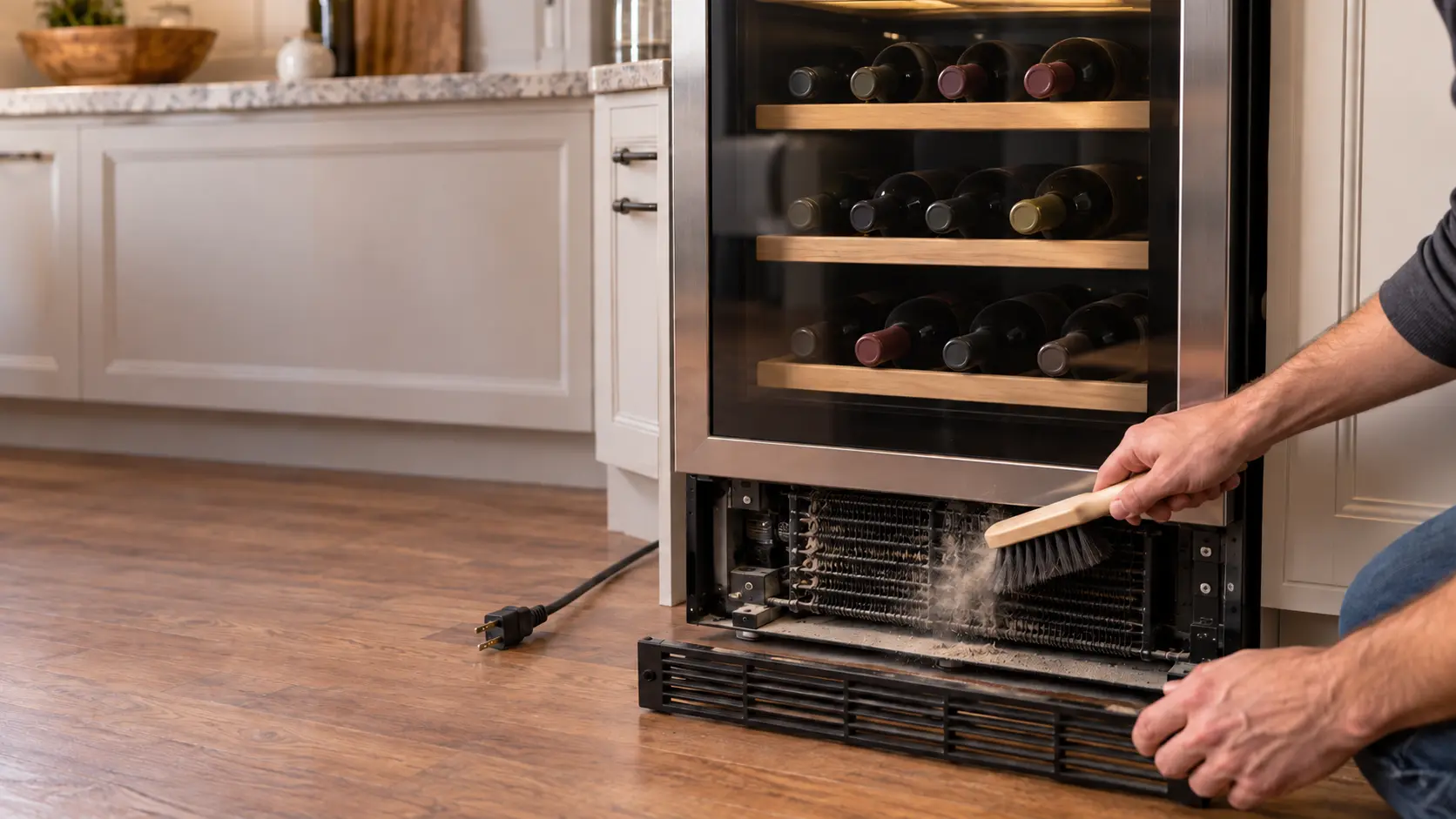
The quiet routines that keep a wine cabinet off our schedule, from brushing the condenser and the front grille to watching humidity for the corks and checking the door seal each season.
Mon–Sat, 8am–8pm
- Three guides
- Read before you book
- Says where to stop
Book a visit
Three short steps, about a minute.
or call (844) 709-0727
Loading appointment form…
The appointment form couldn’t load. Please try again.
Maintenance and prevention,
guide by guide.
A wine cooler rarely announces trouble. It drifts a few degrees warmer, its air dries out, its door stops sealing along one edge, and the wine inside pays for it over months rather than days. The guides in this section are the small, regular jobs that keep those slow problems from starting.
All 18 guides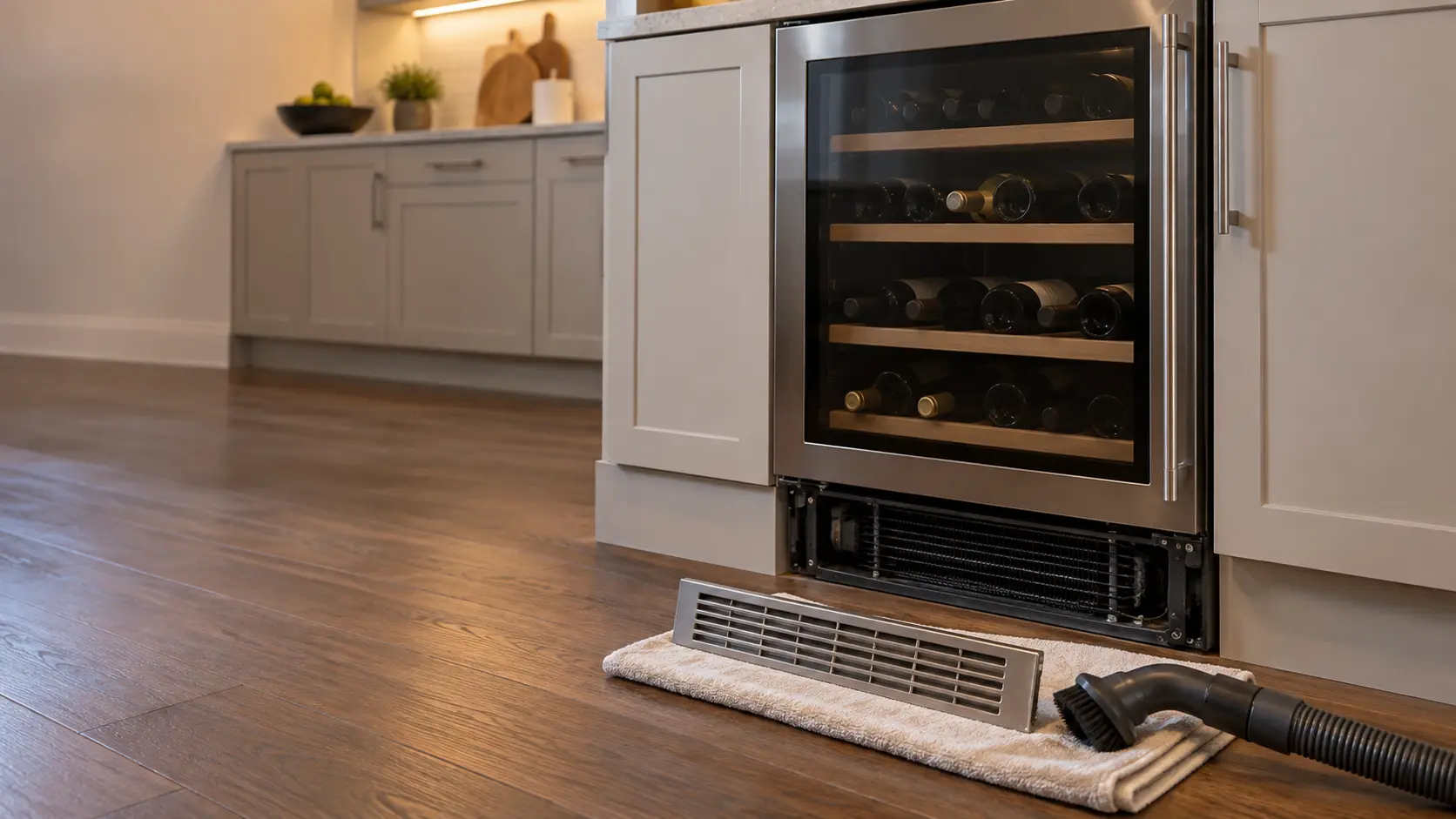
Keeping humidity right for corks
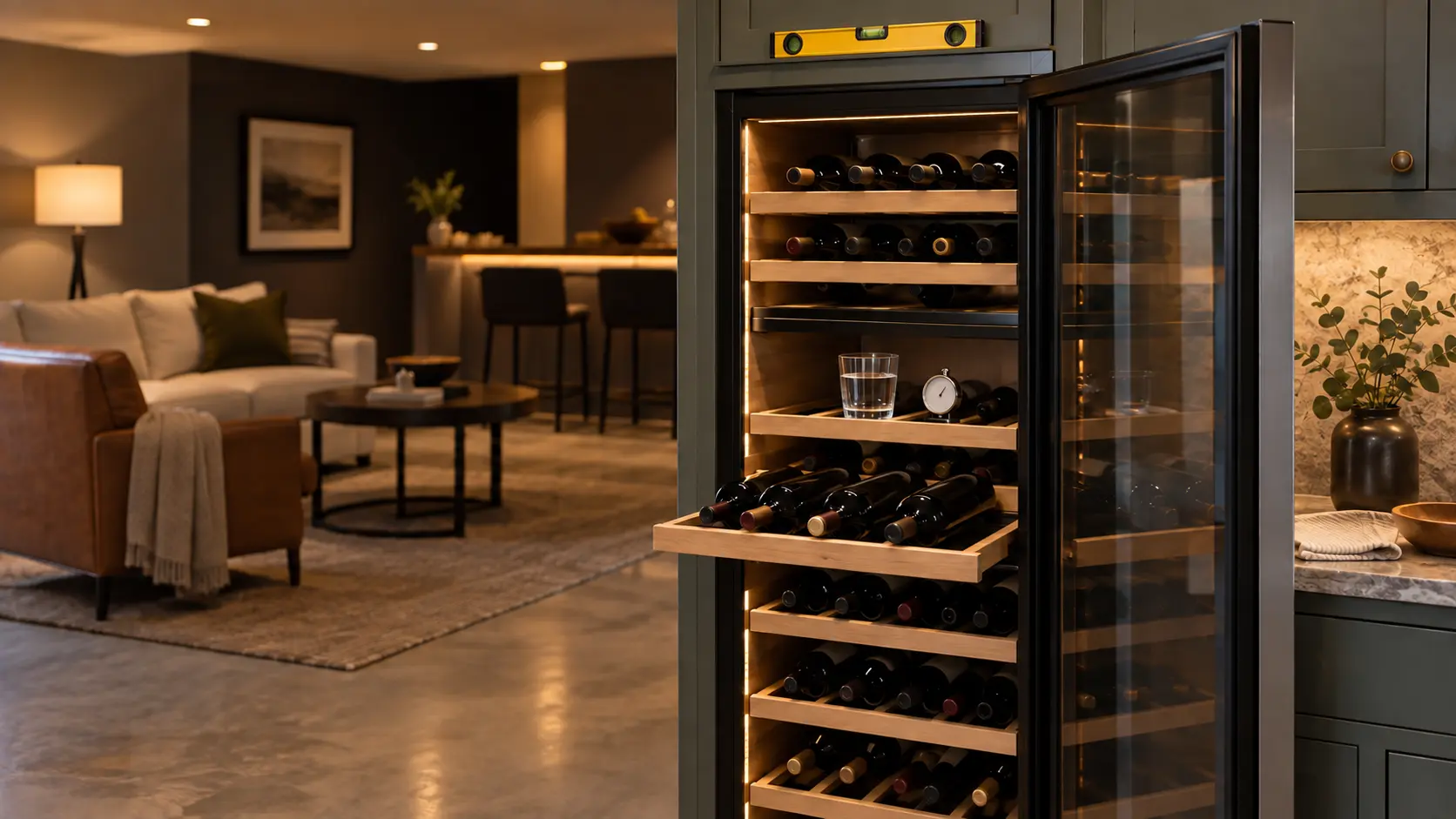
A yearly wine cooler check in about an hour
Small habits that spare the cabinet.
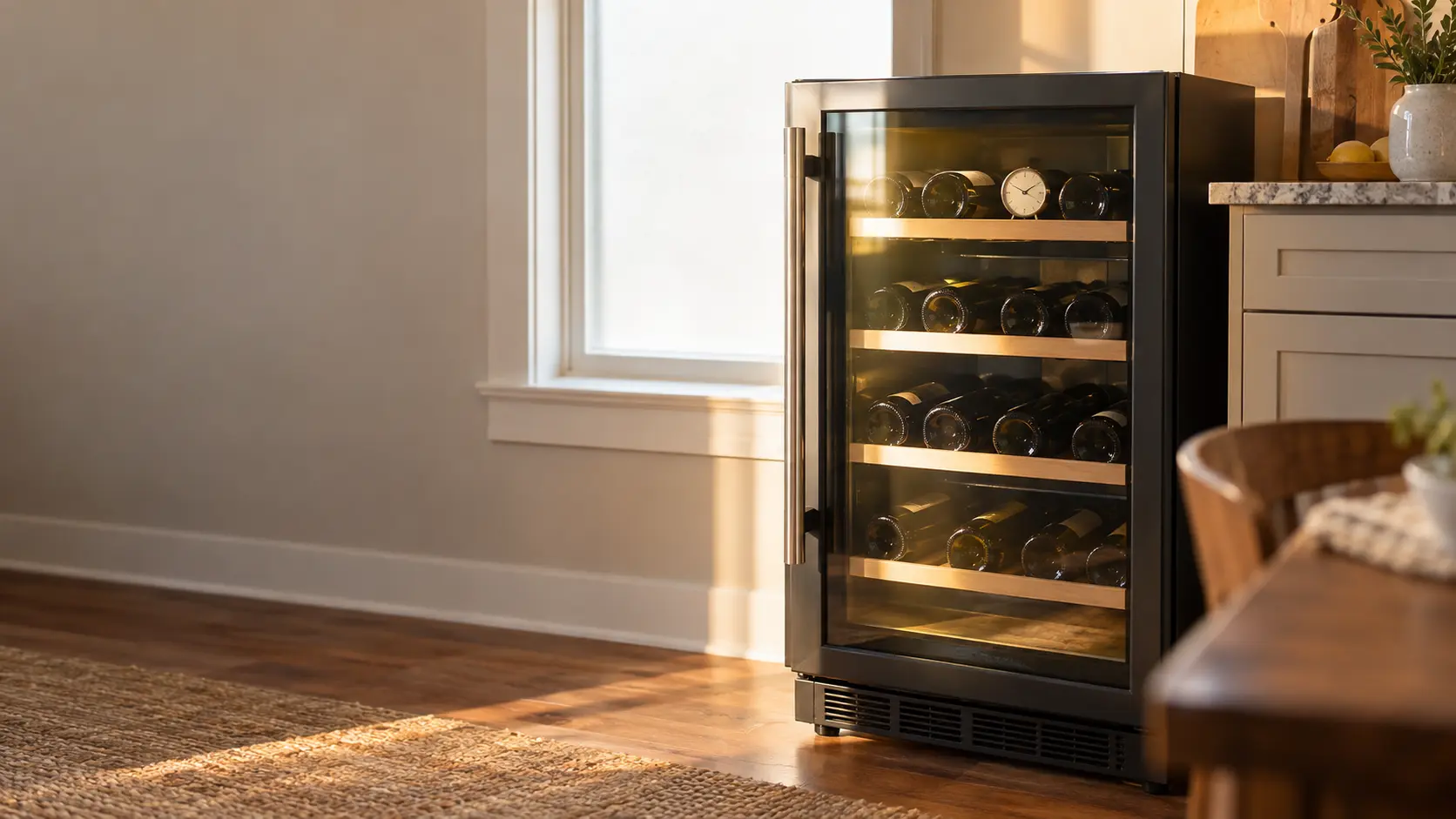
They are written for owners with a vacuum, a soft brush, a thermometer and an hour to spare, whether the cabinet is an undercounter unit in a kitchen, a full-height wine column or a freestanding model in a dining room. Intervals and methods come from the makers' own instructions, quoted and linked where a manufacturer states them.
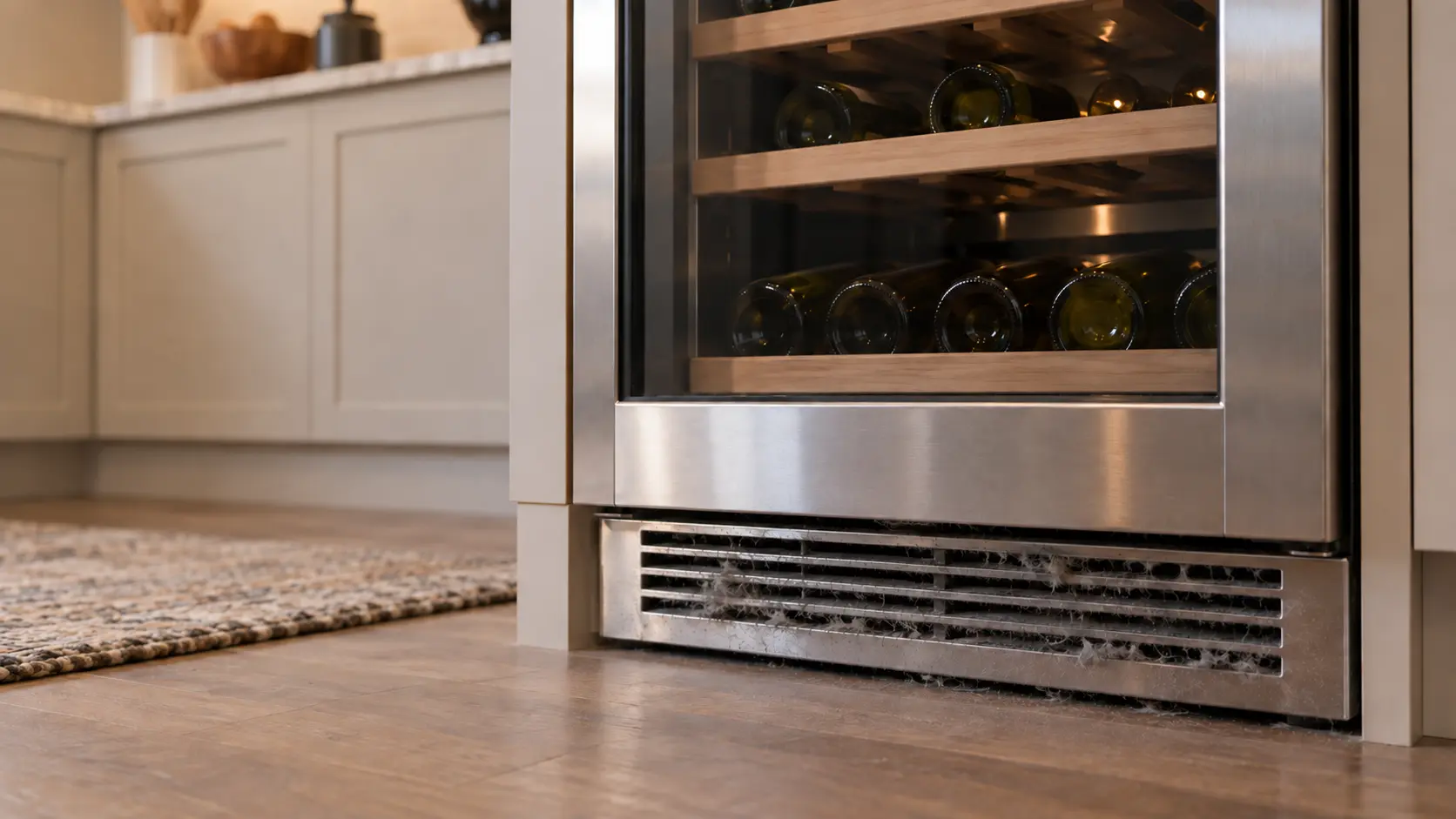
Three guides cover the ground. One deals with the condenser, the heat sink and the air path around the cabinet; one with humidity and what it does to natural corks over years of storage; and one gathers everything into a single yearly round, from checking the real temperature to looking up the model on the federal recall list.
Each guide also says where upkeep stops. Panels held on with screws, wiring, refrigerant lines and a built-in cabinet that would have to be pulled from its opening are all beyond a maintenance job, and the guides name the signs that mean booking a visit instead.
Not sure where to start?The short answerCleaning a wine cooler condenser and keeping its vents open
Cleaning a wine cooler condenser every six to twelve months, as Sub-Zero advises for its wine units, keeps the cabinet holding a steady storage temperature.
The short answerKeeping humidity right for corks
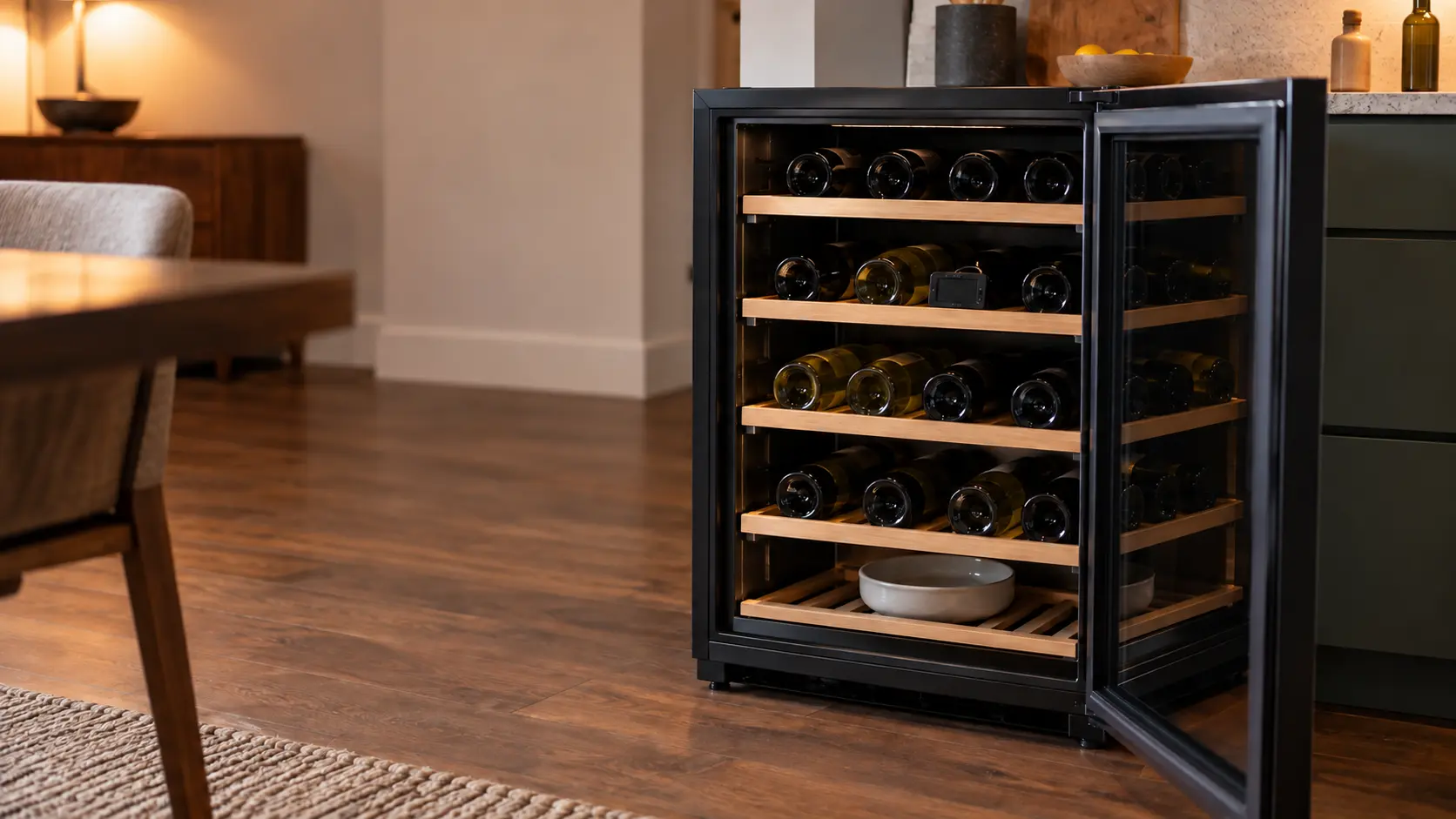
Wine cooler humidity should sit between about 50 and 80 percent, the range Liebherr gives for corked bottles.
The short answerA yearly wine cooler check in about an hour
A yearly round of wine cooler maintenance takes about an hour: confirm the real temperature with a separate thermometer, test the door seal and hinges, check that the cabinet is level and quiet, clean the condenser or heat sink, clear the drain, replace any charcoal filter and look up the model on the CPSC recall list.
When reading
is not enough.
If the checks in these guides did not settle it, the visit picks up from there, stop by stop.
What repairs cost- 01Each zone measured first
- 02A figure before any work starts
- 03The usual wine cooler parts on board
- 04Settled back at cellar temperature
The problems
these answer.
Each has a page of its own, with the causes in the order worth checking.
All 17 problems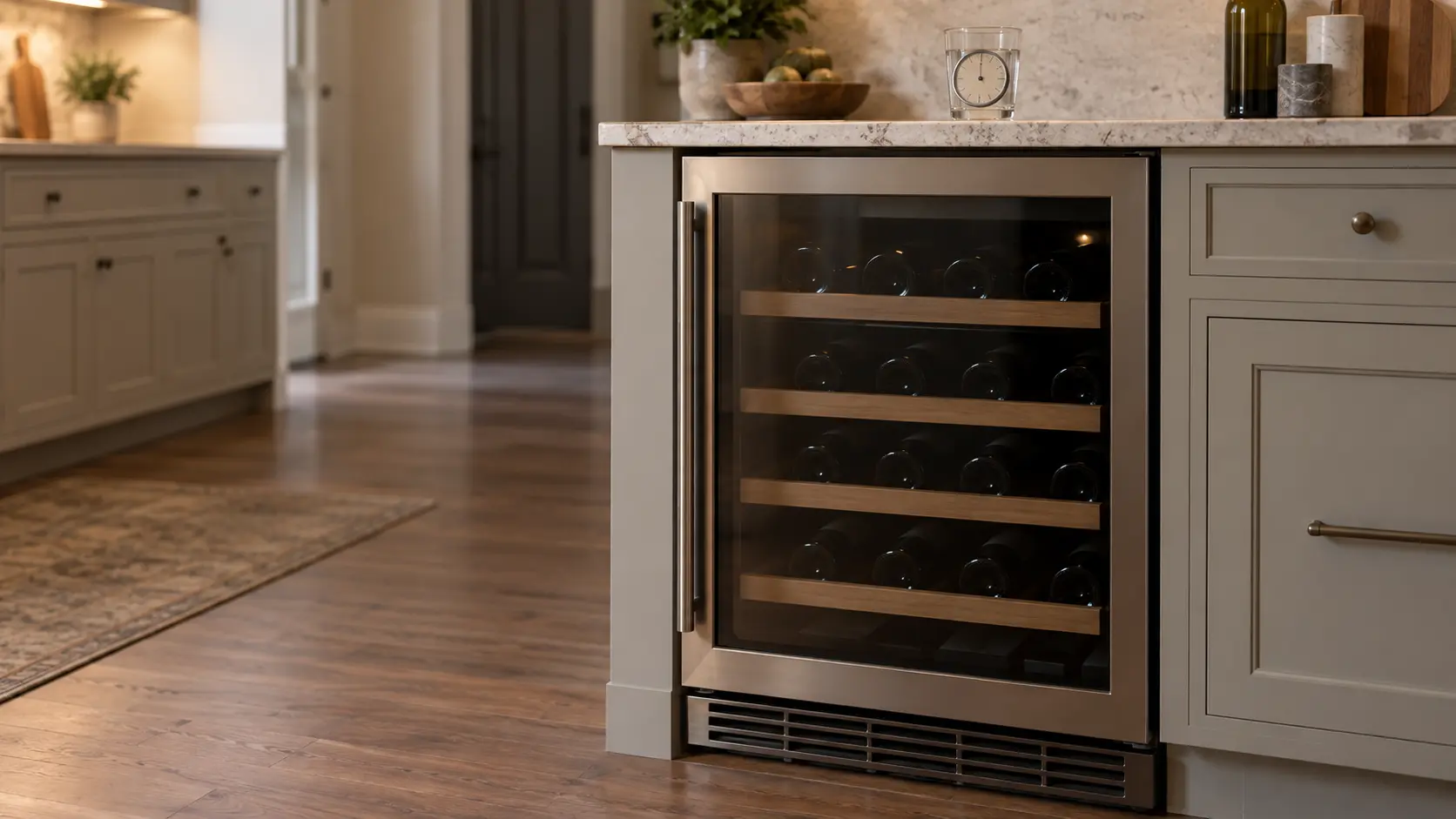
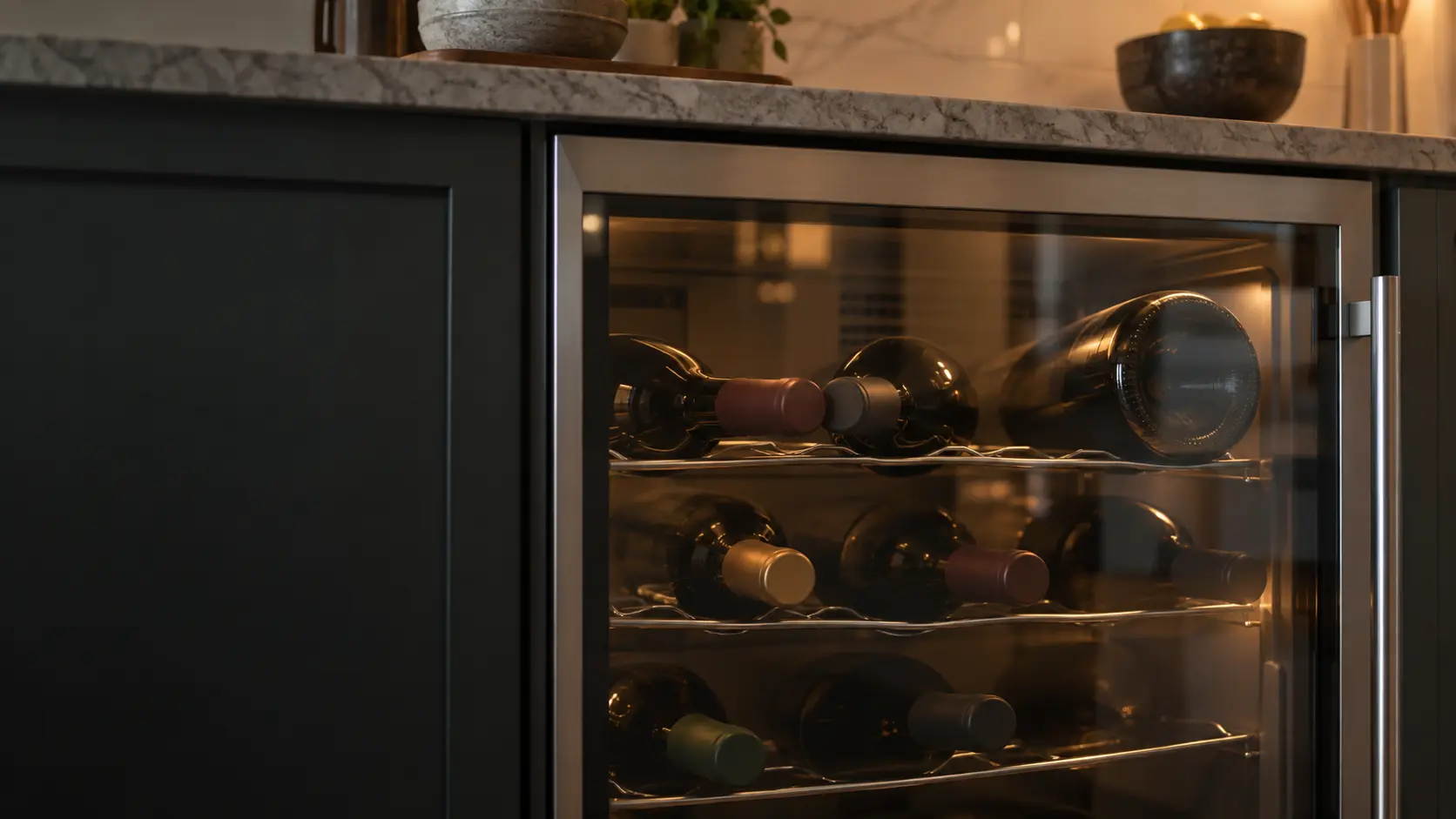

Questions about
maintenance and prevention.
What is the single most useful upkeep job on a wine cooler?
How often should a wine cooler be serviced by a technician?
Does a wine cooler need defrosting?
Is it safe to clean inside with the bottles in place?
The other
sections.
Split by what you are trying to find out rather than by which part of the appliance it concerns.
All guides
Installation and setup
Start from your question
The four questions most visits start with, each with the guide that answers it.
18 guidesWhere to start Where to startBack to your everyday
Let’s get your wine cooler working again.
Three short steps online, or one call. Tell us what you are seeing and pick a window that works.