Two ways of moving heat out of a cabinet
A compressor wine cooler works the way most cold appliances in a house work. A small compressor squeezes refrigerant, a condenser coil sheds the heat into the room, and an evaporator plate inside the cabinet soaks heat back out of the air around the bottles. It cycles on and off to hold a setting, and it can pull a cabinet down fast after the door has stood open during a party.
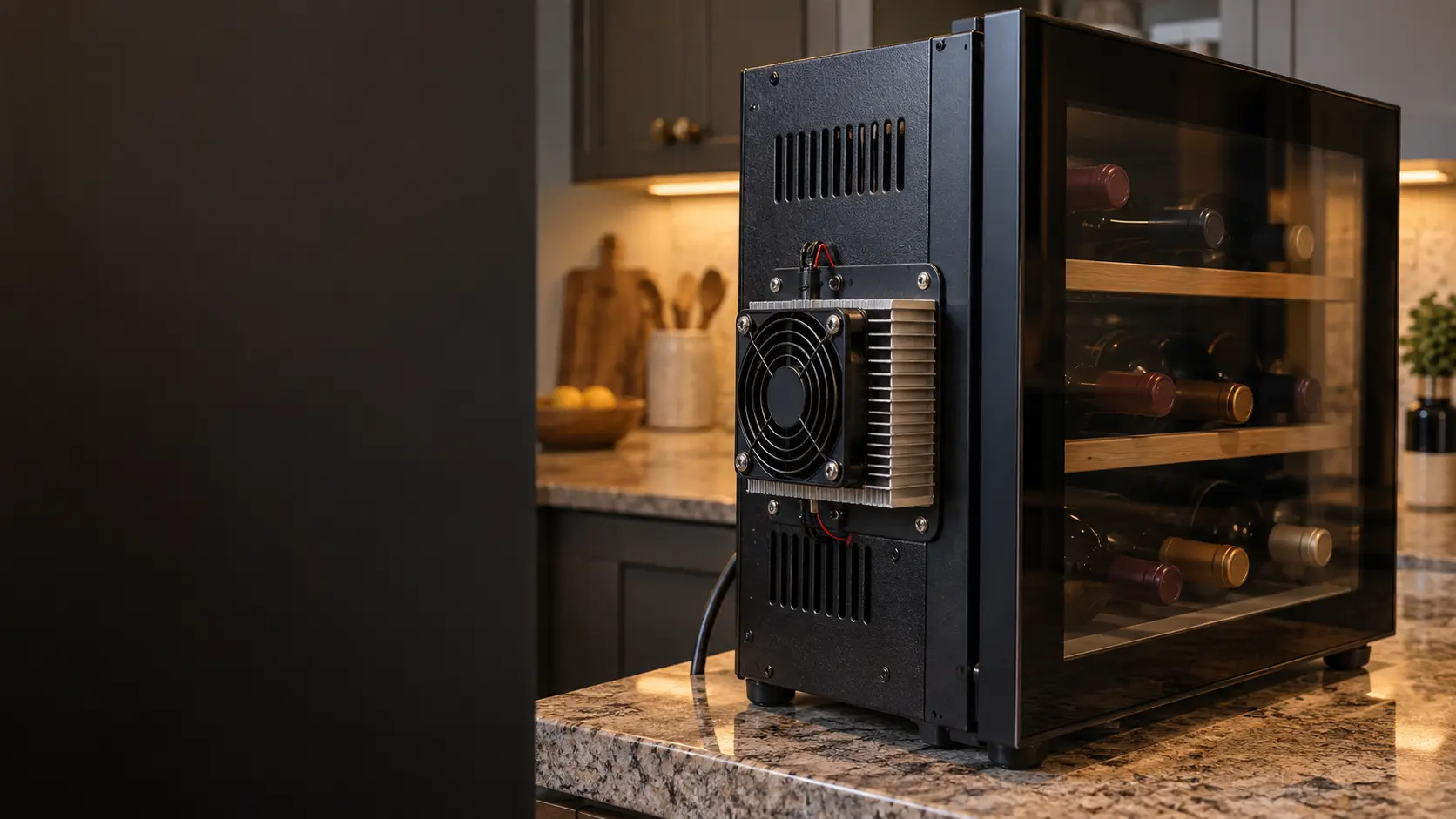
A thermoelectric unit has none of that plumbing. A flat module, a sandwich of semiconductor pellets, gets cold on one face and hot on the other when current passes through it. A small fan and heat sink on the inside spread the cold, and a larger heat sink and fan on the back dump the heat. Vinotemp describes the design as based on the Peltier effect and notes that nothing in it alternates the way a compressor does.
What each one sounds like
A thermoelectric cabinet makes a steady fan whisper and little else. A compressor model hums when it runs, clicks when it starts and stops, and may gurgle faintly as refrigerant settles. In a quiet dining room at night, that difference is the first thing owners notice.
What the bottles feel
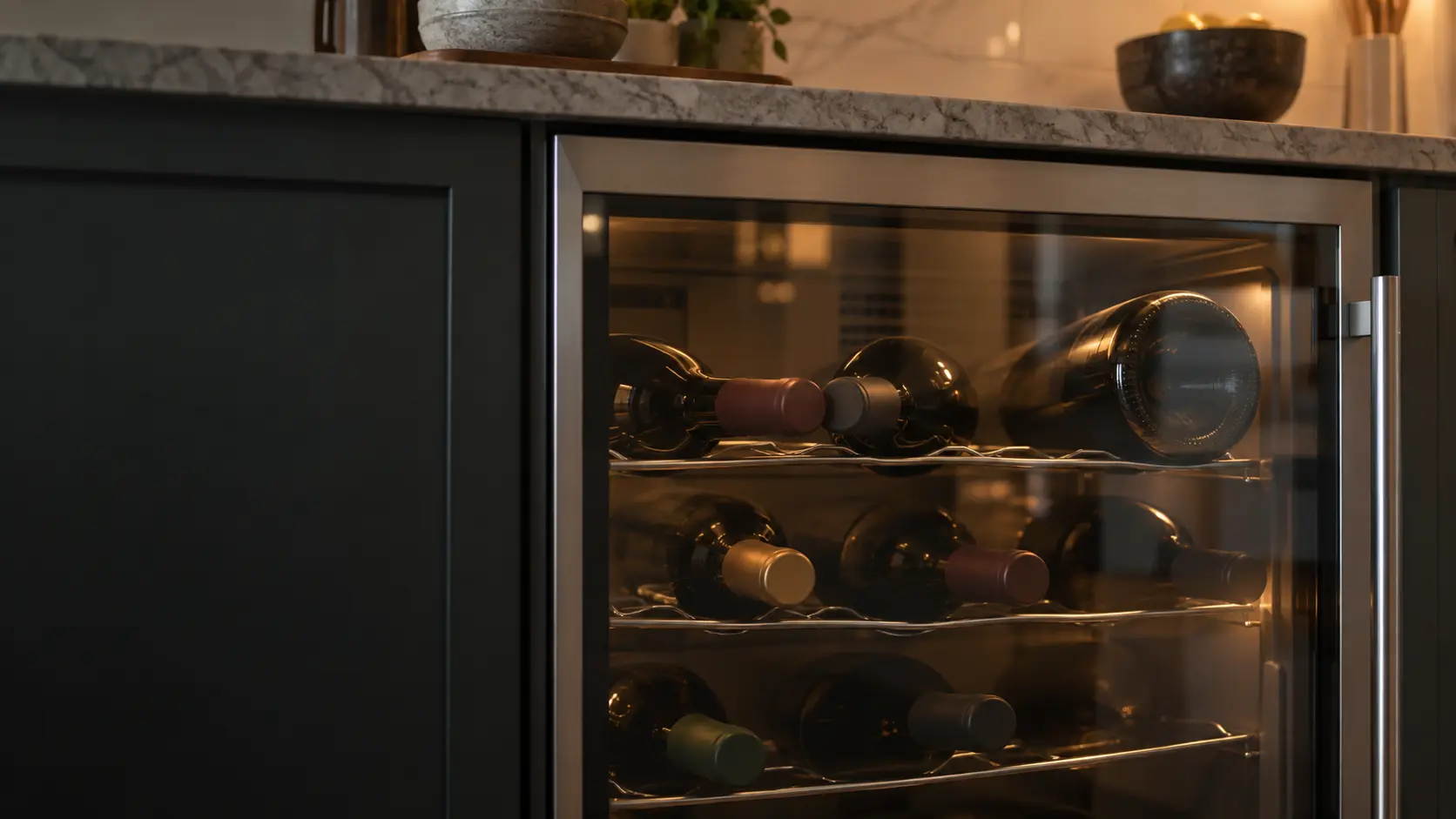
Vibration is the argument collectors raise most often. A solid-state module gives the racks almost none, which is its strongest point. Vinotemp says the compressors fitted to wine cabinets are designed to absorb their own vibration, and a well-leveled compressor unit is rarely a real problem for wine you plan to drink within a few years.
Source: Vinotemp — What is the thermoelectric wine cooler? — Thermoelectric coolers use a Peltier-based design with no alternating mechanism, produce minimal vibration and typically cool ten to twelve degrees below the ambient air; Vinotemp — Wine refrigerator buying guide — Compressor units hold a wide range of temperatures irrespective of the ambient temperature; wine cabinet compressors are designed to absorb vibration; freestanding thermoelectric units need clearance on all four sides
Why the room matters more than the spec sheet
The number printed as a thermoelectric cabinet's lowest setting assumes a comfortable room. Vinotemp puts the typical reach of its thermoelectric coolers at ten to twelve degrees below the surrounding air. In a 70°F dining room that lands close to the 55°F most people store at. In a kitchen that reaches 82°F on a summer afternoon beside a working range, the same cabinet may sit near 70°F with its module running flat out and the owner convinced it has failed.
A compressor unit is much less sensitive. Vinotemp's buying guide says the compressor design holds a wide range of settings regardless of the room, provided the condenser can get rid of its heat. That is why nearly every built-in undercounter model and every full-height wine column uses one.
- Cool, stable room, small collection, quiet space such as a bedroom or den: thermoelectric is a reasonable choice.
- Kitchen, bar, sunny room or anywhere the air climbs past about 75°F: choose a compressor.
- An unheated basement that drops toward 50°F in winter: a thermoelectric cabinet cannot add heat, so the wine follows the room down.
- Any unit going into a cabinet run under a counter: compressor with front venting, never a freestanding model boxed in.
Source: Vinotemp — What is the thermoelectric wine cooler? — Thermoelectric coolers use a Peltier-based design with no alternating mechanism, produce minimal vibration and typically cool ten to twelve degrees below the ambient air; Vinotemp — Wine refrigerator buying guide — Compressor units hold a wide range of temperatures irrespective of the ambient temperature; wine cabinet compressors are designed to absorb vibration; freestanding thermoelectric units need clearance on all four sides
Where each kind can be installed
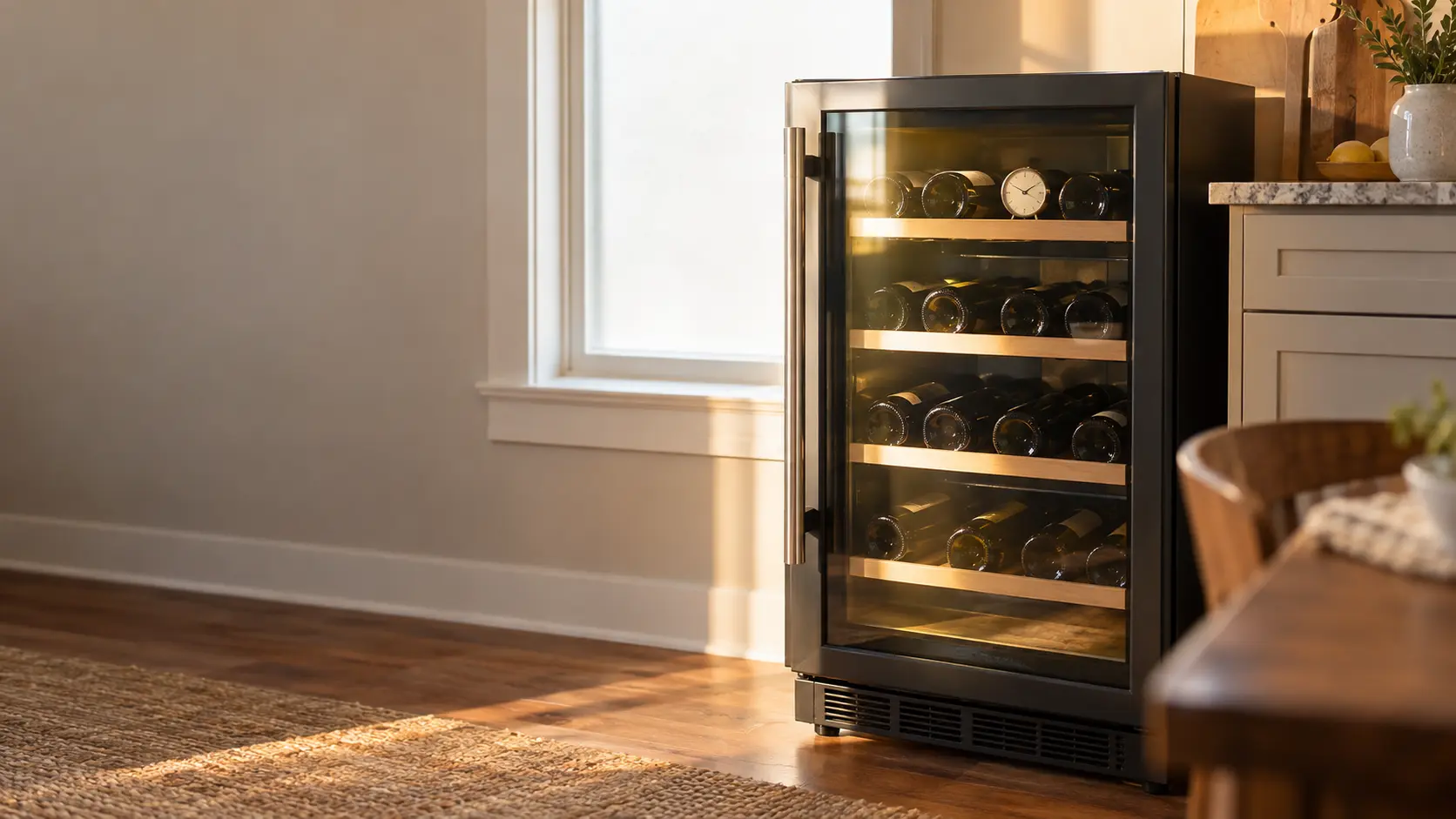
Thermoelectric coolers are freestanding by design. Their rear heat sink needs moving air, and Vinotemp asks for clearance on all four sides. Slid into a tight alcove, the hot side recirculates its own heat, the module loses the little margin it had, and the inside warms. We see this often with small countertop units tucked into a shelf.
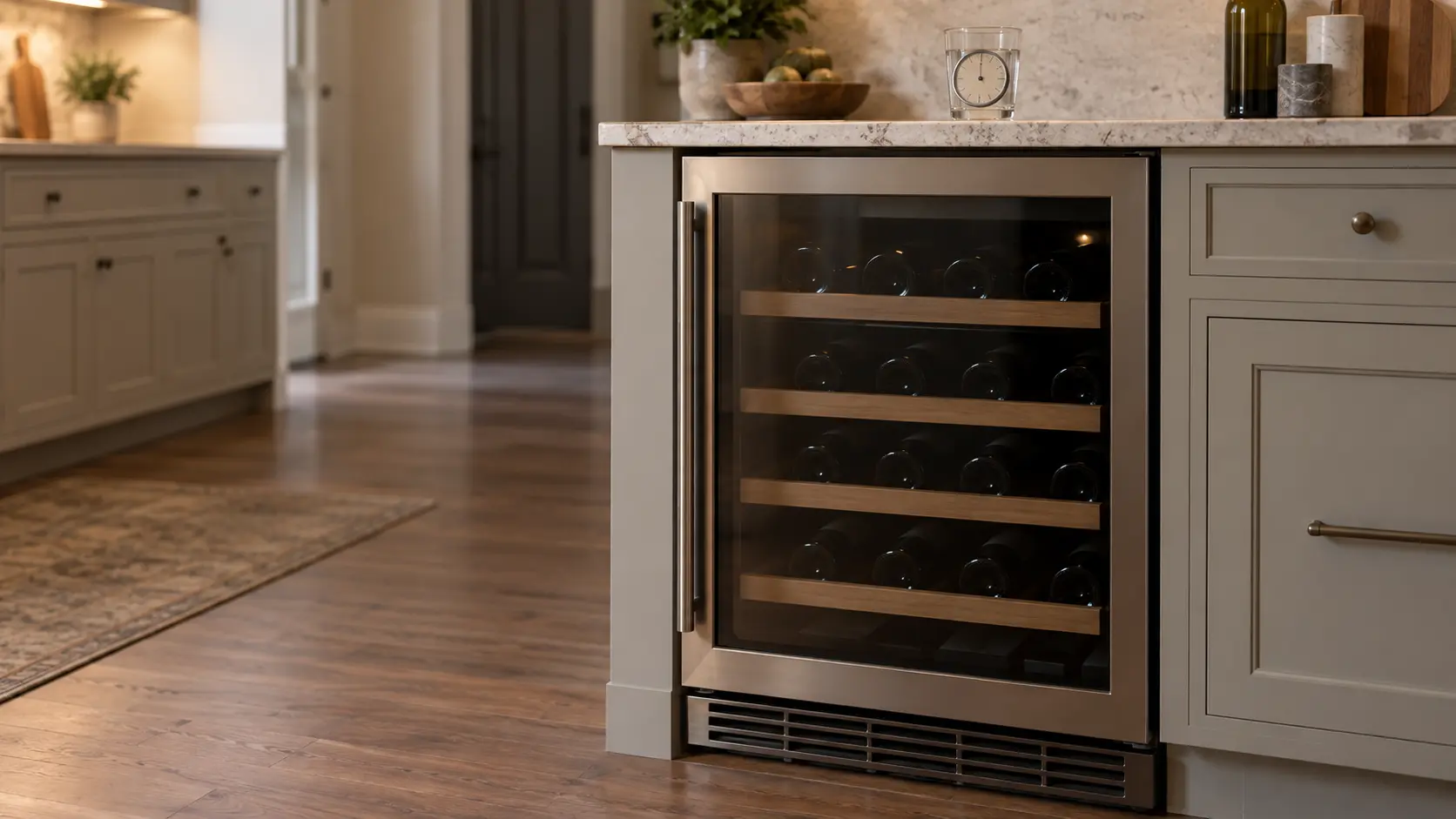
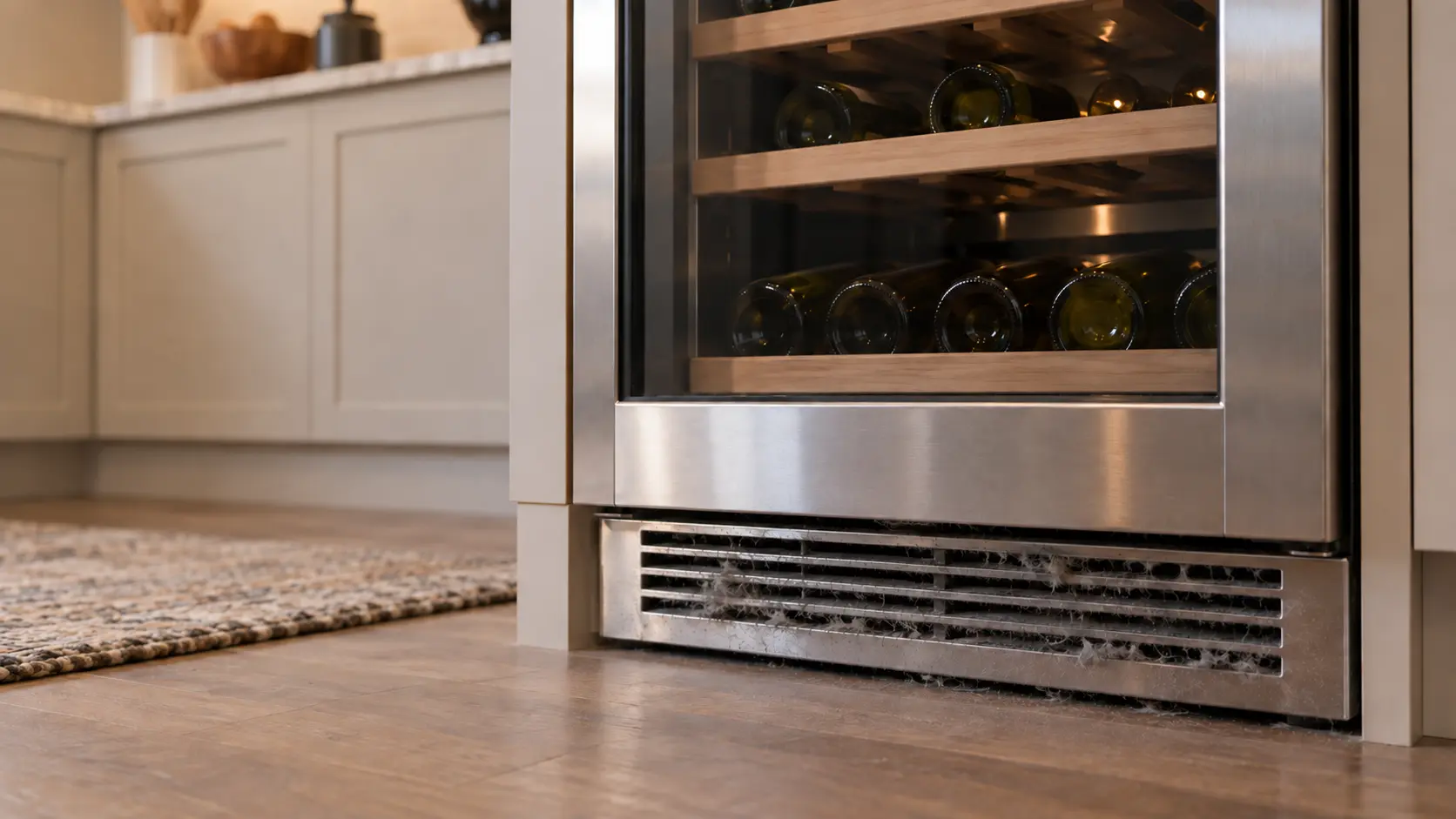
Compressor models come in two families. Freestanding versions breathe through the back and sides like the thermoelectric ones and need the same open space. Built-in versions pull air in and push it out through the toe grille at the bottom front, which is what lets them sit flush in a run of cabinets or stand as a tall column. Confuse the two, slotting a freestanding compressor model into a built-in space, and a cabinet only weeks old will struggle to hold its setting; we are called to that situation again and again.
Source: Vinotemp — Wine refrigerator buying guide — Compressor units hold a wide range of temperatures irrespective of the ambient temperature; wine cabinet compressors are designed to absorb vibration; freestanding thermoelectric units need clearance on all four sides
Running it for years, and repairing it
Since 2019 the Department of Energy has held coolers, the category that covers wine coolers of both kinds, to federal efficiency standards. A thermoelectric module draws current whenever it is working to hold the gap, so in a warm room it may run almost constantly. A compressor cabinet in the same room cycles and rests.
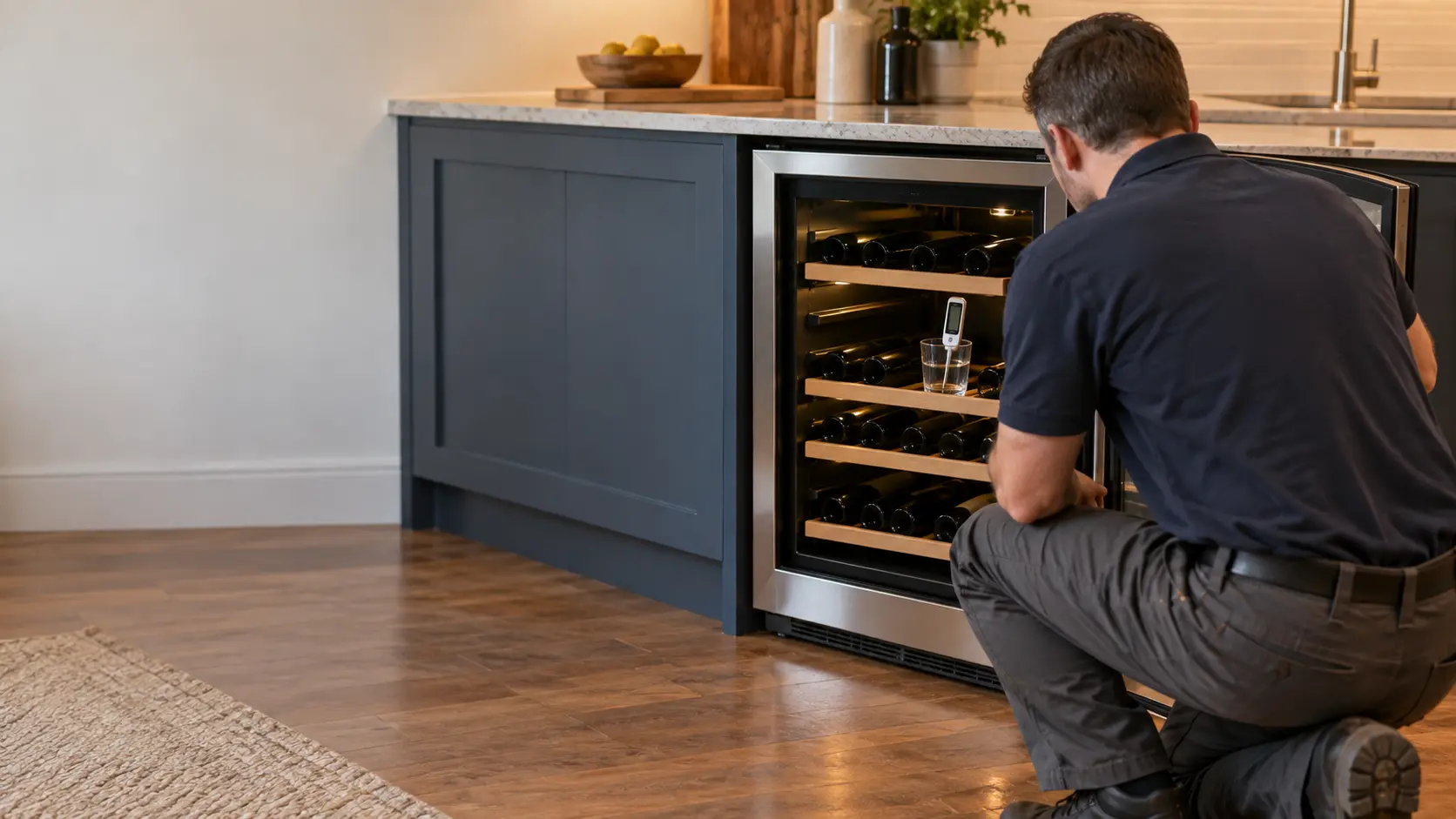
Repairs differ just as much. On a thermoelectric cabinet the usual suspects are the fans, the module itself, the power supply that feeds it and the control board; none of them involves refrigerant, and the parts are small. On a compressor unit the cheaper problems are fans, sensors, a start relay or a door gasket, and the costly one is a sealed-system repair: a compressor, a leak or a restriction, which has to be done by a technician with recovery equipment.
- Thermoelectric: interior or exterior fan, the cooling module, its power supply, the control board and display.
- Compressor, smaller jobs: condenser or evaporator fan, temperature sensor, start relay, door gasket, control board.
- Compressor, largest job: the compressor itself, a refrigerant leak or a blocked line, all handled as sealed-system work.
When a thermoelectric cabinet slowly stops keeping up
Owners often describe a cabinet that crept a degree or two warmer every month. Before blaming the module, check that both fans spin freely and that the rear heat sink is not matted with dust. A seized interior fan leaves the cold stuck on the module face, frosting it, while the bottles an inch away stay warm.
Source: U.S. Department of Energy — Miscellaneous refrigeration products — Coolers are covered miscellaneous refrigeration products; manufacturers have had to meet DOE standards for them since 2019