
One zone or two, keep it or replace it
Choosing and comparing
guides.
Compressor or thermoelectric, one zone or two, and whether a tired wine cabinet deserves a repair or makes way for a new one.
Mon–Sat, 8am–8pm
- Three guides
- Read before you book
- Says where to stop
Book a visit
Three short steps, about a minute.
or call (844) 709-0727
Loading appointment form…
The appointment form couldn’t load. Please try again.
Choosing and comparing,
guide by guide.
Wine coolers look alike through the glass and behave very differently once they are home. This section compares the choices that decide how a cabinet lives with its room and its owner: a compressor against a thermoelectric module, one climate against two, and, when an existing unit has stopped, whether to fix it or buy another.
All 18 guides
Single or dual zone: one storage climate or two
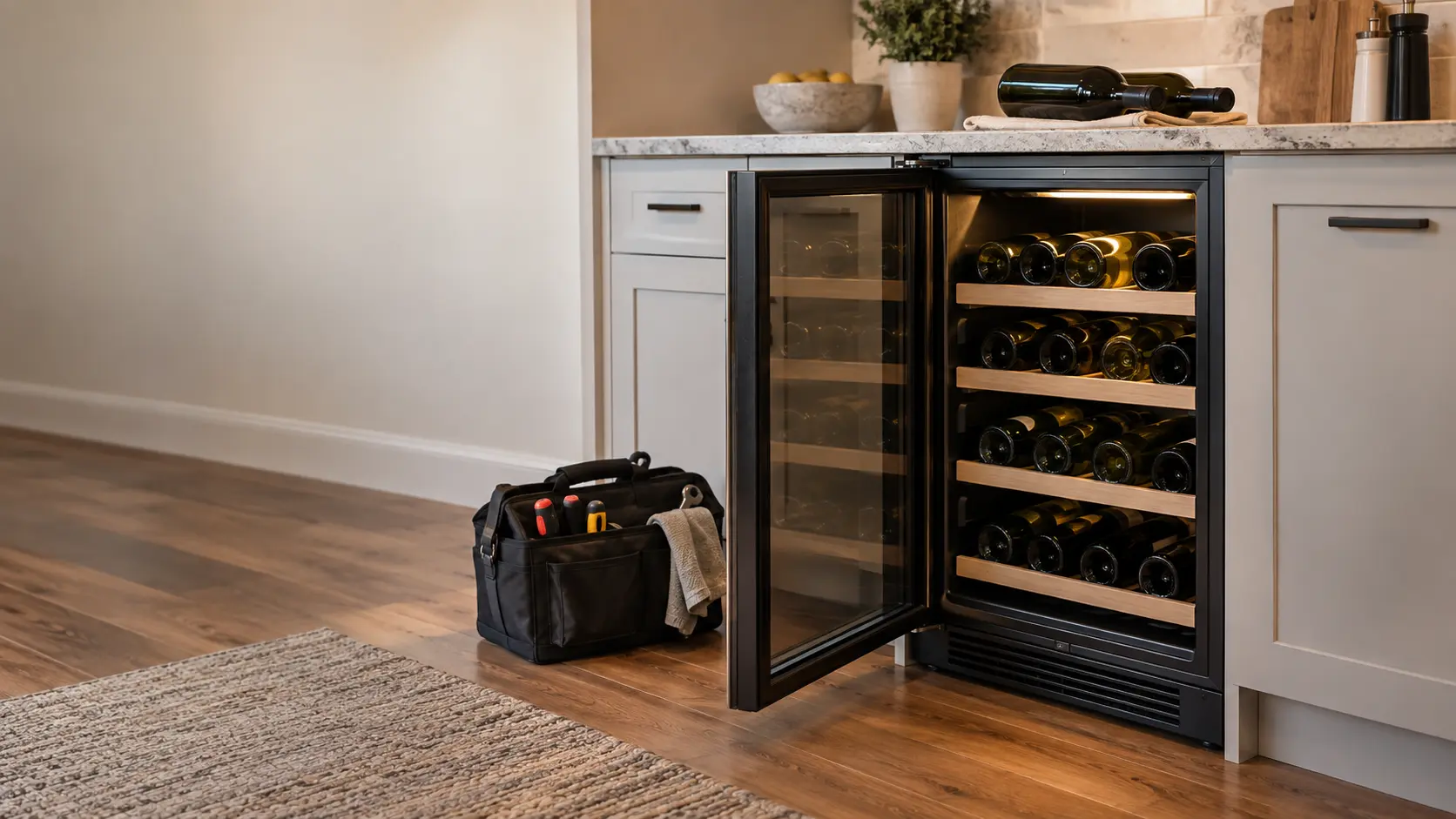
One zone or two, keep it or replace it.
It is written for someone standing in front of a showroom row, reading a listing online, or looking at a cabinet that has just warmed to room temperature with a collection inside. None of the guides favors a brand. Where a maker publishes a figure, such as how far below the room a thermoelectric unit cools or the adjustable range of a wine column, we quote it and link the page.
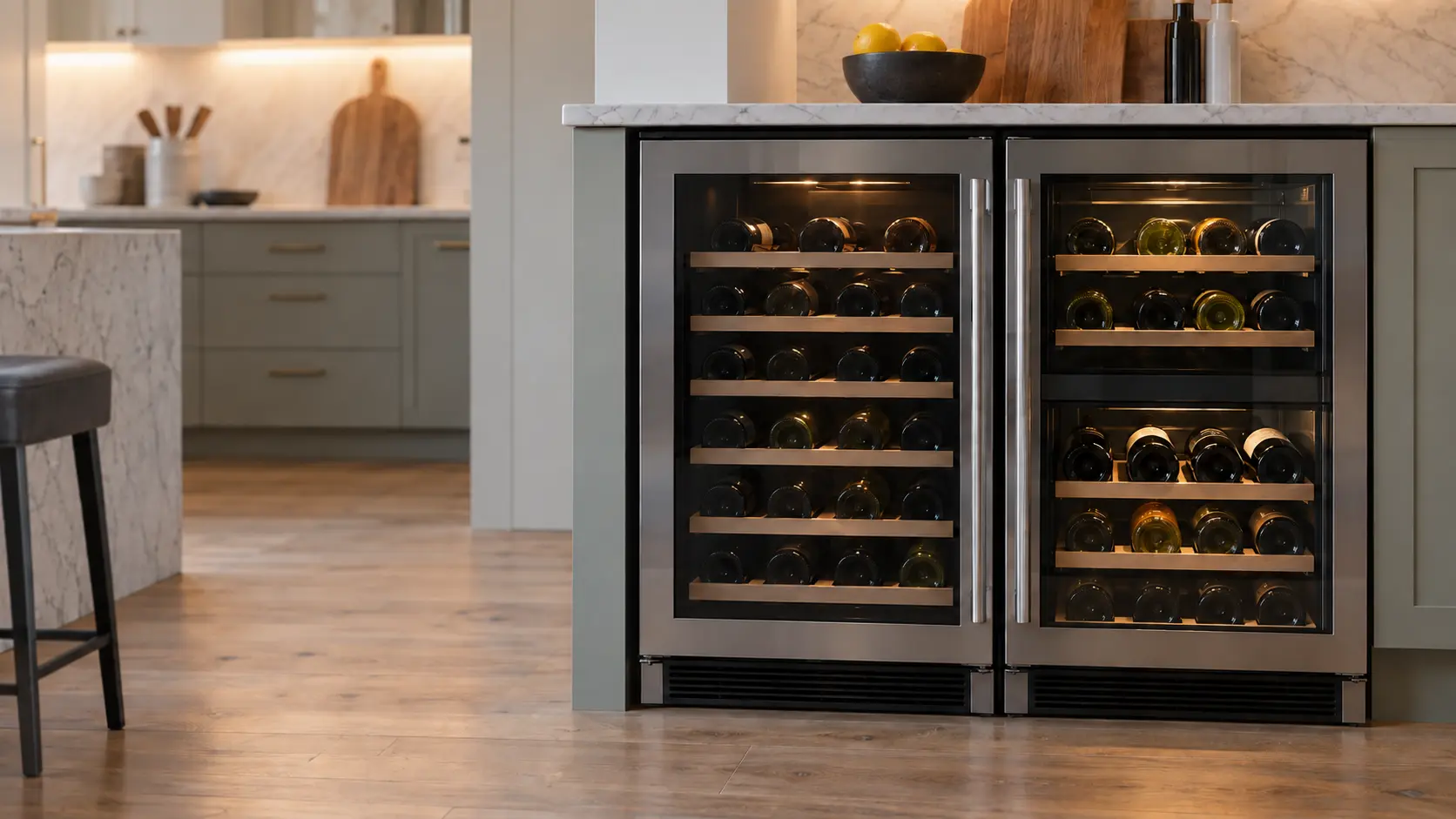
Every comparison also looks ahead to the day something needs attention. A freestanding cabinet and a built-in one fail in similar ways, but the built-in one is sized to an opening and often paneled to match the kitchen, which changes whether repair or replacement makes sense. A second zone adds a sensor and a damper that a single-zone model never needs.
Start with the room. If it runs warm or swings with the seasons, the compressor guide comes first; if you are torn between storing and serving, read the zone guide; if a cabinet has already failed, go straight to the repair-or-replace guide and deal with the bottles before anything else.
Not sure where to start?The short answerCompressor or thermoelectric wine cooler: let the room decide
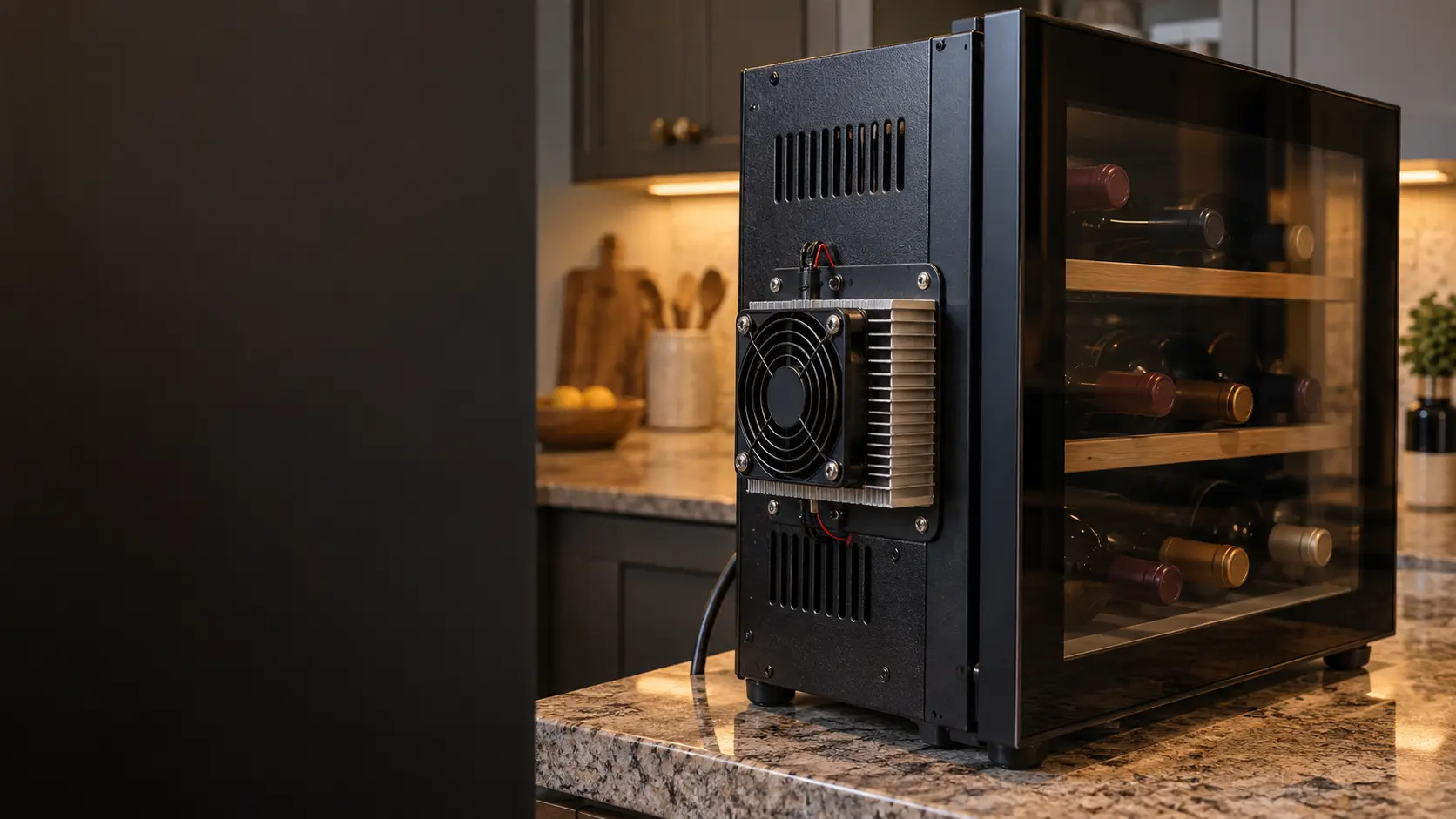
Choosing a compressor or thermoelectric wine cooler comes down to the room it will live in.
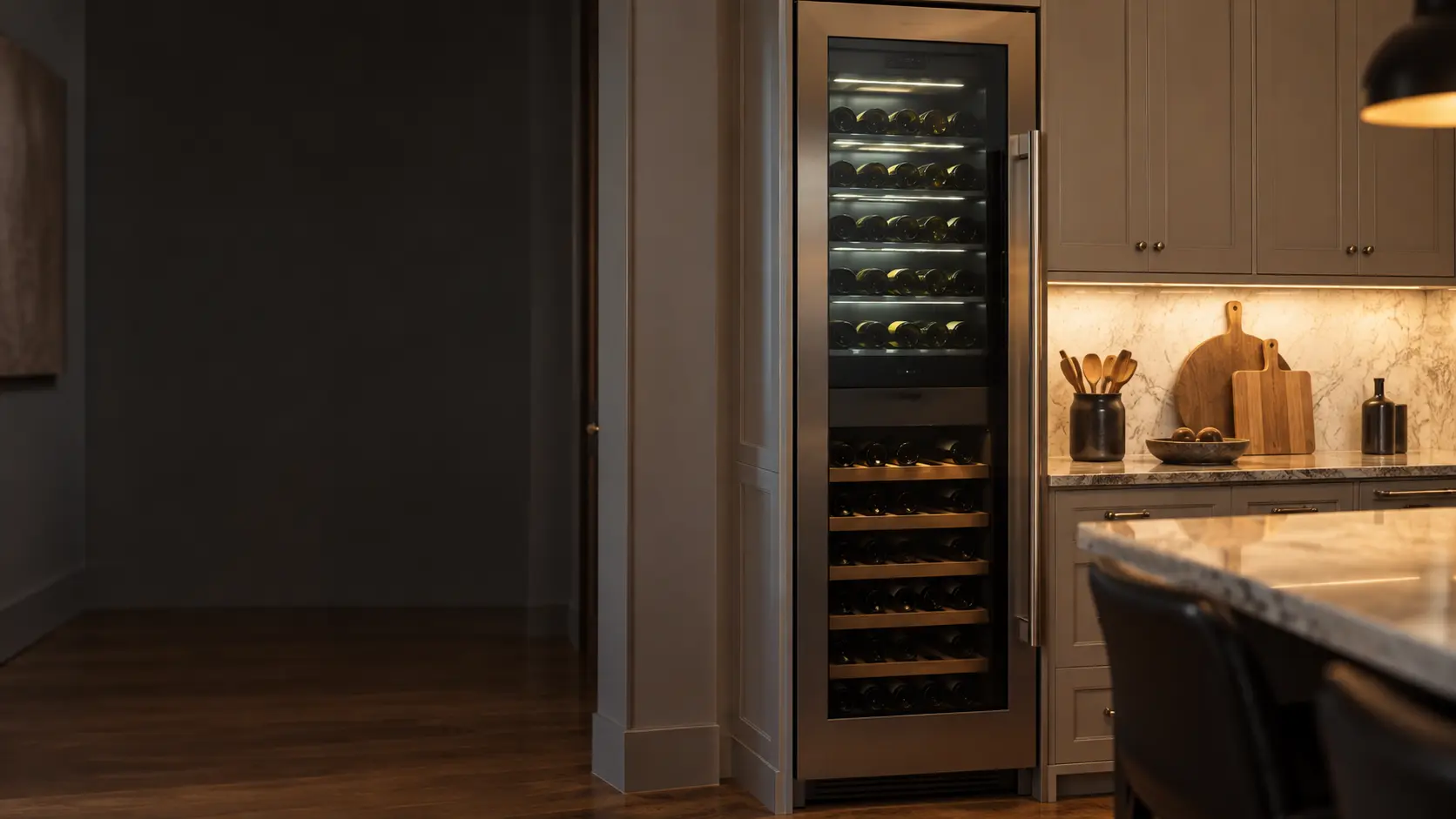
The short answerSingle or dual zone: one storage climate or two
A single or dual zone wine cooler is a choice between one steady storage climate and two independently set ones.
The short answerRepair or replace a wine cooler: the bottles first, then the part
Whether to repair or replace a wine cooler turns on the failed part, the kind of cabinet and what it holds.
When reading
is not enough.
If the checks in these guides did not settle it, the visit picks up from there, stop by stop.
What repairs cost- 01Each zone measured first
- 02A figure before any work starts
- 03The usual wine cooler parts on board
- 04Settled back at cellar temperature
The problems
these answer.
Each has a page of its own, with the causes in the order worth checking.
All 17 problems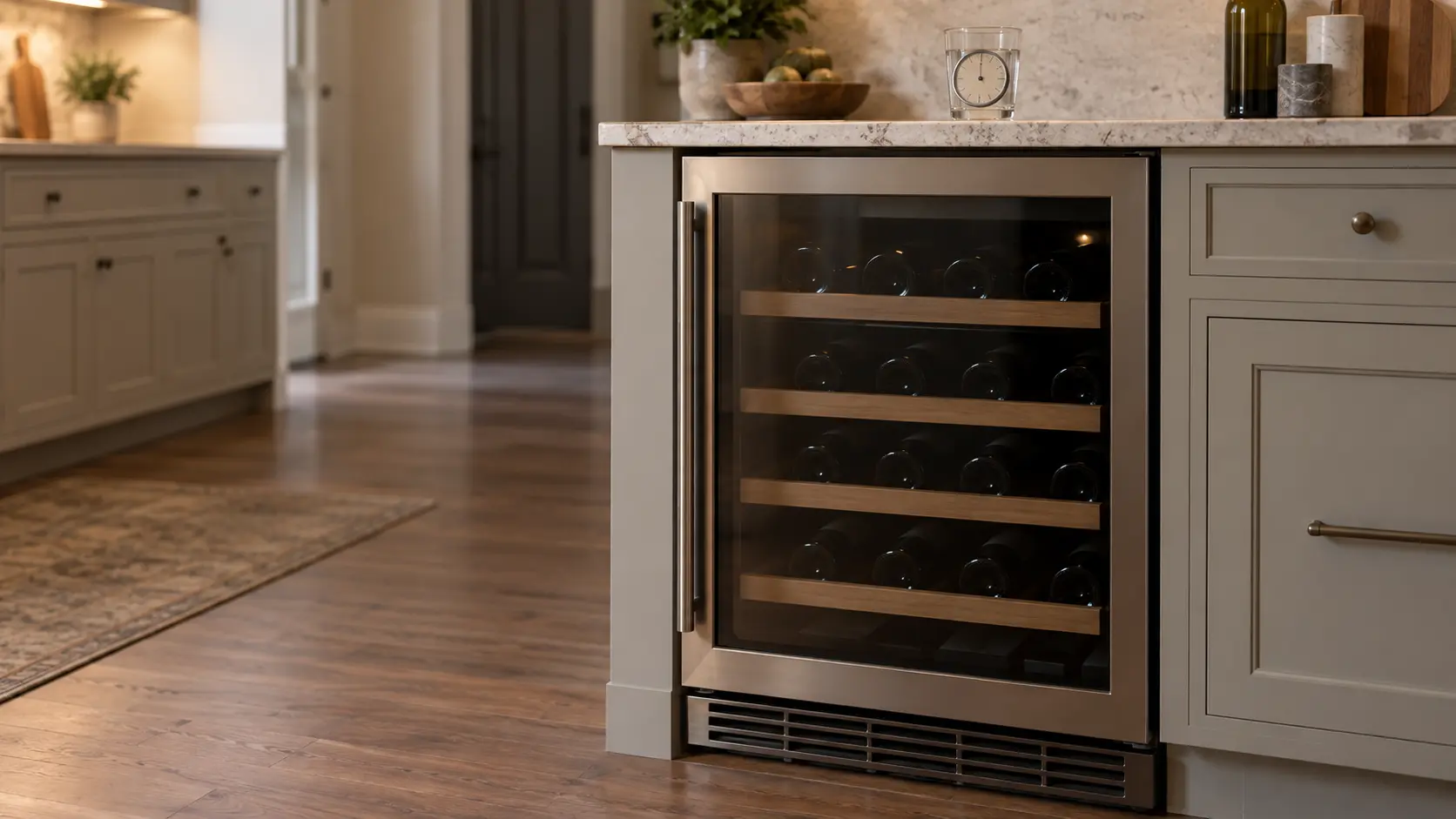

Questions about
choosing and comparing.
Which matters more when choosing a wine cabinet, capacity or cooling type?
Do I need a built-in model under a counter?
Is it worth repairing an inexpensive countertop unit?
Does this section recommend particular brands?
The other
sections.
Split by what you are trying to find out rather than by which part of the appliance it concerns.
All guides
Installation and setup
Start from your question
The four questions most visits start with, each with the guide that answers it.
18 guidesWhere to start Where to startBack to your everyday
Let’s get your wine cooler working again.
Three short steps online, or one call. Tell us what you are seeing and pick a window that works.